Why Your Customer Needs a CB Certificate & Which Countries Require It
Introduce
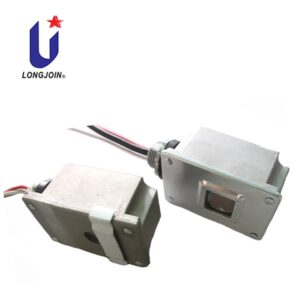
When a customer asks for a CB Certificate, it often feels sudden. But the request usually comes from strict import rules, especially in countries where IEC-based safety standards guide customs clearance. In the outdoor lighting industry—whether you are importing a photocell, photocontrol, or any light sensor photocell switch—regulators want proof of electrical safety before a product enters their market.
This guide breaks down each part in simple, human language, using questions to explain why customers ask for CB Certificates, why governments prefer them, and how Long-Join can support you even if your product (like the JL-207C photocell street light controller) does not currently include CB documentation.
You will also find a helpful country table and clear explanations that align with how professionals in outdoor smart-lighting make purchasing and regulatory decisions.
Why Is Your Customer Requesting a CB Certificate in the First Place?
When a buyer suddenly asks for a CB Certificate, it is rarely about preference. It is almost always about import regulations, especially for lighting and electrical devices such as photocontrols, photocells, and street light controllers.
Let’s break this into clearer questions.
What Does the CB Certificate Actually Mean for Lighting Products?
Are you wondering why import agencies care so much about the CB Scheme? The CB Scheme is a global conformity framework based on IEC standards, which many countries legally follow.
For products like:
- Photocell street light controls,
- Photocontrol receptacles,
- Zhaga socket–basedsmart controllers,
- Automatic light sensor switches
…it tells regulators the product is electrically safe and aligned with internationally accepted rules.
In simple terms: The CB Certificate is a translator
It helps your UL-tested product “speak” the safety language required by IEC-driven countries.
Why Does This Affect Products Designed for North America?
Long-Join’s JL-207C series is engineered for UL773 and ANSI C136.10, which are the top standards for North American lighting. These standards are extremely strict—but different from IEC.
So even though the product is safe and robust, it does not automatically match the documentation format required in CB countries.
This is why a customer in the Middle East, Africa, or South America may ask for IEC-based test evidence before they can import a photocell or photocontrol device.
Why Do Import Authorities Prefer CB Certificates Over Other Documents?
If your customer insists on a CB Certificate, it is usually because their local import office prefers documentation that matches IEC.
Let’s break down the main reasons.
Is It Because Their Local Regulations Follow IEC Standards?
Yes. In many regions—especially the Middle East and parts of Africa—government agencies evaluate electrical products under IEC rules.
So, when a worker sees “UL773” on a photocell street light controller, they know it is safe—but the report format does not match their evaluation system.
A CB Certificate solves that mismatch.
Does a CB Certificate Speed Up Import Approval?
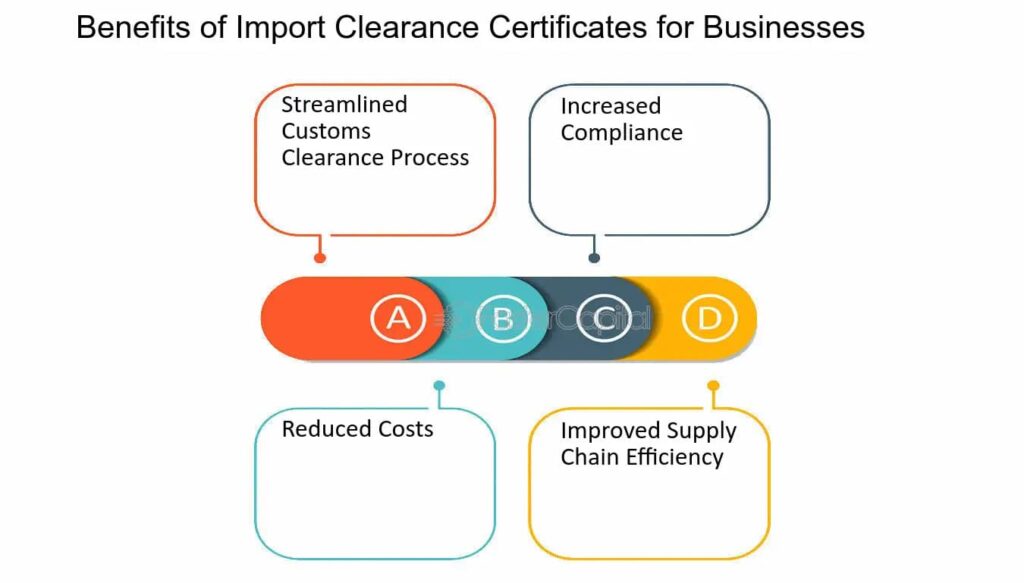
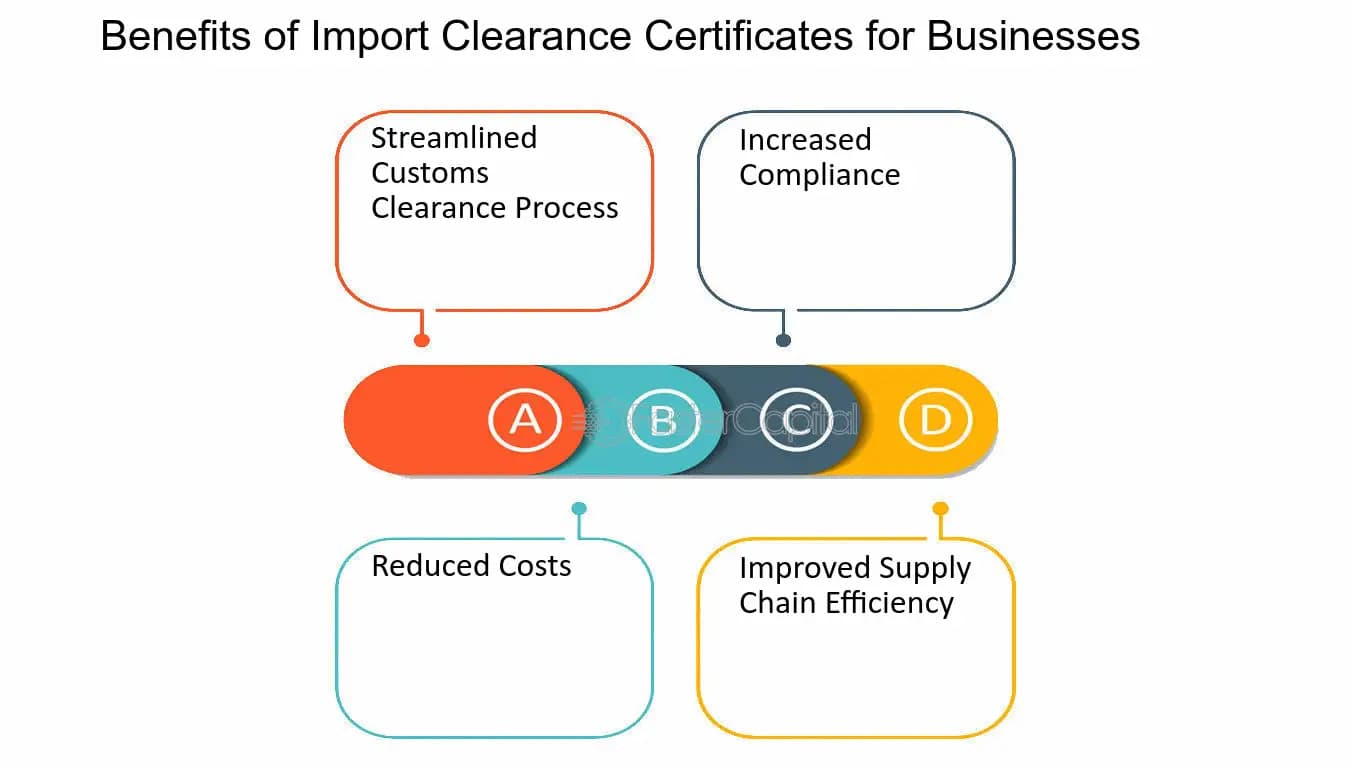
Absolutely. For many countries, CB is the fastest and cleanest path to import approval because it is already recognized by their national conformity bodies.
With CB documentation, customs can immediately issue:
- Certificate of Conformity (CoC)
- Import Permit
- Market Entry Authorization
Without it, they often require equivalent IEC-style test reports, which take longer and may cost more.
Does CB Documentation Reduce Risk for the Importer?
Yes. Importers want to avoid:
- Paying for repeated tests
- Facing rejection during customs inspection
- Losing time when a project deadline is close
A CB Certificate significantly reduces these risks. For government or EPC street-lighting projects, CB may even be mandatory.
Why Import Authorities Prefer CB Certificates
Reason | Why It Matters for Photocells & Controls | Outcome |
Local regulations follow IEC | Aligns safety evaluation | Faster approval |
Technical format matches their system | No need for interpretation | Lower risk |
Used for issuing CoC/Import Permit | Required at customs | Clear pathway |
International recognition | No repeated testing | Saves costs |
Common for tender requirements | EPC and road-lighting bids | Mandatory in many cases |
What Alternative Conformity Documents Can Long-Join Provide Instead of a CB Certificate?
If the product—such as the JL-207C photocontrol—does not include CB certification, Long-Join still offers several valid alternatives accepted by many importing authorities.
Here are the questions customers often ask.
What If They Need Proof Similar to CB?
We can provide ISO/IEC 17050-1 SDoC, which is a formal manufacturer declaration.
This works well for countries that allow supplier declarations when accompanied by technical files.
Can They Use Accredited Laboratory Testing Instead of CB?
Yes—this is usually the strongest alternative.
We can order a batch test report from ISO/IEC 17025 labs. These labs are known worldwide, such as:
- Intertek
- SGS
- TUV Rheinland
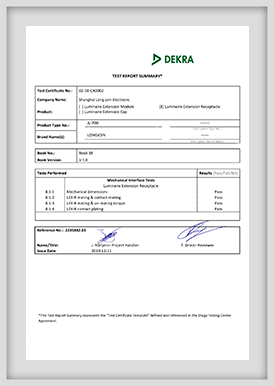
- DEKRA
- Bureau Veritas
These labs test according to IEC standards, making the report functionally equivalent for most import offices.
Is In-House Factory Testing Acceptable?
Some countries allow factory-issued batch reports. This is faster and cheaper, but acceptance varies. It’s best for customers to confirm with their port-of-entry agency.
Alternative Documents We Provide
Option | What It Includes | When It’s Accepted | Advantage |
SDoC (ISO/IEC 17050-1) | Manufacturer declaration | Medium acceptance | Fast, simple |
ISO/IEC 17025 Batch Test (Recommended) | Third-party accredited test | High acceptance | Treated as IEC-equivalent |
Factory Batch Test | In-house report | Depends on country | Quickest option |
How Should You Communicate This to Your Customer Clearly?
Here is a simple message you can copy. It will make your communication easy.
“Our JL-207C photocontrol follows UL773 and ANSI C136.10 standards for the North American market. Because of this design focus, it does not come with a CB Certificate right now.
Still, we can fully support your import license request. We will provide IEC-equivalent documents, including:
- Supplier’s promise that the product meets the rules (ISO/IEC 17050-1)
- This is a batch test report. The lab is ISO/IEC 17025 accredited.
- Manufacturer-issued batch test report (if permitted by your authority).
These documents are accepted by many import offices and meet the necessary regulatory requirements. Please confirm which document type your authority prefers so we can prepare it immediately.”
Which Countries Commonly Require CB Certificates for Photocells and Lighting Products?
Different regions rely on the CB Scheme at different levels. Lighting products face close checks. This covers photocell street light controls and sockets. It also covers Zhaga devices and other sensors.
Here is the breakdown by region.
Middle East: Why Is CB Almost Always Required Here?
Countries like Saudi Arabia, the UAE, and Qatar are strict about electrical safety. Their rules are tough. Their regulators trust the CB Scheme to validate imported lighting equipment.
Countries
- Saudi Arabia (KSA – SASO IECEE Recognition Certificate)
- United Arab Emirates (UAE – ECAS/ESR)
- Bahrain
- Qatar
- Kuwait
- Oman
These nations require recognized IEC evidence to release products at customs.
South America: Why Do Importers Ask for CB or IEC Test Reports?
In many Latin American markets, importing lighting controls requires technical proof aligned with IEC.
Africa: Why Is CB Accepted Under Pre-Shipment Verification Systems?
Asia: How Do Countries Use CB Certificates in Their Approval Systems?
Some Asian regions partially accept CB reports, especially when evaluating lighting controls with electrical components.
Countries
- Singapore (Enterprise Singapore)
- South Korea (KC – partial acceptance)
- India (BIS – certain categories)
- Malaysia (SIRIM)
- Indonesia (LSPro – SNI)
Europe: Do EU Countries Require CB Certificates?
No, the EU does not require CB. But many Notified Bodies accept CB reports as strong technical evidence during CE marking.
Countries
- Germany
- France
- Italy
- Spain
- The Netherlands
- Poland
- The Czech Republic
- Romania
- Portugal
- Belgium
- Finland
- Sweden
Oceania: Do Australia and New Zealand Accept CB?
They don’t require CB, but they use IEC-based standards. A CB report makes RCM approval easier.
Summary Table: Countries That Commonly Require CB
Region | Countries | Requirement Level |
Middle East | KSA, UAE, Qatar, Bahrain, Kuwait, Oman | Very High |
South America | Colombia, Peru, Ecuador, Paraguay | High |
Africa | Nigeria, Kenya, Ghana, Tanzania, Uganda | High |
Asia | India, Indonesia, Korea, Singapore, Malaysia | Medium |
Europe | All EU markets | Low–Medium |
Oceania | Australia, New Zealand | Medium |
Conclusion
CB requirements depend on the importing country, not your lighting product. So when a customer asks for a CB Certificate, they are simply trying to comply with their national rules.
Long-Join can support customers even without CB documentation by offering IEC-equivalent testing, SDoC, and accredited batch reports that help shorten approval time and avoid shipment delays.
Using these alternatives, customers can still import high-quality devices such as photocells, photocontrols, photocell street light controllers, and Zhaga socket solutions without interruption.
External Links:
●https://www.iec.ch/functional-safety
●https://www.nema.org/docs/default-source/standards-document-library/ansi-c136-10-2017-contents-and-scope.pdf?sfvrsn=36d2efb_2
●https://www.iecee.org/certification/cb-test-certificates
●https://stendard.com/en-sg/blog/certificate-of-conformance/
●https://ica.ng/how-to-obtain-an-import-permit-in-nigeria-2025-a-comprehensive-step-by-step-guide/
●https://www.iso.org/standard/29373.html
●https://www.sgs.com/en-ng/news/2024/06/pca-2024-q2-saudi-arabia-imports-what-is-saso-iecee-recognition-certification
●https://moiat.gov.ae/en/services/issue-conformity-certificates-for-regulated-products
●https://onac.org.co/en/home/


