
Do Photocells Need Regular Calibration?
Introduce
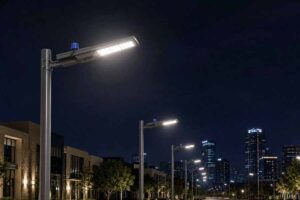
From the pavement, a streetlight looks about as simple as a thing can be. Its timing, though, comes down to a small sensor on top. Dusk comes, the light falls past a set point, and the sensor closes the relay. At sunrise it opens again. Trouble starts when that set point creeps. Suddenly the lamp outside the school is on at half past four, or still burning while people walk to work.
So do photocells need regular calibration? Mostly they need regular checking, which isn’t quite the same thing. Standard units are set before they ever leave the factory. Smart ones often let someone change the lux settings from a laptop. It comes down to the pole in front of you: the photocell type, its age, and what’s changed on the street since.
Does Every Photocell Need Recalibrating on a Schedule?
Picturing a crew pulling every photocell off its pole once a year to reset it? That’s usually not needed. A decent unit should hold its switching level for a long time. The street around it doesn’t stay put, though, and that’s what catches people out.
Out in the field, calibration mostly means going and checking. Does the unit still switch at the light level on its spec sheet? If not, someone puts it right. A film of grime on the window, a tree that’s grown a metre since installation, a new illuminated shop sign across the road, glare off the lamp itself, plain old component aging. Each one can shift what the photocell sensor thinks it’s seeing.
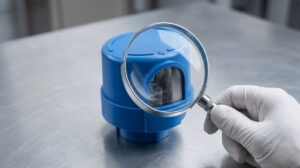
With an ordinary dusk to dawn photocell, start with a site visit. Is it still facing the right way? Has the window got a coat of dust or bird mess on it? And when it switches, is the light anywhere near the lux figure it was set for?
Long-Join Standard Models That Suit LED Lighting
Want LED streetlights switching themselves with no network to babysit? Long-Join’s standard twist-lock models do that.
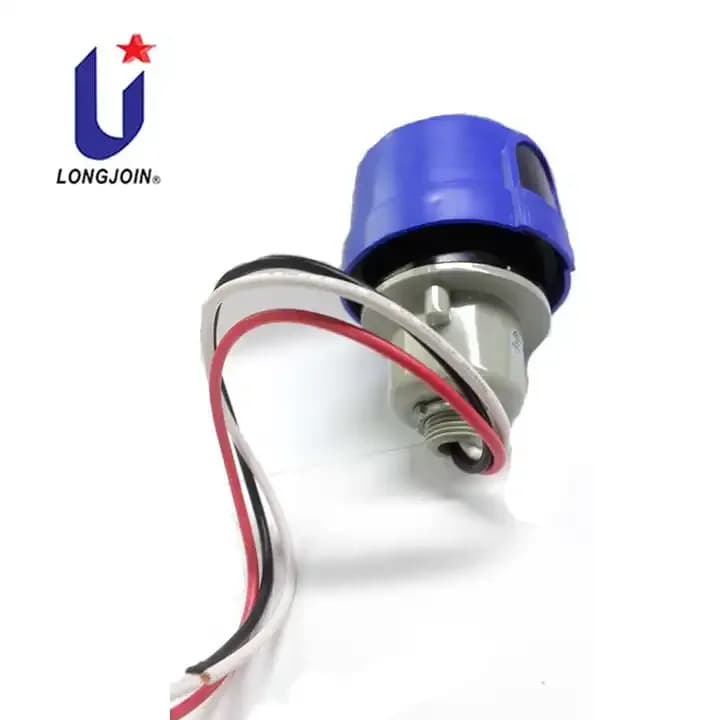
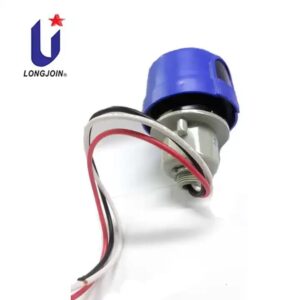
The Long-Join JL-205C photocontrol is rated for 110–277 VAC and goes on street, garden, passage and doorway lighting. Long-Join also reports that five JL-205C units got through more than 20,000 switching cycles in a UL773 endurance test without a failure.
The JL-207C photocontrol covers 120–277 VAC and comes with selectable operating levels, plus fail-on and fail-off versions.
On a basic project these work as stand-alone light sensor controls. That suits roads, car parks and campuses where plain automatic switching does the job.
What Do Smart Photocells Add?
Smart photocells bring communication, dimming, data and remote settings. One operator can look after hundreds of lights from a single screen.
Long-Join’s wireless street lighting control system supports smart controllers running ZigBee, NB-IoT and LoRa. Its UM9900 management system pulls in voltage, current, energy use, light intensity and fault data, and lets the operator send on/off commands, set dimming levels and change the high and low light thresholds remotely.
Say one estate on a big photocell street light project keeps lighting up too early. The operator nudges the threshold for that group from the office. Nobody opens a single fixture.
Getting the Lux Number Right
Lights coming on while the sky is still bright? Or the road already feels gloomy and they’re still off? Often the culprit is the lux threshold.
Lux is a measure of how much light lands on a surface. The photocell watches that number to decide when to switch. Set the turn-on point too high and the lamps fire up early. Too low and people end up walking home in the dark for a few extra minutes.
Long-Join publishes operating levels for its standard models, and on some products the operating parameters can be specified when ordering. The JL-207C, for one, can be supplied with chosen operating-level parameters.
How Do You Check an Old Standard Unit?
Not sure an older photocell is still reading things properly? Start with the easy stuff before ordering a new one.
Watch for glare, too. Long-Join advises installers to keep a photocontrol away from spots where direct light can interfere with its normal reading of ambient light.
Then look up and down the street. If one lamp comes on well before its neighbours, the cause is probably local. Muck on the sensor, a branch that’s grown across it, light spilling over from another fixture.
For standard units, an inspection every two to three years is a sensible place to start for catching aging, dirt or site changes early. The real interval should still follow the owner’s maintenance plan and what the site is like.
Remote Calibration on Smart Systems
Adjusting hundreds of controllers by hand gets expensive quickly.
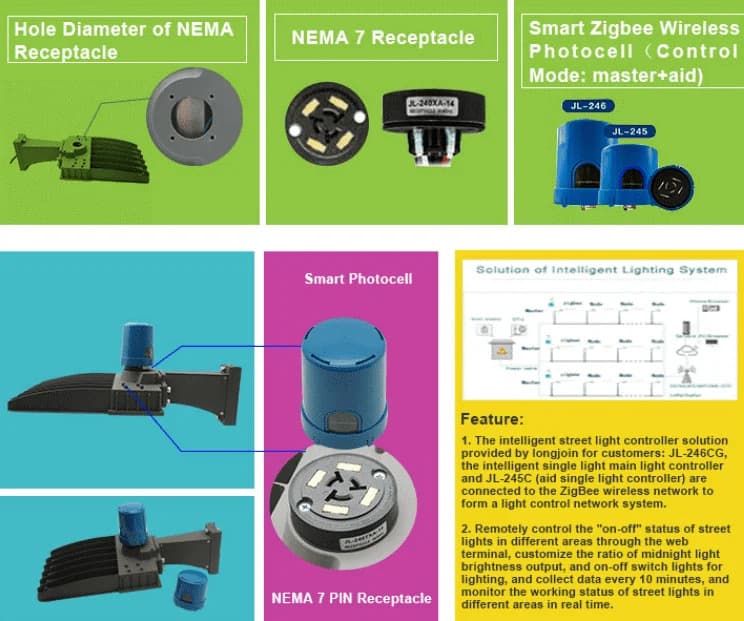
Long-Join’s JL-245 and JL-246 families support wireless communication for connected street-light projects, and the UM9900 platform adds light-source calibration.
The big win is speed. A setting can change today without waiting for the next maintenance round. Long-Join’s photocell controller application guide also gives a handy overview of standard, low-voltage, twist-lock and smart controller options.
One Lux Value Won't Fit Every Street
Take two streets twenty minutes apart. One runs between fields, and when the sun goes it gets properly dark, fast. The other is a high street with a takeaway, a pharmacy sign and traffic queuing at the lights, and it barely seems to notice sunset. Put the same threshold on both and one of them will be wrong. Trees muddy it further. A leafy branch can shade a sensor well before the pavement under it looks dark.
FAQ
On most streets, yes. Signs go up, trees grow, the window gets grubby, and the lamp slowly drifts off its timing. Better a crew finds that on a routine visit than a resident does at five in the afternoon.
The factory sets the normal operating range. Out on site you're fitting that to one real street. A shaded cul-de-sac and a lit-up junction won't want the same number.
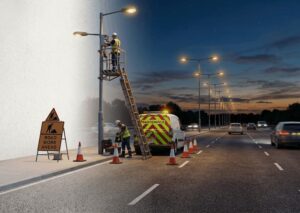
Quite a bit. You check a standard unit at the fixture, usually from a bucket truck. A smart one sends its readings back to a platform, and its thresholds get changed from a desk.
Knock the sensitivity down a bit first. Then cut the hold time, so the lamp drops back sooner once movement stops. Leave it a few nights and see. People and cars should trigger it. A branch in the wind shouldn't.
Yes. Hook compatible controllers up to UM9900 and readings come in on their own. Thresholds and dimming get changed from there, faults show up there, and it can run light-source calibration too.
Conclusion
So, regular calibration? Yes, in the sense of keeping an eye on things. Nobody needs to drag photocells down every spring. A standard unit gets looked at when the maintenance crew is passing anyway, and properly tested if it starts switching at strange times. A smart unit can mostly be looked after from the office.
External Links:
●https://en.wikipedia.org/wiki/LoRa
●https://en.wikipedia.org/wiki/Narrowband_IoT
●https://en.wikipedia.org/wiki/Zigbee
●https://www.sciencedirect.com/topics/engineering/photocell
●https://en.wikipedia.org/wiki/Calibration
 English
 Russian
 Spanish
 Portuguese
 Arabic
 Japanese
 Italian