Why Clients Ask About IEC 60950-22 & IEC 62368-1 for a Simple Gasket — And What It Really Means for Outdoor Photocell Reliability
Introduce
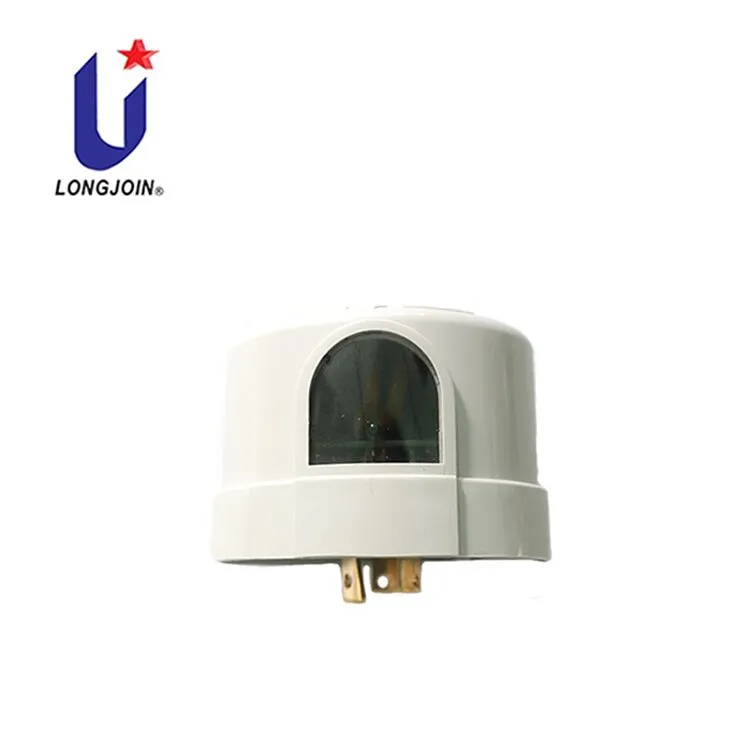
In outdoor lighting, most conversations focus on controllers, sockets, and smart communication. But engineers know one quiet truth: sometimes the smallest part decides whether a streetlight lives or dies. A simple rubber gasket inside a photocontrol or NEMA socket often takes the hardest hit—sun, rain, dust, and years of weather cycles.
This article explains why many global clients now ask, “Does your NE-Z150 gasket meet IEC 60950-22 Annex D.2 and IEC 62368-1 Annex Y.4.3?” and what those questions mean for real outdoor reliability.
It also breaks down the standards in simple terms and shows how NE-Z150 meets the outdoor requirements that matter most.
Why Do Clients Ask About These IEC Standards?
Clients do not ask about IEC standards randomly. Their questions point to real risks faced in street lighting outdoor projects. When a gasket fails, the photocell or photocontrol receptacle quickly follows. Water enters the enclosure. Corrosion begins. The system fails one rainy season later.
A well-made gasket:
- keeps water out
- blocks dust and insects
- holds shape through years of compression
- survives UV exposure
Once the seal weakens, the outdoor photocell light sensor begins to fog, rust, or stop switching the streetlight correctly.
What Fails First in Outdoor Photocells?
Component | Common Failure Cause | Result in the Field |
Gasket | UV aging, cracking, shrinking | Water leaks → photocell failure |
Housing | Impact or heat | Loose assembly |
Sensor / PCB | Moisture, corrosion | Wrong switching or dead unit |
This table shows why many engineers look at the gasket first before anything else.
Why Do Countries Require Proof of Outdoor Material Reliability?
Global lighting projects—especially in Europe, Australia, and coastal regions—ask for documentation because regulations require outdoor components to resist:
- harsh sunlight
- moisture
- salt fog
- extreme temperatures
Governments want to prevent early failure in public spaces. Certification auditors also request component evidence. This is why clients ask for IEC clauses.
Why Do Coastal Projects Care More About Gasket Tests?
Coastal environments destroy weak rubber fast. Sunlight and salt accelerate aging, causing:
- cracking
- hardening
- loss of elasticity
A gasket that fails in 12–18 months leads to full photocell failure before the streetlight even reaches mid-life.
Why Do Clients Want Documents, Not Promises?
Clients are moving away from verbal assurances. They want documents they can submit to inspectors. These usually include:
- material declaration
- UV aging reports
- outdoor endurance test results
- supplier documents
A strong component must show that it meets outdoor expectations under IEC rules.
What Do IEC 60950-22 Annex D.2 and IEC 62368-1 Annex Y.4.3 Actually Require?
This clause targets outdoor enclosure components. For a gasket, it requires:
- strong UV resistance
- no cracking or chalking after aging
- resistance to moisture and humidity
- tolerance to salt fog
- ability to work under low and high temperatures
- sealing performance after aging tests
In short: the gasket must still work after real-life outdoor punishment.
What Does IEC 62368-1 Annex Y.4.3 Say About UV Stability?
This part focuses on materials exposed to sunlight. It requires:
- UV-stabilized rubber or plastic
- successful performance in UV aging cycles
- no cracking, shrinking, or powdering
- stable sealing after UV exposure
If a gasket cannot endure long sunlight exposure, it cannot be used in certified outdoor products.
Why Are These System Standards, Not Component Standards?
A common misunderstanding appears here.
There is no industry-issued “IEC certificate for a gasket.” IEC 60950 and IEC 62368 are system standards. They apply to the full outdoor device, not one washer.
What manufacturers can provide—and what inspectors need—is:
- material compliance
- test data
- UV performance
- environmental durability reports
These satisfy certification audits even without a component-level certificate.
Does NE-Z150 Meet These Outdoor Requirements?
Yes. The NE-Z150 gasket fully meets the outdoor expectations of both IEC clauses.
Its material options include:
- EPDM outdoor-grade rubber
- Weather-resistant silicone
Both are widely used by manufacturers photocell products and street light controller systems because they hold shape, resist sunlight, and survive long-term exposure.
What Material Properties Make NE-Z150 Suitable for Outdoor Use?
EPDM and silicone naturally offer:
- high UV resistance
- ozone resistance
- long-term elasticity
- salt-fog durability
- temperature stability
- weatherproof sealing
These traits match what Annex D.2 and Annex Y.4.3 expect from outdoor sealing materials.
NE-Z150 Material Performance Summary
Property | EPDM | Silicone |
UV Resistance | Excellent | Very Good |
Weatherability | Excellent | Excellent |
Elasticity Retention | Good | Excellent |
Salt Fog Resistance | Good | Excellent |
Temperature Range | -40°C to 120°C | -50°C to 200°C |
Outdoor Lifespan | Long-term | Long-term |
What Documents Can We Provide for System Certification?
While there is no “IEC gasket certificate,” we provide the documents that certification officers actually require:
- Material declaration
- UV aging test data
- Environmental resistance results
- RoHS / REACH compliance
- Optional third-party UV testing
These can be used directly in project compliance files.
Why Are These IEC Questions Increasing in the Photocell Industry?
The rise of smart street lighting brought stricter outdoor reliability demands. Gaskets now face higher expectations, especially in smart photocell sensor products.
Are Smart Lighting Systems More Sensitive to Moisture?
Yes. A smart photocell switch or light photocell sensor contains:
- communication modules
- microcontrollers
- optical sensors
Small amounts of water can cause immediate failure. Engineers now examine seals more closely than ever.
Are NEMA and Zhaga Sockets Driving Higher Standards?
Yes. As more cities adopt:
- NEMA socketsystems
- Zhaga socket solutions
the sealing requirements around these interfaces increased. Weatherproofing is now considered part of the total system performance.
What Happens If a Gasket Fails in a Smart City Deployment?
A failed seal can cause:
- false photocell switching
- communication errors
- power supply shorting
- total controller shutdown
When thousands of nodes are deployed, even a small failure rate becomes expensive.
How Does NE-Z150 Support Long-Term Outdoor Photocell Reliability?
The goal of a gasket is simple: keep water and dust out. But in real outdoor conditions, this is harder than it sounds.
How Does NE-Z150 Handle UV and Heat?
The material was selected for environments with constant sun. EPDM and silicone do not become brittle. They maintain compression set, which means the seal does not loosen over time.
How Does It Perform in Rain, Fog, and Snow?
The gasket stays flexible, even in freezing weather. It also resists swelling when the season gets humid. This ensures the photocell control stays protected across climates.
How Does NE-Z150 Fit Into Long-Join Photocell Systems?
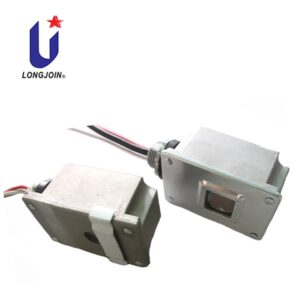
Our sealing components are used alongside products like the JL-250F surge-protected socket, which you can see here:
Gaskets like NE-Z150 complete the weatherproof layer for these outdoor units.
What Proof Do Clients Usually Request Before Project Approval?
Large tenders—especially municipal projects—require document packages.
What Documents Are Expected in Outdoor Lighting Projects?
Here is a typical requirement list:
Required Document | Purpose |
Material Declaration | Shows rubber type and formulation |
UV Aging Report | Confirms sunlight durability |
Temperature Cycle Test | Shows expansion and contraction performance |
Salt Fog Test | For coastal regions |
Compression Set Test | Ensures the gasket stays elastic |
RoHS / REACH | Environmental compliance |
NE-Z150’s available documents satisfy these needs.
Why Do Inspectors Accept Material Reports Instead of Full IEC Certificates?
Because IEC standards apply to systems, not individual gaskets. Certification officers only need to see that the component materials meet outdoor expectations.
Material-level evidence is the industry-standard approach.
Conclusion
Outdoor lighting reliability depends on every part—not only the electronics. A gasket like NE-Z150 seems small, but it protects the entire sealing system of a photocell, photocontrol, or street light controller. That’s why more clients now ask about IEC 60950-22 and IEC 62368-1. They want to know the material will last for years. It has to hold up under sun, heat, rain, and salty air.
NE-Z150 checks those boxes. It helps the whole system last longer. It also comes with the paperwork teams need to get a project approved. With a good seal, outdoor lights keep working well. They stay steady, use power wisely, and last for years.
External Links:
●https://cdn.standards.iteh.ai/samples/21831/eab6bd3d8fd140b2998e016a50bbb6bb/IEC-60950-22-2016.pdf
●https://www.china-gauges.com/common/down/name/5710ecb863a33.pdf
●https://en.wikipedia.org/wiki/NEMA_connector
●https://www.zgsm-china.com/blog/nema-vs-zhaga.html
●https://en.wikipedia.org/wiki/EPDM_rubber


