
Which Is More Reliable: Photocells Or Central Control Systems?
Introduce
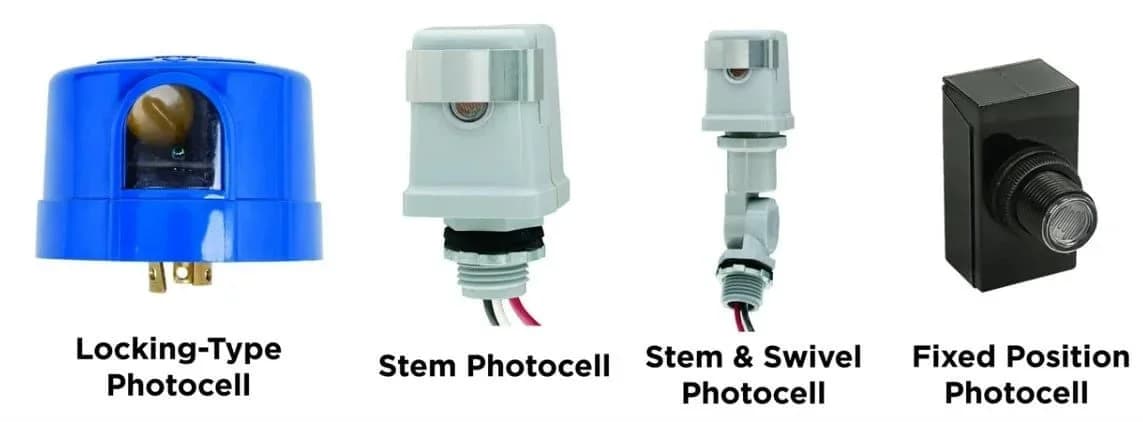
A photocell looks after that part with a sensor not much bigger than a fingernail. It sits on top of the luminaire and watches the sky. There’s no SIM card in it, no rooftop gateway, and nothing to wait for before it flips the relay.
For the plain job of lamp on, lamp off, the photocell is very hard to beat. A CCS pays off once there are thousands of lights to keep track of. Plenty of projects end up with a bit of each.
What a Central Control System Actually Does
Picture a city with four thousand street lights and one maintenance van. Sending someone up every pole to change a setting would take months. A CCS skips the van. Every light gets a controller, and every controller reports back to one management platform.
Long-Join makes a range of wireless lighting controllers that combine the lighting control with the communication side.
The catch is plain arithmetic. More functions means more pieces that have to keep working.
Why Is a Photocell So Hard to Knock Out?
Suppose a lamp only needs to know one thing. Is it dark, or isn’t it? A photocell answers that question with a very short chain of parts.
The photocell sensor reads ambient light and flips the lamp at a set light level. It doesn’t wait for a server to tell it what to do. Long-Join’s twist-lock photocontrol range includes dusk-to-dawn units built to switch outdoor lighting by the natural light level around them.
Fewer links in the chain means fewer places for it to snap. And when a photocell does die, it usually takes one fixture with it.
A CCS has more spots where things can go wrong. A gateway gets fried in a thunderstorm, a SIM card stops working, a server goes down for an update that runs long. Any one of those can hit a whole block of lights at once. That doesn’t make central control unreliable. It just means there’s more to keep an eye on.
Photocell | Central Control System | |
How it reacts | Straight to the light outside | Programmed or remote commands |
Needs a network? | No | Usually, for remote functions |
What a fault hits | Normally one fixture | Possibly a whole group |
Fixing it | Often a quick swap | May need network or software digging |
Best at | Dependable local on/off | Managing a wide area |
Weak spot | Few remote features | More parts that can fail |
When the Network Drops at Dusk
Say it’s six in the evening, the sky is fading, and the cellular network in the area goes down.
A fixture with a local light sensor doesn’t care. It keeps reading the dusk, and if the photocell is in charge locally, the lamp comes on as usual and goes off again at sunrise.
A CCS with no local backup is in a tougher spot. Lose the gateway or the cellular service and the operators can’t send commands or see what the lamps are doing. Unless the controller has a stored schedule or its own local logic, those lights may just stay however they were last left. Off, possibly, on a road that’s now dark.
So the planning question has two halves. Can we control these lights remotely? And what do they do when remote control vanishes?
What Goes Wrong | Photocell | CCS With No Local Backup |
SIM service stops | Keeps switching locally | Remote link may drop |
Server goes offline | Keeps switching locally | Commands and monitoring pause |
LoRa gateway fails | Sensing carries on as normal | A group of lights loses remote control |
Internet is patchy | Basic switching carries on | Data arrives late or not at all |
Central platform fails | Still follows daylight | Operators lose control for a while |

Does Central Control Still Win on Smart Features?
Easily. Reliability is only one slice of a modern lighting project.
A CCS does things no basic photocell can. It shows energy use pole by pole, reports faults before a resident phones in, schedules dimming for the quiet hours after midnight, and points crews at the exact light that needs attention.
Long-Join’s smart lighting range covers Zigbee and NB-IoT wireless controllers, plus NEMA products made for modern control setups.
What a CCS really asks for is more planning. Somebody has to watch the gateways, keep the servers patched and renew the SIM contracts, because the lights are only as dependable as all of that.
Running Both Side by Side
Nobody is forcing a city to choose. Layer them.
Put the dimming, the reports and the schedules on the central platform. Then leave a photocell, or a controller with its own light sensor. It can be each fixture for the days the platform can’t be reached. The lamp carries on reading the sky by itself, and when the link comes back the dashboard fills in again.
Long-Join supplies both NEMA and Zhaga interface parts for this kind of setup. The NEMA 7-pin receptacles take controllers that need power and signal contacts both. The Zhaga Book 18 parts are the small sockets that sensors and communication modules plug into.
Better than hanging a whole city’s lighting on one comms link.

Which Setup Fits Your Project?
A two-kilometre stretch of country road and a city-wide smart rollout have almost nothing in common.
Out where the phone signal comes and goes, and the nearest person who understands gateways is a day’s drive off, a decent photocell makes a lot of sense. Control stays on the pole.
Big cities with good coverage and their own lighting technicians are where a CCS really earns its money. They should still keep a local fallback for the night the comms go down.
Check the fixture interface before ordering anything. Long-Join offers NEMA receptacles, photocontrols and Zhaga components for different control designs, and matching the controller, voltage, dimming method and waterproof rating heads off a lot of trouble in the field.
And test the backup now and then. A fallback nobody has checked in two years isn’t much of a fallback.
FAQs
Yes. A standard photocell switching locally has no idea the internet exists. Give it power and a working relay and it'll keep following the light outside.
Several layers at once: the comms link itself (cellular, LoRa, Zigbee or NB-IoT), the gateways and servers, schedules stored on the controller, and some logic in the controller for when it's on its own. Backup communication and fallback settings help on top of that.
It varies too much to give one answer. It depends on the city, the utility, the fixture and the spec, so read the requirements for your job before picking a fallback.
Long-Join supplies photocontrols, NEMA connectors, 7-pin receptacles, Zhaga parts and wireless controller components, so fixture makers have several ways to pair local sensing with smart control.
For plenty of street lighting systems, it's local fallback control. A photocell or controller that runs without the network keeps the lamp doing its basic night-time job.
Conclusion
So, photocell or CCS? If the only question is whether the lamp comes on tonight, the photocell has the edge, mostly because there’s so little inside it to go wrong. A CCS does a far bigger job, and its reliability rests on a longer chain: the network, the server, every controller and whoever is looking after them.
That’s why so many designs keep both. Hand the clever jobs to the CCS, and keep local control on the pole for the evening the network goes quiet.
External Links:
●https://www.nema.org/membership/products/view/lighting-systems
●https://onomondo.com/blog/what-is-nb-iot-definitive-guide/
●https://en.wikipedia.org/wiki/Zhaga_Consortium



 English
 Russian
 Spanish
 Portuguese
 Arabic
 Japanese
 Italian