
What Hainan’s Full Free Trade Port Operation Means for the Global Outdoor Lighting Industry
Introduce
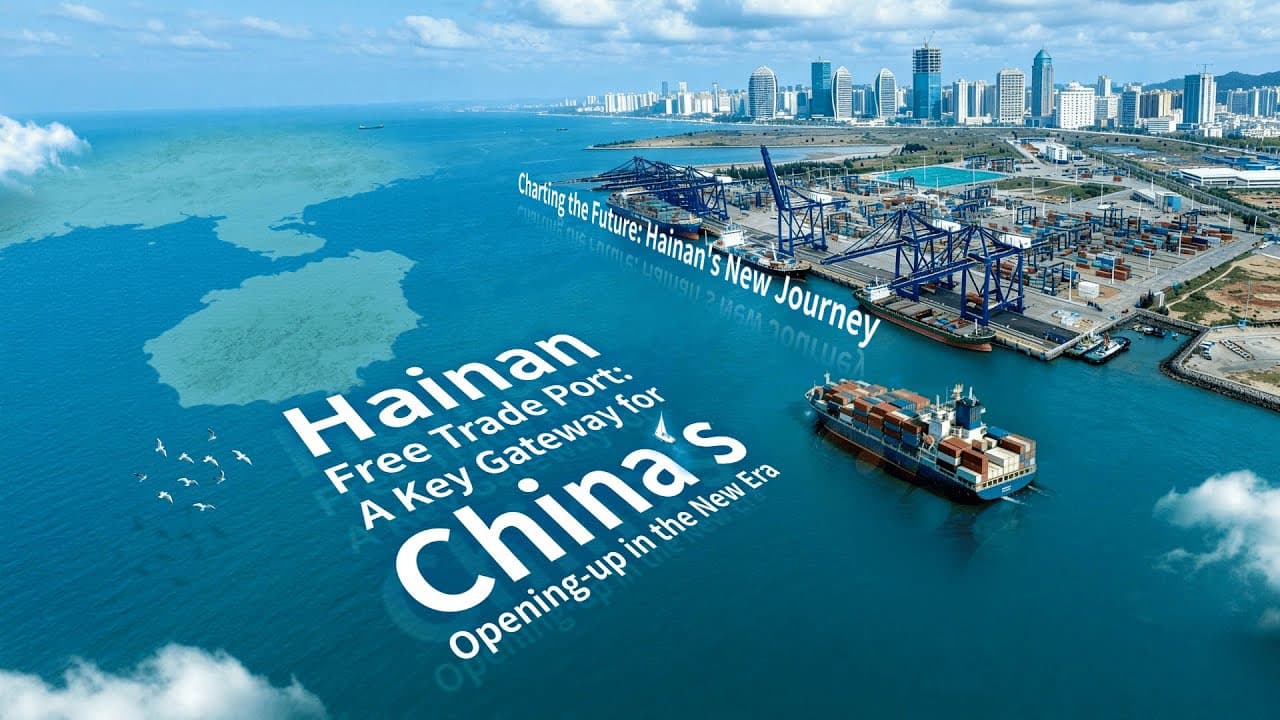
In December 2025, China closed its customs system. It began full official use of the Hainan Free Trade Port (FTP). The whole island now works as a special trade zone with open rules. It has its own customs and tax systems that follow global standards and support steady, long-term trade.
For overseas buyers in outdoor lighting, this is not just “China news.” It changes how you think about risk, multi-year contracts, and where your photocell, socket, and controller platforms are anchored.
This Q&A guide walks through what Hainan’s full FTP operation really means for you as a distributor, manufacturer, EPC, or smart city integrator—and how to quietly turn a macro policy into a competitive edge in your next tender.
What Exactly Changed With Hainan’s Full Free Trade Port Operation?
Are you hearing buzzwords like “full customs operation” and wondering what they mean in day-to-day sourcing? Let’s turn policy language into something a lighting professional can use.
From December 18, 2025, Hainan completed its “customs closure” and began operating as a fully fledged Free Trade Port covering the whole island. Goods entering and leaving the island are now managed under a special system, with more liberal trade for overseas routes and a structured, rule-based process when products move from Hainan into mainland China.
Hainan FTP Concept | What It Means in Simple Terms | Why It Matters to Outdoor Lighting |
“First Line Open” | Trade between Hainan and overseas markets is highly liberalized, with simplified customs procedures. | Easier to ship components, photocell sensor modules, and sockets in and out of Hainan. |
“Second Line Controlled” | Goods moving from Hainan into mainland China follow clear, rules-based customs procedures. | If your supplier uses Hainan as a hub, moving finished luminaires into mainland projects becomes more predictable. |
30% Value-Added Rule | If processing in Hainan adds ≥30% value, goods can enter mainland China without extra tariffs. | Opens the door for assembly, testing, and integration of controllers, photocell street light heads, and smart modules in Hainan. |
Long-Term Design | Hainan FTP is built as a 2035-oriented, stable framework, not a short-term stimulus. | Encourages long-horizon sourcing contracts and platform standardization instead of short spot orders. |
How Does Hainan Change the Picture for the Nine Main Overseas Customer Groups?
Instead of asking what Hainan means for China, it is more useful to ask: What does it change for each type of overseas customer?
1. How Will Photocell Distributors and Wholesalers Rethink Inventory?
If you run a distribution business, your core worry is simple: “Will stock arrive on time, and can I keep SKUs stable for years?”
Under a more predictable trade regime, distributors become more comfortable expanding standard lines—such as photocell street light heads, twist-lock photocell sensor units, and photocontrol receptacle bases—because cross-border risk feels lower.

Instead of defensive spot buying, you can:
- Build tiered inventory plans around standard Long-Join products liketwist-lock photocell sensors
- Lock in annual or multi-year framework agreements
- Offer more confident lead-time promises to your own customers
Result: distributors position China as a primary, not backup, sourcing base for lighting control hardware.
2. How Do Outdoor Street Lighting Manufacturers Gain from a More Stable Trade Route?
For OEMs and fixture manufacturers, the biggest concern is platform continuity. You need to know that NEMA bases, Zhaga socket modules, and other control devices will still be available in five or ten years.
With Hainan signaling a long-term opening strategy, manufacturers gain:
- Higher confidence to standardize product lines on shared interfaces like NEMA 7-pin and Zhaga Book 18
- Stronger justification for converging global SKUs across North America, Europe, and the Middle East
- Less fear that sudden trade friction will force an emergency redesign of drivers, sockets, or controller ports
Articles like “NEMA vs Zhaga: How Smart Lighting Sockets Are Reshaping the Future of Global LED Street Lighting” show how quickly cities are aligning around these socket standards. A more predictable trade environment simply makes it easier to commit to them.
3. What Changes for Emerging Lighting Manufacturers Who Have Not Yet Adopted Photocells?
If you are still selling basic outdoor luminaires without photocell or controller integration, you may hesitate to “complicate” your bill of materials.
Hainan’s FTP operation lowers that psychological barrier in two ways:
- It reduces perceived sourcing risk for new components like plug-in photocell sensorheads or Zhaga-based control nodes.
- It sends the message that Chinese suppliers are aligning their trade processes with stable, rule-based systems—making them easier partners to onboard for your first upgrade.
For a growing regional brand, that can be the final push to add automatic on/off or photocell lighting sensor options as a premium tier, using mature platforms like Long-Join’s DC-rated JL-411 series photocell light sensor.
4. How Do EPC Contractors and Project Integrators Reduce Project Risk?
EPCs care less about one unit price and more about one big headache: “Will everything arrive, pass inspection, and work as designed for 15+ years?”
With Hainan’s full FTP operation:
- Customs risk becomes more manageable in their project risk models
- It becomes easier to write Chinese-origin components directly into tender specifications
- They can reference clear trade and customs frameworks when talking to government clients and financiers
When you are integrating large numbers of photocell street light luminaires and control nodes across multiple cities, a stable trade backbone can be the difference between on-time commissioning and costly renegotiation.
5. How Do Smart City and Intelligent Lighting System Integrators Benefit?
Smart city integrators look at the world in nodes and platforms. Their concern is: “Will I be able to buy the same control node in year 8 of this deployment?”
Hainan’s signal here is powerful:
- It reinforces China’s role as a long-term hardware ecosystem for smart nodes, controllers, and photocellplatforms
- It supports multi-year planning for control networks based on NEMA 7-pin, Zhaga-D4i, and IP-rated photocontrol devices
- It makes it easier to design systems using wireless Zhaga nodes likeJL-721NP that combine NB-IoT, GPS, and 0 dimming for smart street lighting.
For integrators, that means less time worrying about hardware continuity, and more time optimizing control strategies, energy savings, and data integration.
6. How Are OEM / Private Label Lighting Brands Affected?
Private label brands live and die by continuity: your logo is on the housing, but your reputation rests on your OEM partner.
A more predictable free-trade framework enables OEM brands to:
- Sign longer-term agreements with Chinese partners for photocelland controller sub-assemblies
- Place non-brand-visible but mission-critical elements—like photocontrol receptaclebases and shorting caps—reliably into China’s supply base
- Co-develop platform roadmaps in sync with socket trends, as explained in Long-Join’s article onZhaga vs. NEMA lighting controls.
Over time, Hainan’s stability helps OEM buyers move from opportunistic sourcing to genuine partnership models.
7. How Do Energy Service Companies (ESCOs) Turn Policy Into Repeatable Business?
ESCOs care about repeatability and lifecycle cost. Every time they design a retrofit package, they want to reuse it across as many cities or sites as possible.
Clearer, faster customs procedures and tariff rules make it easier to:
- Standardize retrofit kits that combine photocell street lightheads, controllers, and sockets
- Plan multi-city rollouts with confidence that hardware will clear customs on schedule
- Justify long-term, performance-based contracts where energy savings depend on reliable photocelland control operation
When the trade layer is predictable, ESCOs can focus more on kWh savings and less on “Plan B hardware” in case a shipment gets stuck.
8. How Do Government and Municipal Procurement Authorities See This Shift?
Public buyers are cautious by design. Their key questions are:
- “Is this supplier compliant?”
- “Is there hidden political or trade risk we are not seeing?”
Hainan’s full FTP status, grounded in law and aligned with international trade facilitation principles, makes it easier for public agencies to:
- Accept Chinese-origin components that follow global standards like ANSI C136.41and Zhaga Book 18
- Approve tenders that specify NEMA 7-pin photocontrol receptaclebases and matched photocell heads as standard hardware
- Reduce the “unknown risk” factor that often blocks the use of overseas components in public infrastructure
This doesn’t remove the need for local certification and testing, but it lowers the barrier to including Chinese suppliers in the first place.
9. What About Lighting Design and Consulting Firms?
Designers think in decades, not quarters. When they put a specific socket or photocell platform into a standard detail drawing, they want to know it won’t disappear.
With clearer, long-term trade rules around Hainan and broader Chinese exports, consultants gain confidence to:
- Specify NEMA and Zhaga socket interfaces as default for future-ready projects
- Recommend standardized photocelland controller platforms without worrying that supply chains will suddenly fragment
- Align their specifications with proven control hardware, such as Long-Join’s street-light controller solutions documented in the guide onrequirements of light controllers.
The result is subtle but powerful: Chinese supply chains start influencing project design choices, not just last-minute procurement decisions.
Conclusion
Hainan’s Free Trade Port doesn’t change the physics of light—but it does change the confidence behind your supply chain. With clearer, long-term trade rules, it becomes easier to rely on Chinese partners for photocell, NEMA and Zhaga socket platforms, and smart controllers, so you can design, specify, and deliver outdoor lighting projects with fewer risks and stronger long-term stability.
External Links:
Hainan’s Free Trade Port doesn’t change the physics of light—but it does change the confidence behind your supply chain. With clearer, long-term trade rules, it becomes easier to rely on Chinese partners for photocell, NEMA and Zhaga socket platforms, and smart controllers, so you can design, specify, and deliver outdoor lighting projects with fewer risks and stronger long-term stability.
●https://en.wikipedia.org/wiki/Hainan_Free_Trade_Port
●https://www.registrationchina.com/articles/hainan-free-trade-port-2025/


 English
  Russian
  Spanish
  Portuguese
  Arabic
  Japanese
  Italian