
Ligue para nós agora!

+8615900829072

After analyzing data usage, carrier requirements, and long-term maintenance needs, the conclusion is clear. The 245CC performs well, but the 245CG with external SIM is the smarter and more cost-effective choice for U.S. customers. It reduces OPEX, improves stability, simplifies maintenance, and fits the telecom structure of the U.S. far better than a built-in eSIM design.
246-022 controle sem fio zigBee longjoin

Why U.S. Customers Should Choose Smart Photocontrols With External SIM Cards — A Technical & Market-Driven Analysis Based on 245CC vs. 245CG

Introduzir

Smart outdoor lighting keeps growing across the United States. Cities, utilities, and private contractors now rely on connected photocontrol systems to track, manage, and maintain streetlights in real time. But one question always decides whether a project succeeds or fails:


“How much data does a smart controller use, and should we choose a built-in SIM or an external SIM design?”


This article explores those questions using real engineering results from the Long-Join 245CC and 245CG series. You will see how data usage works, why internal SIMs struggle in the U.S., and why external SIM controllers offer lower OPEX, stronger stability, and easier maintenance.

Acessórios de iluminação externa inteligente

How Much Data Does a Smart Photocontrol Use Each Month?

Understanding data usage is the first step before choosing a controller. Many U.S. customers want a clear number because data plans affect long-term cost, especially when thousands of streetlights are deployed.

What Do Real Tests Show?

Our field tests on the 245CC in real projects—not lab simulations—give us these results:

  • ≈25 MB per monthunder normal reporting settings

This includes traffic such as:

  • Heartbeat messages
  • Device health status
  • Command responses
  • Event logs
  • Real-time operational data

These numbers come from real installations, which makes them reliable for planning.

Can Monthly Traffic Be Reduced?

Yes. When the reporting frequency is lowered and real-time logs are reduced, data drops to:

  • ≈15 MB per month

Reporting Mode

Descrição

Approx. Data Use/Month

Standard Monitoring

Default heartbeat + full event logs

≈25 MB

Optimized Monitoring

Lower report rate, key events only

≈15 MB

Aggressive Reduction

Very low report rate

<15 MB (not advised)

  • ≈15 MB per month

This is the lowest safe range. Anything below that weakens user experience because the system becomes slower at reporting faults, switching scenes, and syncing light levels.

Why Does This Matter for U.S. Projects?

The U.S. market uses a mix of carriers—AT&T, Verizon, T-Mobile—and each carrier has its own pricing model. When you know the actual data usage, you can choose the most cost-effective IoT plans and avoid paying for unused capacity.

Why Are Internal SIM Photocontrols Difficult for the U.S. Market?

The 245CC uses a built-in eSIM. On paper, this sounds convenient. In real U.S. deployments, however, it creates challenges that cities and contractors often cannot avoid.

Why Do eSIMs Increase Operating Cost?

Most built-in SIM packages from China offer:

  • 30 MB per month, or
  • 300 MB per year.

These plans are tied to international roaming. U.S. carriers treat roaming differently, and the cost usually becomes higher than local IoT rates. When you scale to thousands of units, the extra cost becomes a heavy burden.

Why Is Carrier Choice So Limited?

With an internal SIM:

  • You cannot switch carriers.
  • You cannot change the APN.
  • You cannot adjust coverage region by region.

The controller is locked to whatever network the eSIM provider supports abroad. This is risky in the U.S., where coverage varies wildly between cities and even neighborhoods.

What Happens When Connectivity Fails?

If the built-in SIM does not match the local network:

  • The entire photocontrolmust be removed.
  • The device must be returned to the manufacturer.
  • A new controller must be shipped back and installed.

This means more labor cost, more truck rolls, and more downtime.

Why Is This a Problem for Municipal Projects?

Large U.S. lighting projects—like those in California, Texas, Florida, or Illinois—want strict control over:

  • SIM lifecycle.
  • Network security.
  • Data bills.
  • APN configuration.
  • Long-term maintenance strategy.

A fixed eSIM makes all of this difficult. It locks customers into a network they did not choose.

To understand the limitations more clearly, you can explore how Long-Join designs flexible communications modules on our smart lighting controller page.

246-022 controle sem fio zigBee longjoin
246CG zigBee wireless control longjoin

Why Should U.S. Customers Choose The 245CG External SIM Photocontrol?

The 245CG allows users to insert their own SIM card. This simple design change solves almost all the problems the internal SIM creates.

How Does Carrier Flexibility Improve Performance?

Different U.S. regions have different strongest networks:

  • AT&T may perform best in southern states.
  • Verizon may take the lead in northern states.
  • T-Mobile may offer better suburban coverage.

With an external SIM controller, the customer chooses the best network for each area.

This leads to better uptime, faster command response, and fewer service calls.

Does It Reduce OPEX for Large Projects?

Yes. This is one of the biggest advantages.

Customers can choose:

  • Local IoT data plans
  • Shared corporate SIM pools
  • Bulk municipal data packages
  • Carrier-managed enterprise plans

Cost Factor

Internal eSIM (245CC)

External SIM (245CG)

Data Plan Type

International roaming IoT

Local carrier IoT plans

Price Flexibility

Baixo

Alto

Long-Term Cost (1,000+ units)

Tends to increase over time

Easier to optimize and scale

Contract Negotiation

Through SIM provider only

Direct with local carriers/partners

All of these cost far less than roaming-based eSIM packages. Over thousands of controllers, the savings are dramatic.

How Does External SIM Improve Maintenance?

If a SIM fails:

  • No controller removal
  • No shipping
  • No downtime

The technician simply swaps the SIM on site. This is especially important for cities with tens of thousands of lights across wide areas.

Why Is It Easier For IT Approval?

Many U.S. cities want full network ownership. They prefer to keep SIMs under their own accounts so they can:

  • Track data usage
  • Manage APNs
  • Oversee security
  • Adjust plans as needed

External SIM designs allow this level of control. Internal SIMs do not.

How Does This Support Smart Lighting Development?

Because customers can use their own carrier plans, they can better manage smart-lighting data from street lighting outdoor networks, asset control platforms, and maintenance dashboards. This leads to:

  • Lower cost
  • Higher reliability
  • More predictable performance

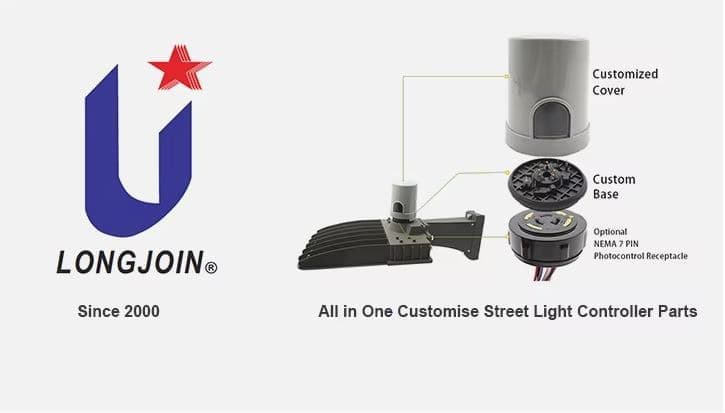
This also pairs well with modern photocontrol receptacle standards, such as NEMA e Zhaga.

Fotocélula de cobertura dupla JL-207C

What Are the Technical Differences Between 245CC and 245CG?

Below is a simple table showing how the two models compare.

How Do The Two Controllers Compare?

Recurso

245CC (Internal eSIM)

245CG (External SIM)

SIM Replacement

Not possible

Easy on-site replacement

Carrier Choice

Limitado

Full flexibility

Data Cost

Higher (roaming fees)

Lower (local IoT plans)

Manutenção

Requires factory return

Simple SIM swap

Deployment Fit

Moderado

Excellent for U.S.

Escalabilidade

Harder to scale

Ideal for large projects

Each point reflects a real operational concern. Contractors want a controller that reduces fieldwork. Utilities want a predictable cost. OEMs want a controller that supports future growth. The 245CG satisfies all these requirements because the SIM slot gives customers freedom.

Which Model Helps Customers Manage Data Better?

With an external SIM, customers can match their data plan directly to the actual usage we measured earlier:

  • Around 25 MB/month for standard use
  • As low as 15 MB/month with trimmed reporting

This makes cost planning simple.

When customers match the right SIM plan with the right hardware, they get stable service with lower long-term bills. This is especially helpful when deploying hundreds of light photocell units across a city.

Why Is the 245CG the Better Market Choice for the United States?

The U.S. market values flexibility. It also values local carrier management, predictable cost, and hardware that supports long-term rollout. For these reasons, the external SIM model becomes the practical choice.

Does It Offer Better Network Stability?

Yes. The ability to select the strongest carrier in each area leads to better command response and fewer lost packets. This matters for remote dimming, fault reporting, and scheduling tasks.

How Does It Improve Cost Control?

Cities often manage thousands of streetlights. A small increase in data cost per device becomes a huge expense over time. External SIM controllers let them choose affordable plans that match real data usage.

Does It Simplify Field Maintenance?

Absolutely. When SIM cards are replaceable, crews avoid time-consuming controller replacements. This improves service speed and lowers truck-roll cost.

How Does It Support Long-Term Growth?

Smart lighting projects evolve. New districts come online. More nodes are added. An external SIM controller grows with the network because it adapts to:

  • New data packages
  • New APN requirements
  • Updated carrier rules
  • Future IoT standards

This makes deployment more stable for years ahead.

Is It Compatible With Modern Lighting Systems?

Yes. The 245CG works with common lighting control platforms and integrates easily with NEMA and Zhaga interfaces. This makes it a good match for any U.S. city trying to expand from basic dusk-to-dawn setups toward advanced IoT operations.

You can learn more about Long-Join’s socket technologies aqui.

Conclusão

After analyzing data usage, carrier requirements, and long-term maintenance needs, the conclusion is clear.


The 245CC performs well, but the 245CG with external SIM is the smarter and more cost-effective choice for U.S. customers. It reduces OPEX, improves stability, simplifies maintenance, and fits the telecom structure of the U.S. far better than a built-in eSIM design.


For cities, utilities, and OEMs, the 245CG offers the most flexible and reliable path toward intelligent lighting at scale.

Links externos:

●https://www.att.com/
●https://www.verizon.com/
●https://www.t-mobile.com/
●https://www.nema.org/standards/technical/the-abcs-of-conformity-assessment/faqs-product-certification-and-testing
●https://zhagastandard.org/
●https://en.wikipedia.org/wiki/Original_equipment_manufacturer

Guia de recomendação perfeito para usuários locais

Fabricante da marca LONG-JOIN de Xangai, há 20 anos profissional em serviços de conectores da série NEMA e Zhaga para atender a uma ampla gama de necessidades de compradores de luminárias e produtos elétricos de marcas estrangeiras.

Nosso produto

Sobre nós

Recursos

Serviços

Copyright © 2024 Long-join. Todos os direitos reservados.

pt_PTPortuguese

É um prazer atendê-lo. Oferecemos aqui as melhores e mais recentes linhas empresariais da marca LONG-JOIN, incluindo controladores NEMA, controle Zhaga e conjuntos de controladores de iluminação pública para cidades inteligentes. Por favor, compartilhe seu endereço de e-mail conosco para receber nossos melhores votos. Estamos ansiosos para continuar esta jornada como seu parceiro de confiança.

JL-250FXA, JL-242JV, JL-260C, JL-207C, JL-208, JL-250F, JL-250G, JL-240XA, JL-205C, JL-103A, JL-403, JL-404C, JL-118A, série JL-202 e JL-217C, JL-700, JL-700L, JL-711A, etc.