
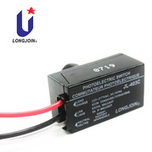
How To Choose The Right Button Photocell Series For Your Lighting Fixtures: A Comparative Guide For JL-103A, JL-403C, JL-423C, JL-412C, And JL-411
Introduce
Do you already have a light fixture design but feel lost? Choosing the right photocell from a long list of model codes is confusing. It’s a common problem. A wrong choice can cause flicker and annoying on-off switching. It may even make the light fail too soon.
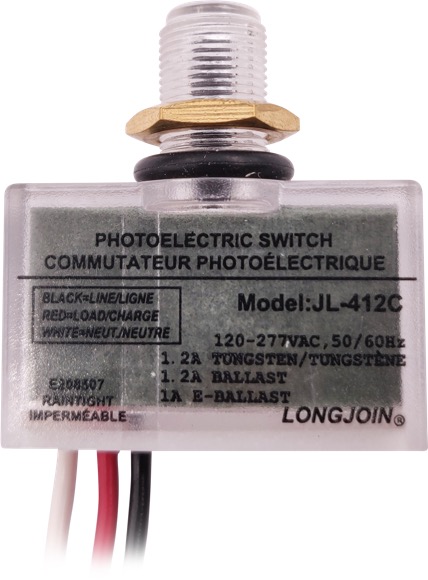
Long-Join makes button photocell sensor models like JL-103A, JL-403C, JL-423C, JL-412C, and JL-411. Each one is built for voltages, places, and load types. In this guide, we turn model numbers into simple choices. This helps you match each product to real lighting needs instead of guessing from a confusing datasheet alone.
What Key Questions Should You Ask Before You Choose A Button Photocell?
Do you have a long list of part numbers? Are you stuck and unsure where to start? Do not compare everything at once. Ask a few simple questions first, and always follow the same order.
- What voltage does the fixture use?
- 120 VAC only (North America).
- Universal 120–277 VAC for commercial and industrial sites.
- 12–24 VDC low-voltage systems, solar, or signage.
- What kind of load are you switching?
- Traditional HID or tungsten lamps.
- LED drivers with inrush current.
- Small DC loads on bollards or cabinets.
- How precise should dusk-to-dawn control be?
- Standard 10–20 lux ON / 30–60 lux OFF.
- Tighter window, for more stable lighting controlin sensitive areas.
- Where will the control live?
- Harsh outdoor poles with surge and weather stress.
- Tight wall packs or façade fittings with very little space.
Once you answer these questions, you can go to Long-Join’s Button Photocell category and immediately narrow the choices instead of scanning every datasheet line by line.
How Do Voltage Range And Environment Shape Your First Choice?
Do you feel unsure which model actually matches your mains supply and environment? Voltage is usually the fastest way to filter options.
AC Button Photocells (120 VAC Or 120–277 VAC)
- JL-103A – 120 VAC classic
Ideal if your products are sold into 120 V markets only. It offers around 500 W / 850 VA capacity and standard dusk-to-dawn levels. It works well on porch lights, yard lights, and small 120 V poles where conditions are stable. - JL-403C – Mini, 120–277 VAC universal
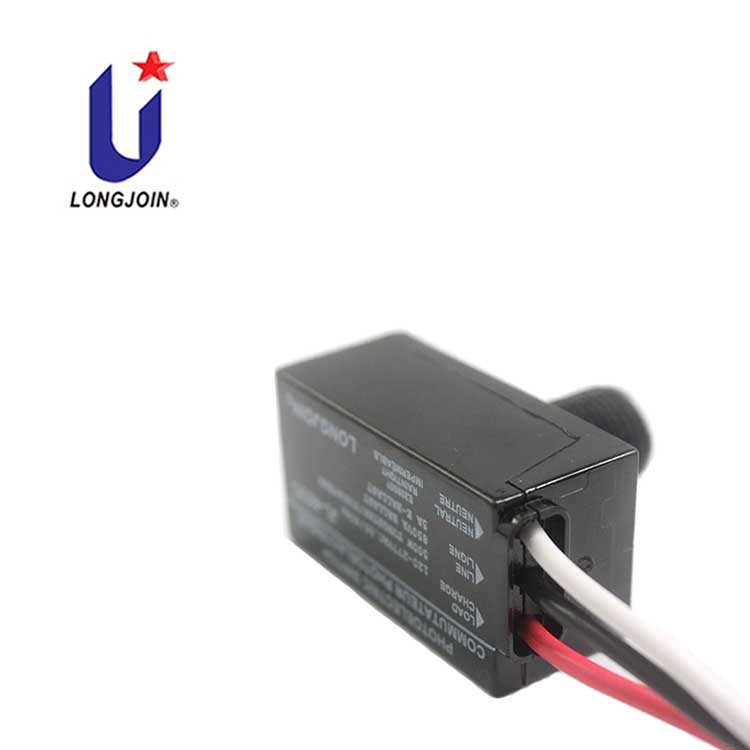
This mini button photocell lighting sensorsupports 120–277 VAC and IP-rated outdoor It is a good fit for universal-voltage wall packs, passages, and compact outdoor fixtures that ship to several regions with different grids. - JL-423C – Heavy-duty, 120–277 VAC with surge
JL-423C keeps the same wide voltage band, but is built for tougher work: higher load ratings and built-in MOV surge protection. It is targeted at poles, parking lots, and high-power luminaires where outages are costly. - JL-412C – Compact electronic option
JL-412C also supports 120–277 VAC but focuses on compact size and low power consumption. It fits especially well into tight LED housings and small wall packs where there is little room for a larger body.
DC Button Photocell (12–24 VDC)
- JL-411 series – 12/24 VDC direct wire-in
When you design solar or low-voltage systems, bringing mains AC is not an option. JL-411 series serves 12 VDC and 24 VDC applications with modest DC loads, such as landscape lighting, wayfinding, or cabinet lights. It behaves like a small DC light sensor photocell switchinside the system.
Voltage And Environment At A Glance
Model | Voltage Range | Typical Environment |
JL-103A | 120 VAC | 120 V wall, yard, barn lights |
JL-403C | 120–277 VAC | Universal-voltage wall packs, small poles |
JL-423C | 120–277 VAC | High-power poles, parking lots, harsh grids |
JL-412C | 120–277 VAC | Tight LED fixtures and compact housings |
JL-411 | 12–24 VDC | Solar / DC signage and low-voltage systems |
Once you know if the installation is mains AC or low-voltage DC, and how exposed it is, this table usually leaves you with only one or two practical candidates.
How Do Light Control Levels, Sensor Type, And Response Time Compare?
Have you ever seen lights switching on too early, or flickering around dusk? That usually comes from mismatched lux levels, sensor type, or time-delay.
Lux Switch Levels
Most button photocells use a “dusk to dawn” window that balances safety and energy savings:
- JL-103A: about 10–20 lux ON / 30–60 lux OFF.
- JL-403C: around 10–20 lux ON / 30–80 lux OFF.
- JL-412C: slightly wider 10–30 lux ON / 30–60 lux OFF for compact fixtures.
- JL-423C: tighter band, around 16 lux ON / 24 lux OFF, which helps keep high-end photocell street lightsystems more stable.
- JL-411: roughly 5–15 lux ON / 20–80 lux OFF for low-voltage projects.
That tighter band on JL-423C is useful when your luminaires sit near reflective glass, LED billboards, or car parks where ambient light can change quickly.
Sensor Type: Thermal Or Electronic?
- Thermal (JL-103A)– simple structure, natural delay, very robust. Best for long-life 120 V fittings. They do not need very fast switching.
- Electronic / phototransistor (JL-403C, JL-423C, JL-412C, JL-411)– faster, more compact, easier to tune. Works well with LED loads and compact housings. Ideal for most dusk-to-dawn projects.
Response Time And Fail Mode
A small built-in delay helps avoid flicker when a car passes or lightning flashes. That is why many Long-Join electronic models ship with a few seconds of time-delay. Some versions of JL-423C also offer different fail modes (fail-on or fail-off), so OEMs can choose what happens if the control is damaged.
Light Control Behaviour
Model | Sensor Type | Typical ON/OFF Behaviour | Use When… |
JL-103A | Thermal | Standard dusk-to-dawn, soft response | You want a proven 120 V solution with simple needs |
JL-403C | Electronic | Standard dusk-to-dawn with delay | You need universal voltage and compact size |
JL-423C | Electronic | Tighter 16/24 lux style window | You want stable control on demanding projects |
JL-412C | Electronic | Standard levels, compact body | You design tight LED housings |
JL-411 | Electronic DC | Low-voltage dusk-to-dawn for 12/24 VDC | You build DC or solar-based systems |
If you already chose the voltage family, this table helps you decide how strict and how fast your photocell control should be in the field.
Which Button Photocell Fits The Most Common Lighting Scenarios?
Are you wondering how these specs translate to real projects? Let’s connect the models to typical use cases that many fixture makers face.
1. 120 V Porch, Wall Pack, Or Barn Light
For simple 120 V products sold into a North American market, JL-103A is often enough. It is a classic, thermal button design with solid load capacity and familiar dusk-to-dawn behavior. The main benefit is reliability with minimal configuration.
2. Universal-Voltage Wall Packs And Small Poles
If your luminaires ship globally or into mixed 120–277 V commercial buildings, JL-403C is a smart baseline. It combines universal voltage, compact size, and outdoor-ready construction, making it a practical outdoor photocell light sensor for many catalogue fittings.
3. High-Power Street Lighting And Parking Lots
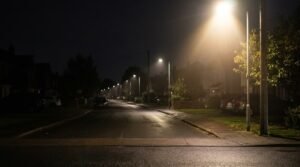
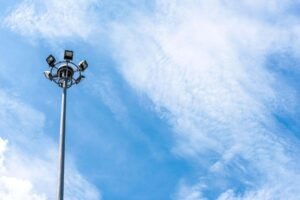
For robust, high-wattage poles and car park fittings, JL-423C steps in. It offers higher load ratings and surge protection, along with tighter lux control. This makes it a strong match for premium photocell LED street light families where reliability and grid disturbances are both serious concerns.
4. Compact LED Façade And Architectural Fixtures
When the mechanical design leaves almost no space, JL-412C is often the easiest choice. It is an electronic, compact button sensor with modest power consumption, suited for slim LED wall packs, façade luminaires, and decorative housings.
5. Solar, DC Signage, And Low-Voltage Systems
If you run on 12 VDC or 24 VDC from a battery or power supply, JL-411 series is the natural pick. It gives you dusk-to-dawn switching in DC form, so you do not need to bring mains into a low-voltage cabinet or bollard. It effectively behaves like a built-in DC photo cell sensor in your system.
Table 3 – Scenario-Based Quick Guide
Scenario | Recommended Model |
120 V residential or light commercial | JL-103A |
Mixed 120–277 V commercial / industrial | JL-403C |
High-power poles and parking lots | JL-423C |
Slim LED wall packs and façades | JL-412C |
Solar, signage, and 12/24 VDC applications | JL-411 series |
For many OEM teams, this is the table product, sales, and engineering sit around when they agree on a final BOM.
How Can Long-Join Help You Customise And Scale Your Button Photocell Strategy?
Do you feel that catalogue parts get you close, but not quite all the way to your ideal design? That is where Long-Join’s engineering support becomes important.
Instead of treating each button photocell as a fixed “black box,” Long-Join works with customers to fine-tune:
- ON/OFF lux levels for special city or project requirements.
- Surge protection levels to match your driver and grid tests.
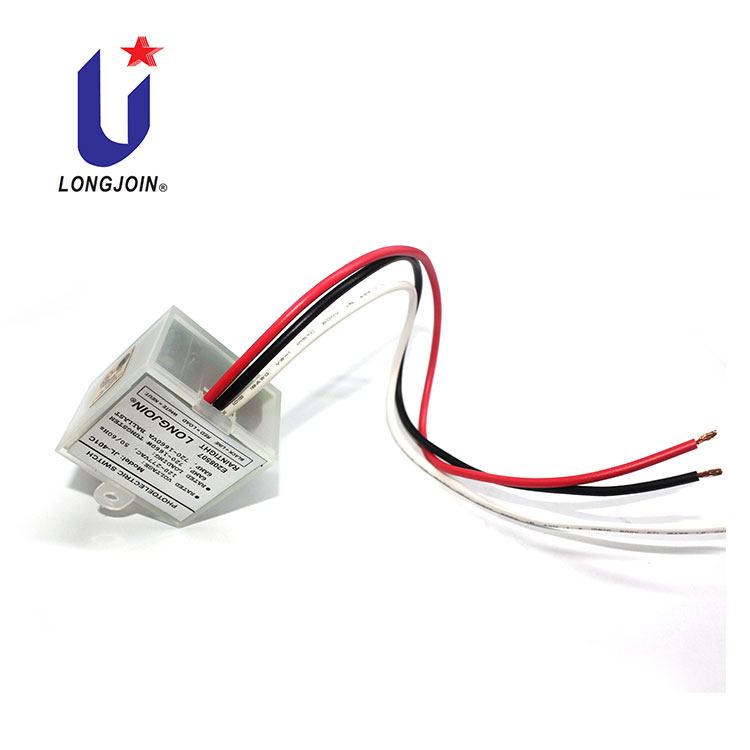
- Wiring colour codes and mounting threads to fit your assembly lines.
- IP performance, caps, and accessories to manage rain, dust, or insects.
If you are planning a full photocell street and wall-pack portfolio, it is useful to view Button Photocells alongside twist-lock and other wire-in products on:
- Button Photocell Wire-in Controllers
- Direct Electronic Wire-in Controllers
Conclusion
Choosing between JL-103A, JL-403C, JL-423C, JL-412C, and JL-411 seems hard. It can be simple. First check the voltage and the environment. Then check the lux range, sensor type, and real use.
From there, you can work with Long-Join to tune details and turn a single button control into a long-term platform for your luminaires.
External Links:
●https://clarionuk.com/resources/ip-ratings/
●https://electronics.stackexchange.com/questions/640162/how-do-movs-work-for-surge-protection
●https://en.wikipedia.org/wiki/Bill_of_materials
 English
  Russian
  Spanish
  Portuguese
  Arabic
  Japanese
  Italian