

Should Long-Join Wire-In Photocells Be Used Indoors Or Outdoors?
Introduce
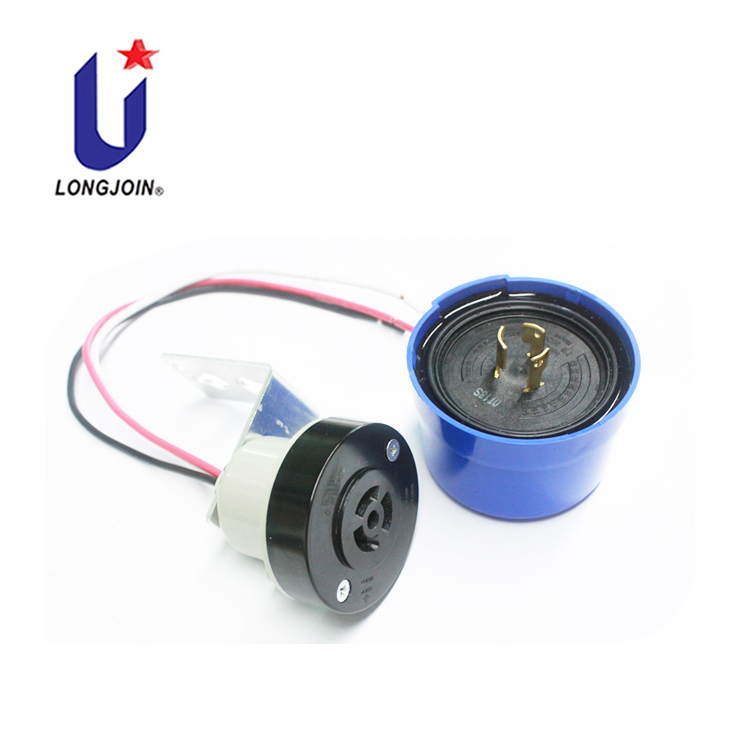
Quick answer: outdoor. JL-103A and similar models are built for outdoor lighting. Garden lights. Passage lights. Doorway lights. Landscape lights. LED floods. Wall packs. Barn lights. That’s what they’re designed for.
But here’s the thing—they can work indoors. Just not in the way most people think. The room has to be large. Light has to change naturally. No other lamps shining directly at the sensor. Get any of that wrong and the photocell cycles on and off like something’s broken.
What Is The Long-Join JL-103A Wire-In Photocell?
JL-103A is a classic Long-Join setup. Simple dusk-to-dawn control. Light comes on when darkness arrives. Goes off when daylight returns. No manual switching. Just automatic.
Think of it as an eye for the lamp. Senses enough daylight? Lamp stays off. Area gets dark? Lamp turns on. That’s the whole concept. People don’t have to flip a switch every evening. Perfect for outdoor work where you want set-it-and-forget-it operation.
Long-Join says JL-103A is practical for compact fixtures. Especially where you need simple light sensing. Garden work. Passage areas. Barns. Street lighting. All of it benefits from basic automatic control.
Item | JL-103A Basics |
Product Type | Wire-in / button type photocell |
What It Does | Turns lights on at night, off during day |
Where It’s Used | Outdoor lights, garden lights, passage lights, barn lights |
Control Method | Light sensing |
Best For | Simple automatic lighting control |
Why Are Wire-In Photocells Mostly Used Outdoors?
Because outdoor light changes are obvious. Sun’s bright during the day. Dark at night. That clear difference is exactly what the photocell needs. It can sense the shift and switch reliably.
Outdoor lights also need automatic control more often. Garden lights. Post lights. Courtyard areas. Doorways. Wall packs. Running every night. A dusk-to-dawn photocell cuts manual work. Keeps spaces safer after dark.
Long-Join’s wiring guide mentions wire-in photoelectric switches are used for outdoor lighting, garden lighting, passage lighting, doorway lighting. All based on ambient natural light.
Outdoor use also demands durability. Dust. Rain. Wind. Temperature swings. Outdoor photocells need proper sealing, good housing, stable design. That’s what outdoor models are built for.c
Can Wire-In Photocells Actually Be Used Indoors?
Yeah, they can. But only if you’re smart about it.
Not in a small room. Not when other lights keep shining on it. Not if it faces reflected light from walls, glass, or signs. Get any of that wrong and the photocell cycles constantly. On-off-on-off all night. Pointless.
Long-Join warns against placing a photocell where reflected or artificial light hits it. That’s the biggest indoor problem. The sensor gets confused. Thinks it’s daytime when a nearby lamp’s on. Tries to turn off. Turns off. Room gets darker. Sensor turns the light back on. Endless cycle.
Large indoor spaces might work. Warehouse entrance. Covered walkway. Large hall. Semi-open passage. Enough natural light change for the sensor to actually read. But small rooms? Forget it. Too much artificial light interference.
Indoor Space | Will It Work? | Why Or Why Not |
Small office | No, not really | Too much artificial light |
Narrow room | No | Sensor sees reflected light |
Large hallway | Maybe | Light change if placed right |
Warehouse entrance | Maybe | Natural light can be clear |
Covered walkway | Often yes | Mix of shelter and outdoor light |
What Actually Goes Wrong When A Photocell Is Used Indoors?
Light interference is the biggest problem. Another lamp shines on the photocell. Sensor thinks the area’s bright. Turns off the controlled lamp. Area gets darker. Sensor turns it back on. On. Off. On. Off. Repeats all night.
Bad placement is another one. If the sensor faces a window, mirror, glossy wall, or another fixture, it reads wrong. Can’t figure out the actual room condition. Flickers. Switches at weird times. Kills the lamp life fast.
Mixed lighting’s also a mess. Sunlight from one window. Ceiling lights from another direction. Basic photocell can’t figure out what’s actually happening. It’s confused by conflicting signals.
Before you use a wire-in photocell indoors, check three things. Space size. Where the light sources are. What the electrical rating is. Get all three right or don’t bother.

When Should You Use A Photocell Plus Motion Sensor Indoors?
This works when the light needs to respond to both darkness and actual human movement. Walkways. Corridors. Parking areas. Stairs. Shared passages. This setup’s smarter.
Photocell checks the light level. Motion sensor checks if someone’s moving. Together they make the system intelligent. Light doesn’t need to stay fully on when nobody’s there. Saves energy. Makes lighting more useful.
Long-Join has Zhaga controllers that do this. JL-723A1H combines light sensing with PIR mode and DALI dimming. They also make microwave sensing controllers like JL-712A2H and JL-712A3 for light sensing plus motion-based dimming.
This combo approach works way better indoors than a photocell alone.
Which Long-Join Photocell Works Better For E26/E27 Indoor Lamp Holders?
For indoor lamps with E26 or E27 sockets, use a lamp-base photocell instead of a wire-in model. JL-301A, JL-302A, and JL-303 series are built for this. Sits between the lamp holder and the bulb. No complex wiring needed.
Easier for homes. Small shops. Porches. Simple passage lights. Just screw it in and you’re done.
Need | Better Choice | Why |
Outdoor fixture wiring | JL-103A or wire-in | Strong fixed outdoor control |
E26/E27 indoor lamp holder | JL-301A / JL-302A / JL-303A | Easier to install |
Corridor smart lighting | Light sensing plus motion sensor | Better energy savings |
Simple garden light | JL-103A | Good basic outdoor control |
LED bulb holder control | JL-302A / JL-303A series | Made for CFL or LED bulbs |
What Protection Features Do Outdoor Photocells Actually Need?
Rain. Dust. Sun. Temperature swings. Outdoor photocells face everything.
They need suitable housing. Firm wiring. Proper sealing. Installation that keeps water out of the fixture. That’s baseline.
Also don’t mess up the wiring. Long-Join’s JL-103 installation guide is clear: black wire for line power in, red for load output, white for neutral. Get it backwards and things fail. Or become unsafe.
Outdoor installation isn’t just about the product. It’s placement. Sealing. Correct wiring. Get all three right.
How Should You Actually Choose Between Outdoor And Indoor Use?
Choose outdoor when the lamp needs simple, reliable automatic switching. That’s what JL-103A was designed for. Light follows day and night naturally. No complications.
Choose indoor only when the space is large and the sensor won’t face other lamps. If the indoor space is small, use a lamp holder photocell or photocell plus motion sensor instead.
Really it’s that simple. Outdoor-friendly design says outdoor use. Small indoor space says different solution.
FAQs
No, but it's mainly for outdoor. Can work indoors if the space is large and there's no light interference. But that's not the normal use case.
Artificial light close to the sensor confuses it. Makes the photocell switch on and off at the wrong times. All night. Every night.
Combines light sensing with movement detection. Light responds to darkness AND if someone's actually moving. Smarter system.
JL-301A, JL-302A, or JL-303A. These are designed for that use.
Good sealing. Correct wiring. Weather resistance. Protection from dust and water. That's it. Keep it simple.
Conclusion
Long-Join wire-in photocells like JL-103A work best outdoors. Simple. Reliable. Perfect for lights that need automatic dusk-to-dawn control.
For small indoor lamps, use a lamp holder photocell instead. For corridors and walkways where people move around, use photocell plus motion sensor.
External Links:
●https://oceancontrols.com.au/Sensors.html/PhotoElectric.html/?srsltid=AfmBOopNrxmUj4HvlQjV2rzV5W4Bqk4kLOHJV9cVA-xWZ0erkE5jVLt8
●https://en.wikipedia.org/wiki/Wave_interference
●https://www.upowertek.com/what-is-dali-dimming/
●https://en.wikipedia.org/wiki/Zhaga_Consortium
 English
  Russian
  Spanish
  Portuguese
  Arabic
  Japanese
  Italian