
How Does Photocell Sensitivity Affect Urban Outdoor Lighting Performance?
Introduzir
Urban lighting has changed a lot. It is no longer just about turning lamps on at night and off in the morning. Cities now want better energy use, safer roads, and a smoother lighting experience for drivers and pedestrians.
That is where photocell sensitivity starts to matter. A more sensitive controller can notice light changes faster and react with better timing. Long-Join’s product range includes both button-style and twist-lock models for different levels of lighting control, from simple dusk-to-dawn use to more demanding street systems.

What Does Photocell Sensitivity Really Mean?
Photocell sensitivity is the controller’s ability to notice changes in ambient light and decide when the fixture should switch on or off. In plain words, it is how “aware” the unit is when the sky gets dark or bright. Long-Join describes its photocontrol work principle as detecting ambient light levels and switching the light fixture based on a preset threshold.
Sensitivity Level | Switching Performance | Common Problem It Helps Reduce | Lighting Result | Melhor Caso de Uso |
Baixo | Reacts slowly to changing light | Frequent delay at dusk or dawn | Less precise lighting control | Very simple outdoor fixtures |
Médio | Gives balanced response in stable conditions | Unneeded switching in simple areas | Reliable daily use | Small outdoor lighting and general lighting |
Alto | Reacts faster to ambient light change | Late turn-on and wasted lighting hours | Better energy saving and better timing | Municipal and commercial street lights |
Mais alto | Responds fast and stays stable in changing environments | False switching caused by interference or light disturbance | Smarter and more accurate control | Main roads and complex urban lighting systems |
This matters in street lighting outdoor projects because poor sensitivity can cause two common problems. First, the light may turn on too late, which leaves roads and walkways darker than they should be. Second, it may switch too often when there is a quick flash of light from car headlights, lightning, or a passing reflection. Good sensitivity is not just about speed.
It is also about staying steady when the light around the fixture changes for only a moment. That is why the best controle de fotocélula balances fast response with good anti-interference behavior.
How Does A Thermal Button Photocell Work?
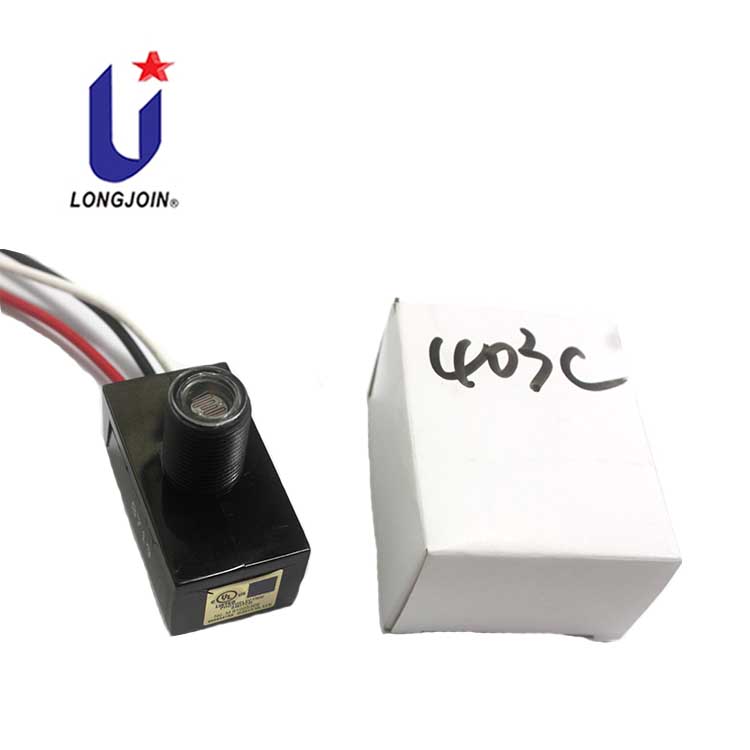
A thermal button photocell uses a simple mechanical idea. In older and simpler designs, light creates heat, and that heat affects a bimetal strip. The strip bends as conditions change, and that movement helps open or close the electrical contact. This structure is simple, proven, and still useful in many everyday lighting jobs. Long-Join offers button photocell products such as the JL-103A and JL-403C in its wire-in controller range.
The good side of this design is its simplicity. It is easy to install, easy to understand, and often a practical fit for small fixtures. The tradeoff is that it is not usually the fastest or most precise option when compared with more advanced sensor fotoelétrico designs. For basic paths, yards, doorways, and small outdoor fixtures, though, that is often enough.
Why Are Button Photocells Still Useful In Outdoor Lighting?
Button photocells are still useful because not every project needs the highest level of precision. Some fixtures just need reliable dusk-to-dawn switching without extra cost or extra complexity. Long-Join says the JL-103A is used for passage lighting and doorway lighting, while the JL-403 series is used for street lighting, passage lighting, and doorway lighting based on ambient lighting level.
Models like JL-103A e JL-403C make sense for small outdoor lighting, simple wall packs, garden paths, and general-purpose fixtures. Long-Join’s button photocell guides also place JL-103A, JL-403C, and JL-423C in the practical, everyday control category, not the ultra-precise smart control category. That makes them a good match where space is tight and maintenance needs to stay simple.
Button Photocells Vs. NEMA Photocells In Real Projects
Comparison Item | Button Photocells | NEMA Type Photocells |
Estrutura | Small and simple | Larger and more system-ready |
Sensing Style | Usually thermal or basic control | Usually photoelectric sensing |
Velocidade de resposta | Moderate or slower | Faster |
Sensibilidade | Médio | High to higher |
Instalação | Easy and flexible | Best for standard street light interfaces |
Manutenção | Easy for small fixtures | Easier for municipal replacement programs |
Best Project Type | Doorways, paths, small outdoor lamps | Street lights, municipal roads, commercial outdoor lighting |
Smart Lighting Fit | Limitado | Better fit for advanced lighting control |
Another reason they remain popular is that many installers prefer parts that are easy to replace. A compact photocell switch that does one job well can still be the right answer in the field. Not every city light needs a complex street light controller.
Why Do NEMA Type Photocells Usually Respond Better?
NEMA type photocells usually perform better in sensitivity because many of them use electronic photoelectric elements rather than simple thermal action. Long-Join’s twist-lock photocontrol category explains that the sensor de fotocélula detects ambient light and sends the on or off signal once the light crosses the threshold. That electronic sensing method is usually quicker and more precise in outdoor control work.
Long-Join also positions the JL-205 and JL-207 series as stronger options for outdoor and street lighting use. The JL-205 series is described as having high-sensitivity photosensitive elements, while the Série JL-207 is built for automatic outdoor lighting control with long-life features.
In real city lighting, this means the controller can react with better timing when the sky becomes dark, yet avoid being fooled by brief light noise. That helps the fixture work in a more stable way and cuts wasted operating hours.
What Do The Different NEMA Models Tell Us About Sensitivity?
The different models show that sensitivity is not one single level. It changes with the sensor type and the job the product is built to do.
Long-Join’s low-voltage JL-205-12D and JL-205-24D are placed in solar and battery-based lighting applications, including off-grid street lights. That suggests fast and dependable sensing is important where every bit of stored energy matters. These models are part of the JL-205 family, which Long-Join presents as suitable for low-voltage DC lighting.
O JL-205C is used for street lighting, garden lighting, passage lighting, and doorway lighting. Long-Join also says JL-205C uses an advanced photoelectric sensor that measures ambient light continuously and switches at dusk and dawn in real time. That makes it a strong fit for municipal and commercial lighting where timing matters more.
O JL-207C goes a step further. Long-Join highlights long life, zero-cross technology, and strong outdoor durability in the JL-207 line. It also says advanced models like JL-207C include strong proteção contra surtos and cross-zero switching to reduce switching shock. Those features support better long-term stability in demanding road lighting systems.
How Does Sensitivity Change Real Urban Lighting Performance?
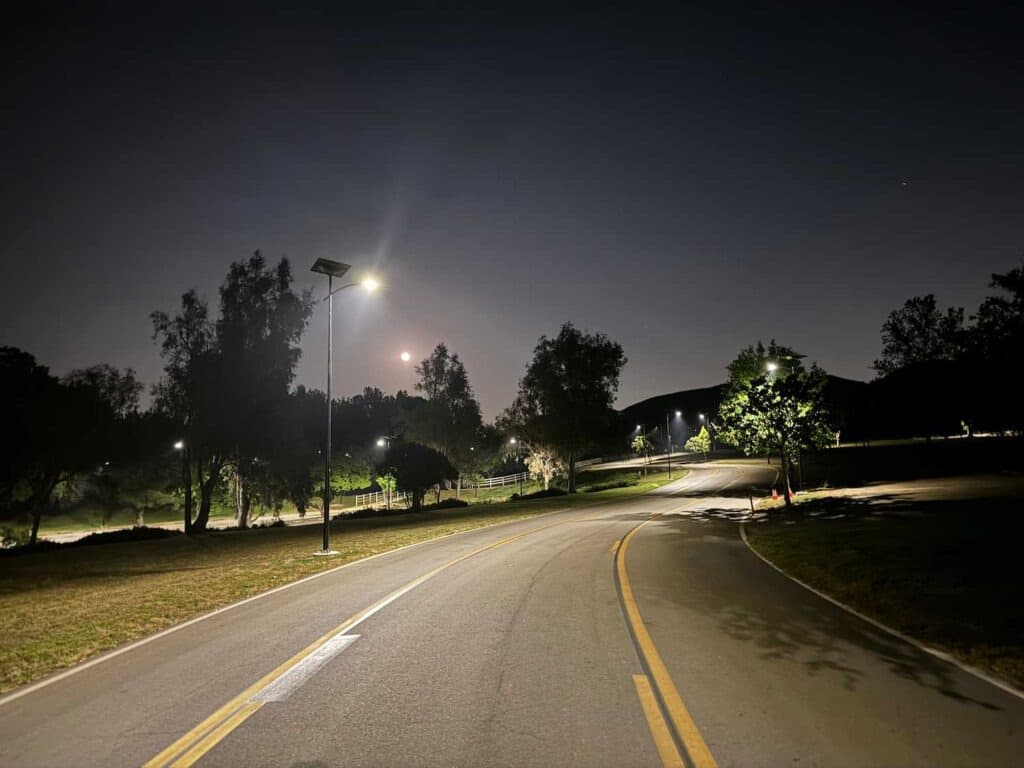
Sensitivity affects urban lighting in three big ways: timing, stability, and energy use.
First, it affects timing. A more responsive light photocell sensor can turn lights on closer to the right moment at dusk and off closer to the right moment at dawn. That improves visual comfort and helps roads stay properly lit. Second, it affects stability.
A better photo sensor can ignore short light disturbances and avoid needless switching. Third, it affects energy use. If the lamp runs only when it should, wasted hours go down. Long-Join repeatedly positions its photocontrol products around automatic switching based on ambient light, which is the core of this energy-saving benefit.
In short, better sensitivity helps a photocell for street light act smarter. It makes the system feel less random and more reliable. That is especially important in roads, municipal streets, campuses, and commercial outdoor areas where lighting errors are more visible.
Which Type Fits Simple Jobs, And Which Fits High-Precision Jobs?
The table below turns the outline into a simpler comparison. The relative response ranges and application differences come from your outline, while the product positioning and use cases are supported by Long-Join product and category pages.
Modelo | Tipo | Main Sensing Style | Relative Response | Sensitivity Level | Melhor ajuste |
JL-103A | Button | Thermal / mechanical | Slower | Médio | Small outdoor lights, paths, doorways |
JL-403C | Button | Thermal / compact control | Slower | Médio | Small and general lighting |
JL-205-12D | NEMA | Photoelectric | Faster | Alto | 12V solar and off-grid street lights |
JL-205-24D | NEMA | Photoelectric | Faster | Alto | 24V industrial and low-voltage lighting |
JL-205C | NEMA | Advanced photoelectric sensing | Rápido | Alto | Municipal and commercial streetlights |
JL-207C | NEMA | Advanced photoelectric sensing with stronger protection | Fast and stable | Mais alto | Road lighting and tougher outdoor systems |
JL-423C | Button | Electronic button-style control | Mid-range | Médio | General-purpose control with tougher load needs |
Conclusão
Long-Join’s range shows a clear pattern. Button models are simple, compact, and useful for everyday outdoor jobs. NEMA models are better when the lighting system needs faster response, steadier switching, and stronger outdoor performance. That is why sensitivity matters so much in urban lighting.
The right choice depends on the job. If the goal is basic dusk-to-dawn control, a simple button fotocélula may be enough. If the goal is smarter, steadier, and more energy-aware controle de iluminação, a higher-sensitivity NEMA model is the better move.
Links externos:
●https://en.wikipedia.org/wiki/Surge_protector
●https://en.wikipedia.org/wiki/Zero-crossing_control
●https://en.wikipedia.org/wiki/Photoelectric_sensor



 Portuguese
  English
  Russian
  Spanish
  Arabic
  Japanese
  Italian