
Can CE Certification Replace UL773 Photocontrol Requirements?
Introduzir
CE and UL. People see both stamps on a photocell and think they’re basically the same thing.
They’re not.
CE is for Europe. Shows the product meets European safety and EMC rules. UL773 is different — it’s built specifically for plug-in locking photocontrols used outdoors. UL says it covers light-sensitive control units up to 480V AC for outdoor lighting fixtures.
So can CE do the job of UL773? No. Not even close.
CE gets you into the European market. UL773 actually checks whether the interruptor de fotocélula survives real outdoor use.

What Are These Two Marks Actually For?
Selling into different markets and confused about which certificate you need? Fair enough. Let’s sort this out.
CE is Europe’s conformity mark. Manufacturer slaps it on, declares the product meets legal requirements for the European Economic Area. Usually covers basic safety and electromagnetic compatibility.
UL is North America’s thing. And UL773 specifically? Not some generic safety badge. Built around how outdoor light-sensitive controls actually behave. Matters a lot if you’re selling photocells for street lights in the US or Canada.
CE | UL773 | |
Mercado | Europa | América do Norte |
Foco | Basic safety, EMC | Photocontrol safety, outdoor operation |
Scope | Lots of electrical stuff | Plug-in locking photocontrols specifically |
Replaces the other? | Nope | Nope |
Long-Join carries CE, UL, cUL, FCC, RoHS, CB, Zhaga Book 18, UKCA, ISO 9001:2015. All of it. Because one certificate doesn’t cover every market. Never does.
So What Does CE Actually Check?
Think CE means the photocontrol survived every outdoor aging test? It doesn’t.
CE mostly deals with two things — Low Voltage Directive and EMC Directive. LVD makes sure electrical equipment doesn’t shock you. EMC makes sure the thing doesn’t interfere with other devices, or get messed up by interference itself.
Área | Checks | Means What |
LVD | Electrical safety, shock protection | Safe under normal use |
EMC | Emission and immunity | Won’t mess with other stuff |
Technical File | Documentation | Proof exists somewhere |
CE Mark | Sale declaration | Legal in Europe |
Fine for basic compliance. Doesn’t tell you anything about relay sticking after five years. Or thermal shock. Or whether water gets in after the fortieth rainstorm.
What Does UL773 Actually Test?
Worried your street light controller works great in the lab, then dies in six months outside? That’s exactly what UL773 is checking for.
Written specifically for plug-in locking photocontrols in area lighting. Real safety, real function, outdoors. Not lab conditions — actual field conditions.
Light sensor has to switch at the right level. No flickering. No hunting around. No random on-off cycling. Relay has to carry rated current without welding shut or sticking. Housing stays safe. Sealing keeps moisture out.
Área | Por que isso importa |
Operating performance | Switches at stable light levels |
Relay reliability | Doesn’t stick, weld, or die early |
Insulation distance | Reduces shock and leakage risk |
Wet location safety | Stops shorts from moisture |
Heat resistance | Parts don’t drift or fail under heat |
Proteção contra surtos | Handles voltage spikes |
Mechanical strength | Base doesn’t crack or loosen |
Durability testing | Proves it lasts long-term |
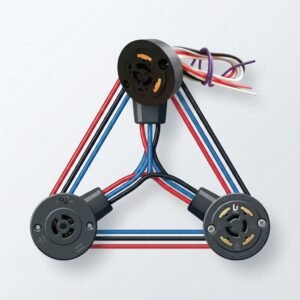
Long-Join’s JL-202 series has three twist-lock terminals. Meets ANSI C136.10-1996 and UL773. That’s the real deal, not a generic label slapped on for marketing.
Why Can't CE Just Cover Both?
Wish one certificate covered everything? Sure. Doesn’t work that way.
CE and UL773 exist for different reasons entirely. CE handles European legal stuff. UL773 goes narrow and deep — outdoor plug-in locking photocontrols specifically. A CE mark means basic electrical and EMC rules got followed. Doesn’t mean the relay survives outdoor moisture. Doesn’t mean the twist-lock holds up. Doesn’t mean switching stays accurate after thousands of cycles.
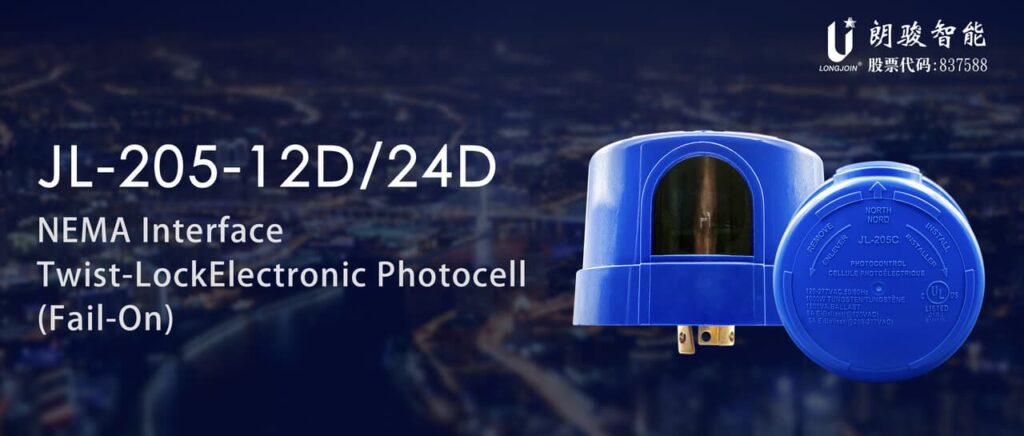
Here’s the practical part. A photo sensor might look perfect on paper. Then you put it on a road, a parking lot, a factory yard. Heat. Rain. Dust. Vibration. LED driver interference messing with the signal. Constant switching cycles. UL773 was built for exactly these problems.
CE is useful. It’s just not a replacement.
Why Relay And Heat Testing Actually Matters
Ever seen a lamp stay on all day? Or refuse to come on at night? Usually that’s the control failing, not the lamp.
The relay is the part that opens and closes the circuit. Sticks — light stays on. Fails — light stays off. Switches too much — lamp life and control life both shrink.
Heat’s a real problem too. Outdoor fixtures get hot. Really hot, especially sealed housings under direct sun. Bad material deforms. Cracks. Loses insulation strength. Moisture sneaks into weak joints. Shorts happen.
This is why Long-Join talks about waterproof gaskets, receptacle structure, NEMA compatibility constantly. These aren’t marketing details. They’re the difference between a photocell that works for a decade and one that becomes a maintenance nightmare in year two.
How Do You Actually Pick Between Them?
Selling to one country or multiple? That’s the first question you answer.
Europe needs CE, full stop. North America needs UL or cUL, especially for plug-in locking photocontrols in area lighting.
Distributor or contractor working across markets? Get the right certificate for each market. Don’t assume CE covers North America because it sounds official. It doesn’t.
Long-Join’s got products tied to CE, UL, ANSI C136.10, ANSI C136.41, NEMA receptacles. Their standard connector page states compliance with ANSI C136.41 plus UL, cUL, CB, and CE certifications.
What Should Procurement Actually Check?
Trying to avoid wrong orders? Failed inspections? Angry customers?
Don’t stop at the logo.
Ask which market it’s for. Ask if the certificate actually matches the product type. Ask if it’s been tested for outdoor conditions — wet locations, heat, surge, relay durability, Soquete NEMA fit. Check voltage and load rating against your fixture.
Simple road lighting? Basic photocell sensor probably works fine. LED smart lighting? You might need something stronger — NEMA 7-pin controller, photocontrol receptacle, smart control node. Long-Join’s 7-pin photocontrol supports ANSI C136.41 and UL773-related use with 0-10V dimming.
Cheapest option isn’t always the right one. Right one fits the market, the fixture, the weather, the voltage, and the actual risk of the project.
Perguntas frequentes
CE covers European market conformity. UL773 is safety testing specifically for plug-in locking photocontrols used outdoors in North America.
Because the relay runs the whole circuit. Stick, drift, fail — the light either stays on, stays off, or flickers constantly.
Adds strength, insulation, heat resistance. Basically keeps the housing from failing when things get hot or rough outside.
Not really. CE stays focused on basic safety and EMC. UL773 goes into the outdoor-specific stuff.
CE for Europe. UL773 for North America. Selling globally? Get both. Don't cut corners here.
Conclusão
CE is useful. It just can’t replace UL773.
CE proves basic European safety and EMC compliance. UL773 goes deeper — relay action, insulation, heat, moisture, surge protection, long-term reliability under actual outdoor stress.
North American street lighting? UL773 is non-negotiable. European market? CE matters. Selling globally? Find a supplier who actually understands both, not one who just slaps certificates on for show.
Links externos:
●https://www.cecertmodel.com/home
●https://en.wikipedia.org/wiki/UL_(safety_organization)
●https://ib-lenhardt.com/kb/faq/emc-directive-2014-30-eu
●https://webstore.ansi.org/standards/ieee/c136101996?srsltid=AfmBOopt6k0o19F4rsH6CeLQQ9fKo8lwiNABpO2dUtnAfghtFtNnMGka
●https://en.wikipedia.org/wiki/NEMA_connector
 Portuguese
  English
  Russian
  Spanish
  Arabic
  Japanese
  Italian