Call Us Now!

+8615900829072

Fail On and Fail Off are not “better or worse.” They are tools. Pick Fail On when darkness is the bigger risk. Pick Fail Off when wasted light is the bigger problem. Then match voltage, load, lux settings, and the right receptacle interface so your outdoor lighting stays stable, safe, and efficient.
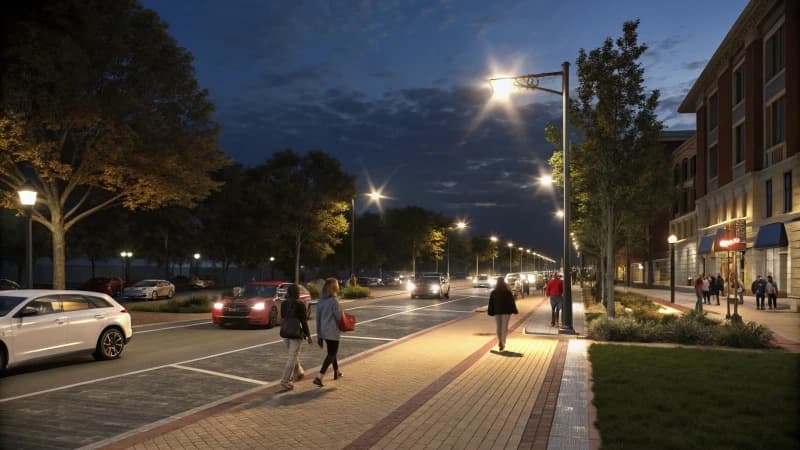
Fail Off Mode phocell protect the city

Long-Join Photocontrol Failure Mode Selection — Fail On Or Fail Off?

Introduce

Photocontrols do a simple job that protects the whole outdoor lighting system: they turn lights on at dusk and off at dawn using a photocell (light sensor). When they fail, the system does not just “stop working.” It usually fails in a specific way: Fail On (light stays on) or Fail Off (light stays off). That choice affects safety, energy waste, maintenance speed, and even light pollution.

Why Does A Failure Mode Matter More Than Most People Think?

If you only look at “turn-on lux” and voltage, you can still end up with a bad outcome when something breaks. Failure mode decides what happens on the worst night: rain, power dips, relay damage, or sensor fault.


A quick way to think about it is this:

  • Fail Onprotects visibility and safety first.
  • Fail Offprotects energy and darkness first.

Table: Fail On Vs Fail Off At A Glance

Item

Fail On Mode

Fail Off Mode

What happens when it fails?

Light stays ON

Light stays OFF

Biggest benefit

Safety and security

Energy saving + less light pollution

Biggest risk

Wasted power + light pollution

Dark areas + safety complaints

Best for

Main roads, walkways, security zones

Parks, eco-zones, decorative lighting

What Is Fail On Mode, And When Is It The Safer Choice?

Fail On means that when the photocontrol fails (or loses internal control), the relay remains closed, so the light keeps shining.

This mode is most useful when darkness creates bigger risk than energy waste.

Table: Fail On Vs Fail Off At A Glance

  • Street corners with heavy night movement
  • School roads, hospitals, and bus stops
  • Security areas like gates, fence lines, car parks
  • High pedestrian traffic streets where visibility reduces accidents

Long-Join describes Fail On / Fail Off as a safety and application decision, not a “one-size-fits-all” spec.

What are the real advantages?

Fail On reduces urgent complaints. A lamp that stays on is annoying, but it still keeps the road visible. It also helps maintenance teams spot faults faster, because “stuck on” is easier to notice than “sometimes off.”

Fail Off Mode phocell protect the city

What Is Fail Off Mode, And When Does It Protect The City Better?

Fail Off means that when the photocontrol fails, the relay remains open, and the light stays off.


This sounds scary at first. But it’s useful in places where light is not critical, or where lighting must be controlled strictly.

Where does Fail Off make sense?

  • Light pollution sensitive zones (parks, observatories, coastal areas)
  • Decorative lighting that should never run all night
  • Projects with strict energy-saving targets
  • Low-traffic roads with backup lighting plans

What are the real advantages?

Fail Off is harsh, but it prevents “silent waste.” A failed controller that stays ON can burn power for months if nobody checks it. Fail Off avoids that, and it reduces unnecessary night glow.

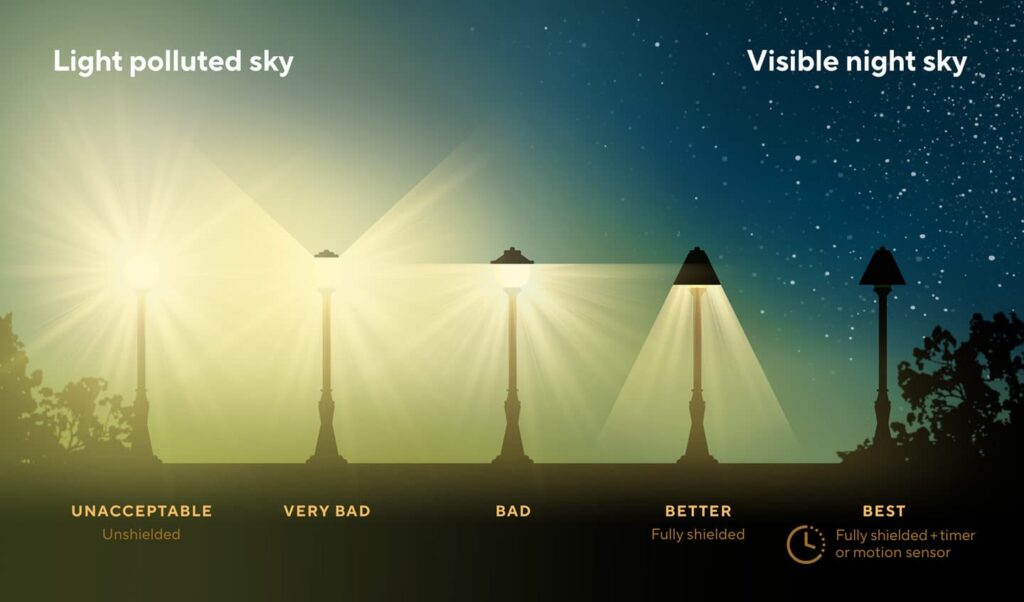
light pollution street environment

How Do You Choose The Right Mode For Street Lighting Outdoor Projects?

Don’t choose by emotion. Choose by risk.

Ask two simple questions:

  1. If this light goes OFF at night, what is the worst outcome?
  2. If this light stays ON for weeks, what is the worst outcome?

If question 1 is dangerous, lean Fail On.

If question 2 is unacceptable (cost, glare, wildlife, complaints), lean Fail Off.c

Table: Common Scenarios And A Practical Mode Choice

Scenario

Typical risk

Better default mode

Busy road / junction

Accidents, crime

Fail On

Estate gate / security perimeter

Security incidents

Fail On

Park paths after closing

Unneeded lighting

Fail Off

Decorative façade lighting

Waste, over-brightness

Fail Off

Industrial yard (no night shift)

Energy waste

Fail Off

Hospital surroundings

Safety + access

Fail On

For zoning language, DarkSky explains LZ0 / LZ1 as very dark areas where lighting should be minimal and often extinguished when not needed. That kind of environment naturally fits Fail Off more often.

What Technical Checks Stop Photocell Failures From Turning Into Bigger Problems?

Failure mode helps, but correct matching prevents many failures in the first place.

1) Are you matching voltage correctly (example: photocell 220V vs 277V vs 480V)?

A photocontrol must match the supply range. Long-Join’s JL-207 series is listed across common outdoor voltage ranges and use cases (street, garden, passage).

2) Are you matching load power and switching current?

If the lamp load is too high for the relay, you get overheating, arcing, and early failure. That is how a simple controller becomes a repeat maintenance problem.

3) Are your lux settings realistic for the site?

A dusk to dawn photocell sensor should not “hunt” due to headlights, reflections, or poor placement. Pick lux levels that match the environment, and mount the sensor where it “sees” the sky, not the lamp.

4) Are you reducing wasted power with better controls?

The U.S. Department of Energy guidance for exterior lighting shows common practice: automatic ON at dusk and OFF at dawn using a light sensor, then combining zoning and operational control to reduce waste.

How Do Long-Join Photocontrol Specs Help You Match Fail Mode, Voltage, And Interface?

Long-Join’s catalog makes selection easier because you can choose by:

  • Voltage range
  • Application type (street, garden, doorway)
  • Connector standard (3-pin vs 7-pin)
  • Extra protection needs (like higher lightning protection models)
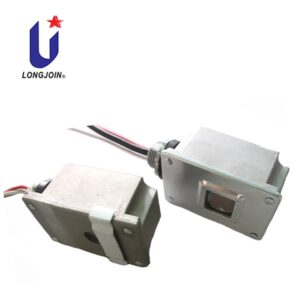
UM-204C light sensor switch
Fail-off UM-204C light sensor switch

Option A: Twist-lock photocontrols for standard dusk-to-dawn control

The JL-207 series Photocontrol is positioned for common dusk-to-dawn control in outdoor lighting.

Option B: Higher lightning protection projects

The JL-217 series is presented for projects where higher lightning protection is required.

Option C: Choosing the right base / interface

If your project uses a photocontrol receptacle, Long-Join’s JL-200 series receptacles are designed to accept twist-lock photocontrols, with details like IP rating and applicable voltage range described on their receptacle page.


And if you need a smart-ready interface, Long-Join also lists ANSI C136.41 7-pin receptacle options (useful for dimming and control signals).

Table: A Simple Long-Join Selection Map

What you need

What to look for on Long-Join pages

Standard street lighting control

JL-207 series photocontrol models

Higher lightning protection areas

JL-217 series models

Twist-lock base for photocontrol

JL-200 series photocontrol receptacle

Smart-ready 7-pin receptacle

ANSI C136.41 receptacle product pages

What Do Real Projects Look Like When Fail On Or Fail Off Is Chosen Correctly?

Case 1: Fail On in security-focused areas

A contractor installs a photocell switch on gate lights and perimeter poles. The goal is simple: no dark gaps. When a controller fails, the light stays ON. Security is maintained, and the fault is visible during routine patrol.


This approach fits the “safety first” logic described in Long-Join’s Fail On / Fail Off application guidance.

Case 2: Fail Off in energy-saving and environment-sensitive projects

A park project uses zoned lighting and strict control to limit night glow. If a controller fails, the light stays OFF instead of running all night. The maintenance team gets a report, and the system avoids long-term waste.

Conclusion

Fail On and Fail Off are not “better or worse.” They are tools. Pick Fail On when darkness is the bigger risk. Pick Fail Off when wasted light is the bigger problem. Then match voltage, load, lux settings, and the right receptacle interface so your outdoor lighting stays stable, safe, and efficient.

External Links:

●https://www.nema.org/docs/default-source/standards-document-library/ansi-c136_41-2021-contents-and-scope.pdf?sfvrsn=8a588985_1 ●https://www.researchgate.net/publication/233564457_Electronic_Light_Intensity_Control_to_Simulate_Dusk_and_Dawn_Conditions ●https://darksky.org/resources/guides-and-how-tos/lighting-zones/ ●https://leaditop.com/detailed-analysis-of-fail-on-and-fail-off-modes-in-street-light-controllers/ ●https://www.energy.gov/

Perfect for Local Users Recommendation Guide

Shanghai LONG-JOIN Brand Manufacturer, Since 20 years Professional in NEMA Series connector and Zhaga Series Connector service for meet a vast range of oversea brand luminaire and electrical purchaser diversity needs.

Our Product

About Us

Resoureces

Services

Copyright © 2024 Long-join. All rights reserved.

en_USEnglish

It’s a pleasure to assist you. here offer the best latest LONG-JOIN brand Business ranges about NEMA controller, Zhaga control, and smart cities street light controller assemblies. Kindly share your email address with us to receive our heartiest wishes. We are eager to continue this journey as your trusted partner.

JL-250FXA, JL-242JV, JL-260C, JL-207C, JL-208, JL-250F, JL-250G, JL-240XA, JL-205C, JL-103A, JL-403,JL-404C, JL-118A, JL-202 series, and JL-217C, JL-700, JL-700L, JL-711A,  etc