
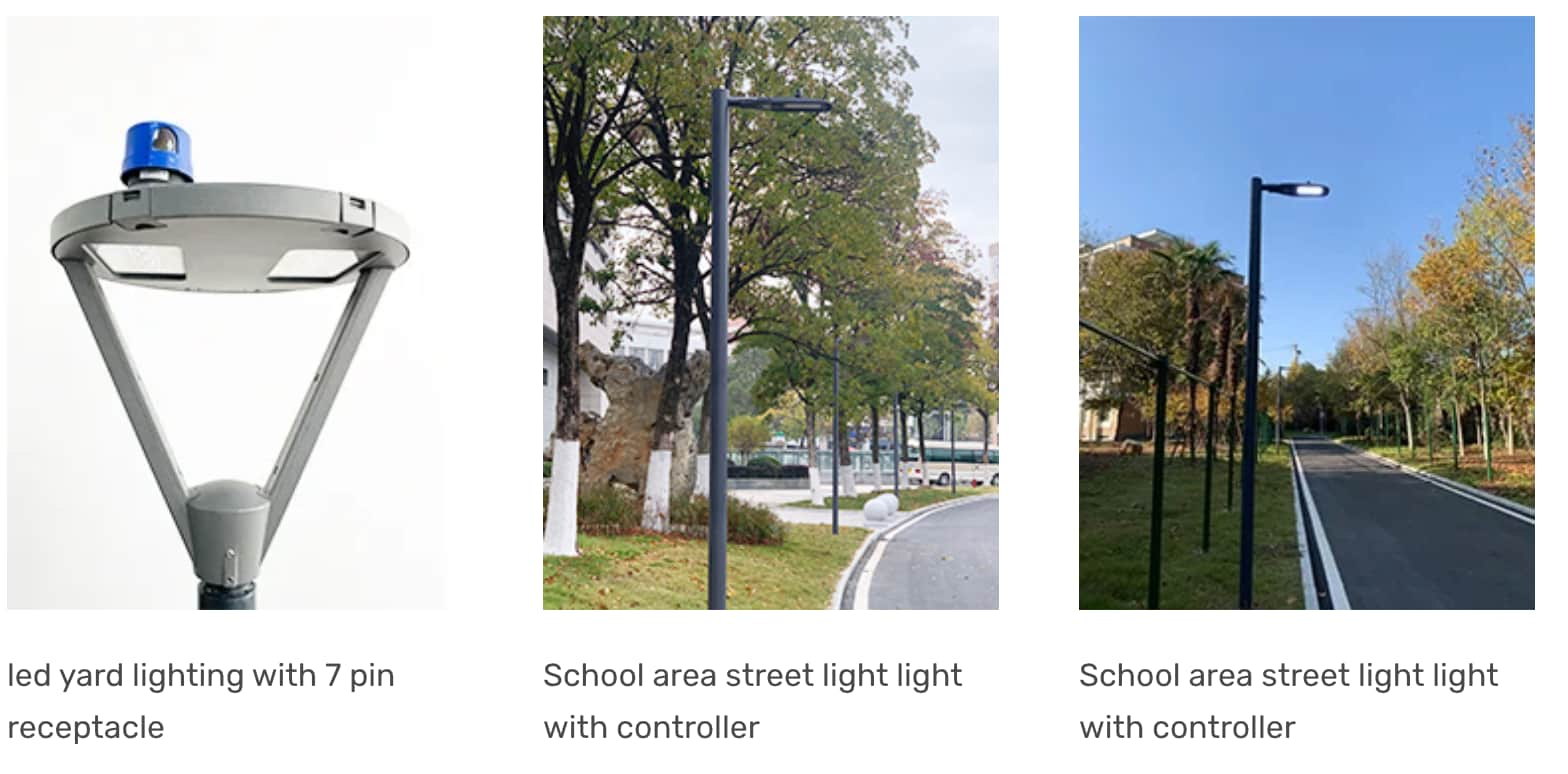
JL-207C Rated Load Parameters: A Guide to Correctly Reading Photocell Nameplates
Introdurre
Being able to read the content of a photocell nameplate is a very useful skill. The rated load on the nameplate tells you how long the unit will last and the photocell’s limit. This helps to avoid overloading the relay.
The nameplate has a combination of numbers, words, and symbols that could easily be overlooked as unnecessary; however, it is quite the opposite.
The JL-207C is one of Long-Join’s classic photocell models. It is applicable to several types of outdoor lighting fixtures. Understanding its rated load parameters will allow you to correctly match fixture power and get the best out of the photocell.
What Is the JL-207C?
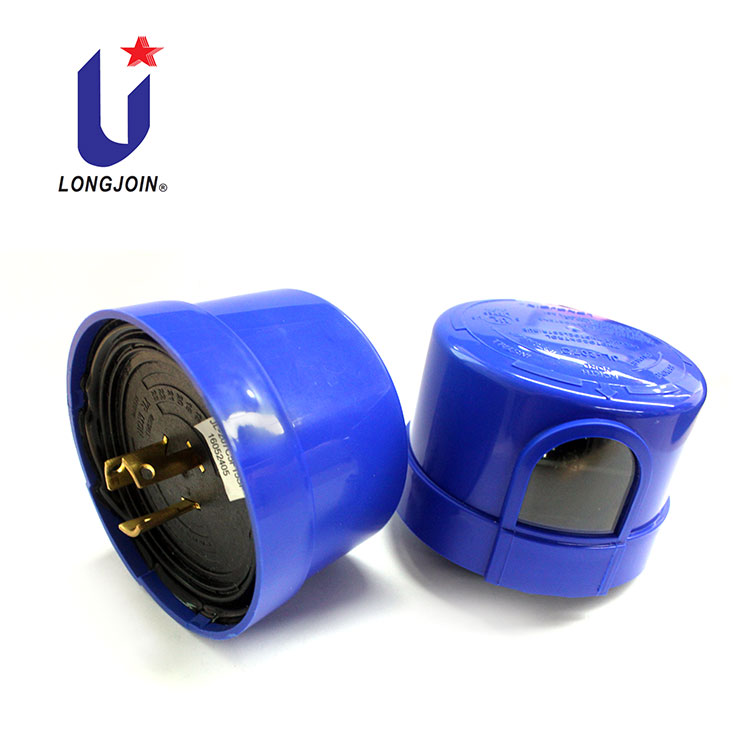
JL-207C is a Long-Join twist-lock photocell. Along with the ease of installation and replacement, it also has other well-thought-out features, such as meeting UL and ANSI C136.10 standards and running on a wide rated voltage range of 120~277VAC.
JL-207C can adapt to various power grid environments because of its wide voltage range. The model is so versatile and has a low stock value that it can be used for an outdoor light with a high load.
It also supports high-load switching. It is particularly suitable for LED lights and old tungsten lamps.
What Are the JL-207C Parameters?
The JL-207C family has four versions, split mainly by supply voltage and load capacity.
Modello | Rated Voltage Range | Intervallo di tensione applicabile | Carico nominale |
JL-207C | 120~277 V CA | 105~305VAC | 1000W tungsten, 1800VA ballast, 8A@120VAC / 5A@208-277VAC, electronic ballast |
JL-207CHP | 120~277 V CA | 105~305VAC | 1800W tungsten, 2000VA ballast |
JL-207E | 347 V CA | 105~382VAC | 1800W tungsten, 1800VA ballast, 5A electronic ballast |
JL-207F | 480 V CA | 105~528VAC | 1800W tungsten, 1800VA ballast |
Each column has a different significance. The rated voltage is the voltage it is designed for, applicable voltage range is the range it can withstand while rated load is the highest load it can switch.
Select the one corresponding to your supply voltage first. Then compare the load with the fixture.
What Do the JL-207C Rated Load Parameters Mean?
Most commonly, there is some confusion about two of the lines on the nameplate, so it’s best to read each line slowly.
What Does 1000W Tungsten, 1800VA Ballast Mean?
It implies that the photocell can operate tungsten lamps of up to 1000 watts and a ballast of up to 1800VA. This includes conventional high-intensity tungsten lamps and HID lamps.
Why two numbers? Ballast is inductive, and the relay is subjected to a different stress than it would be if it were a tungsten filament. The two loads receive different ratings because they have different characteristics.
What Does 8A@120VAC / 5A@208-277VAC, e-Ballast Mean?
This line is a current limit. The photocell can handle up to 8 amps at 120VAC for higher wattage loads and up to 5 amps in the 208-277VAC range.
This is written for the electronic ballast circuits in which LED drivers are connected. For LED fixtures, it is the amp rating that is important, as they draw a brief surge of inrush current at startup. The number of watts is not enough to tell you the complete story.
An approximation is 8 Amps and 120 volts equals approximately 960VA. That’s right next to the 1000W tungsten rating, which is good, because the numbers make sense.
What Should Buyers Do With This Information?
Follow the nameplate as a solid number; purchase it.
Choose the model according to the nameplate-rated power. Don’t overload a photocell; it’ll be dead in no time.
Match it down the line with your load type. Different lines are used for the type of lamp employed:
- Tungsten lamps
- lampade HID
- LED fixtures with electronic ballast
They all use different lines. Verify the type of load and voltage, and ensure that the actual electrical values are within the nameplate rating. When in doubt, consult with Long-Join’s team to be sure the model fits that particular fixture before you purchase.
Clear details of the Serie JL-207 are available on Long-Join’s site, along with those of all other Long-Join models.
Frequently Asked Questions on JL-207C Rated Load Parameters
It's a Long-Join twist-lock photocell designed for use in outdoor lighting fixtures, including street lights, parking lots, and area lights. It is compatible with tungsten, HID, and LED fixtures.
Look up your fixture's load at your voltage of supply and stay below the line corresponding to your load type, tungsten, ballast, or electronic ballast.
Yes. Electronic ballast circuits are listed as 8A at 120VAC and 5A at 208-277VAC on the nameplate.
Relay contacts burn out and wear rapidly; they can weld closed. Less life, flickering, or continuous 24/7 operation.
Total load on the photocell is the sum of all loads, compared to the rating for this load type and voltage, and leaves some margin.
Conclusione
A nameplate on a JL-207C reveals what it is capable of: 1000W tungsten, 1800VA ballast, 8A or 5A for electronic ballast (depending on voltage). Read the appropriate line for your load, select the appropriate version for your supply voltage, and remain within limits. If you do that, the photocell will switch reliably for years without failure.
Link esterni
●https://en.wikipedia.org/wiki/Ballast_(electrical)
 Italian
 English
 Russian
 Spanish
 Portuguese
 Arabic
 Japanese