
Is Surge Protection (SPD) For Photocells Really Necessary?
Introdurre
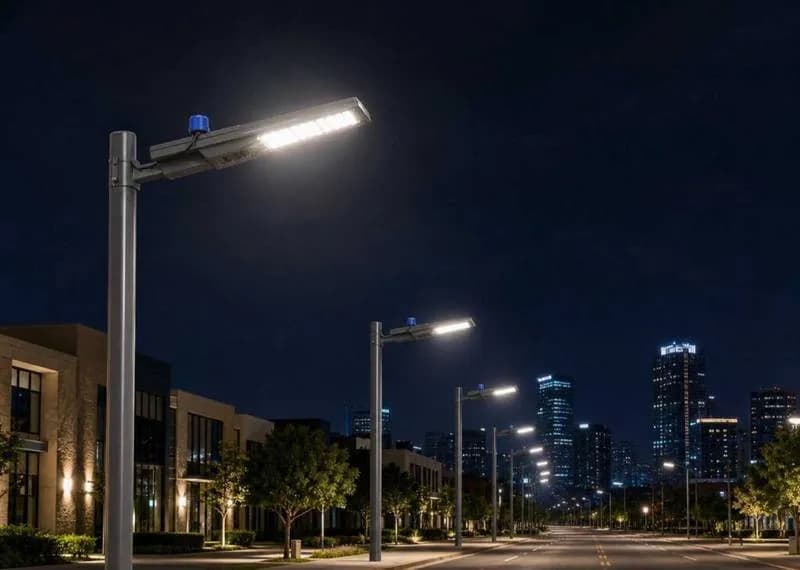
there, but it’s mounted in one of the most exposed spots on a street light. Top of the pole. Wind hits it first. Rain hits it first. Heat hits it first. Lightning effects? Hits it first.
UN surge protection device—SPD—shields the photocell from sudden voltage spikes. One bad surge can fry the relay, destroy the sensor, kill the whole light. For outdoor lighting projects, surge protection isn’t some optional upgrade. It’s the difference between a system that works and one that fails constantly in the field.
Long-Join recognizes this. Some of their photocontrol designs use Protezione contro le sovratensioni MOV to keep voltage spikes from burning out internal circuits.
Why Are Photocells More Prone To Surge Damage Than Fixtures?
Photocells sit on top. That position means they catch lightning effects, rain, and power surges first. The LED fixture might have a stronger driver and room for protection components, but the photocell is smaller. More sensitive. More exposed.
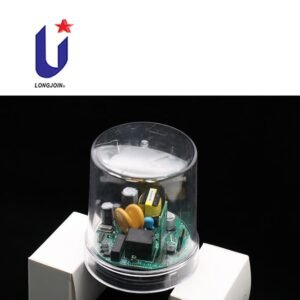
Inside a photocell you’ve got a photosensitive element, a relay, a circuit board, sometimes an MCU. These parts make the light turn on at night and off during the day. But they’re also easy to wreck with fast voltage spikes.
Here’s what field engineers notice after every storm: the lamp’s still fine. The photocell’s fried.
Part | Why It’s At Risk | Common Result |
Photosensitive element | Reacts badly to voltage spikes | Light won’t turn on at night |
Relay | Contacts burn or get stuck | Light stays on during the day |
MCU or circuit board | Gets disrupted by surge noise | Flickering or wrong switching |
Low-voltage dimming pins | More signal paths for surge to enter | Smart control stops working |
One surge. That’s all it takes.
Why Do 7-Pin Photocells Need More Surge Protection?
UN 7-pin photocell does way more than basic on/off. Smart control. Dimming. Monitoring. Communication. That’s useful for modern street lighting. But it also gives surge voltage more entry points.
A standard 3-pin unit? Just handles power switching. A 7-pin unit adds low-voltage signal lines for dimming and smart features. Long-Join’s NEMA connector page explains this—7-pin receptacles support 0-10V dimming and DALI connections through extra contacts.
Good for smart projects. Bad for surge vulnerability. If a surge hits the signal side, the lamp might still turn on but dimming or remote control fails. In a smart city project, that kind of problem’s a nightmare to troubleshoot.
What Surge Problems Actually Damage Photocells?
Lightning’s first. A strike nearby sends a fast surge through the power line, the pole, the fixture. Even if it doesn’t hit the pole directly, the surge travels into the lighting system anyway.
Second problem is unstable power. Industrial zones. Areas near high-voltage lines. Weak electrical grids.
Third problem comes from inside the system itself. Some high-power LED drivers create backflow spikes during switching. These spikes travel backward toward the photocell and wreck the relay or circuit.
Surge Source | Where It Happens | Perché è importante |
Lightning storms | Open roads, coastal areas, tall poles | Sudden, massive high-voltage impact |
Industrial power lines | Factories and heavy-load areas | Creates unstable electrical environment |
LED driver spikes | High-power LED fixtures | Damages relay or circuit components |
Poor grounding | Old poles or weak installations | Surge energy can’t discharge properly |
Any one of these kills an unprotected photocell.
What Actually Happens When A Photocell Has No Surge Protection?
Failure Type | Descrizione | Probable Cause |
Lights stay on | Lights remain on during the day | Relay contact burns or sticks |
Lights stay off | Lights remain off at night | Sensor or internal circuit damage |
Flickering | Light cycles on and off repeatedly | MCU or control circuit disturbance |
Complete failure | Unit shorts, burns, or stops responding | Total component failure |
Second: lights stay off at night. The photo sensor or internal circuit gets damaged. System doesn’t read darkness correctly.
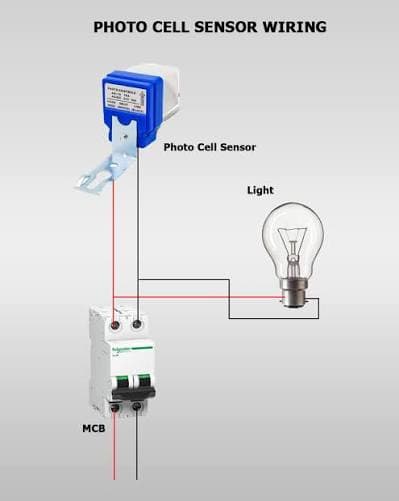
Flickering’s another one. MCU or control circuit gets disturbed. Light turns on, off, on, off, on, off. Looks like a lamp problem. Usually it’s the photocell.
Worst case? Complete failure. Photocell shorts, burns, stops responding. Only fix is replacement. In large projects with multiple failed units after storms? Suddenly you’re spending way more than if you’d picked better protection from the start.
Which Regions Actually Need Surge Protection Most?
Some regions need it as mandatory. Southern and east coast USA? Lightning happens constantly in outdoor lighting projects. A basic dusk-to-dawn photocell without protection won’t survive long.
Middle East is another one. Saudi Arabia. UAE. Qatar. Heat, dust, storms all stress electronics. Add heat to electronics and surge protection becomes critical, not optional.
Southeast Asia too. Philippines. Malaysia. Indonesia. Heavy rain, humidity, frequent storms. Latin America’s high-risk also—Brazil and Mexico especially.
Regione | Main Risk | Raccomandazione |
Southern and East Coast USA | Frequent lightning | Get photocells with clear surge ratings |
Medio Oriente | Heat, storms, grid stress | Check heat AND surge performance specs |
Southeast Asia | Rain, humidity, lightning | Pick sealed and surge-protected models |
America Latina | High lightning activity | Ask for test reports and field proof |
How Can Buyers Actually Know If Surge Protection Is Real?
Don’t just trust the words “surge protected” on a product page. Check the actual rating. Look for specific numbers: 2kV, 4kV, 6kV. A product that won’t state its protection level probably isn’t suitable for harsh outdoor use.
Ask for test proof. UL, ETL, certificazioni CE. Real test reports show the product was actually tested, not just marketing hype. Long-Join’s JL-245CZ smart controller page, for example, lists 6KV/3KA differential mode surge protection. Numbers. Real specs.
Ask for real project feedback. If a photocell control product has actually worked in stormy or high-risk areas, that proves more than any sales claim.
What Should Buyers Actually Ask Suppliers Before Ordering?
Ask specific questions. What’s the surge protection level? 2kV? 4kV? 6kV? Does it use MOV protection? Has it passed any test standard? Can they share a technical sheet?
Also ask if it’s suitable for your exact region. A dry city road, a coastal road, and an industrial area don’t have the same risk. The right photocontrol needs to match your site.
For smart systems, ask about protection on both power AND signal lines. Smart photocells need more protection than regular units. Long-Join’s smart lighting products show how surge protection, dimming, and remote control can work together in one design.
A good supplier answers clearly. Vague answers? Be suspicious.
Domande frequenti
Photocells sit at the top and have sensitive parts. That position and sensitivity makes them easier targets during storms or voltage spikes.
Light stays on during the day. Light stays off at night. Flickers constantly. Or stops working completely.
Absorbs sudden high voltage and protects the inner circuit from burning out during a surge.
Check the rated surge level, get test reports, review the technical sheet, and ask about real field use. Don't trust marketing claims alone.
Stormy and harsh regions. That's the southern USA, Middle East, Southeast Asia, and parts of Latin America.
Conclusione
Surge protection for photocells is necessary in most outdoor lighting projects. When it fails, everything fails.
For basic projects, standard protection might work. For smart lighting, 7-pin systems, and high-risk regions? Go stronger. Check ratings. Check MOV design. Check certifications. Ask for field proof.
One surge can cost thousands in replacements and downtime. Decent surge protection costs almost nothing. The math’s easy.
Link esterni:
●https://electrical.theiet.org/courses-resources-and-career-for-electrical-professionals/free-resources/consumer-guidance/surge-protective-devices/
●https://lsp.global/your-guide-to-the-mov-surge-protection-circuit-diagram/
●https://www.nvcuk.com/technical-support/view/what-is-dali-8
●https://europa.eu/youreurope/business/product-requirements/labels-markings/ce-marking/index_en.htm
 Italian
  English
  Russian
  Spanish
  Portuguese
  Arabic
  Japanese