
How To Choose The Right 103 Series Button Photocell For Your Lighting Fixtures: A Must-Read Guide For New Users
Introdurre
New to the 103 Series and worried about buying the wrong photocell for your light? You’re not alone. Many first-time buyers land on Long-Join’s site, see several JL-103 models, and aren’t sure which one will actually match their fixtures.
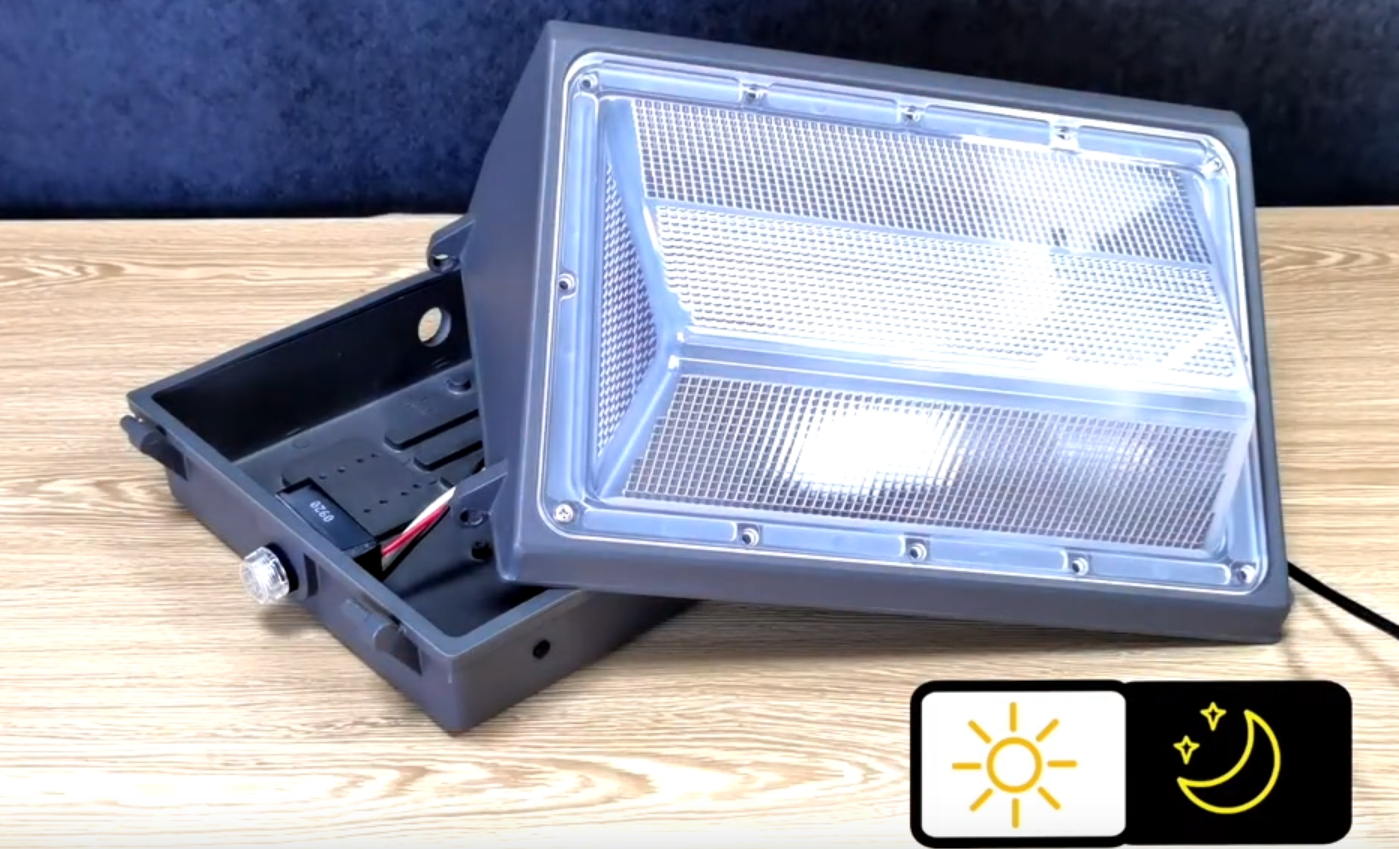
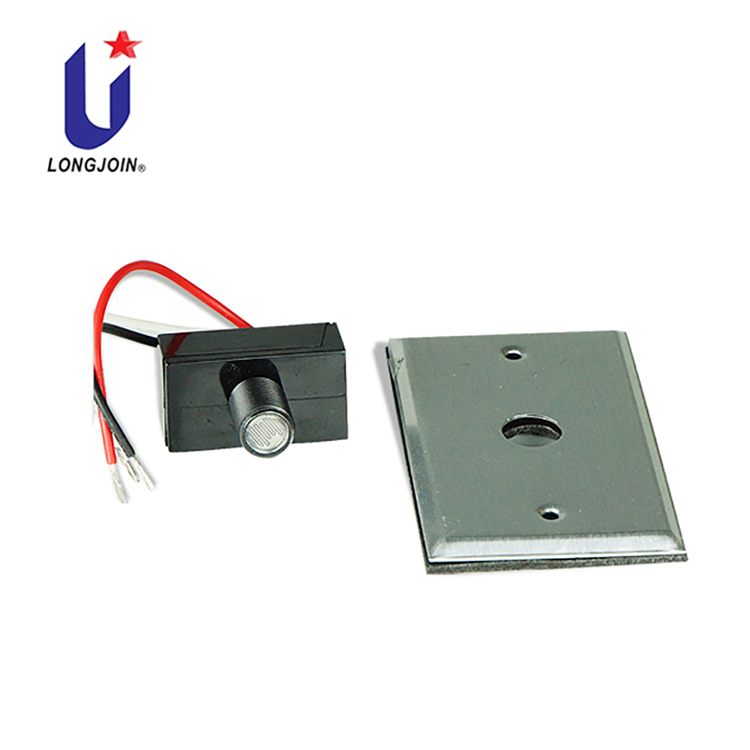
The 103 Series is a group of sensori fotocellula. They fit inside the light fitting and turn the lights on at dusk and off at dawn. It works with many voltages and handles different load levels. It also fits standard button-style mounting holes in wall packs, barn lights, and small outdoor light fixtures.
This guide shows you the steps in simple terms. It explains how to match voltage with load, how to check sizes, and how to pick parts like rain caps and gaskets so your setup stays safe, clean, and neat.
What Core Electrical Parameters Do You Need To Check First?
Are you worried that picking the wrong JL-103 model could trip breakers or shorten lamp life? That concern is valid. The first thing you must match is the electrical spec: voltage, frequency, and load.
A quick way to keep things simple is:
- Look at the label on your driver or ballast.
- Match that nominal voltage to the JL-103 model.
- Make sure frequency is 50/60 Hz if your grid is mixed.
Example 103 Series Voltage Options
Model (Example) | Rated Voltage (AC) | Typical Application Scenario |
JL-103A | 120 V | North American small wall packs, barn lights |
JL-103B | 220–240 V | European/Asian general outdoor luminaires |
JL-103C / D | 208–277 V / 347 V | Commercial sites with wide voltage range or higher V |
After voltage, think about load. The 103 Series is designed for lighting loads in the hundreds to roughly 1500–2000 W range, depending on the exact model and whether the load is tungsten or ballast/GUIDATO. That gives enough headroom for most wall packs, floodlights and smaller area lights.
To avoid overload:
- Add up the wattage of all lamps or LED drivers controlled by the same light photocell sensor.
- Compare that number with the “Carico nominale” (often shown as W/VA for tungsten and ballast loads).
- Leave a safety margin instead of running at the absolute limit.
If you want a deeper technical breakdown of wired photocell lighting sensor design and loading, Long-Join’s article on wired photocell sensors.
How Do Load And Environment Affect Your 103 Series Choice?
Do you install lights in hot rooftop enclosures, seaside car parks, or humid tropical climates and worry whether the button photocell will survive? Environment is the next big filter.
The JL-103 family is built as a thermal button photocontrol, with sealed housings and UV-stabilised plastic to protect the sensing element.
Moisture and dust protection matter too. Button controls in the 103 Series often carry ratings such as IP54, which protect against splashing water and dust in standard outdoor use when correctly installed in a sealed fitting.
Environment Checklist For 103 Series Button Photocells
Environment Type | What To Check | Practical Tip |
Hot climates / tight housings | Max ambient temp, high-temp lead options | Use high-temp wires if luminaires run very hot. |
Coastal / humid | IP rating, gasket quality, corrosion resistance | Combine with a good gasket and sealed luminaire body. |
Dusty industrial sites | IP rating, cable entry sealing, rain cap selection | Avoid gaps around the nipple and choose a closed cap design. |
General outdoor use | Standard temp range and IP rating | JL-103 is widely used for passage and doorway lighting. |
If your project is a larger lighting control scheme—such as area lighting or car parks—button types like the JL-103 might be used inside individual fixtures, while twist-lock controllers handle pole-top heads. Long-Join’s home page gives a good overview of how button controls and NEMA/Zhaga solutions fit together across street and area lighting portfolios.
What Installation Dimensions Should You Confirm On Your 103 Series Fixture?
Have you ever drilled a hole, only to find the control doesn’t quite fit or the nut can’t grab enough thread? Getting the mechanical details right saves a lot of rework.
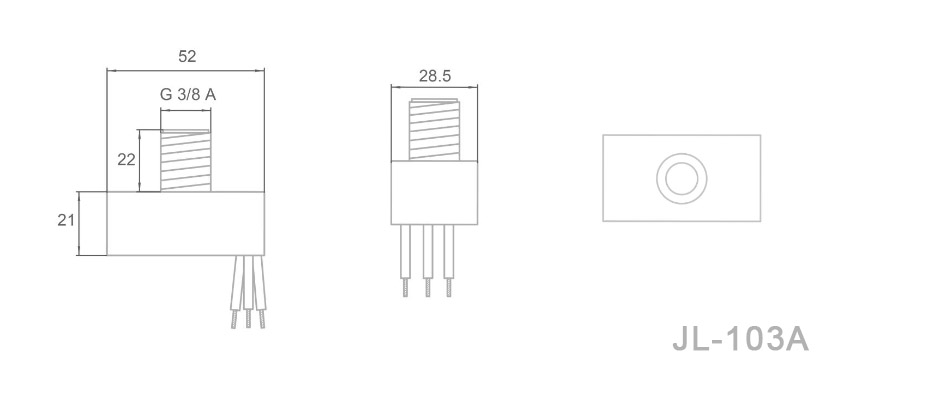
The 103 Series follows a standard G3/8A mounting, which needs a panel hole of about 16.5–17 mm and provides a thread length of roughly 12–15 mm. This range is designed so the locknut can clamp firmly on common sheet-metal or cast-aluminium housing thicknesses while leaving enough room for a gasket and rain cap base.
Before ordering, it helps to check three simple points on your luminaire:
- Hole size– Measure the existing hole or the knockout size. Aim for the 16.5–17 mm range so the threaded nipple fits without play.
- Panel thickness– Thicker cast housings may need a longer thread; very thin sheet metal needs the right gasket to seal.
- Space behind the panel– Ensure wires can bend without being pinched by reflector plates or drivers.
Key 103 Series Mounting Dimensions And Their Impact
Dimension / Spec | Recommended Value / Range | If It Is Wrong… |
Mounting hole diameter | 16.5–17 mm (G3/8A) | Hole too small: can’t insert nipple. Too big: leaks and loose fit. |
Thread length available | 12–15 mm | Too short: nut won’t grip, control can twist or fall out. |
Panel thickness supported | Thin sheet to medium casting | Too thick: threads may not protrude enough for nut and gasket. |
Clearance behind panel | Enough space for body + cable bend | Tight clearance can pinch wires and stress seals. |
How Do Gaskets, Panel Size, And Rain Cap Color Influence Real-World Performance?
Do small details like guarnizioni and cap color really matter, or are they just cosmetic? For button photo cell controls, they play a big role in sealing and appearance.
Gaskets and Panel Sizes
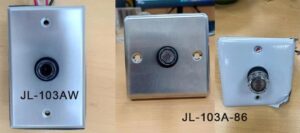
For the 103 Series, typical panel plate sizes around 115.5 × 71.5 mm or 86 × 86 mm are common when the photocontrol is mounted through a junction box cover or adapter plate. Choosing a matching gasket thickness for that plate helps keep water out and compensates for any small unevenness in the surface.
In general:
- Thin metal covers → softer, slightly thicker gasket to absorb flex.
- Solid cast plates → firmer, thinner gasket for a tight, rigid seal.
This pairing keeps the light photocell sensor stable and avoids water tracking through the mounting hole during storms.
Rain Cap Color Choices
Color is not only about looks. It also affects how the equipment blends into its environment:
Rain Cap Color | Best-Fit Scenario | Why It Helps |
Nero | Industrial parks, warehouses, concealed installs | Hides dirt; low-profile on dark housings. |
Bianco | Residential walls, decorative façades | Matches light-colored fixtures, keeps look clean. |
Transparent / No cap | Protected indoor or enclosed luminaires | Leaves sensor exposed for maximum light pickup where water is not a risk. |
Why Does Wire Exit Direction Matter During Installation And Maintenance?
Have you ever opened a fitting and found the wiring from the control sharply bent or pressed against a sharp edge? That’s usually a sign that wire exit direction wasn’t considered during design or retrofit.
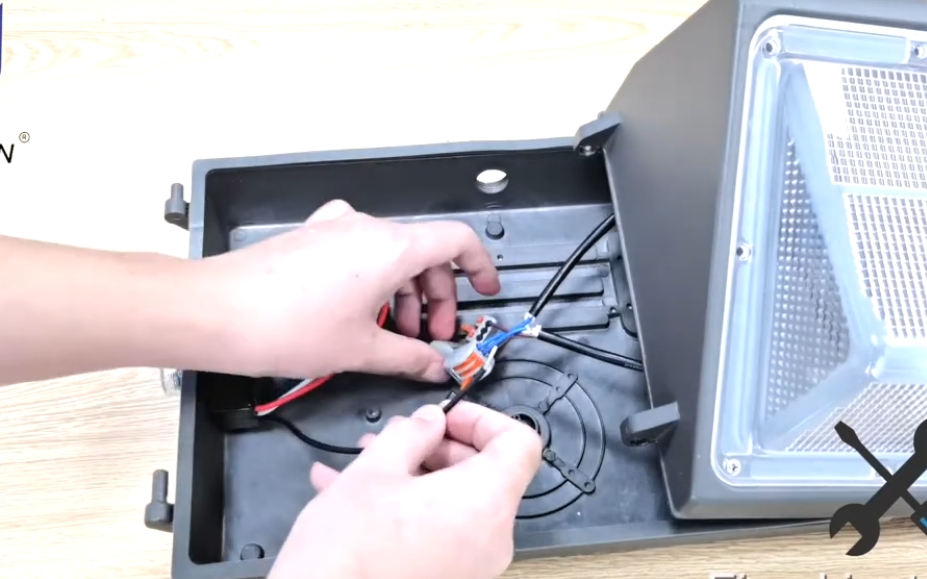
For compact button controls like JL-103, cable leads exit from the back of the body and pass through the housing into the wiring space. When planning your layout, think about:
- Cable routing– Are the leads free to route towards the terminal block without tight 90-degree bends?
- Internal obstacles– Reflectors, drivers, and mounting brackets can all clash with the body or cable.
- Service access– Can a technician later identify and replace the control without disturbing other wiring?
Conclusione
Before you click “buy” on a JL-103, it helps to run through a short checklist so your first installation goes smoothly and your lights turn on and off exactly when you expect.
Once you understand these core ideas, you’re no longer “guessing” at a 103 Series part number. You’re choosing a compact sensore di illuminazione della fotocellula that fits your fixture, your grid, and your environment—so your lights simply work, night after night.
Link esterni:
●https://www.strouse.com/blog/what-is-a-gasket
●https://www.zhagastandard.org/index.php?option=com_content&view=article&id=340:zhaga-enables-iot-upgradeable-outdoor-led-lighting-fixtures&catid=22
●https://www.nema.org/membership/products/view/lighting-systems
●https://en.wikipedia.org/wiki/Operating_capacity
●https://en.wikipedia.org/wiki/Light-espiring_diode


 Italian
  English
  Russian
  Spanish
  Portuguese
  Arabic
  Japanese