
Headlights, Neighbours and Billboards: Who Is Responsible When a Street Light Blinks Off at Night?
Introdurre
The most annoying thing to notice about a streetlight is seeing it blink off in the middle of the night. It’s a really frustrating sight, and blame tends to go around between the contractor, the supplier, and the residents.
There are simple technical reasons why this occurs, and this article will take the time to break it down, with a focus on where the photocontrol is installed, how well it filters infrared light, and how best to sort through who or what is responsible.
The information here will help users and maintenance teams work out the best and fastest way to fix the lights.

What Actually Makes a Street Light Blink Off at Night?
There are 2 common reasons for a street light that blinks off:
- The location of the fixture or photocontrol
- The ability of the photocontrol to filter infrared light.
Basically, when a strong light ray is focused on a lamp that should come on, the photocontrol senses that as daylight and opens the relay, leading to the lamp switching off. This is reversed when the false illumination goes off. This continuous loop is what is seen as the “blinking”.
Installation Location Factors
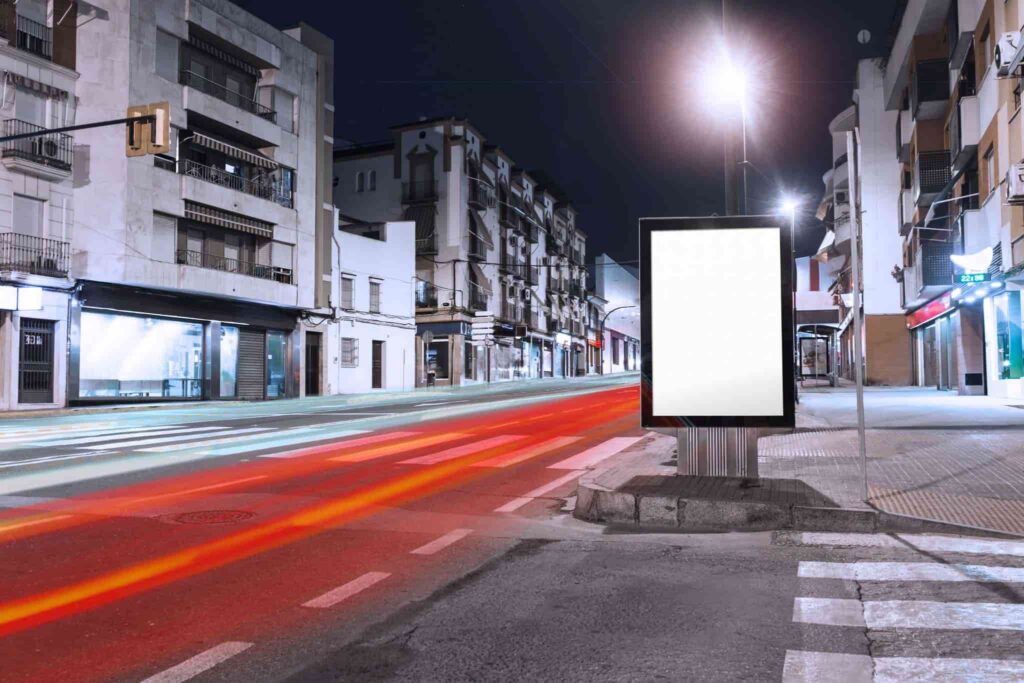
During installation, consideration must be given to the light sources around the light fixture or the photocontrol itself. Avoid placing them in locations that expose them to:
- Continuous vehicle headlights
- Lit billboards
- Adjacent street light rays
Built-in time delay eliminates short flashes, such as from a car passing, but cannot eliminate the light that is on.
IR Filtering Issues
Reliable photocells have strong infrared filtering. This helps to avoid the photocells reading infrared from artificial light as normal daylight. If a photocell has a weak filtering system, the lamp switching system becomes less sensitive and accurate.
Investing in photocontrollers with IR-filtered transistors such as the JL-207C will maintain a good level of sensitivity to the daylight spectrum.
How Do You Define Fault Boundaries and Responsibility?
Responsibility follows the evidence: the installer answers for placement, the supplier answers for product performance, and mixed cases need a joint diagnosis.
Fattore | Fault Performance | Confirmation Method | Responsibility Basis |
Installation Location Interference | Photocontrol falsely sensing strong light at night, causing flickering on/off | On-site detection of light angle and light source location analysis | Installer should choose a reasonable location and follow standardized installation practices |
IR Filtering Weakness | Poor IR and strong light source filtering causing frequent false triggers | Testing photocontrol IR filtering performance and actual response behavior | Supplier responsibility to provide compliant photocontrol products |
Comprehensive On-site Fault Verification | Multiple environments and light sources causing photocontrol instability | Based on spectrum on-site testing, video and data recording | Joint diagnosis to objectively identify and rule out causes |
For the location, ensure the sensor is installed away from nearby light beams or billboards. This is an installation step that should be taken note of by whoever is carrying out the installation.
On the other hand, the IR filter is more supplier-focused. Here, a product with strong IR filtering should be the priority. A compliant product should not misbehave in normal night conditions, and this responsibility is managed by the supplier.
Some of the stresses that multiple external light faults cause can be diagnosed on site using spectrum testing, video and data recording, and everyone involved agrees on the cause and eliminates it or confirms it. To ensure there is no formal testing, a simple pattern check is completed beforehand. If the blink corresponds with the cars that are passing, headlights are suspected. If it occurs at the same time each night, watch for a flashing light or a light that flashes on or off nearby.
In the end, it’s decided by the contract and the local rules. The technical results only make for a shorter conversation.
How Do Long-Join Photocontrols Reduce These Faults?
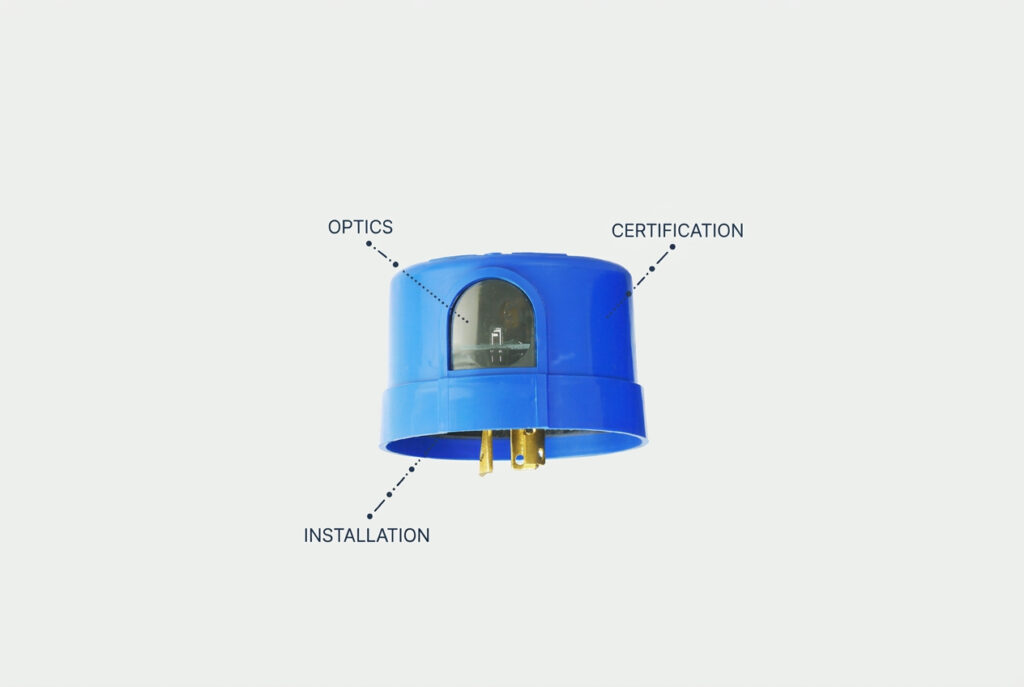
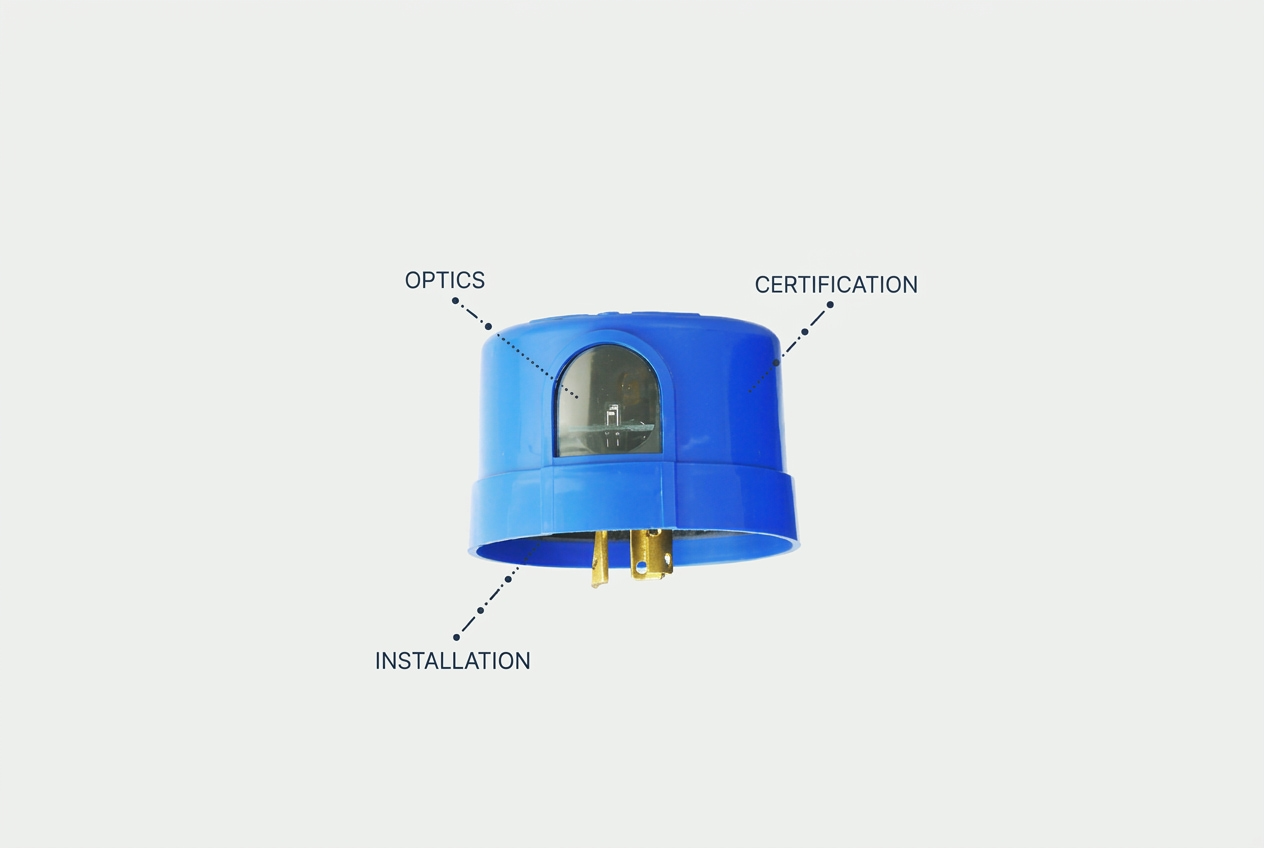
Long-Join approaches the problem from three angles: Optics, installation support, and certified performance.
Optics
The optical window of a Long-Join photocell is only sensitive to light in the daylight spectrum, making it more immune to bright objects that mimic daylight. Long-Join model JL-207C features an IR-filtered phototransistor that further optimizes this function.
Installazione
When installed, Long-Join offers suggestions and technical assistance to ensure it is placed in a logical location. In practice, this means pointing the sensor north with no billboards or other lights in the way, and ensuring that the light from the fixture itself does not reach the window.
Certificazione
Product certifications like UL, CE, and ENEC are supported by sensitivity and stability in certification. That reduces the risk of a false trigger and provides documents for reference for buyers should there be a fault to be resolved.
Frequently Asked Questions on Street Light Photocontrol Flickering
A bright light from these sources maintained for a while tricks the sensor into identifying it as daylight, this causes the relay to open and the lights to turn off.
Things to look out for during installation include the angle of light on the sensor window and bright light sources nearby, ensure that the unit is facing towards open sky and away from the bright sources.
IR filters prevent the sensor from reacting to infrared emitted from artificial light, keeping it sensitive to the real daylight spectrum.
The installer should select a reasonable location and follow standard practice, and the supplier should supply a compliant item with IR filtering.
Optimized optical windows, IR filters that are built in, and certified sensitivity and stability.
Conclusione
A street light flashing at night is usually the fault of an external light source mimicking daylight. The main issues are usually due to the fixture installation location or the inability of the photocell to filter infrared.
The location of the fixture is the responsibility of the installer, while the supplier is responsible for the ability of the product to filter infrared. Long-Join photocontrols reduce these faults with better optics, practical installation guidance, and certified performance.
Link esterni
●https://en.wikipedia.org/wiki/Infrared
 Italian
 English
 Russian
 Spanish
 Portuguese
 Arabic
 Japanese