
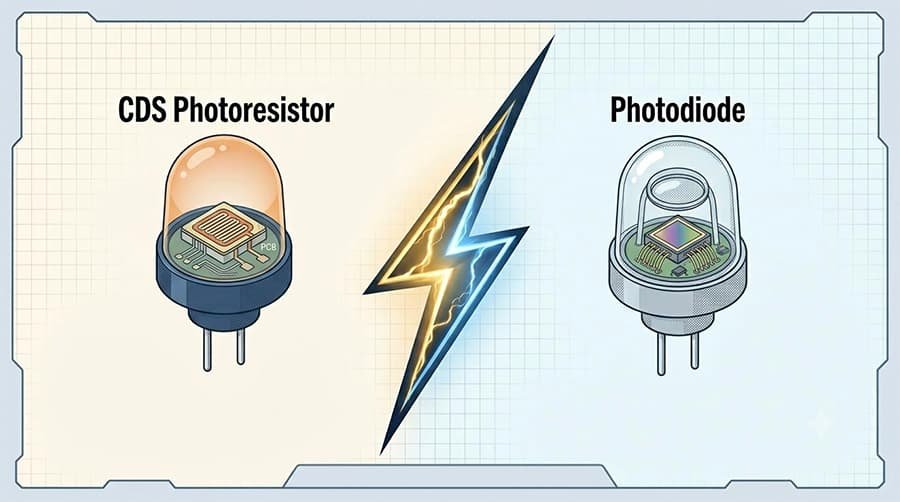
Why Do High-Temperature Countries Choose Photodiode Photocells Instead Of CDS Photocells?
Introdurre
Hot countries are hard on street lights. Sun, obviously. But also hot lamp housings, dust, humidity, and lights that run for twelve hours straight every night.
Sensor gets unstable, and the lamp does silly things. Comes on too early. Goes off too late. Cycles when it should just stay put.
So the sensor choice matters. CdS photoresistors are simple and cheap. Fotodiodi E phototransistors cost more, but they suit systems that need faster response and steadier control. Long-Join uses all three across its photocontrol families: CdS, photodiode, and IR-filtered phototransistor.
Why Is Heat Such A Problem?
A street light can sit in direct sun for hours before it ever switches on.
The weather report says 40°C or 45°C. Fine. But the air around a lamp body or a sealed control enclosure runs hotter than that. Then add dust, moisture, voltage swings, reflected light. Heat never shows up alone.
And the photocell still has to read daylight correctly while its own temperature keeps moving.
Hot-Climate Condition | Problema | What The Photocell Needs |
Strong direct sun | Housing heats up | Wide temperature tolerance |
Hot days, cooler nights | Switching point drifts | Stable sensing |
Dust or haze | Less light reaches sensor | Consistent detection |
Reflections | False switching | Filtering and time delay |
Long outdoor exposure | Faster aging | Good sealing, durable parts |
Buyers in the Middle East, Africa, Southeast Asia should check the full operating temperature of the fotocontrollo. Not just the cover material. The whole unit.
How Does A CdS Photocell Work?
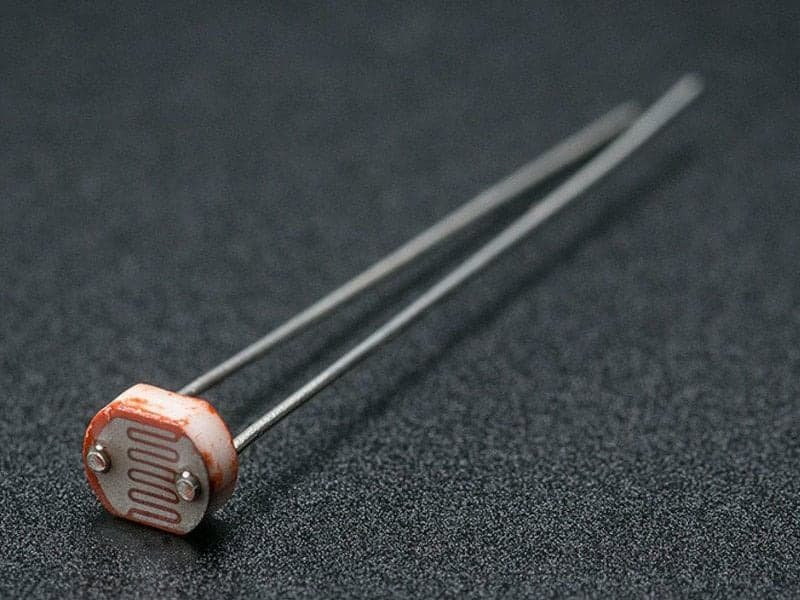
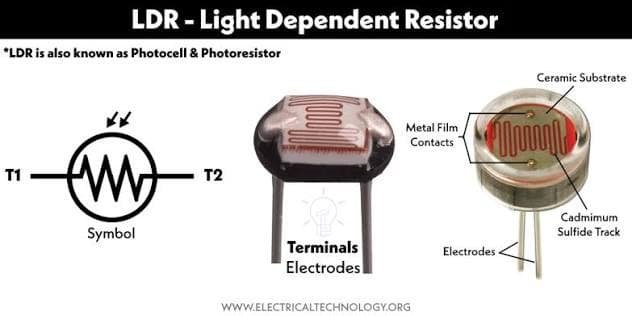
CdS is a cadmium-sulfide photoresistor. Some people call it an LDR. Light changes, resistance changes. More light, lower resistance. Darkness pushes it back up. The circuit reads that swing and decides when the lamp goes on or off.
It’s popular for a reason. Simple. Cheap. Long-Join still uses CdS in the JL-104A/JL-404C wire-in family, and the published JL-401CR spec lists -40°C to +70°C ambient.
The weakness is precision.
CdS cells vary from one part to the next. Temperature also nudges their resistance around. Big unit-to-unit variation, so CdS suits basic “light or dark” detection better than anything needing accurate lux readings.
Why Do Photodiodes Do Better In Heat?
Different mechanism. A photodiode doesn’t mainly change resistance. It puts out a light-related electrical current, and the control circuit measures that.
For a street light photocell, that gives the designer real control. Switching points. Delays. Filtering. Photodiodes also respond much faster than typical CdS parts. And in street lighting the final switching is often slowed down on purpose, so a car headlamp or a lightning flash doesn’t kill the lamp for a second.
Long-Join splits its direct electronic controllers by sensor type. JL-401 series is photoresistor-based. JL-411 series is photodiode-based.
But here’s the catch. A photodiode alone doesn’t make a controller heat-proof. The whole product still needs the right temperature rating, sealing, surge protection, housing design. Sensor is one piece.
So How Do They Actually Compare?
Not old versus new. That’s the wrong way to think about it. It’s about how much stability and control the project needs.
Articolo | CdS Photoresistor | Photodiode / Phototransistor |
Sensing method | Resistance changes | Current changes |
Response | Slower | Faster |
Part variation | Can be high | Easier to control |
Temperature influence | More noticeable | Easier to compensate |
False-trigger control | Depends on circuit | Works well with filtering, delays |
Basic dusk-to-dawn | Bene | Bene |
Smart control | Less common | Better suited |
Costo | Usually lower | Usually higher |
Fast sensor doesn’t automatically mean better street light sensor though. The electronics around it matter just as much. Circuit should ignore short flashes and use clean turn-on and turn-off points.
Long-Join’s JL-207 series comes with different sensing options, CdS or IR-filtered phototransistor. The company describes the phototransistor version as the more sensitive one.
Which Long-Join Models Fit Hot Climates?
Compare published limits. Don’t pick by sensor name alone.
Modello | Sensor / Type | Published Temp | Typical Fit |
JL-104A/JL-404C | CdS | da -40°C a +70°C | Basic wire-in control |
JL-411 series | Fotodiodo | Check exact model | Low-voltage electronic sensing |
JL-205C | Electronic twist-lock | da -40°C a +70°C | Street and area lighting |
JL-207C | Twist-lock, phototransistor options | da -40°C a +70°C | Higher-spec outdoor lighting |
JL-205C takes 110–277VAC, with IP54, IP65, IP67 options. JL-207C is rated 120–277VAC, same three IP choices.
Now the important part. Expected ambient temperature actually above +70°C? Don’t assume these standard models cope. Ask the manufacturer to confirm a suitable design, or add proper thermal protection. Guessing here is how projects fail.
How Does A Better Sensor Cut False Switching?
False switching is the number one photocell complaint. Lamp comes on under a dark cloud. Switches off because of reflected light. Cycles because its own light shines back into the sensor.
Long-Join’s installation guide warns that artificial light reaching the photocontrol can cause repeated on/off cycling. So placement matters as much as sensor type. Maybe more.
Semiconductor-based control also makes it easier to add time delays, filtering, separate turn-on and turn-off thresholds. The photocell then reacts to real daylight changes instead of every little disturbance.
What Should Buyers Check First?
Real installation temperature. Not the city’s average weather. Ask how hot the luminaire gets in direct sun, and whether the control sits close to the LED driver. That spot gets hot.
Then sensor type, voltage, switching level, IP rating, surge protection, load rating, failure mode. Heading toward smart lighting later? Check whether the fixture uses a NEMA or Zhaga interface.
Certification too. ANSI C136.10 covers locking-type photocontrols and mating receptacles. UL 773 covers plug-in locking-type photocontrols for area lighting.
And confirm the exact sensor inside the model you’re buying. Long-Join lists CdS, photodiode, phototransistor and other sensing technologies across its direct electronic controllers. Don’t assume.
Domande frequenti
Easier to pair with electronic control that keeps detection stable as conditions shift.
Changes its resistance. The point where the circuit decides "dark" or "bright" moves.
No. Long-Join lists both up to +70°C ambient.
The product was evaluated against a safety standard. UL 773 covers plug-in locking-type photocontrols for area lighting.
No. Phototransistors and other electronic sensors work well too. Depends on the controller design.
Conclusione
Hot climates hit a photocell with heat, dust, reflections, moisture, years of outdoor service. CdS still handles simple jobs fine. But when stable sensing, fast response, and filtering matter, photodiode and phototransistor designs give engineers more to work with.
For high-temperature projects the rule is short. Pick the right sensor. Then confirm the temperature rating of the whole photocell before anyone installs it.
Link esterni:
● https://en.wikipedia.org/wiki/Fotoresistenza
●https://en.wikipedia.org/wiki/Photodiode
●https://www.electronics-tutorials.ws/transistor/phototransistor-basics.html
●https://www.sciencedirect.com/science/article/abs/pii/S0969804325002891

 Italian
  English
  Russian
  Spanish
  Portuguese
  Arabic
  Japanese