

Do LEDs Need A Special Photocell? The Shocking Truth Inside
Introdurre
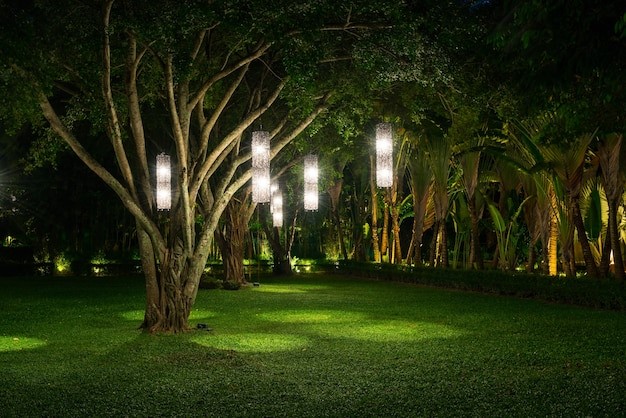
LEDs are everywhere now. Street corners, gardens, wall packs, barn lighting, pathways. They’re efficient as hell and last way longer than old-school lamps.
But you can’t always use any old photocell with LEDs. Some work. Others? They’ll make your light flicker like a broken neon sign, switch at the wrong time, or just act unstable with the whole dal tramonto all'alba cycle. The reason’s simple—LED lights don’t behave like tungsten lamps did. They’ve got drivers inside. Lower power draw. Different current patterns altogether.
That’s exactly why products like the Long-Join JL-103A exist. It’s built for automatic control in outdoor LED setups—landscape lights, garden spots, LED floods, wall packs, barn lights. The kind of stuff you actually see installed.
Why Do Some Photocells Work Poorly With LED Lights?
Ever notice an LED light flickering? Half-glowing when it should be fully on? Switching at 3 PM instead of dusk? Photocell’s probably to blame.
Old tungsten lamps pulled heavy current. Simple load. Traditional photocell flipped a switch—circuit closed, lamp on. Circuit opened, lamp off. Nothing fancy happening inside.
LEDs? Totally different beast. They’ve got electronic drivers inside. Those drivers reshape the power before it hits the LED chips. Lower current. Faster response. More sensitive. A photocell that handled a tungsten lamp fine? Could choke on an LED load.
Lighting Type | Load Behavior | Photocell Problem |
Tungsten Lamp | High power, simple circuit | Usually no issue |
LED Lamp | Low power with driver | May flicker or act weird |
Smart LED | Driver plus smart controls | Needs real compatibility |
So it’s not just “LED or not LED.” It’s whether the photocell and LED driver can actually get along in the same circuit.
What Makes LED Loads Different From Tungsten Lamps?
LEDs are more efficient. But that efficiency messes with how they behave electrically.
Tungsten pulls hard current—simple heating element, straightforward load. Photocell can switch it without breaking a sweat. LED fixtures though? They might draw almost nothing, especially when the driver’s idling or partly active.
This throws off older photocell units. The photocell might not fully cut power. The LED driver still gets a trickle of current. That tiny bit is sometimes enough to make the light strobe, glow faintly, flicker like something’s wrong—all when it should be completely off.
So installers blame the LED. And yeah, sometimes they should. But honestly? Better fix is picking a photocell that was actually designed for LED fixtures in the first place.
What Is The Long-Join JL-103A Photocell?
Looking for a simple sensor switch for small outdoor LED stuff? JL-103A is what Long-Join made for situations like that.
It’s a button-type photocell. 120VAC. Controls passage lights, doorway fixtures, landscape setups, garden spots, LED floods, wall packs, barn lights. Basically turns lights on or off depending on how dark it is outside.
Think of it as the fixture’s eyeball. Gets dark enough? Photocell turns the light on. Sun comes back? Light goes off.
Parametro | JL-103A Specs |
Product Type | Button type photocell |
Tensione nominale | 120 V CA |
Frequenza | 50/60 Hz |
Turn-On | 10–20 Lx |
Turn-Off | 30–60 Lx |
Sigillatura | IP54 |
Ideale per | Outdoor LEDs, wall packs, barn lights, gardens |
Certificazioni | CE, RoHS, UL |
Makes it useful for basic dusk-to-dawn projects where you just want the light to do its thing automatically. No fancy control system needed.
How Does A Photocell Sensor Control Light Automatically?
Pretty straightforward, actually. The photocell reads brightness. Gets dark? Light turns on. Gets bright again? Light turns off.
It’s like a tiny security guard sitting on your fixture. Doesn’t need anyone flipping a switch. Just watches light levels and reacts.
The sensor inside checks ambient brightness. Drops below the threshold? Circuit fires up. Rises above it? Circuit cuts. That’s the whole dusk-to-dawn concept right there.
Works great for outdoor lighting because you don’t waste energy during the day. Lights stay off unless something’s actually broken or you installed it in the wrong spot.
Why Do LEDs Often Need A Better-Matched Photocell?
Do LEDs need a “special” photocell? In practice, yeah. They need one that actually matches the LED driver.
Doesn’t mean expensive or complicated. Means the photocell’s voltage, load type, wiring setup, and fixture design have to line up. If they don’t? Flickering. Wrong switching times. Instability.
LEDs also respond faster than old lamps. Tiny circuit hiccup shows up as a visible flash. Tungsten filament heated slowly—small changes were hidden. LEDs? Problem shows instantly.
Problema | Root Cause | Better Fix |
Flicker | Unstable current to LED driver | Use LED-matched photocell |
Wrong switch time | Sensor confused by nearby light | Check lux level and placement |
Glowing when off | Small current leakage to driver | Match photocell to LED load |
Shorter lifespan | Constant on/off stress | Get stable photocell control |
That’s why you can’t just throw any photocell at an LED street light. Photocell, driver, fixture—they’ve got to work as one unit.
What Wiring Points Should You Check Before Installing JL-103A?
Before you touch anything, look at the wiring diagram. Seriously. Don’t just guess based on wire color.
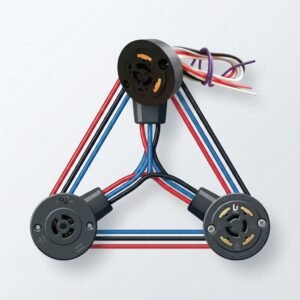
JL-103A is a wire-in button type. Wiring matters. Line, neutral, load side—gotta connect exactly how the manual says. One wire in the wrong spot and the light dies or the photocell burns out early.
Check your voltage too. JL-103A runs 120VAC. Different voltage? Don’t force it. Grab the right model from the same family instead.
And placement. Sensor needs to see actual daylight. Don’t stick it where the lamp shines directly at it. If the sensor sees its own light, you get an endless loop—light on, light off, light on again. Annoying doesn’t even cover it.
How Can You Reduce Flicker And Wrong Switching?
LED flickering with a photocell? Don’t panic and rip out the whole fixture.
Start simple. First, make sure the photocell’s rated for that LED load. Second, check wiring’s tight and correct. Third, look at sensor placement. Pointing at another light? Bright wall? Reflective window? It’s reading the wrong light level.
Keep the sensor out of shade during the day too. Sensor stays too dark, the light comes on too early or stays on forever.
Good photocell sensor responds to real outside light. Not false light from the fixture or surrounding junk. That’s why placement matters as much as picking the right product.

Is JL-103A Suitable For Every LED Project?
Nope. JL-103A works great for lots of simple 120VAC outdoor setups. Not a cure-all though.
Good for small and medium applications where you just want basic automatic switching. Wall packs, barn lights, garden lights, doorway stuff, pathways. Want wider voltage range? Heavier loads? Smart city integration? You need a different product.
Need a Presa NEMA? Remote monitoring? Dimming? That’s a different setup. Want 120–277VAC flexibility? Different controller altogether.
Simple rule: match the photocell to the actual fixture. Not to the price tag.
Domande frequenti
Not necessarily. But it's safer picking one designed for LEDs. Cuts down on flicker and weird switching.
JL-103A was built for common outdoor fixtures. Handles automatic dusk-to-dawn control for most LED stuff.
Landscape lights, garden spots, LED floods, wall packs, passage lights, doorway fixtures, barn lights.
Light flickers. Glows dimly when it shouldn't. Switches at the wrong time. Or just doesn't work as you expected.
Absolutely. Keep it away from direct lamp light, heavy shade, and strong reflections. Bad placement causes false switching.
Conclusione
LEDs don’t always need a “special” photocell. They need the right one. Old photocells? Made for simple, high-power lamps. LED fixtures use drivers and low current. They need actual matching.
Long-Join JL-103A gives you a solid option for 120VAC outdoor LED fixtures needing automatic dusk-to-dawn control. Match the voltage, load, wiring, and sensor position before installation. Do that and you’re golden.
Link esterni:
●https://en.wikipedia.org/wiki/NEMA_connector
●https://www.ledlightexpert.com/what-is-an-led-driver?srsltid=AfmBOorCUqhljJQukx–JrjqtVF1TppPy7w8gLlBQxrwR9h4BNcSb9nO
●https://en.wikipedia.org/wiki/Halogen_lamp
 Italian
  English
  Russian
  Spanish
  Portuguese
  Arabic
  Japanese