
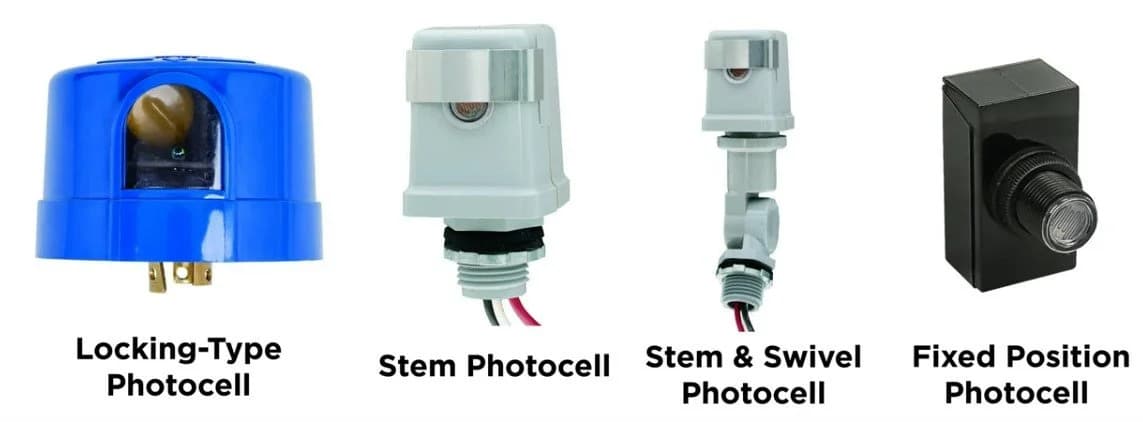
Future Trends In Photocell Technology—A Comparative Analysis Of Traditional Single-Function Photocells, IoT Smart Photocells, And AI-Enabled Photocell Controllers
Introduce
Outdoor lighting is changing fast. For many years, a basic photocell was enough. It could sense light, turn lamps on at night, and switch them off in the morning. That simple job still matters. But today, city projects want more. They want fewer false triggers, easier remote checks, smarter energy use, and better control in bad weather.
Long-Join’s current product pages still show strong demand for classic models such as the JL-205C and JL-207C, while its newer smart-control content points toward connected and more intelligent systems.
The main weakness of a traditional photocell sensor is simple: it mostly judges by light level alone. That works well most of the time, but it can struggle when shadows, storms, dust, or sudden weather changes confuse the sensor.
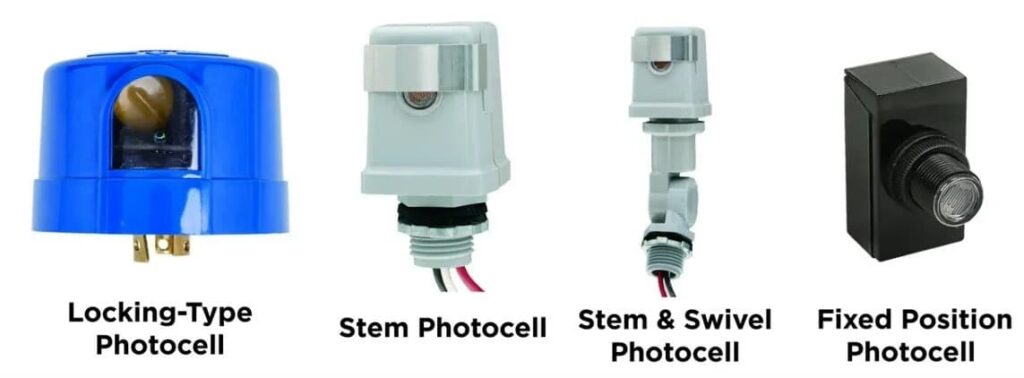
What Makes Traditional Single-Function Photocells So Common?
Traditional single-function photocells stay popular because they are simple, affordable, and proven in the field. Long-Join describes the JL-205C as suitable for street lighting, garden lighting, passage lighting, and doorway lighting, with automatic switching based on ambient natural light. The JL-207 series is presented in a similar way, with a focus on dependable automatic control for outdoor lights.
That is why these products still fit many standard projects. If a road, path, or parking area only needs a dependable dusk to dawn photocell, a classic model does the job without adding network cost or system complexity.
Long-Join’s twist-lock product category explains the basic work principle clearly: when ambient light drops below a set threshold, the controller turns the fixture on, and when light rises again, it turns the fixture off.
Still, simple does not mean perfect. A single light sensor switch can react to more than sunset and sunrise. Fast-moving clouds, heavy rain, dust, tree shadows, or reflected light can make the sensor read the environment badly. That does not mean every traditional unit fails often, but it does explain why single-function control has limits in harder outdoor settings.
What Do Traditional Long-Join Photocells Offer?
Model | Main Control Style | Typical Use | Main Strength | Main Limitation |
JL-205C | Ambient light sensing | Street, garden, passage, doorway lighting | Low cost and simple operation | Judges mostly by light alone |
JL-207C | Ambient light sensing with long-life options | Street and area lighting | Stable and reliable outdoor control | Can still be affected by changing conditions |
Why Are IoT Smart Photocells A Big Step Forward?
IoT smart photocells improve one big weakness of traditional units: they make the lighting system visible from a distance. Instead of waiting for a field complaint, operators can check status, manage groups of lights, and issue commands remotely.
Long-Join’s JL-245CN page says the controller connects through NB-IoT and lets users remotely control devices through a web interface. Its wireless controller service page also lists smart controller families built for connected lighting.
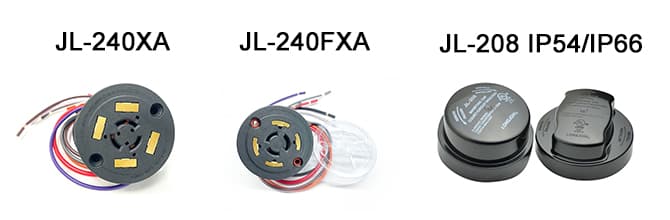
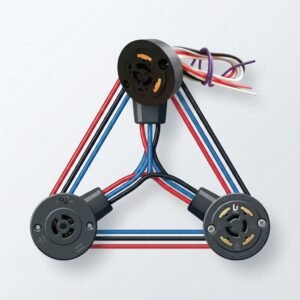
This changes daily operations in a useful way. A normal photocell control unit acts alone. An IoT unit becomes part of a wider system. That means better maintenance planning, easier fault checks, and more real-time data. Long-Join’s smart street lighting articles also discuss common protocol paths such as NB-IoT, Zigbee, and LoRa-based systems, depending on network needs and project scale.
But IoT alone does not make a controller truly intelligent. A connected unit can report more, but if it still relies on one light-reading path, it may still struggle with the same real-world confusion as a basic light photocell. In other words, networking improves visibility and management, but it does not fully solve the judgment problem.c
How Do IoT Smart Photocells Improve Daily Management?
Function | Traditional Unit | IoT Smart Unit |
Local on/off control | Yes | Yes |
Remote on/off control | No | Yes |
Real-time status check | No | Yes |
Network communication | No | Yes |
Data collection | Very limited | Better and more useful |
Intelligence level | Low | Medium |
Why Is AI-Enabled Hybrid Control Seen As The Future?
Because the real problem is not just control. It is judgment.
A future-ready controller should do more than notice that light has changed. It should ask why it changed. Was it normal evening dimming? A passing truck shadow? A storm front? Dirt on the sensor? Combining photocell lighting sensor functions with AI can make lighting systems smarter and safer, while its future-trend articles mention AI-driven smart lighting, predictive maintenance, and self-learning control as the direction ahead.
That is why hybrid control matters. In simple terms, a hybrid controller uses more than one source of information. It may combine light sensing with motion, visual input, or smarter MCU logic. This gives the system a better chance to tell the difference between natural darkness and short-term shadow occlusion. Long-Join’s quality and planning content also explicitly mentions medium-term development of AI-based photocell lighting sensor systems.
For outdoor projects, that means fewer wrong switch actions, steadier operation in extreme weather, and more precise energy saving. It also means a stronger fit for smart city work, where a street light controller must do more than flip power on and off.
How Do These Three Photocell Paths Compare Side By Side?
The clearest way to see the shift is to compare them directly. The first path is simple and reliable. The second adds connectivity. The third adds judgment.
Comparative Analysis Of Different Long-Join Photocell Types
Features | Traditional Single-Function Photocell | IoT Smart Photocell Without AI | AI-Enabled Hybrid Photocell Controller |
Representative Direction | JL-205C, JL-207C | JL-245CN and related smart lines | Future AI-based planning direction |
Control Method | Single light sensing | Network remote control plus monitoring | Multi-sensor fusion plus intelligent judgment |
False Trigger Risk | Higher | Medium | Very low |
Energy Saving Effect | Average | Good | Excellent |
Remote Monitoring | None | Supported | Supported |
Intelligence Level | Low | Medium | High |
Best Use Case | Standard outdoor lighting | Smart city and connected lighting | Complex outdoor scenes and precision control |
What Does This Mean For Long-Join’s Product Direction?
It means the market is not abandoning classic products. Basic photocontrol models like JL-205C and JL-207C still make sense for many standard projects. But the growth path is clearly moving toward connected and more intelligent control. Long-Join’s recent smart-lighting, AI, and wireless-control pages point in that direction through NB-IoT research, cloud platforms, protocol support, and AI-based sensing plans.
So the future is not one product replacing everything. It is a layered market. Some projects still need a simple photocell switch. Some need networked control. The most demanding sites will push toward hybrid systems that can think better in messy outdoor conditions.
Conclusion
Traditional photocells still have real value. They are simple, stable, and cost-friendly. IoT smart photocells add remote visibility and better management. But AI-enabled hybrid controllers look like the next serious step because they solve the biggest old problem: poor judgment in complex outdoor conditions. Long-Join’s recent product pages and future-facing articles suggest that this smarter path is becoming more important for modern lighting control and smart city upgrades.
External Links:
●https://en.wikipedia.org/wiki/Narrowband_IoT
●https://en.wikipedia.org/wiki/Zigbee
●https://en.wikipedia.org/wiki/LoRa
●https://en.wikipedia.org/wiki/Microcontroller

 English
  Russian
  Spanish
  Portuguese
  Arabic
  Japanese
  Italian