
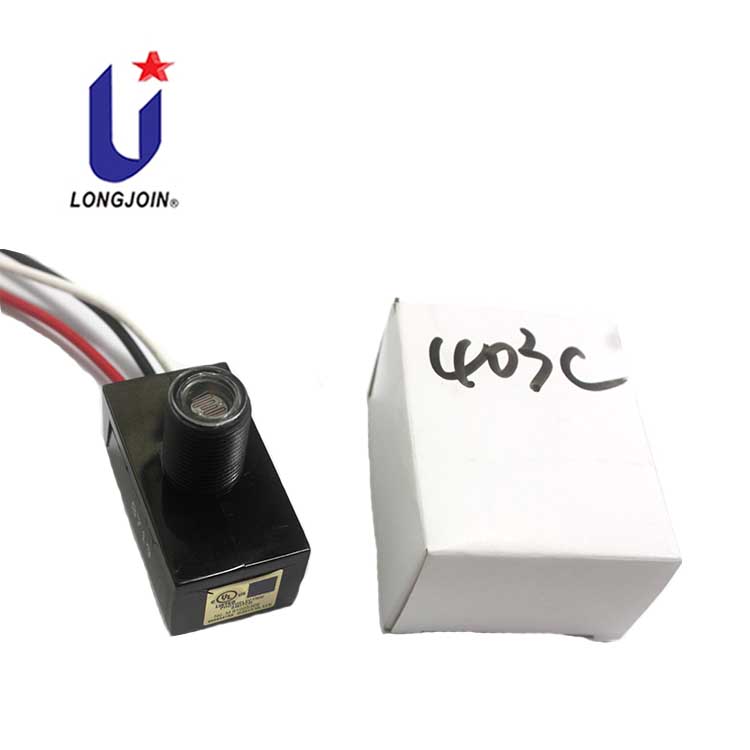
How To Choose The Suitable Button Photocell Series For The Middle East
Introduce
Designing outdoor lighting for the Middle East is not just about adding “a small sensor on the lamp.” Heat, sand, humidity, and unstable grids can quickly expose any weak point in your design. In this guide, we’ll walk through how to choose button-type photocell solutions that actually match real projects in the region — from villas and courtyards to campuses and small streets — and how Long-Join supports you end-to-end.

What Makes The Middle East A Special Challenge For Button Photocells?
Are your current sensors failing too early, switching at the wrong time, or showing water inside the cap after one rainy season?
The Middle East brings a combination of stress factors that standard indoor-style sensors simply cannot handle:
- High ambient temperatures on poles and walls, especially in summer, where metal housings can reach well above air temperature.
- Humidity and sudden rain, especially in coastal and Gulf areas, which quickly test sealing and gaskets.
- Dust and sand, which can block the eye of a photocell sensor and cause “always on” or “always off” failures.
- Mixed loads from 500 W villa circuits up to 1,500–2,000 W small campus loops, often on the same project.
Because a button photoelectric sensor reacts directly to light at the installation point, anything that affects the lens or internal temperature will affect switching accuracy and product life. That is why serious projects in the region now prefer outdoor-grade photocell lighting sensor designs with tested IP and surge performance instead of low-cost generic parts.
To translate this into day-to-day decisions, you need to link environment, load, and installation style together.
Environmental Factor | Risk For Button Photocell | What You Should Look For |
High heat (rooftops, poles) | Deformed plastic, drifted lux point, early failure | High-temperature-resistant cable and housing, temperature-compensated design |
Humidity & rain | Water ingress, rusted terminals | IP65+ sealing, rainproof cap, proven outdoor test reports |
Dust & sand | Blocked sensor eye, false switching | Lens shape and cap design that shed dust; easy cleaning access |
Unstable grid & surges | Burnt electronics, welded contacts | Built-in surge protection and proper coordination with driver/MCB |
Which Core Physical Features Should A Button Photocell Have In Hot, Humid Climates?
Do you feel unsure if the “nice-looking” sensor in the catalog will survive a year on a hot façade in Dubai or Riyadh?
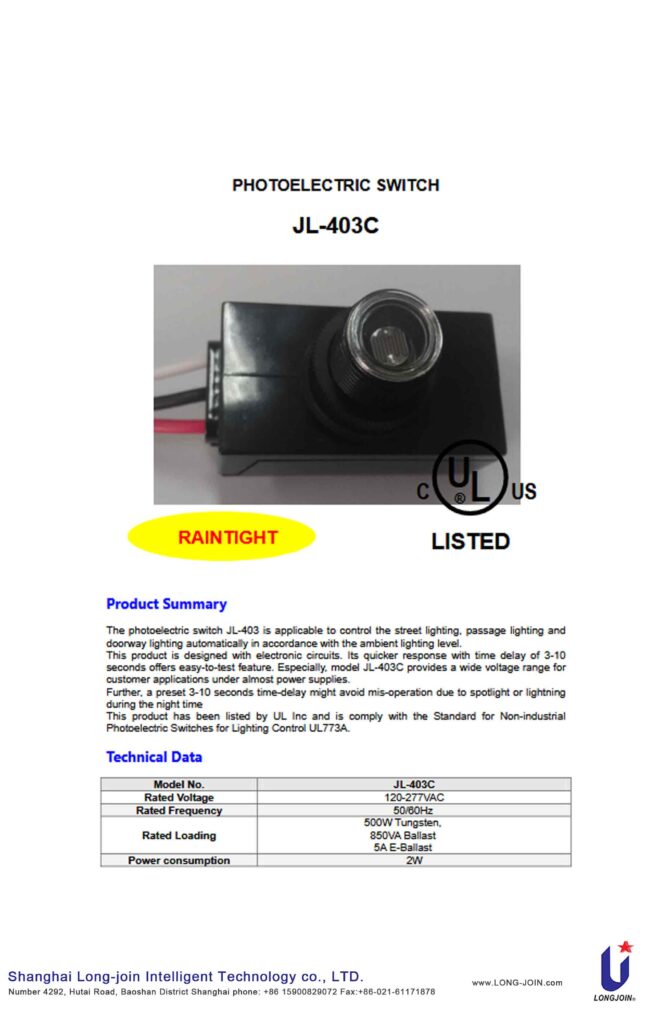
For the Middle East, the core physical design of a button photocell sensor matters as much as its lux setting:
- High-temperature-resistant wiring
Use cable insulation that keeps its properties even at elevated temperatures. This protects the joint box and prevents cracked insulation and short circuits over time. Long-Join’s wiring guides show how heat-resistant conductors and correct terminations improve long-term reliability in outdoor lighting control. - Rainproof cap and sealed body
A well-designed cap directs water away from the sensor lens and sealing lines. This is critical where occasional heavy rain hits a very hot, dusty surface — a typical stress test for outdoor equipment. - Rated load matched to 500–2,000 W circuits
For residential streets and campuses, the usual range falls between 500 W and 2,000 W per circuit. Choosing a button photocell with proper relay and contact rating avoids overheating at the terminals and prolongs life. - Built-in surge protection
Voltage swells and lightning-related transients are common on long outdoor runs. Integrating surge elements inside the photo cell reduces failure rates and callbacks, especially where LED drivers already include their own surge stage.
How Do Accessories And Combinations Make Your Button Photocell Projects Easier?
Have you ever reached site and realized the wall box is too weak, or the sensor is exposed in a way that looks unprofessional?
Button photocells become much more practical when combined with the right mechanical supports and interfaces:
- Aluminum panels
Metal panels give rigidity, flat mounting, and better thermal behavior than thin plastic plates. They also match many Middle Eastern architectural facades and compound walls. On Long-Join projects, aluminum panels are widely used to tidy up junction boxes and improve appearance on exposed installations.
What Should You Check When Selecting A Wired Button Photocell?
Looking at many similar datasheets, but still not sure which one really fits your project in Abu Dhabi, Jeddah, or Doha?
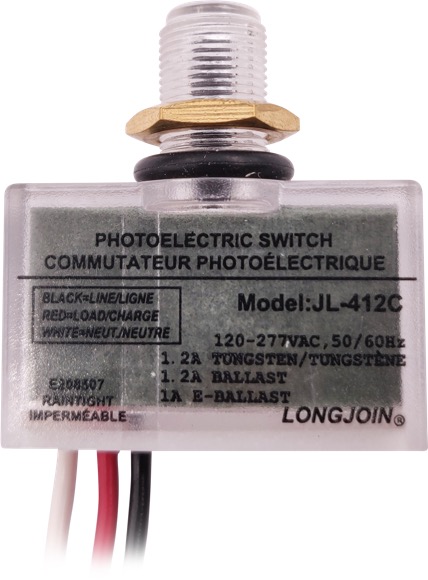
Use this short checklist when choosing a wired button photocell lighting sensor:
- Rated load and load type
Confirm both the total wattage and the nature of the load (LED drivers, electronic ballasts, or mixed). Ask for inrush-current guidance, not just “maximum W”. - Ingress protection and UV stability
For fully outdoor use, IP65 or higher is a realistic minimum. Also check that the housing material is UV-stabilized so it does not become brittle or yellow under strong sun. - Wiring convenience
For contractors, fast wiring matters. Clear color coding, pre-stripped cable ends, and wiring diagrams like those in Long-Join’s photocell sensor wiring guide reduce errors and site time. - Surge and safety coordination
Ensure the surge level and insulation class are aligned with the luminaire driver and local standards (IEC 60598 and related outdoor lighting requirements). - Switching performance
A stable dusk-to-dawn photoelectric sensor should avoid rapid on/off at borderline light levels. Long-Join designs use delay and temperature-compensated structures to keep switching stable in real outdoor conditions.
What Should You Check When Selecting A Wired Button Photocell?
You can capture these checks in a simple evaluation table:
Check Item | Minimum Requirement | Good Practice For Middle East |
Electrical rating | Matches circuit wattage | 20–30% safety margin above calculated load |
IP rating | IP65 | IP66+ on exposed poles or seafront |
Cable & terminals | Fits conductor size | Heat-resistant insulation, corrosion-resistant screws |
Surge protection | Basic MOV | Surge design coordinated with LED driver and SPD |
Documentation | Basic leaflet | Clear wiring diagrams and local language support where needed |
Which Typical Button Photocell Setups Work Best For Common Middle Eastern Scenarios?
Do your customers ask for “something simple that just works” in villas, then “future smart control” on campus projects?
Here are three common setups and how a button photocell can be positioned in each:
- Residential villas and small courtyards
- Load: 500–800 W on short runs
- Goal: Silent, low-maintenance dusk-to-dawn operation
- Recommended: Compact button sensor with rainproof cap and 1 kW rating, mounted on an aluminum panel near the distribution box.
- School, university, or compound campuses
- Load: 800–1,500 W, a mix of building façades, paths, and parking
- Goal: Stable control, easy maintenance, potential future upgrade to smart nodes
- Recommended: Button sensors on feeder circuits, plus NEMA receptacles on key poles using Long-Join’s NEMA range. Allows later upgrade to JL-207 / JL-217 series controllers or smart PCBA like JL-265CX.
- Courtyard and small street projects preparing for smart control
- Load: Up to 2,000 W across longer runs
- Goal: Start with simple dusk-to-dawn, but keep a path open to remote monitoring
- Recommended: Use robust button photoelectric sensor for now, but specify poles and luminaires with NEMA or Zhaga interfaces so you can later deploy smart controllers described in Long-Join’s smart lighting control insights.
In all three cases, the core logic is the same: start with a reliable outdoor photocell light sensor foundation, then add smart layers as budgets and city plans evolve.
Why Partner With Long-Join For Middle East Button Photocell Projects?
With so many suppliers on the market, why do many distributors and OEMs in the region choose specialized manufacturers photocell partners instead of generic components?
Long-Join focuses on outdoor lighting control and photoelectric technology, from basic button sensors to advanced remote-controlled nodes. Our portfolio includes DC-rated devices like the JL-411 series for low-voltage systems, twist-lock controllers for photocell street light applications, and intelligent semi-finished PCBA for smart city platforms.
Conclusion
If you are already testing button sensors in your market, the next step is to turn successful samples into a predictable product line.
By doing this, you give installers something simple and robust for today, while keeping room for tomorrow’s smart upgrades. And with a focused partner like Long-Join behind your photocell switch and control roadmap, you can respond faster when city authorities, EPCs, or campus owners ask for “more intelligence” in the same familiar hardware family.
External Links:
● https://www.nema.org/standards/technical/the-abcs-of-conformity-assessment/faqs-product-certification-and-testing
● https://webstore.ansi.org/standards/nema/ansic136412025?srsltid=AfmBOooawILxLcUmVrG76QcxtT-SdRZOU8TcJLhRtMyR0Paj7xuUPyWj
● https://electricmall.com.ng/product-category/electro/lights/led-drivers-lights/



 English
  Russian
  Spanish
  Portuguese
  Arabic
  Japanese
  Italian