
Can Long-Join Photocontrols Be Used For Aviation Obstruction Lights?
Introduce
Aviation towers, phone masts, wind turbines, and building rooftops use warning lights. These lights keep them visible at night. These lights must turn on at dusk and off at dawn. So many buyers still ask this simple, important question:
“Can Long-Join’s photocontrols work for aviation obstruction lights?”
At first, it feels like a simple yes or no. Street lights use dusk-to-dawn controls. Tower lights do too. Both depend on light detection. And both need stable switching. But once you look deeper, you find that aviation belongs to a safety-regulated industry, while streetlighting belongs to a municipal infrastructure industry. Different rules. Different tests. Different failure risks.
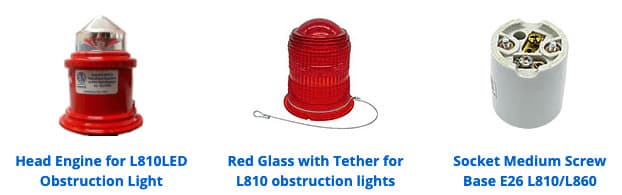
What Makes Aviation Obstruction Lights Different From Normal Outdoor Lighting?
When you look at tower lights and normal street lights, it’s easy to think they’re the same. After all, both use dusk-to-dawn photocells. Both turn on at night. But aviation lights must follow far stricter rules.
Aircraft warning lights must follow global safety rules. These rules are made by groups like the ICAO and the FAA for safe flying. These rules set how bright the light must be. They decide when it turns on and what it does when something fails. They say how it should survive icing, storms, and salt spray.
Street lights do not need such strong protection. Municipal lighting follows standards like ANSI C136 and UL773. These focus on weatherproofing and stable switching, not aviation safety.
Key Differences Between Aviation and Street Lighting
Feature | Aviation Obstruction Lights | Municipal Street Lights |
Governing Standards | ICAO, FAA, CAAC | ANSI C136, UL773, CE |
Purpose | Aircraft safety | Road visibility |
Failure Risk | High (life-safety) | Medium |
Switching Requirements | Highly precise thresholds | General dusk–dawn |
Redundancy | Often required | Not required |
EMI/EMC Demands | Strict | Moderate |
These differences explain why you cannot automatically use any photocell or photocontrol in aviation. The environment is more sensitive, and the rules are tighter.
Why Do Aviation Obstruction Lights Need A Photocontrol?
If you’re new to aviation lighting, you may ask: why do tower lights even need a photocell? The job sounds easy. You just turn the warning light on when it gets dark.
But there’s more happening behind that simple moment.
A tower needs the light to turn on before visibility becomes poor. If the switch waits too long, the light might activate after aircraft already approach the area. If it turns on too early, power consumption increases. So, aviation lights depend on a reliable photoelectric sensor that responds at the right moment.
A proper photocontrol ensures:
- Stable dusk-to-dawn operation
- Correct switching levels (70 Lux ON, 100 Lux OFF for many aviation systems)
- Low risk of false triggers
- Long service life even in harsh climates
These functions are similar to what a light photocell does for streetlights, but aviation requires tighter margins and more predictable behavior.
Are Long-Join Photocontrols Functionally Compatible With Aviation Obstruction Light Logic?
If you’re worried about functional compatibility, here’s the good news: Yes, the logic is compatible.
Aviation obstruction lights generally require:
- ON at 50–70 Lux
- OFF at 100–150 Lux
- Delay time to avoid false switching
- Stable detection regardless of temperature
Long-Join’s wire-in photocontrols (such as the JL-101 and JL-103 series) naturally support:
- Adjustable Lux values from 5 to 300 Lux
- Adjustable ON/OFF delay
- Stable photodiode sensing
- Optional DC versions for tower systems
- Anti-flicker switching logic
This means the basic “dusk-to-dawn” behavior is fully met. In a functional sense, a Long-Join photocell sensor or outdoor photocell light sensor can switch obstruction lights reliably.
Long-Join Photocontrol Capabilities vs. Aviation Requirements
Requirement | Aviation Needs | Long-Join Wire-In Photocontrols |
Lux ON Level | 50–70 Lux | Adjustable (5–300 Lux) |
Lux OFF Level | 100–150 Lux | Adjustable (5–300 Lux) |
ON/OFF Delay | Yes | Yes (5–120 sec) |
Flicker Prevention | Yes | Yes |
Temperature Stability | Required | Supported |
AC/DC Input | Both used | Both available |
From a pure technical standpoint, Long-Join’s photocontrols can handle the switching behavior of aviation lights.
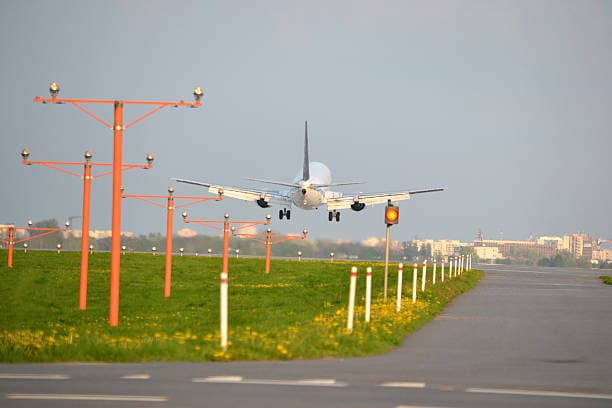
Do Long-Join Photocontrols Match The Electrical Requirements Of Tower Lighting Systems?
Many engineers worry about electrical compatibility. Aviation tower lights sometimes run on AC and sometimes on DC depending on the system. Some telecom towers use 24VDC. Some wind turbines use 48VDC. Rooftop lights may use 110–240VAC.
So you may ask: can Long-Join match these inputs?
Yes.
Long-Join’s wire-in photocontrols can be customized for:
- 12VDC
- 24VDC
- 48VDC
- 110–240VAC
This fits the common voltage range of aviation obstruction lights.
Long-Join photocontrols also support high loads, often up to:
- 1000W / 1800VA
This aligns with the needs of obstruction-light power units.
Aviation Tower Voltage vs. Long-Join Compatibility
Voltage Type | Aviation System Usage | Long-Join Support |
12VDC | Some telecom towers | Yes |
24VDC | Common in telecom | Yes |
48VDC | Wind turbines | Yes |
110–240VAC | Rooftop lights | Yes |
So from an electrical standpoint, a Long-Join photocontrol or photo cell sensor works seamlessly.
Why Can Only Wire-In Photocontrols Be Used For Aviation Towers?
Here’s a common engineering confusion:
“Why not just use NEMA or Zhaga photocells? They’re everywhere.”
Because aviation systems do not use those standards.
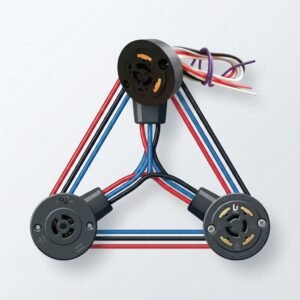
NEMA and Zhaga sockets belong to street light control systems, not aviation. Tower lights require:
- Hardwired enclosures
- G¾ or NPT conduit entry
- High-vibration resistance
- Weather-tight sealing
- Long cable runs
- No detachable twist-lock heads
Meaning:
Suitable Long-Join Models
- JL-101 series
- JL-103 series
- Custom wire-in photocontrols
Not Suitable
- NEMA photocells
- NEMA receptacles (including 7-pin receptacle types)
- Zhaga Book 18 sockets
- Smart photocontrols (LoRa / NB / Zigbee)
Aviation uses direct wiring because the industry avoids detachable connectors that can shake loose or fail under vibration.
If you want to see Long-Join’s NEMA and Zhaga interfaces for comparison purposes, you can check:
https://www.long-join.com/products/receptacle/
This helps clarify why they are not intended for aviation.

What Certifications Do Aviation Obstruction Lights Require—and Do Long-Join Products Have Them?
This is where things get serious.
Aviation obstruction lights are governed by:
- ICAO Annex 14 Volume 1
- FAA AC 150/5345-43
- CAAC ML Standards
- National/regional aviation authorities
These standards test for:
- Icing and freezing endurance
- Precise light-trigger accuracy
- EMI/EMC resistance
- Redundant failover
- Salt spray and corrosion
- Light diffusion and anti-glare
- Electrical protection
Long-Join photocontrols are designed for:
- UL773 (photocontrol standard)
- ANSI C136 (North America)
- CE and EMC (Europe)
- Zhaga Book 18 (smart lighting)
These certifications ensure reliable municipal lighting performance but do not replace aviation certifications.
Certification Comparison
Standard | Aviation Lights | Long-Join Photocontrols |
ICAO | Required | Not included |
FAA | Required | Not included |
CAAC | Required | Not included |
UL773 | Not applicable | Yes |
ANSI C136 | Not applicable | Yes |
EMC | Required | Yes |
This means Long-Join photocontrols can function in aviation systems, but they cannot replace certified aviation-grade controllers where ICAO/FAA compliance is mandatory.
What Risks Occur If A Non-Aviation Photocontrol Is Used In Aviation Systems?
You may wonder: what’s the big deal if a normal photocell fails?
In street lighting, the light may remain ON or OFF and someone eventually fixes it.
In aviation, a failed photocontrol can cause:
- Warning light staying OFF
- Increased aircraft collision risk
- Regulatory fines
- Tower shutdown orders
- Investigation from aviation authorities
crucial.
Problems that aviation systems must avoid:
- False OFF switching at night
- Triggering from reflections
- Moisture leaks
- Temperature drift
- Sensor failure during storms
- Cable interference
This is why aviation projects often require:
- Redundant switching
- Dual photocontrol logic
- Sensor self-check systems
- Environmental testing
These safety layers are not common in municipal lighting photocontrols.
In What Applications Can Long-Join Photocontrols Be Safely Used?
If your project does not fall under civil aviation regulation, then yes—Long-Join photocontrols work well.
Suitable Applications
- Telecom towers
- Building rooftop obstruction lights
- Industrial chimneys
- Wind turbine towers
- High-rise buildings
- Private property towers
- Low-risk zones far from airports
In these cases, a Long-Join photocell, photocontrol, or light sensor switch provides reliable dusk-to-dawn control.
When Should Long-Join Photocontrols Not Be Used?
If your project does not fall under civil aviation regulation, then yes—Long-Join photocontrols work well.
Suitable Applications
- Telecom towers
- Building rooftop obstruction lights
- Industrial chimneys
- Wind turbine towers
- High-rise buildings
- Private property towers
- Low-risk zones far from airports
In these cases, a Long-Join photocell, photocontrol, or light sensor switch provides reliable dusk-to-dawn control.
When Should Long-Join Photocontrols Not Be Used?
Not Suitable
- Airport perimeter towers
- Government-controlled aviation zones
- Projects requiring ICAO or FAA certification
- High-altitude towers with extreme icing
- Any site requiring aviation-approved electronics
If certification is mandatory, the system must use aviation-grade photocontrols specifically tested for that purpose.
Conclusion
Aviation lighting may look simple, but the rules behind it are strict. Long-Join photocontrols can meet the switching logic, electrical requirements, and mechanical installation needs of general obstruction light systems. However, for aviation-regulated projects, certified controllers are required, and streetlighting photocontrols should not be used.
If you are designing a tower project, always confirm whether the structure falls under an aviation authority. This saves time, prevents redesigns, and ensures safety. For non-regulated towers, Long-Join wire-in photocontrols offer a reliable, durable, and customizable option.
External Links:
●https://www.icao.int/
●https://www.faa.gov/
●https://www.shopulstandards.com/ProductDetail.aspx?UniqueKey=30842
●https://www.nema.org/standards/technical/ansi-c136-series-standards-for-roadway-and-area-lighting-equipment
 English
  Russian
  Spanish
  Portuguese
  Arabic
  Japanese
  Italian