

10 Common Misconceptions About IP66D vs IP66 for Outdoor Street Lighting
Представлять
IP66D appears on product datasheets and tender documents and causes confusion almost every time.
Some buyers assume it represents a higher level of protection than standard IP66. Others treat it as a specialised certification relevant to specific lighting applications.
This article works through ten of the most common misconceptions about IP66D and explains what it actually means for outdoor street lighting photocontrol procurement.
What Is IP66D?
IP66D combines IP6X (complete dust protection) and IPX6 (protection against powerful water jets) — it does not imply significantly better overall outdoor durability than standard IP66.
The “D” suffix in IP66D refers to dust protection testing specifically, emphasising that the product has been confirmed to meet the IP6X dust-tight requirement alongside the IPX6 water protection rating.
In practice, IP66 already implies both the dust (6) and water (6) ratings from its two digits. IP66D is a notation style rather than a fundamentally different standard.
Misconception 1: IP66D Is Superior to IP66 for Street Light Photo Controls
Due to their mounting height and the natural cleaning effect of wind and rain, street light photo controls accumulate minimal dust, making enhanced dust protection the least relevant performance dimension for this application.
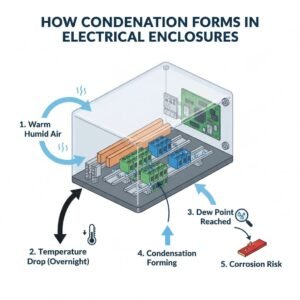
The primary risks for photo controls in street lighting are condensation, salt spray, and UV corrosion. None of these are tested by IP66D. The dust protection emphasis in IP66D addresses a failure mode that pole-mounted outdoor photo controls rarely experience.
Misconception 2: IP66D Makes Photo Controls More Suitable for Roadway Lighting
Tall installation poles and natural rain and wind cleaning further reduce dust accumulation on roadway lighting photo controls, making the dust protection component of IP66D largely irrelevant to roadway application performance.
What roadway lighting photocontrols actually need are:
- Material durability
- Устойчивость к ультрафиолетовому излучению
- Thermal stability
- Защита от перенапряжения
However, none of these factors appear in IP66D testing.
Misconception 3: IP66D Makes Photo Controls More Suitable for Coastal Lighting
Coastal environments present salt spray and high humidity as the primary threats. IP66D does not test for salt corrosion resistance, making it an inadequate specification for coastal performance assessment.
A product bearing IP66D has not been tested for the electrochemical corrosion that coastal salt spray causes on housing materials, gaskets, metal fasteners, and PCB surfaces. Buyers specifying coastal installations need ASTM B117 salt spray test data, not an enhanced IP dust rating.
Misconception 4: IP66D Makes Photo Controls More Suitable for High Mast Lighting
High mast lighting faces strong wind, condensation, UV exposure, high temperature, and salt spray. IP66D does not include testing for any of these critical environmental risks.
At 15 to 25 metres, photocontrols face more wind loading, greater UV exposure intensity, and more severe thermal cycling than standard pole-mounted units, and IP66D does not address these relevant specifications such as mechanical pull strength, UV-stabilised housing material, operating temperature range, and surge protection rating.
Misconception 5: IP66D Provides Better Protection for LED Drivers
IP66D mainly reflects the overall luminaire waterproof and dustproof performance. It does not describe the detailed protection requirements for internal electronic components.
LED driver protection within a luminaire depends on the driver’s own component ratings, PCB conformal coating, thermal management design, and surge protection circuitry. None of these are captured by the luminaire’s external IP66D rating.
Misconception 6: IP66D Is Significantly Harder to Pass Than IP66
IP6X dust protection testing is more stringent than some water spray levels, but photo control units are compact with simple sealing structures. Glass-fibre reinforced PBT material’s dimensional stability means they routinely satisfy dust protection requirements without design modification.
For most photo control designs, the IP6X requirement does not represent a meaningful engineering challenge. The relevant engineering investment goes into gasket material selection, UV stabilisation, and thermal cycling durability instead.c
Misconception 7: IP66D Is Especially Suited for NEMA Photo Controls
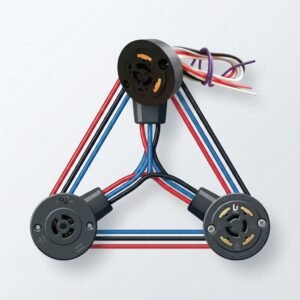
NEMA type photo controls feature a top photosensitive window, bottom sockets with sealing rings, glass-fibre PBT bases, and EPDM sealing rings. These structural characteristics do not derive additional protection from IP66D certification.
The NEMA twist-lock interface is designed for standardised interoperability and tool-free replacement. Its sealing design addresses moisture ingress at the socket interface. IP66D testing does not specifically evaluate this interface in the context of a mounted and twisted photo control assembly.
Misconception 8: IP66D Provides Better Protection for Smart Photo Controls
Smart photo controls in NEMA or Жага format have well-protected internal electronics. The primary protection concern is the communication module’s environmental durability, which IP66D does not specifically address.
Smart photo control durability depends on:
- MCU temperature rating
- Antenna seal quality
- Communication module encapsulation
- PCB coating.
None of these appear in IP66D testing. A smart photo control with IP66D marking and inadequate conformal coating will fail in a humid coastal environment faster than one with standard IP66 and full PCB protection.
Misconception 9: IP66D Is Required for ENEC Luminaire Compliance
ENEC focuses on overall lamp quality, including housing heat resistance, photosensitive window aging, PCB insulation spacing, waterproof structures, and glass-fibre reinforced base durability. All physical characteristics for photo controls which IP66D does not cover.
ENEC certification requirements for photocontrols specifically include long-term thermal aging, photosensitive element reliability testing, insulation clearance verification, and factory audit surveillance. An IP66D rating does not satisfy or substitute for any of these ENEC requirements.
Misconception 10: IP66D Should Be a Primary Specification Criterion
IP66D addresses just dust and water ingress, while real-world outdoor photo control performance is determined by things like salt spray resistance, UV stability, thermal cycling durability, mechanical strength, and surge protection, none of which IP66D covers.
For outdoor street lighting photo control procurement, the relevant specifications are UL773 or UL1598 compliance, salt spray test duration under ASTM B117, operating temperature range, relay cycle life, housing material (glass-fibre reinforced PBT), and surge arrester rating. IP66D should be a secondary notation, not a primary selection criterion.
Procurement Recommendations
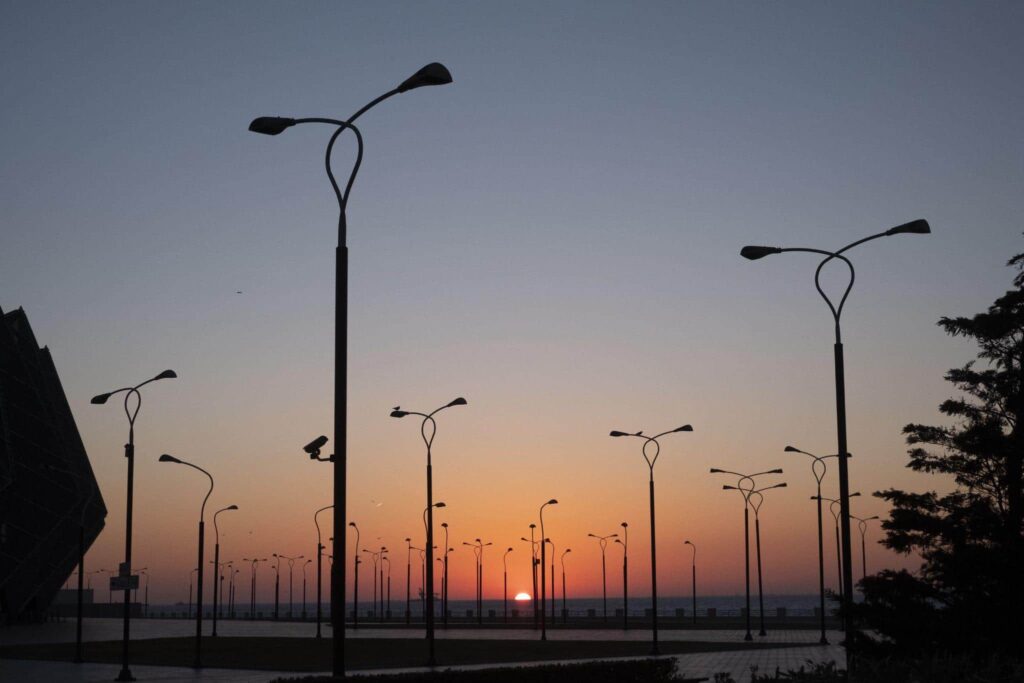
When purchasing outdoor streetlight photo controls, do not rely on IP66 or IP66D ratings as primary performance indicators. The real environmental risks for street lighting photo controls involve factors such as condensation, salt spray, UV degradation, thermal cycling, and surge events, all of which require separate test documentation beyond IP rating.
Focus on material specifications, sealing structure design, and compliance with multiple verified testing standards including UL773, ASTM B117, and IEC 60068 series.
Long-Join’s photocontrol specifications, including material data and test certifications, are all available on-site.
Frequently Asked Questions on IP66D vs IP66
IP66D is a notation emphasising that both the IP6X dust protection and IPX6 water protection ratings have been confirmed. Standard IP66 already implies both ratings from its two digits. The practical difference is minimal.
Mounting height and the natural cleaning effect of wind and rain mean streetlight photo controls accumulate little dust. Condensation, salt spray, and UV degradation are the primary threats.
No. IP66D tests dust ingress and water jets using clean water. Salt spray corrosion is a separate chemical process assessed by ASTM B117 and IEC 60068-2-11, which are not part of IP66D testing.
Strong wind mechanical loading, condensation cycling, UV radiation intensity, sustained high temperature, and salt spray corrosion. All of these require separate test documentation beyond IP66D.
UL773 or UL1598 certification, ASTM B117 salt spray test duration, operating temperature range, relay cycle life, glass-fibre reinforced PBT material confirmation, UV-stabilised housing, and surge arrester rating.
Заключение
IP66D combines dust and water protection ratings but is not a comprehensive indicator of suitability for outdoor street lighting environments. The real performance threats for photocontrols are not assessed by IP66D testing.
Long-Join specifies products through systematic verification that includes salt spray, UV exposure, thermal cycling, and mechanical strength testing, providing reliable photocontrol solutions that meet the actual demands of North American and international outdoor lighting applications.
Внешние ссылки
●https://store.astm.org/b0117-26.html
●https://www.enec.ae/

 Russian
  English
  Spanish
  Portuguese
  Arabic
  Japanese
  Italian