
Does The Size Of The Twist-Lock Photocell Window Affect Its Accuracy?
Представлять
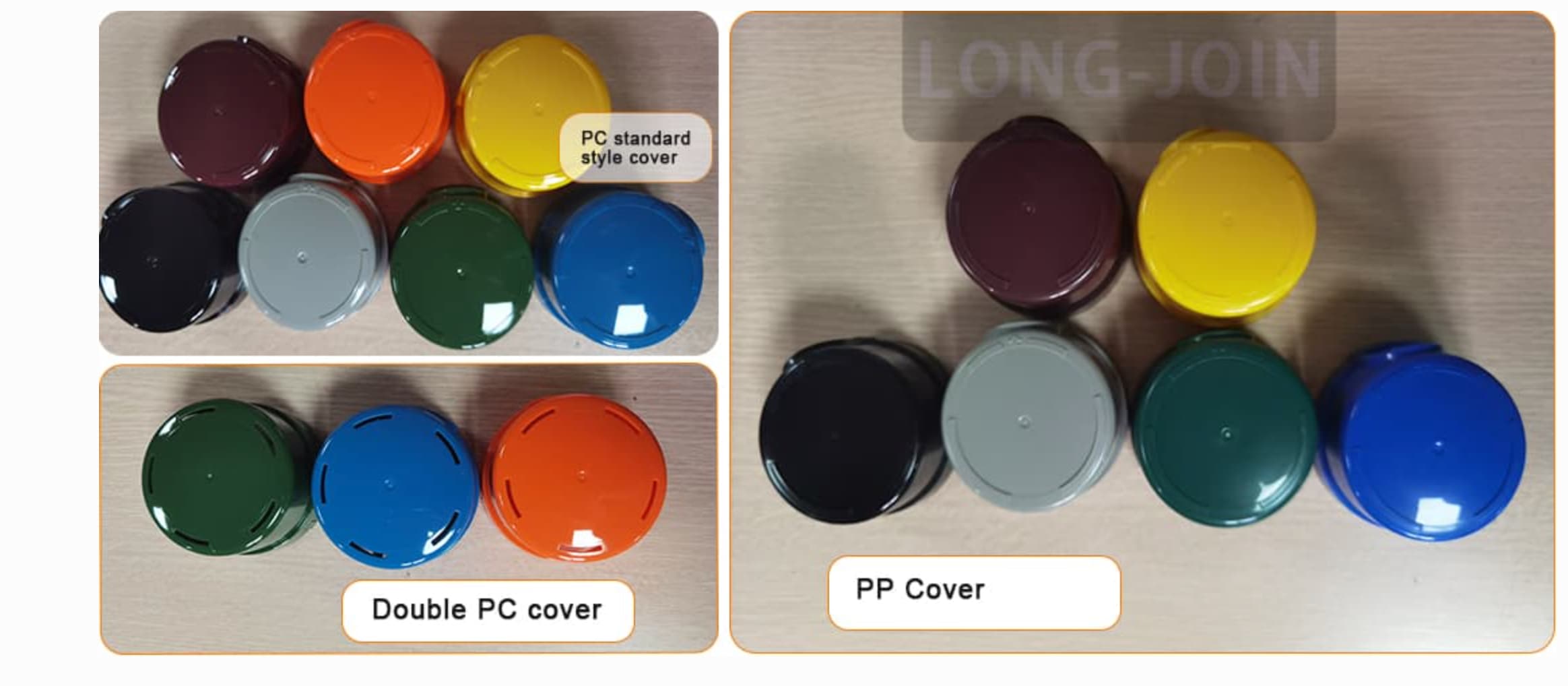
Most people who handle a twist-lock photocell never really look at the clear bit on top. You plug it in, twist it till it clicks, climb back down the ladder. But that little window is the only way daylight gets to the sensor, so if anything about it is off, the controller is working from bad information, and somebody ends up ringing to say the light by their gate came on at half four in the afternoon.
People often ask whether a bigger window makes a фотоэлемент more accurate. Honestly, not on its own. Size changes how much light gets in and from which angles. Whether the lamp switches at the right moment depends on a lot more, from the sensor behind it to the other lights hanging around the site.
What's Actually Sitting Behind That Little Window?
There’s a light-sensitive part in there, and its only job is to turn the daylight landing on it into an electrical signal.
That signal goes to the control circuit, which compares it with a set switching level. Signal drops in the evening, lamp goes on; morning light pushes it back up, lamp goes off.
In Long-Join’s twist-lock photocontrol range you’ll find two kinds of sensing part, CdS photocells и phototransistors, and they don’t react to light in exactly the same way. So the window, sensor and circuit get worked out as one piece.
Six Things About the Window That Change the Reading
You’d be surprised how small a change to the housing it takes to throw the readings off. The window is the only route from the sky to the sensing element, and its area, its plastic, its shape, the sensor type, the circuit and the seal all play a part.
Could one small change to the housing really throw the controller off? It can. The window is the only road between the light outside and the sensing element inside.
Фактор | What It Changes | Watch Out For |
Window area | How much outside light gets in | Bigger isn’t automatically better |
Light transmittance | How much light passes through | Dirt, aging and yellowing cut it down |
Shape and position | Direction and viewing angle | Keep the lamp’s own light out |
Тип датчика | Sensitivity and response range | Match it to the outdoor light |
Control circuit | ON/OFF behaviour | Sensible thresholds and delay |
Уплотнение | Protection of the light path | Moisture and dust |
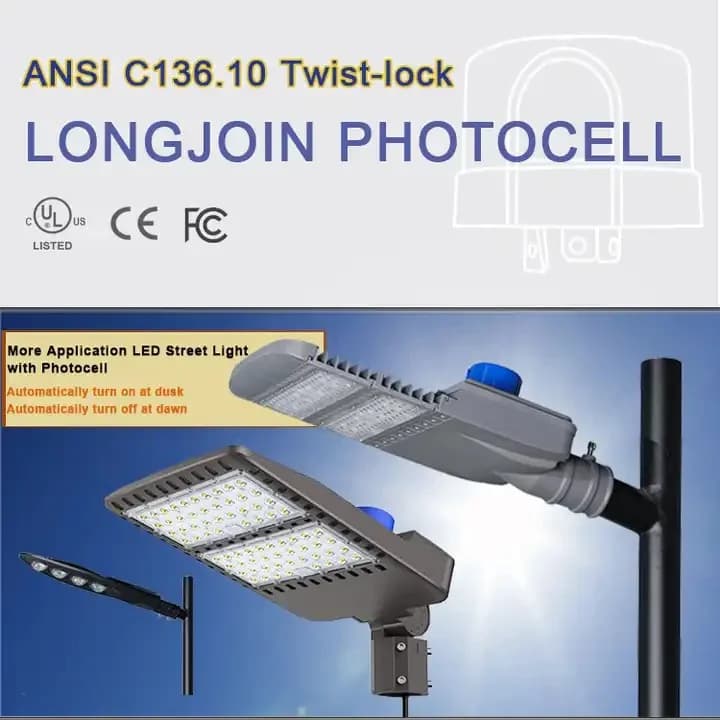
Long-Join’s photocontrol installation guide makes the point quite plainly. If the photocontrol eye can’t get enough natural light, the fixture may just sit there burning all day. If the lamp’s own light gets back into it, either straight or off some surface nearby, you get false switching instead.
Is a Bigger Window More Sensitive?
On paper, more glass means more light and a better reading. Outdoors it rarely plays out like that.
A larger window does give the sensor a wider view. Trouble is, that view includes stuff you’d rather it ignored, like the lamp across the road, the chemist’s sign that stays lit until midnight, headlights swinging round a corner, or a whitewashed wall that catches the low sun around five o’clock.
And if the light-sensitive part behind it is small, a much bigger hole may barely help. Judge a фотоэлемент уличного освещения on the whole design, not on how big its window looks.
It’s like the window in your sitting room. Knock it out to twice the size and yes, you see more of the street, but you don’t see any of it more clearly, and now the neighbour’s security light is shining straight in at you too.
Why Some Windows Are Tiny and Some Are Wide
Put two photocells side by side on a bench, one with a pinhole of clear plastic and one with a wide dome, and you might think somebody got it wrong. Usually they didn’t.
The small window is there to limit which directions the sensor can see, which helps on crowded sites. The bigger one takes in more of the sky.
What most people don’t think about is the acceptance angle. The opening doesn’t only control how much light gets in, it controls which directions that light can come from so two very different-looking windows can still switch within a minute or two of each other.
Can Window Position Cause False Switching?
Ever watched a street light come on, go off a minute later and then come back on, over and over? Nine times out of ten it can see its own lamp.
Long-Join’s installation instructions warn against lamp light reaching the photocontrol eye, whether it gets there directly or after bouncing off something. The sensor can’t tell that light from daylight, so it switches the lamp off, the street goes dark, and on it comes again.
A dusk to dawn photocell sitting near a glossy wall, a bright advertising board or a luminaire that’s been tilted at a strange angle is much more likely to do this. Where you mount it matters at least as much as window size. A beautifully designed window still gets it wrong if it’s bolted up where artificial light keeps pouring in.
When a Perfectly Good Window Still Reads Badly
For all the talk about window size, it’s honestly not what causes most of the trouble once units are out on site.
Проблема | What You’ll Notice | First Thing to Try |
Dust or bird mess | Lamp on too early | Wipe the window |
Lamp glare | Lamp off in the middle of the night | Turn the sensor away |
Deep shade | Lamp on in the afternoon | Move it somewhere more open |
Moisture inside | Switching all over the place | Check the seal |
Wrong threshold | Consistently early or late | Look at the lux setting |
Short flashes of light | Lamp blinks off briefly | A sensible time delay |
Long-Join’s photocell maintenance guide mentions dirt, nearby lighting and reflections as things that change how a unit switches. So even a well-built outdoor photocell wants a wipe now and again.
Streets change. A tree gets bigger every summer until it’s hanging over the pole, a new shop opens across the road with a sign that never goes off, dust builds up on the clear patch a little more each month. Nothing inside has broken. It’s just looking at a different street.

Getting the Window, Seal and Sensor to Agree
Nobody’s really aiming for the biggest window possible. You want a clear, controlled view in a housing that survives years of sun and rain.
The sensor and circuit need to suit each other as well. A lovely window won’t save a badly picked switching threshold, and a very sensitive component will misbehave anyway if the window keeps funnelling lamp light onto it.
Long-Join’s twist-lock products come with different sensing technologies, voltage ranges, protection levels and control features. The JL-207 photocontrol series is a decent example, with versions you can pick for different street-lighting jobs.
Часто задаваемые вопросы
Not by itself, no. It changes how much light comes in and from what angles, but the sensor, the window material, the settings and where you mount it count just as much.
Because the extra area lets in light you don't want along with the light you do, and what's sitting behind the window decides how much of it is any use.
Anywhere you need to keep the view narrow, for instance right next to other lamps, near a bright sign, or up against a shiny wall.
Point the window at open sky, away from the lamp and anything its light might bounce off, and give it a short delay. Long-Join's application guide lists lamp reflections and poor sensor placement among the usual causes of false operation.
Different sensing parts, outdoor protection options, switching settings and standard twist-lock formats, for street, parking lot, pathway and area lighting.
Заключение
So yes, the window size does affect how light gets to the sensor, but a bigger one isn’t automatically more accurate. If the window’s clean, the unit’s mounted where it sees daylight instead of its own lamp, the seal’s holding and the sensor suits the site, you’ll find the size of that little clear patch hardly matters at all.
Внешние ссылки:
●https://www.rp-photonics.com/acceptance_angle_in_fiber_optics.html
●https://www.zgsm-china.com/blog/11-things-you-need-know-about-led-street-light-with-photocell.html
●https://www.electronics-tutorials.ws/transistor/phototransistor-basics.html
●https://www.adafruit.com/product/161?srsltid=AYCX9vKK_ZaG-w__FHqTsqef5A3I8t1RN262tR9Aeq6xGVw439huCRv9
●https://www.sciencedirect.com/topics/engineering/photocell




 Russian
 English
 Spanish
 Portuguese
 Arabic
 Japanese
 Italian