

Tender Specification Conflict: When “Over-Spec” Lighting Requirements Clash With Real-World Photocell Supply
Introduzir
Municipal street lighting tenders are getting more detailed every year. On one hand, that looks like progress. Buyers want better reliability, fewer failures, and longer service life. On the other hand, very strict tender language can create a new problem: the document becomes harder to satisfy than the real job itself. That is where many bidding conflicts begin. Your outline frames that tension clearly.
A common tender may ask for IP65 protection, at least 10,000 switching cycles, and surge protection at or above 6 kV. Those targets sound sensible. But when all three are locked in as fixed minimums, the supplier pool can shrink fast, especially in the photocell market where products are often designed for different risk levels and field conditions rather than one perfect universal setup. Standards like ANSI C136.10 and ANSI C136.41 help parts work together. But that does not mean every control device offers the same protection or acts the same in the field.
Why Do Tender Documents Sometimes Become A Design Constraint?
Tender writers usually want to protect the city. They want to reduce maintenance calls, avoid early product failure, and make sure the lighting system stays stable for years. That goal is reasonable. The problem starts when the tender mixes “minimum requirement” with “best possible condition.”
Then the document stops being a buying guide and starts acting like a rigid design rule. Procurement guidance commonly notes that specifications should support broad competition while still meeting performance needs.
In street lighting, that matters because photocontrol products are not all built in the same way. One model may focus on stronger surge handling. Another may focus on cost control for lower-risk areas. Another may offer more housing and sealing options. When the tender assumes one fixed answer, real-world engineering flexibility gets lost.
How Over-Specification Creates Procurement Friction
Tender Requirement | What Buyers Want | What Can Go Wrong In Bidding |
IP65 minimum | Better weather resistance | Some suppliers have good field products but limited certification documents |
≥10,000 cycles | Longer switching life | Low-cost models may not provide clear relay life data |
Surge ≥6 kV | Better lightning protection | Qualified options may cost more and reduce bidder participation |
All conditions fixed together | Easy compliance check | Fewer equivalent solutions are allowed |
Why Do Photocell Controllers Receive So Much Attention In Tenders?
UM sensor de fotocélula may look like a simple on-and-off device, but it works in a hard outdoor environment. It sits on top of the fixture, faces heat, rain, dust, humidity, and sometimes unstable power. In real service, it may also deal with LED driver inrush current, voltage spikes, and lightning-related surge stress. That is why buyers often focus on this part when writing tenders.
This is also why requirements for Fotocontrole IP65, surge protection, and switching durability show up so often. The buyer is not wrong to ask for them. The real issue is that these items are often written as hard thresholds without enough room for application-based judgment.
A coastal road, an industrial area, and a calm urban street do not expose a photocell switch to the same risks. Treating them as the same can lead to over-buying in one place and under-thinking in another.
What Makes The JL-207C A Useful Real-World Case?
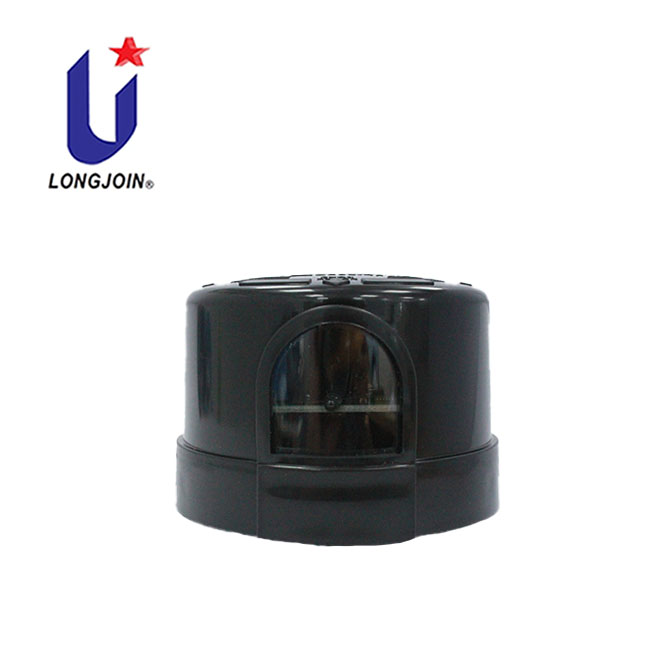
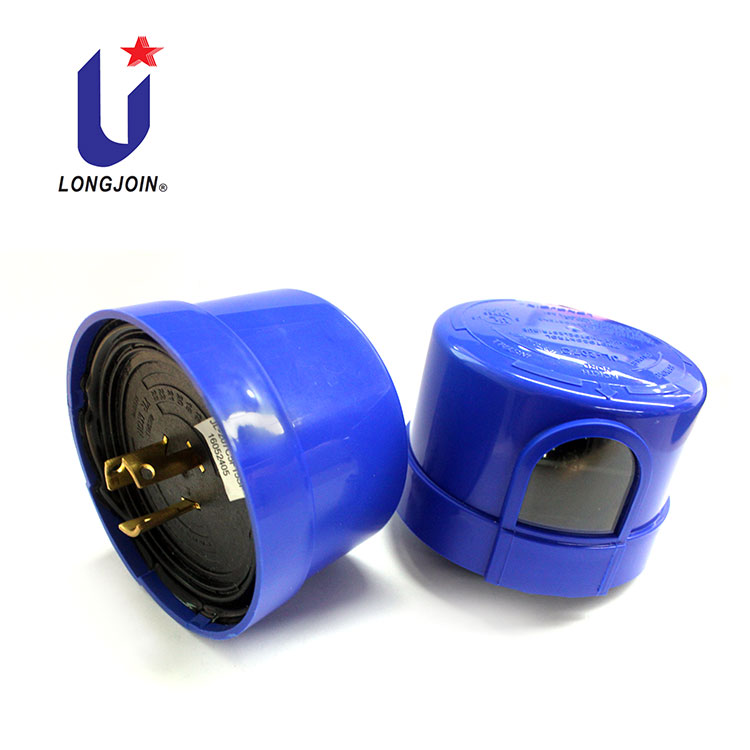
O LONG-JOIN JL-207C is a good example because it is not positioned as just one fixed product for one narrow condition. Long-Join says the JL-207C series supports automatic dusk-to-dawn lighting control and offers a rated voltage of 120–277 VAC.
The same product family is also described as having more than 10,000 relay life cycles in long-life versions, with configuration choices such as fail-on or fail-off modes and added protection through design options.
That matters in procurement. A configurable product can act as a bridge between strict tender language and real project conditions. Instead of forcing the buyer to change the whole platform, the supplier can often match the housing, protection, or operating mode more closely to the bid requirement.
Long-Join’s own comparisons also describe the JL-207 family as offering optional IP54, IP65, or IP67 protection levels and highlight its customization flexibility.
Why JL-207C Works As A “Bridge Product”
JL-207C Feature | Why It Helps In Tenders |
120–277 VAC operating range | Fits common municipal voltage needs |
Relay life above 10,000 cycles in long-life versions | Supports durability-focused bidding language |
Optional IP54 / IP65 / IP67 protection levels | Helps match different weatherproofing demands |
Custom modes and protection choices | Gives contractors room to meet specs without redesign |
Twist-lock form factor | Supports standard street lighting installation practice |
What Does A Typical Tender Conflict Look Like In Practice?
Picture a city upgrading roadway lighting. The tender asks for IP65 minimum, at least 10,000 switching cycles, and surge protection of 6 kV or more. During bidding, one contractor finds low-cost products that meet the price target but fail on surge. Another finds products with good sealing but weak life-cycle documents. A third offers stronger units, but the total project price rises.
At that point, the conflict is no longer only about product quality. It becomes a procurement issue. The buyer wants strict compliance. The contractor wants a fair path to bid.
The supplier wants to show that one adaptable product family may be more realistic than a one-line requirement sheet. Guidance on performance-based specifications often encourages defining the output needed rather than locking in unnecessary technical rigidity.
Why Is Higher Specification Not Always Better?
It is easy to think higher numbers always mean a better project. In real engineering, that is not always true. A higher surge level can make sense in lightning-prone zones. But using that same level everywhere may raise cost without bringing equal value. The same goes for sealing levels and spare-part strategy.
Over-specification can also reduce competition. Fewer suppliers qualify. Bidders spend more time arguing about documents. Spare-part stocking becomes harder if the project uses one premium setup where several practical setups would do the job.
Infrastructure procurement guidance notes that design decisions shape competition later in tendering, so specification choices directly affect how many suppliers can realistically participate.
How Can Procurement Teams Write Smarter Photocell Specifications?
A better method is to divide the problem by real operating risk. Instead of asking for the same controlador de iluminação pública profile everywhere, buyers can group the project into zones. Urban low-risk roads, coastal roads, and industrial corridors do not need the exact same control strategy.
This is where a configurable light sensor or fotocélula do anoitecer ao amanhecer family becomes useful. The product stays familiar, but the protection level can better match the site. That improves clarity for buyers and feasibility for contractors.
A More Practical Zone-Based Procurement Approach
Project Zone | Real Risk Level | Smarter Specification Logic |
Standard urban road | Low to medium | Focus on stable switching, standard sealing, and proven cycle life |
Coastal roadway | High humidity and corrosion | Prioritize stronger environmental protection and housing durability |
Lightning-prone corridor | High surge exposure | Prioritize stronger surge handling and verified protection design |
Mixed retrofit project | Mixed risks | Allow configurable products and equivalent solutions |
What Is The Main Lesson From The JL-207C Case?
The bigger lesson is simple: many tender conflicts are not caused by product failure. They come from a mismatch between procurement language and engineering reality.
Tenders often describe one ideal product, while the market offers many application-based variants. The JL-207C matters because it shows how a photocell for street light can be positioned not only as an operating device, but as a compliance-friendly, adaptable option for municipal work.
That does not mean every tender should become loose or vague. It means specifications should define the result they need, leave room for equivalent technical paths, and recognize that configurable products can be valid answers.
Conclusão
The real conflict in municipal lighting tenders is not “good spec versus bad product.” It is usually “fixed paperwork versus variable field reality.” When a tender is too rigid, it can narrow the market, raise costs, and create avoidable bidding disputes.
The JL-207C case shows a better way to think about this. A strong fotocélula product is not only one that switches lights on and off. It is one that can fit real installation risks, support clear compliance, and help buyers move from argument to practical decision.
Links externos:
●https://www.ledsupply.com/blog/understanding-led-drivers/?srsltid=AfmBOooSNlQgPSVi2AIhuhkxZXf0hF4swQlXgi0OTmqsykETCYPXrluE
●https://au.indeed.com/career-advice/finding-a-job/what-is-tender-writer
●https://www.nema.org/docs/default-source/standards-document-library/ansi-c136-10-2017-contents-and-scope.pdf?sfvrsn=36d2efb_2
 Portuguese
  English
  Russian
  Spanish
  Arabic
  Japanese
  Italian