
Applicability Analysis Of Long-Join JL Series Photocontrols In Middle East High-Voltage, High-Temperature, And High-Humidity Environments
Introduzir
The Middle East is growing fast. New roads, industrial parks, oil facilities, ports, and utility projects all need reliable outdoor lighting. But this region is not easy on lighting controls. Many sites deal with strong heat, heavy dust, salty air, moisture, and unstable grid conditions. That means a normal photocell may fail early, cycle badly, or lose accuracy.
This is why model selection matters. A good photocontrol for this market should handle voltage stress, survive harsh weather, and keep switching stable over time.
Long-Join’s JL series is often considered for these jobs because it includes both standard and smart options, from classic photocell switch designs to remote-control systems built for wider lighting networks.
Long-Join’s own product ecosystem also shows strong support for NEMA and Zhaga interfaces, which helps make upgrades easier in modern street lighting outdoor projects.

Why Are Middle East Lighting Sites Harder On Photocontrols?
Many Middle East projects are installed in places where the climate is not gentle. In inland areas, very high heat and thick dust can make the sensor less stable.
In coastal and industrial areas, damp air and salt can wear out enclosures and connectors much faster over time. In oil and energy projects, equipment may run for long hours. It may also face vibration. Safety rules can be stricter too.
For an outdoor photocell sensor, the job is not only to switch lights on at dusk. The real challenge goes beyond that. The true test is whether it still works well after months of heat, dirt, and electrical strain.
That is why buyers in this region should look at sealing, switching stability, surge resistance, and housing quality first, not just price.
What Does This Mean In Practice?
It means the best model is not always the cheapest one. A low-cost unit may work in a mild site, but not on a hot tower, refinery road, or exposed oilfield pole. In these projects, a stronger light photocell sensor can save money by reducing replacements, service visits, and downtime.
Site Condition | Common Risk To Standard Controls | What A Better Model Should Offer |
High heat | Faster aging of internal parts | Stable switching and durable housing |
Dust and sand | Dirt buildup and sealing issues | Strong enclosure and better protection design |
Humidity and salt air | Corrosion and moisture entry | Higher sealing level and corrosion-aware installation |
Voltage fluctuation | Unstable switching or shortened life | Better high-voltage fit and surge tolerance |
What Should You Consider For Transmission Towers And High-Voltage Grids?
Transmission and utility-side lighting often sits in exposed places. These poles and towers may face heat, dust, and wind for long periods. In these cases, voltage compatibility becomes a major issue. If the control does not match the grid well, the system can switch poorly or wear out too soon.
Long-Join’s recent product content places the JL-205E and JL-207E in the discussion for high-voltage projects, which tells us these models are part of the brand’s practical answer for tougher grid conditions.
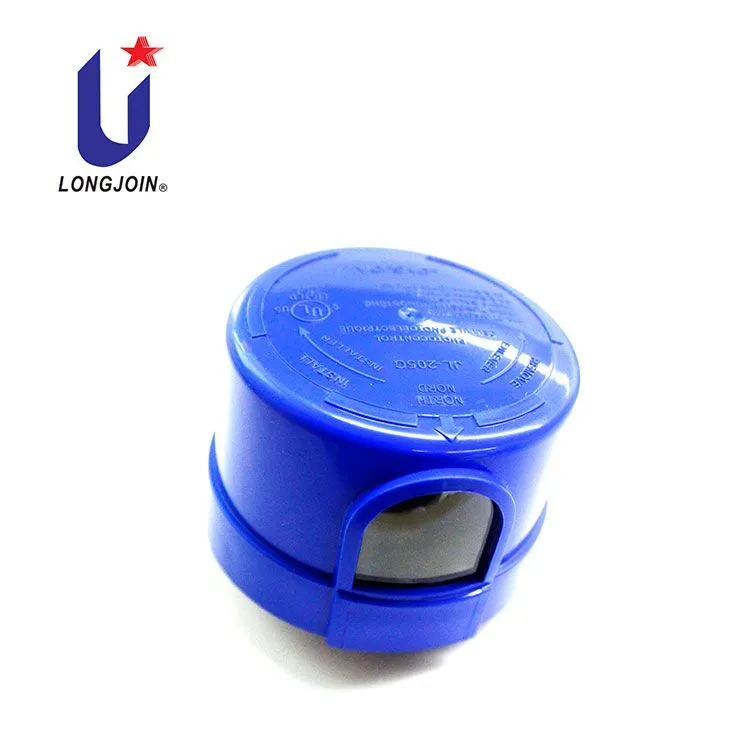
Long-Join also notes that high-voltage photocell control needs careful matching to local power conditions, which is a key point for Middle East buyers. If the site has frequent line swings or large loads, this step matters even more.
A simple buying rule is this: where the grid is rough, choose a model built for electrical stability first. Do not treat the dusk to dawn photocell sensor like a small accessory. In many projects, it is the part that decides whether the light system stays dependable.
Why Do Refineries And Petrochemical Plants Need Tougher Models?
Refineries and petrochemical plants are not normal outdoor sites. These places are often hot and damp. Fumes are also common there. Many of them run for long hours with no break. Even if the light point is outside a hazardous explosion zone, the area around it can still be harsh and hard to work in.
In these areas, you need to choose a photocell for street lights or area lights with more care. The unit should be sealed well, installed correctly, and matched with a housing or socket system that reduces exposure to water and dirt.
Long-Join’s wider product family includes standard interfaces such as NEMA and Zhaga solutions, which can help buyers choose a more suitable control architecture for industrial lighting upgrades and maintenance planning.
What Matters Most In These Plants?
The key issue is reliability over time. If a control fails too often, maintenance becomes expensive and disruptive. In a refinery, the hidden cost of one weak control is not just the part itself. It is the labor, access time, and safety process needed to replace it.
For that reason, buyers should focus on enclosure protection, wiring quality, stable switching, and compatibility with the full luminaire system. A well-matched photo sensor setup helps reduce nuisance failures and keeps lighting predictable.
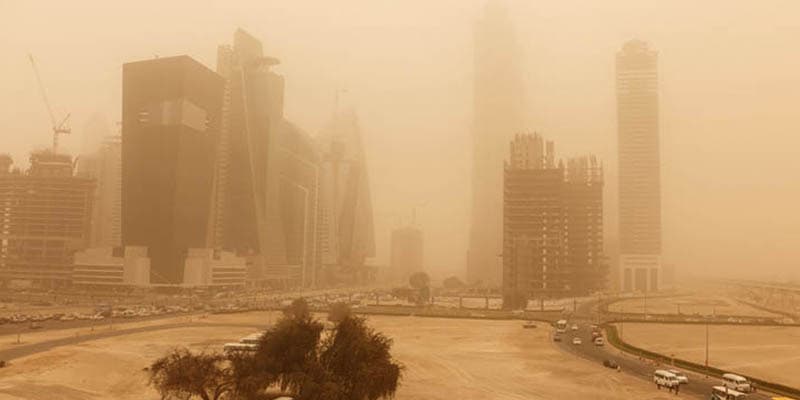
How Do Sandstorms, Strong Winds, And Salt Spray Affect Oilfield Lighting?
Oilfield sites can be especially hard on outdoor controls. Dust can settle into weak seals. Wind can drive particles against housings again and again. In coastal oil and gas areas, salt in the air adds another layer of stress to exposed parts.
That is why protection rating matters. In Long-Join’s smart control lineup, the JL-245CZ is presented with IP65/IP67 options, showing that the company does offer higher-protection products for harsh outdoor conditions. This does not mean every JL model has the same rating, but it clearly shows that stronger sealing is already part of Long-Join’s design direction for tougher sites.
If your project sits in an open oilfield, the safest move is to make sealing your first and most basic requirement. A stronger outdoor photocell light sensor is often the better choice. It helps reduce the risk of water getting in and dust causing damage.
Oilfield Challenge | Por que isso importa | Better Selection Logic |
Sandstorms | Dust can enter weak enclosures | Favor better sealing and outdoor-grade construction |
Strong wind | More physical wear over time | Use durable housing and firm mounting |
Salt spray | Can speed up corrosion | Use protected interfaces and careful installation |
Remote locations | Maintenance is costly | Choose longer-life, more stable models |
Which JL Series Models Fit Best For Different Middle East Conditions?
Not every site needs the same model. That is why selection should follow the environment.
For standard high-voltage switching jobs, JL-205E and JL-207E are the clearest models to review first, since Long-Join directly positions them in its high-voltage comparison content. Where grid conditions are tougher, this is the more logical starting point than a basic low-stress control.
For projects that need a broader control platform, Long-Join’s NEMA e Zhaga ecosystem is also worth considering. Long-Join explains that its smart photocell socket system connects classic twist-lock heads, wireless controllers, and dimming-ready drivers in one platform.
This makes future upgrades easier. It also helps if the customer later wants remote monitoring or dimming.
A Simple Selection Guide
- Hot, high-voltage utility sites:start by reviewing JL-205E e JL-207E.
- Projects needing socket flexibility:use a NEMA or Zhaga-ready path for easier future upgrades.
- Exposed sites with dust and moisture:prioritize higher protection designs, not just lower cost.
- Smart city or industrial park expansion plans:consider wireless control architecture early.
Why Is JL-245CN A Strong Choice For Large Industrial Parks?
Large industrial parks often have many poles spread across wide spaces. In that case, manual checking wastes time. A remote system gives more value because the operator can monitor and manage many nodes from one place.
Long-Join’s JL-245CN is positioned as an NB-IoT wireless remote street light controller. Long-Join says users can remotely control devices through a computer terminal web interface, and the product connects through the NB-IoT network. The product page snippet also notes an operating altitude of up to 4000 m, which shows it is designed with broader outdoor deployment in mind.
For Middle East industrial parks, this matters because centralized control supports energy saving, faster fault checks, and easier scaling. Instead of treating each street light controller as a separate point, the operator can manage lighting more like a system. That is a better fit for modern projects that want efficient lighting control and lower maintenance pressure.
Conclusão
The Middle East can be a tough market for outdoor lighting controls. Heat, dust, влажность, salt air, and voltage stress can all cause problems. That is why choosing the right model matters even more. The best choice is to fit the product to the site, not just the budget.
For high-voltage jobs, start with the JL-205E and JL-207E. They are the best first models to look at. For larger smart projects, JL-245CN offers a more advanced path. And for buyers planning long-term upgrades, Long-Join’s NEMA and Zhaga ecosystem adds useful flexibility. A well-chosen iluminação pública com fotocélula solution lasts longer, works more smoothly, and cuts maintenance headaches.
Links externos:
●https://www.zhagastandard.org/index.php?option=com_content&view=article&id=340:zhaga-permite-iluminação-de-led-para-exteriores-atualizáveis-pela-iot&catid=22
●https://www.nema.org/standards/technical/the-abcs-of-conformity-assessment/faqs-product-certification-and-testing
●https://en.wikipedia.org/wiki/Narrowband_IoT

 Portuguese
  English
  Russian
  Spanish
  Arabic
  Japanese
  Italian