
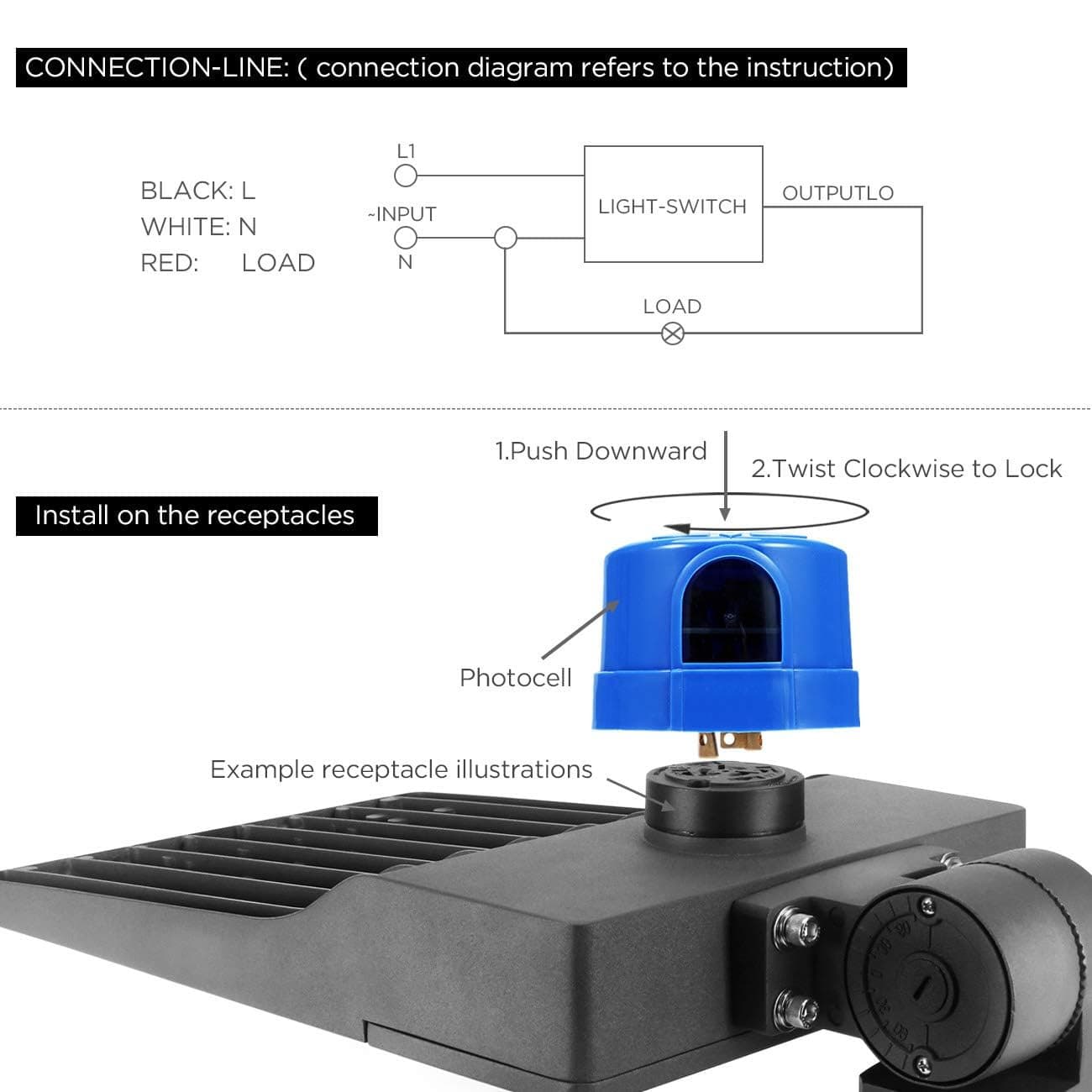
Twist Lock Photocell Installation Troubleshooting
Introduzir
Street light turning on too early? Staying on during the day? Flickering at night like something’s possessed? Don’t automatically assume the lamp is dead.
Most of the time, the issue is installation. How the twist lock photocell is mounted. Where it’s facing. How the wiring connects. A twist lock photocell is simple—it reads outdoor light and controls the lamp automatically. But get one step wrong and the whole thing acts broken.
This guide walks through common installation problems. Shows you what to check before you waste money replacing a photocell that probably works fine.
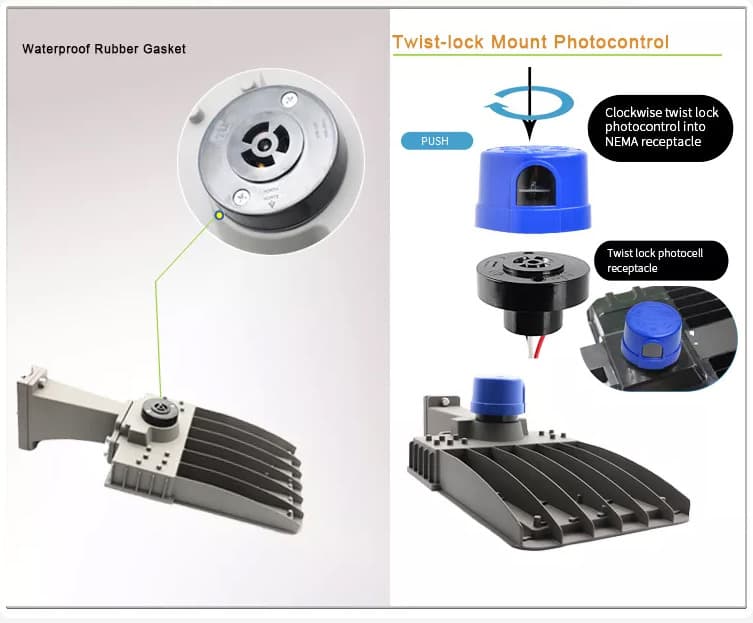
Why Does The North Arrow Actually Matter During Installation?
Most twist lock photocells have a north arrow on top. It’s not decoration. It’s functional.
This arrow points the sensor in the right direction—away from direct sunlight and away from the lamp’s own reflected light. When the north arrow points the wrong way, the photocell reads light wrong. Thinks it’s brighter or darker than it actually is. Lamp turns on too early. Or stays off when it should be on.
During installation, check the arrow before you lock anything down. Long-Join documentation states the photocell socket should align north during mounting. This one small step keeps the light sensor control steady.
Problema | What Happens | Quick Fix |
North arrow faces wrong way | Lamp switches at wrong times | Rotate photocell to true north |
Sensor faces direct sun | Takes too long to turn on at night | Recheck direction and angle |
Sensor sees lamp reflection | Lamp cycles on and off repeatedly | Move or rotate the control head |
Seriously—don’t skip the north arrow. It sounds simple because it is. But it’s also the most common install mistake.
Can A Blocked Sensor Window Actually Cause False Switching?
Absolutely. The photosensitive window is what reads the outside light. Block it, and the photocell is blind.
Sometimes the fixture shape itself blocks it. Other times dust and dirt build up on the window. This happens constantly in dry areas, dusty roads, industrial zones. When that window gets covered, the photocell thinks it’s still dark outside. Light stays on all day. Wastes power.
Reflected light is another sneaky problem. LED fixture light bounces back into the sensor. Photocell thinks daylight came back. Turns the lamp off. But now the sensor sees darkness again. Turns it back on. Off. On. Off. You get an endless cycle.
This is frustrating. But it’s also fixable. Usually just repositioning solves it.
Is The Photocell Actually Installed In The Right Light Area?
This matters more than people think. Photocell needs to face open outdoor space. Not a wall. Not a bright sign. Not glass. Not the lamp’s own light.
Put it facing something too bright and it delays switching on. Put it in deep shadow and it turns on too early. Location is just as important as wiring. Sometimes more so.
Keep the sensor away from direct LED light and strong reflections. Avoid deep shadows from poles, trees, fixture covers. A tiny position change can fix false switching problems that seem impossible to diagnose.
Can Wrong Voltage Stop A Photocell From Working?
Yes. Voltage mismatch is serious. Period.
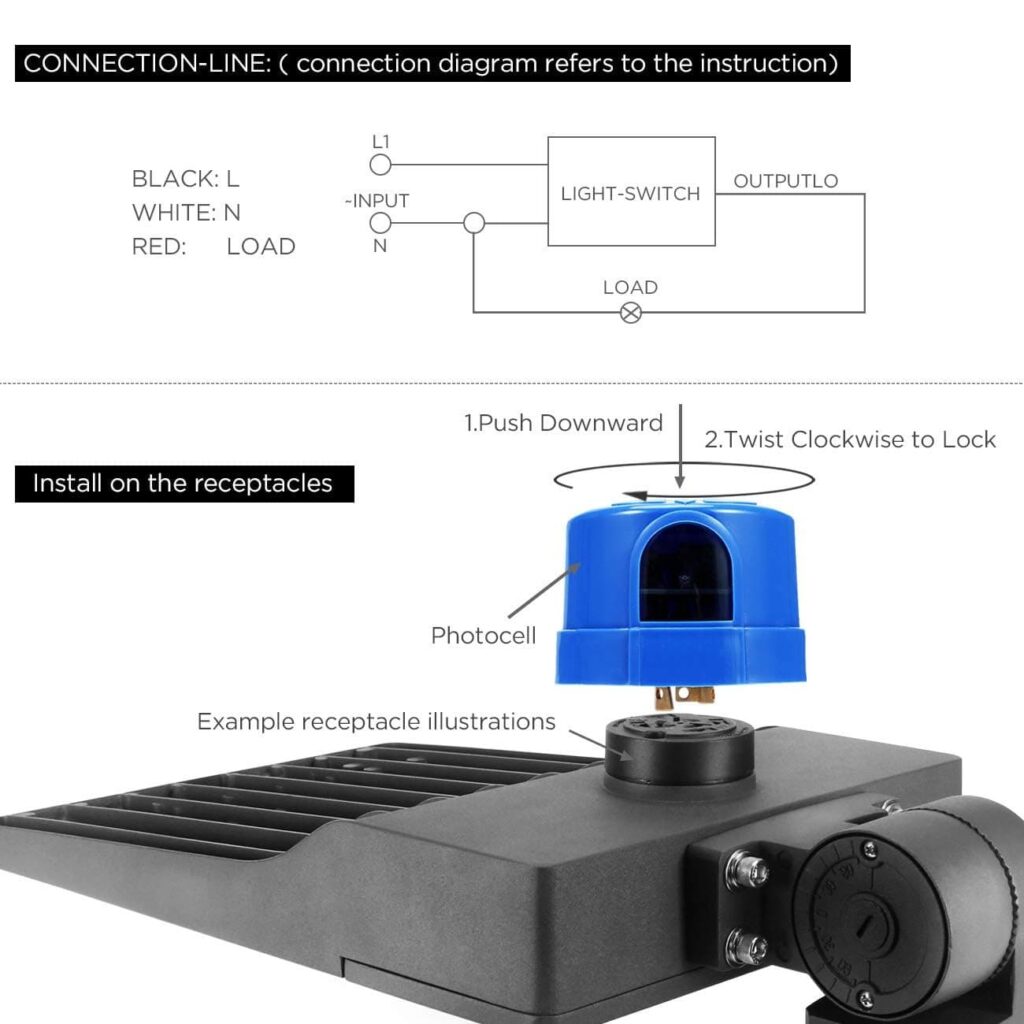
A unit built for 120V shouldn’t go on 277V or 480V. Too much voltage damages the internal circuit. Not enough voltage and the photocell won’t start at all.
Read the product label. Long-Join makes different twist lock photocontrols with different voltage options. This matters especially for street lighting projects where voltage standards change by location or country.
How Do Heat, Rain, And Dust Actually Affect A Photocell?
Outdoor equipment takes a beating. Heat. Rain. Dust. Storms. All of it affects performance.
In hot regions, internal components can drift over time. Changes the switching point. Rainy areas? Water gets in through poor sealing. Short circuits. Relay failure. Unstable switching.
Dust is simple but serious. Dust covers the sensor window and the photocell can’t read daylight properly. Common in the Middle East, dry regions, industrial sites.
Environment Issue | Where It Happens | Resultado | How To Prevent |
High heat | Médio Oriente | Sensor drift or shorter lifespan | Use heat-tolerant models |
Water entry | Southeast Asia | Short circuits or relay failure | Use proper sealing |
Dust buildup | Dry and northern areas | Wrong light reading | Clean sensor window regularly |
Thunderstorms | Storm-prone areas | Surge damage | Use surge protection |
Pick the right model for your climate. It makes a difference.
Why Does The Lamp Fixture Itself Cause Interference?
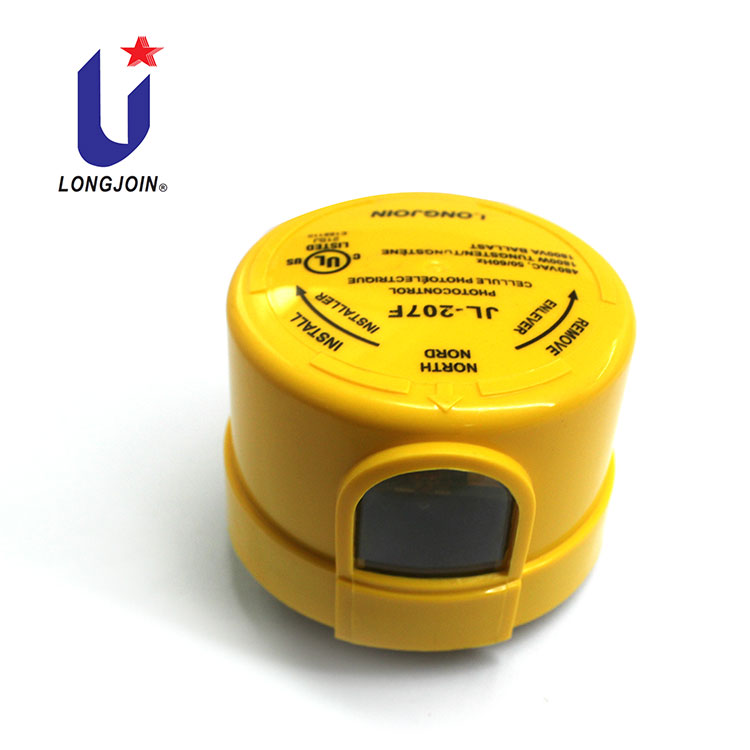
The fixture can be the problem. Shiny lamp housing reflects light back into the sensor. Creates self-oscillation—light turns itself on and off endlessly.
LED flicker messes with the sensor too. If reflected light changes rapidly, the photocell misjudges real outdoor light. Wears down the relay faster.
Some fixtures also create electromagnetic interference—EMI. Disturbs the relay or control circuit inside the photocell. Lamp starts behaving randomly.
Test the photocell on the fixture before you install it everywhere. Check the angle. Check reflection. Check driver quality.
When Is The Photocell Too Old Or Just Damaged?
Photocells don’t last forever. Relay contacts wear out over time. Unit might fail to open or close properly. Switching gets unreliable.
The sensing part ages too. Fotodiodo or CDS element loses sensitivity. Unit still works, but not at the right light level. Doesn’t respond to actual darkness the way it should.
Lightning and power spikes cause sudden failure. Surge damage happens fast. Long-Join offers photocontrol products where higher lightning protection is built in—useful if you’re in storm-prone areas.
What Should You Actually Check Before Replacing The Photocell?
Check the simple stuff first. Most problems come from installation, not the photocell failing.
Look at the north arrow. Is the sensor window blocked? Confirm the voltage matches. Check the socket wiring. Make sure the photocell is fully locked into the receptacle. Inspect water sealing. Look for dust buildup.
A careful check saves time and money. Also prevents replacing a good photocell when the real issue is wiring, reflection, or mounting.
Perguntas frequentes
Sensor reads light incorrectly. Lamp turns on too early, off too late, or wastes energy.
Flicker or reflected light confuses the sensor. Causes repeated on-and-off switching that wears it out.
Design, voltage, weather, surge protection, relay quality, and site environment all affect how long they last.
Absolutely. Reduces damage from lightning and power spikes. Worth the investment in risky areas.
North arrow, wiring, voltage, sealing, sensor window, and lamp reflection. Check all of it before final testing.
Conclusão
Twist lock photocell problems usually trace back to installation when you know where to look. Start with orientation. Check the sensor window. Check wiring. Check voltage. Check weather exposure. Check fixture reflection. Check product age.
A good installation makes the photocell work smoothly. Protects the lamp. Saves energy. Reduces maintenance headaches. For street lighting projects, the best result comes from matching the photocell, socket, driver, and fixture from the beginning.
Don’t cut corners on installation. Takes an extra 20 minutes to do it right. Saves months of headaches later.
Links externos:
●https://en.wikipedia.org/wiki/Photodiode
●https://en.wikipedia.org/wiki/Light-emitindo_diode
●https://en.wikipedia.org/wiki/Electromagnetic_interference




 Portuguese
  English
  Russian
  Spanish
  Arabic
  Japanese
  Italian