
Shorting Cap Photocell In Smart City Upgrades: Why It Matters For Modern Street Lighting
Introduzir
Street lighting upgrades do not always happen in one clean step. A city may install new LED luminaires first, then add photocells, smart controllers, or network systems later. During this gap, the lights still need power. Roads, parks, bridges, and parking areas cannot stay dark while the final control system is being prepared.
Why Does A Shorting Cap Matter During Smart City Upgrades?
Smart city lighting projects take time. The poles, luminaires, sockets, controllers, and network systems may not all arrive or get installed at once. If the lighting department waits for every part before turning on the lamps, streets may stay dark longer than needed.
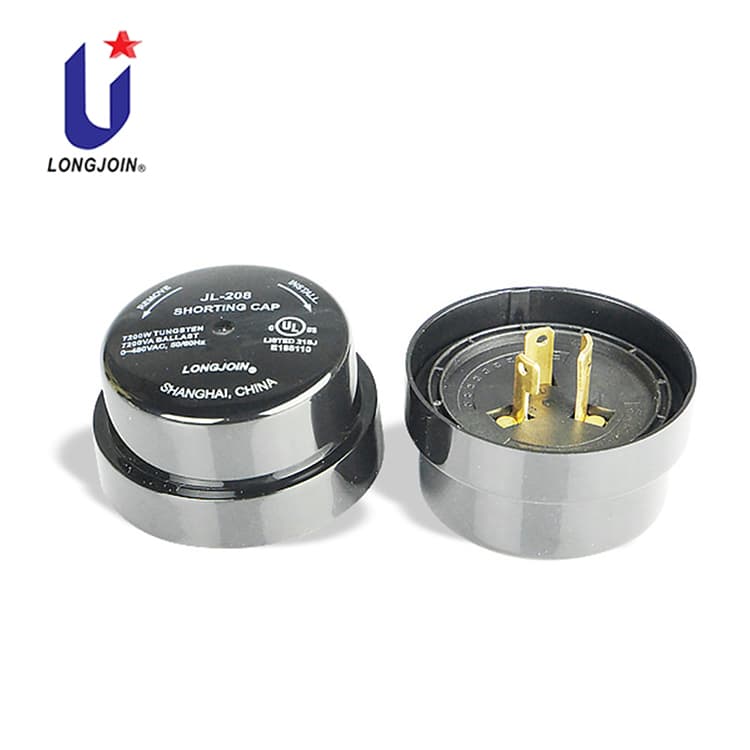
A shorting cap helps avoid that delay. Teams can install NEMA-ready lights first and use a Capacitor de curto-circuito JL-208 to keep the lamps working. Later, they can remove the cap and install a photocell, smart controller, or wireless node.
This is helpful for staged projects. It also reduces rewiring work. The same photocontrol receptacle can support today’s bypass cap and tomorrow’s intelligent lighting control device. For cities with many poles, this small step can save time and reduce repeat labor.
Item | Capacitor de curto-circuito da fotocélula | Fotocélula padrão |
Main Job | Keeps power flowing | Controls light by daylight |
Daylight Sensing | Não | Sim |
Automatic On/Off | Não | Sim |
Melhor uso | Testing, bypass, upgrades | Daily dusk-to-dawn control |
Typical Mounting | Receptáculo NEMA | Receptáculo NEMA |
How Does JL-208 Help When A Street Light Photocell Fails?
A failed photocell can cause a real problem. Sometimes the light stays off at night. Sometimes it stays on all day. Either way, the maintenance team must respond. But in many places, the correct photocell sensor may not be ready at once.
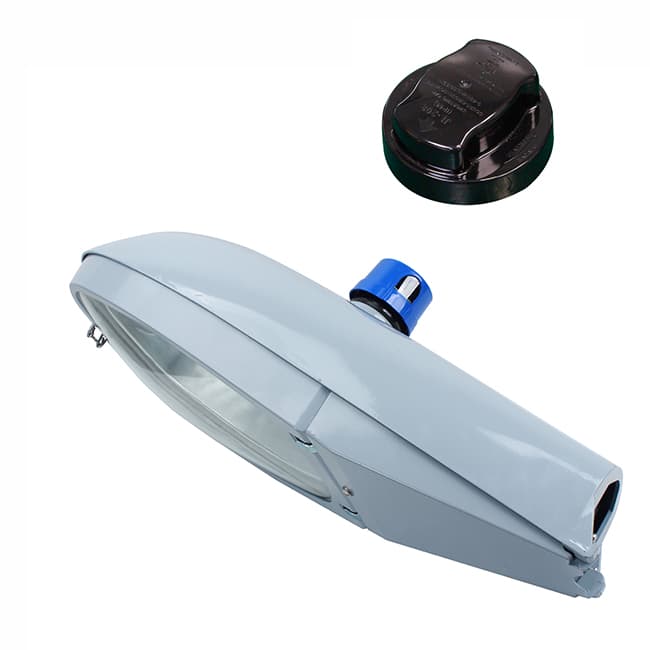
In this case, a JL-208 shorting cap can be used as a temporary fix. The technician removes the failed photocell and installs the shorting cap on the same NEMA socket. The luminaire receives power again, and the street is no longer dark.
This does not replace the long-term control solution. It only gives the team breathing space. The proper photocell or smart node can be installed later. For public roads, parking areas, and pedestrian zones, that quick power restoration can make the area safer.
What Are The Typical Technical Features Of JL-208?
The JL-208 is built for outdoor lighting work. It is made for NEMA twist-lock installation and is used as a short circuit cap for lighting maintenance and testing. Depending on the version, it can come with different protection ratings and housing choices.
The key point is not only the electrical bypass function. Outdoor fixtures face rain, dust, heat, sunlight, and handling during maintenance. So the housing and sealing design matter too.
Item | Capacitor de curto-circuito JL-208 |
Product Type | Photocell shorting cap |
Função principal | Circuit bypass |
Instalação | ANSI C136.10 NEMA receptacle |
Classificação de proteção | IP54 / IP65 / IP66 options |
Carga nominal | 7200W Tungsten |
Ballast Rating | 7200VA |
Proteção contra surtos | Available in selected versions |
Housing Color | Black, clear, or customized |
Uso comum | Maintenance, testing, upgrade staging |
For lighting departments, these details help when choosing a product for street lighting outdoor use. A cap used on a road fixture should not be treated like an indoor connector.
When Should Cities Use A Shorting Cap Instead Of A Photocell?
Cities should use a shorting cap when the goal is continuous power, not automatic daylight control. For example, it is useful during emergency repair, factory inspection, construction lighting, and smart controller staging.
It is not the best choice when the final system needs automatic on and off control. In that case, a photocell or controlador inteligente should be used. The shorting cap is more like a bridge. It connects the old step to the next step without forcing the city to rework the whole fixture.
This is why it fits smart city projects so well. A city may start with JL-208, then move to JL-205C or JL-207C photocontrols, and later use a smart controller such as JL-240XA ou JL-245CN when the platform is ready.
How Does A Shorting Cap Support Factory Testing?
Lighting manufacturers often need to test luminaires before shipment. The lamp must be powered on to check wiring, driver function, LED output, and general build quality. A shorting cap makes this easier.
Instead of installing a photocell for every test, the factory can place a shorting cap on the receptacle. The fixture powers on directly. Workers can confirm that the luminaire works before packing or delivery.
Can A Shorting Cap Help Temporary Construction Lighting?
Yes. Construction sites often need steady light before the final control plan is complete. Roads, bridges, storage yards, and parking areas may need lighting for night work or safety.
A shorting cap keeps the luminaire powered continuously. This is useful when the site does not need a daylight-based photocell switch yet. It also avoids extra temporary wiring if the fixture already has a Receptáculo de fotocontrole NEMA.
But the site team should still plan how the lights will be managed. If the lamps stay on all day and night, energy use will increase. So shorting caps are best used with a clear purpose and a clear replacement plan.
What Is A Smart Upgrade Path With LONG-JOIN Products?
A smart lighting upgrade should be easy to stage. The first step may be simple power restoration. The next step may be normal dusk-to-dawn operation. The final step may be remote monitoring and network control.
Project Stage | Recommended LONG-JOIN Product | Propósito |
Initial Installation | Capacitor de curto-circuito JL-208 | Keep light energized |
Normal Photocell Control | JL-205C | Basic dusk-to-dawn control |
Roadway Lighting Control | JL-207C | More reliable photocontrol use |
Smart City Control | JL-240XA | Smart control interface |
Connected Lighting Platform | JL-245CN | Networked lighting control |
This path helps cities avoid waste. They do not need to replace the whole luminaire each time the control level changes. They can upgrade the control device on the receptacle.

What Should You Check Before Installing A Photocell Shorting Cap?
Before installing a shorting cap, check the receptacle standard, voltage rating, load condition, and outdoor protection needs. The cap must match the fixture and the project use. Do not install it by guessing.
For smart city work, labeling is also helpful. If a pole is using a shorting cap only as a temporary bypass, the maintenance team should know when it must be replaced with a photocell or controller.
Perguntas frequentes
A shorting cap keeps the circuit closed. A fotocontrole senses daylight and switches the lamp on or off.
Use it during testing, emergency bypass, temporary lighting, or smart upgrade staging.
It should be installed only when the cap and fixture match the correct ANSI C136.10 NEMA receptacle requirements.
It keeps the light working before the final photocell, smart node, or controller is installed.
Yes. That is one of its main benefits. It can be removed later and replaced with a compatible smart control device.
Conclusão
A photocell shorting cap may look like a small accessory, but it plays an important role in modern lighting work. It helps restore power, support factory testing, keep temporary lights running, and make smart city upgrades easier to manage.
For municipalities and lighting contractors, the LONG-JOIN JL-208 Shorting Cap is a practical bridge between basic street lighting and future intelligent lighting control. It keeps today’s lights working while leaving room for tomorrow’s smarter system.
Links externos:
●https://www.intermatic.com/Catalog/us/Products/Photocontrols?setcontextlanguagecode=en
●https://en.wikipedia.org/wiki/Light-emitindo_diode
●https://www.nema.org/membership/products/view/lighting-systems

 Portuguese
  English
  Russian
  Spanish
  Arabic
  Japanese
  Italian