
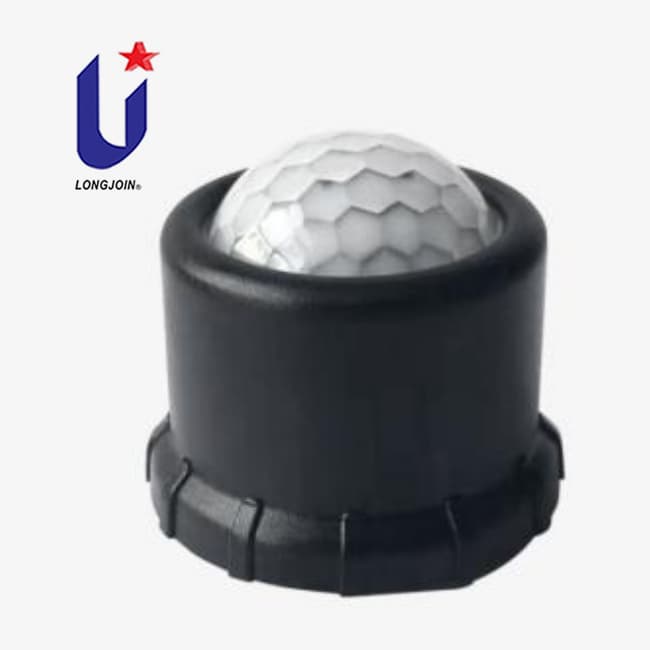
Comparative Analysis Of Long-Join Zhaga Sensor JL-723A1H PIR And Conventional Photocell JL-711A
Introdurre
Cities are asking more from every lamp post. Today, a photocell must do more. It should switch lights on at dusk and off at dawn. Many projects now need fast lighting control and smart hardware. They want energy savings without losing reliability.
In that context, Long-Join’s Zhaga PIR sensor JL-723A1H and the conventional photocell sensor JL-711A often appear in the same shortlist, but they solve slightly different problems. JL-723A1H gives smart, dynamic presence sensing with DALI-2 dimming for lighting. JL-711A gives simple, strong ambient light control with 0–10 V dimming.
What Are The Core Sensing Principles Behind JL-723A1H And JL-711A?
At a high level, the two devices “sense the world” in very different ways.
JL-723A1H – PIR + Light Sensing For Dynamic Control
JL-723A1H combines:
- Passive infrared (PIR)sensing reads body heat. It spots people or cars moving.
- Light sensingto measure ambient illuminance
- DALI-2 outputto talk digitally to Driver LED and smart controllers
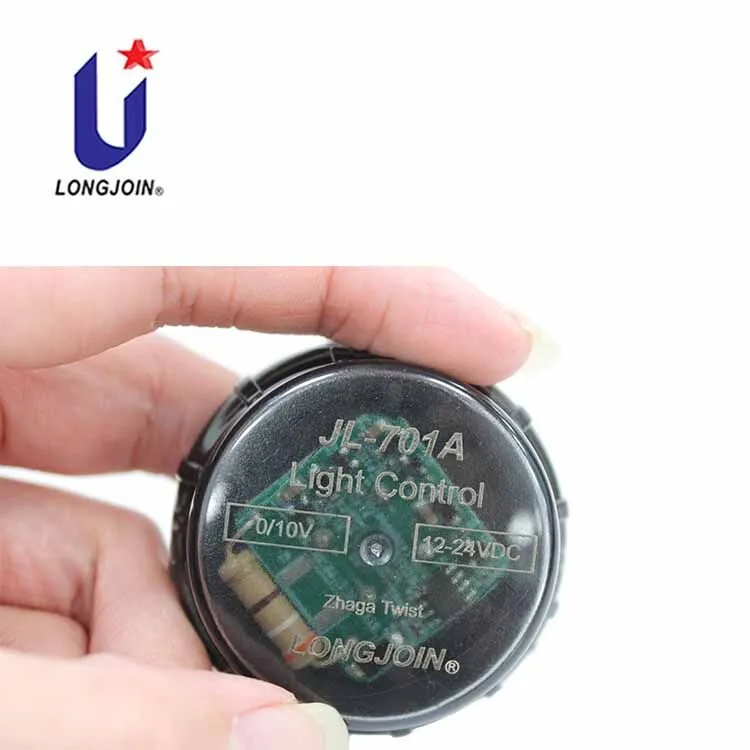
JL-711A – Conventional Photocell For Dusk-To-Dawn Switching
JL-711A, by contrast, is a classic light photocell sensor:
- It provides a 0–10 V dimming interface so the driver can raise or lower output based on lux level.
- It does notdetect motion, people, or traffic. It only “knows” whether it is bright or dark enough.
To put the sensing principles side by side:
Aspetto | JL-723A1H Zhaga PIR Sensor | JL-711A Conventional Photocell |
Primary Sensing Principle | PIR (human / vehicle motion) + light sensing | Ambient light sensing only |
Caso d'uso tipico | Smart presence-based dimming, adaptive street lighting | Classic dusk-to-dawn photocell street light control |
Output Interface | DALI-2 digital bus | 0–10 V analog |
Standard | Zhaga Book 18 sensor head | Zhaga Book 18 controller |
How Do Response Speed And Control Precision Differ In Real Projects?
When designers move from paper to the street, two parameters suddenly matter a lot: how fast the sensor reacts, and how precisely it controls light.
Velocità di risposta
- JL-723A1H: PIR detection and DALI-2 messaging are designed for near real-time Start-up time is under 200 ms, and motion events are typically detected and processed within a few seconds, depending on delay settings chosen by the engineer. This is fast enough to bring a luminaire from a low standby level to full brightness before a pedestrian walks under the pole.
- JL-711A: Because it tracks lux rather than motion, its “response” is intentionally slower and more filtered. The photocell avoids reacting to passing car headlights or lightning, so effective switching happens over seconds rather than instant changes.
Control Precision
- With DALI-2, JL-723A1H handles fine dimming steps. It also links to building or city platforms to group, schedule, and monitor lights over time. DALI-2 is a digital lighting protocol based on IEC 62386. It lets you control brightness, groups, and scenes for each light or street section with high precision.
- JL-711A uses a 0–10 V analog signal. It is stable and common. But it does not give the address control or data feedback found in DALI-2. Every light on that 0–10 V line gets the same voltage. They all act as one group, not as separate parts.
A simplified technical comparison is shown below (values are representative of the series):
Articolo | JL-723A1H Zhaga PIR Sensor | JL-711A Conventional Photocell |
Supply Voltage | 12–24 V DC, ≥15 mA | 12–24 V DC, 10 mA |
Typical Power Use | <0.13 W (12 V), <0.26 W (24 V) | ≈12 V/5 mA, 24 V/6 mA |
Output | DALI-2 digital dimming | 0–10 V analog dimming |
Sensing Mode | Light sensing + PIR | Light sensing only |
Spectral Range (light) | ~800–1100 nm (weighted to NIR for PIR assist) | 350–1100 nm, peak ~550 nm (daylight) |
Start-Up Time | <200 ms | About 5 s (for stable lux reading) |
Default Turn-On Level | ~50 lux, adjustable via IR / DALI parameters | 50 lux (±10), fixed range |
Grado di protezione IP | IP66 | IP66 |
Where Does Each Sensor Save The Most Energy In Outdoor Lighting?
Both devices support energy saving, but they attack the problem differently.
Where JL-723A1H Excels
In places with changing traffic, like streets, bike lanes, parking lots, and campuses, lights at night waste energy. PIR-based systems shine here:
- The luminaire can sit at 20–30% standby.
- When JL-723A1H detects motion, it smoothly ramps up to a safer level (say 70–100%).
- After a delay, it dims back down.
Where JL-711A Is Still The Right Tool
JL-711A is ideal when:
- The road category or safety regulation demands continuouslighting at a fixed level.
- Traffic is high and relatively constant (major urban corridors, ring roads).
- The priority is simple, robust dusk-to-dawn operation rather than complex profiles.
Energy Logic Summary
Scenario | Better Choice | Why |
Quiet residential street | JL-723A1H | Presence-based dimming avoids burning at 100% all night |
Busy urban arterial road | JL-711A | Simple dusk-to-dawn behaviour meets constant-light needs |
Car parks / campuses / bike lanes | JL-723A1H | Large savings by dimming when empty |
Basic site perimeter lighting | JL-711A | Low-cost dusk-to-dawn photocell lighting sensor |
How Stable Are These Sensors In Harsh Outdoor Conditions?
From a city engineer’s perspective, “smart” is only useful if it stays alive through wind, dust, and surges.
Protezione ambientale
Both JL-723A1H and JL-711A are designed for outdoor use with IP66-class sealing when correctly paired with Zhaga bases and domes. This level of protection is intended to resist dust ingress and powerful water jets, making the heads suitable for street lighting outdoor projects that face rain and pollution.
Electrical Robustness
- JL-723A1H, as a newer PIR + light sensing design, typically includes surge-resistant circuitry and proper isolation, making it suitable for modern LED drivers and DALI-2 bus wiringin outdoor poles.
- JL-711A, while simpler, is also built as a low-voltage DC controller, which separates it from the grid side where large surges occur. Combined with good surge protection in the driver and upstream photocontrol receptacle, it can deliver long service life.
Mechanical And System Integration
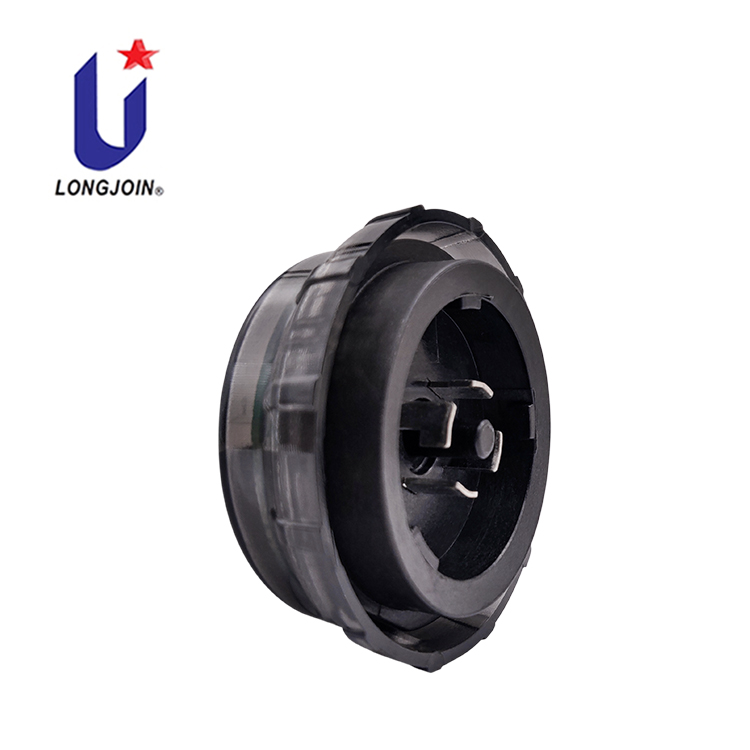
For luminaires that still use twist-lock heads, Long-Join supplies a range of NEMA socket and receptacle products such as the ANSI C136.41 7-pin JL-240XA and other NEMA 3-pin and 7-pin bases.
For Zhaga designs, engineers instead mount a Zhaga socket (4-pin connector) and fit JL-723A1H or JL-711A as low-profile heads. Long-Join’s Zhaga series hub explains how these plug-and-play heads and accessories work together for modern LED street lights.
How Should You Balance Cost, Complexity, And Long-Term Value?
Most teams face three limits. They manage money, complexity, and needs that will come.
Upfront Cost
- JL-711A is generally the lower-cost option. It is a single-function photo sensorwith 0–10 V output and no need for DALI wiring or configuration tools.
- JL-723A1H costs more per node because it combines PIR detection, advanced logic, and DALI-2 communication in one compact Zhaga head.
System Complexity
- JL-711A fits well into traditional analog dimming chains. Electricians already know how to wire a 0–10 V photo cell sensoror light sensor switch.
- JL-723A1H requires a DALI-2-capable driver or controller and some extra commissioning, but in return it gives much finer control and richer data.
How Do You Build A Future-Proof Zhaga Lighting Ecosystem With Long-Join?
Finally, many OEMs and cities are not just buying a single photocell control device—they are building a platform.
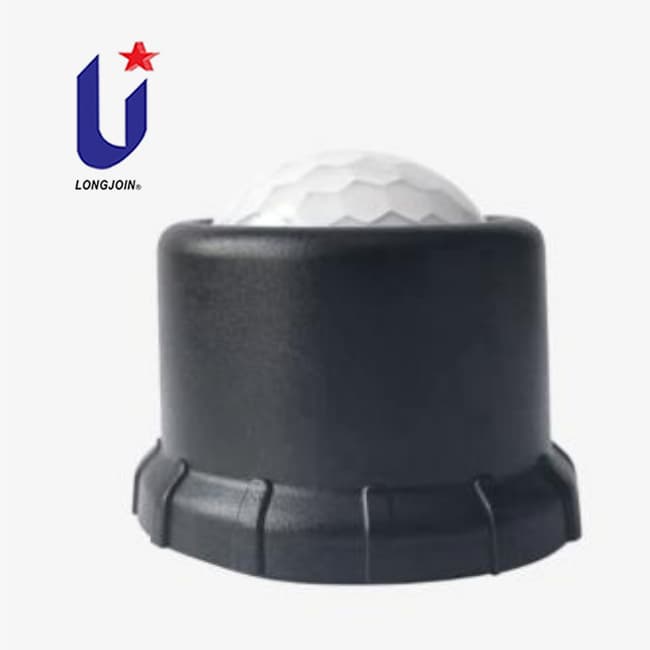
Long-Join’s Zhaga portfolio offers:
- Sensor headssuch as JL-723A1H (PIR + light, DALI-2) and JL-711 series (0–10 V photocell).
- Zhaga accessories(bases, domes, gaskets) for IP66-grade integration into modern LED luminaires.
- NEMA receptacles and photocontrolswhere legacy twist-lock heads are still required alongside Zhaga.
Conclusione
JL-723A1H and JL-711A are not rivals. They are two clear answers to two different needs.
Both sit inside Long-Join’s Zhaga and NEMA line. They work with photocontrol receptacle products, so OEMs and cities can mix and match parts as their lighting plans grow.
The project should save a lot of energy and feel more comfortable. Then JL-723A1H is usually the best choice overall. If you want low cost and reliable dusk-to-dawn lighting, choose JL-711A. It always stays dependable.
 Italian
  English
  Russian
  Spanish
  Portuguese
  Arabic
  Japanese