
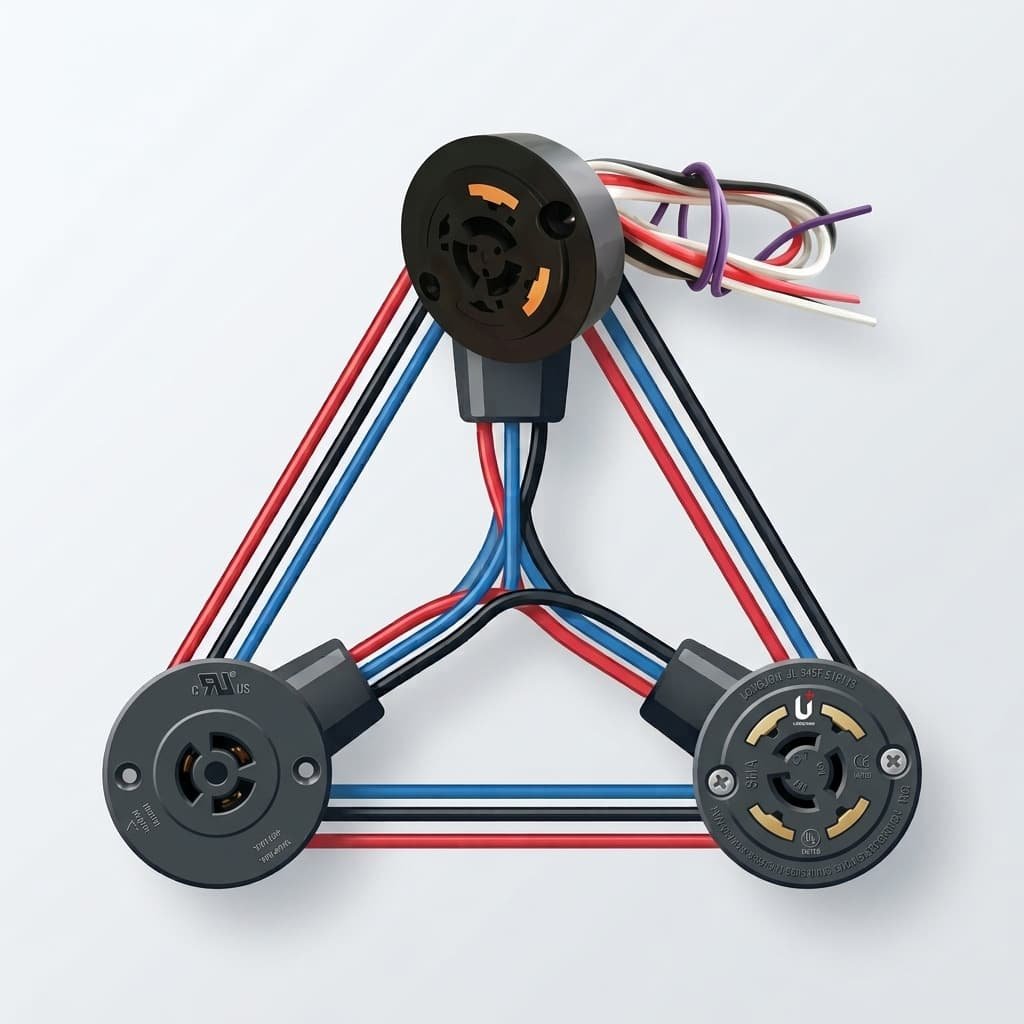
8 Factors Affecting Compatibility of Twist-Lock Photocells with Different Brands of NEMA Sockets
Introdurre
The NEMA standard defines the interface that allows any compliant photocell to be installed in any compliant socket.
In practice, buyers regularly encounter compatibility problems between photocells and sockets from different manufacturers, such as loose fit, difficult insertion, poor contact, or premature failure.
These problems are not caused by the standard. They are caused by what the standard does not specify. This article will take a deeper dive into what contributes to these compatibility issues.
Why Does Incompatibility Occur Despite a "Standard Interface"?
NEMA SS-1 defines the basic interface geometry, but it leaves critical compatibility factors unspecified, and those gaps are where real-world incompatibility originates.
The NEMA SS-1 standard specifies:
- Positioning of the three pins
- General size range
- Electrical connection definitions
- Basic mechanical structure requirements
It does not specify factors such as spring contact material and pressure, insertion and extraction force limits, base material requirements, sealing ring compression force, socket service life, or whether the socket must pass UL1598 testing.
Every manufacturer fills these unspecified factors with their own design decisions. When two manufacturers make different design choices within the same geometric envelope, the resulting products may be dimensionally compliant but operationally incompatible.
What Are the Eight Real Reasons for Compatibility Issues?
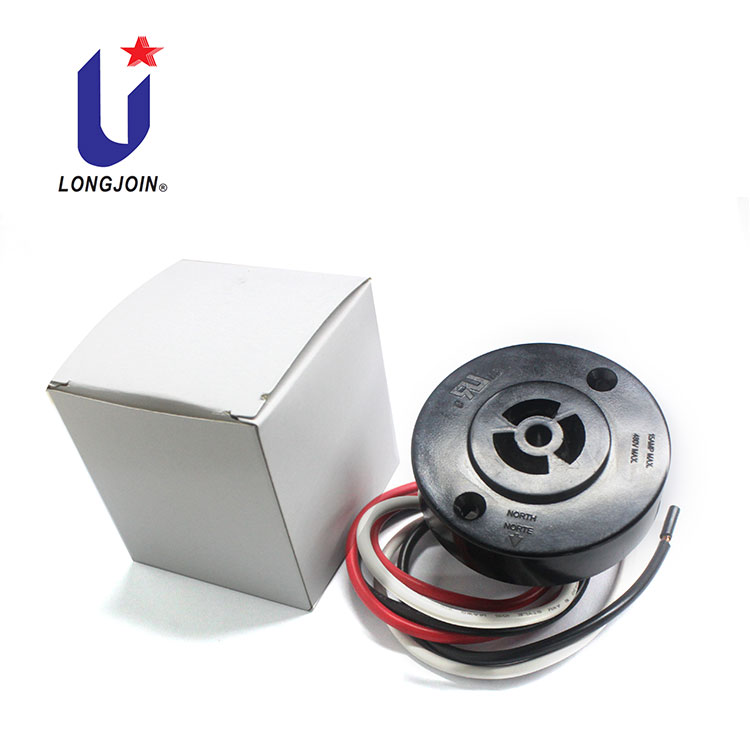
Eight specific factors cause the compatibility problems that buyers encounter between twist-lock photocells E Prese NEMA from different manufacturers.
No. | Compatibility Issue | Details and Impact |
1 | Large differences in spring contact pressure | Affects insertion firmness; no uniform pressure spec in NEMA, overly high or low pressure reduces compatibility |
2 | Socket size tolerance variation | Allowed dimensional deviations cause sockets to be too tight, loose, rotated, or poorly sealed |
3 | Different materials used by brands | PC material lacks durability; GF (glass fibre reinforced polymers) offers more stability |
4 | Different sealing ring heights | Causes uneven sealing performance, affecting water and dust resistance |
5 | Different socket aging speeds | Weather resistance impacts lifespan; low-end products corrode and fail sooner |
6 | Common UL1598 testing failures | Involves high temperature, UV, salt spray, and mechanical strength tests; low-quality sockets often fail |
7 | Differences in ENEC and CE testing | European sockets have more precise dimensions; Asian low-end products vary greatly, causing compatibility conflicts |
8 | NEMA standard tests not fully executed | Lacks full-set tests for insertion force, spring fatigue, high temperature, and salt spray; many manufacturers only check appearance, causing unreliable long-term use |
Spring contact pressure is the most frequently overlooked compatibility factor. The spring clips inside the NEMA socket grip the photocell’s twist-lock pins after rotation. The clamping force those springs apply determines whether the photocell seats securely and whether consistent electrical contact is maintained.
NEMA SS-1 defines no force specification for these springs. One manufacturer’s socket may have springs exerting 8N of clamping force while another’s exerts 14N. A photocell calibrated for the lower force will feel loose in the higher-force socket and may not rotate fully. One calibrated for the higher force may be difficult to insert and remove from the lower-force socket.
Socket size tolerance variation is the geometric equivalent of the spring force problem. NEMA SS-1 defines a size range rather than a precise dimension. Two sockets that both comply with the standard may differ by the full tolerance band, and when a photocell at one end of the photocell tolerance is paired with a socket at the opposite end of the socket tolerance, the combined variation produces a fit that is either too tight to insert easily or too loose to seat correctly.
Frequently Asked Questions on Twist-Lock Compatibility
NEMA SS-1 defines interface geometry but not spring pressure, material, sealing ring dimensions, or test requirements. Different manufacturers make different design choices within the standard, producing products that are dimensionally compliant but operationally incompatible.
It determines clamping force on the photocell pins after rotation. Mismatched spring forces between socket and photocell brands produce loose fit, difficult removal, or inconsistent electrical contact, all of which cause switching problems in service.
PC materials undergo greater dimensional change from thermal cycling and UV degradation than GF materials. A fit that is correct when new may become too loose or too tight after the PC socket has changed dimensions through service, while a GF socket maintains its original geometry.
UL1598 tests include high temperature, UV aging, salt spray, and mechanical strength — conditions that reveal material and design failures that dimensional compliance testing alone does not detect. Sockets that have not passed these tests may fail in service even when initially fitting correctly.c
European-market sockets produced for ENEC compliance typically have tighter dimensional tolerances than low-end Asian market products. The wider tolerance variation in low-end products increases the probability of fit problems when combined with photocells from higher-precision manufacturers.
Conclusione
Whether a twist-lock photocell fits a NEMA socket reliably depends on the socket’s quality control and test compliance rather than dimensional compliance with NEMA SS-1 alone.
Long-Join follows NEMA and international certification standards, using GF+PBT materials, controlled spring contact specifications, and UL1598-compliant design to ensure compatibility between Long-Join photocells and Long-Join sockets.
For mixed-brand installations, specifying socket and photocell from the same manufacturer and the same certification level is the most reliable approach.
Link esterni
●https://www.ul.com/sites/default/files/2024-10/CS604906_UL_1598_5th_edition_Brochure_EN_Final.pdf


 Italian
  English
  Russian
  Spanish
  Portuguese
  Arabic
  Japanese