
Comparative Analysis Of JL-205E And JL-207E — Which Is More Suitable For High Voltage Environments
Introdurre
High-voltage lighting networks, like 347 V city grids, can be hard on a photocell. That kind of voltage puts a lot of stress on the device over time. Voltage spikes hit hard. Long cable runs add stress. Harsh weather wears things down. And the lights still run, night after night. Choosing the wrong device doesn’t just shorten life span—it can mean blacked-out streets or over-lit façades and rising maintenance costs.
That’s where Long-Join’s 347 V twist-lock photocontrols come in. The JL-205E and JL-207E are built for this. Both are made to control outdoor lights on high-voltage systems.
JL-205E is built for simple dusk-to-dawn switching. It’s rugged and made to last outdoors. JL-207E comes with a zero-cross option. It also supports a wider voltage range. Plus, it offers more surge protection choices for rough grids and demanding jobs.
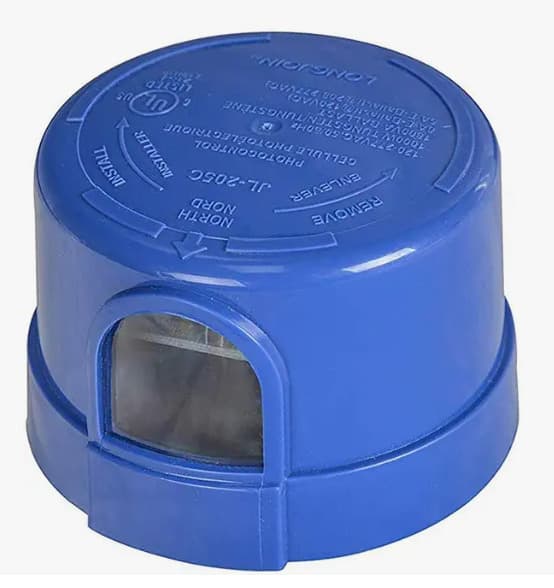
What JL-205E And JL-207E Are Built For In High Voltage Projects
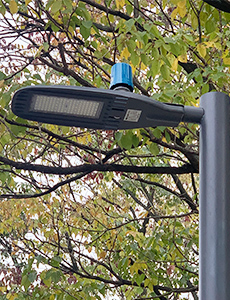
A twist-lock photocontrol sits on top of the light fixture. It uses a small sensor to read the light around it. When it gets dark at dusk, it turns the light on. When morning comes at dawn, it switches the light off. On high-voltage networks, it also has to handle power surges. It must cope with big temperature changes too. And it should resist wear and tear for many years.
How Does JL-205E Position Itself?
JL-205E belongs to the JL-205 Series Twistlock Photocontrol family from Long-Join. It is a 347 VAC model typically used as a photocell for street light applications in Canadian-style grids. JL-205E is essentially the “workhorse” 347 V light photocell: simple, robust, and focused on keeping lights on when they’re needed.
How Does JL-207E Position Itself?
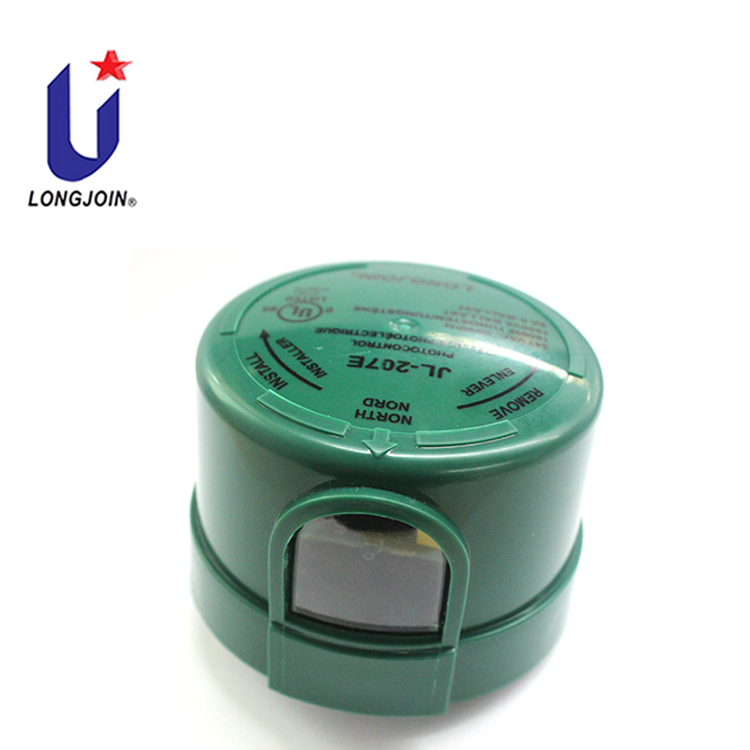
JL-207E is part of the JL-207E 347VAC Street Light Twist-Lock Photocontroller line. It is also rated 347 VAC but includes more advanced options for wide-voltage use and surge customization.
- Rated voltage: 347 VAC
- Applicable voltage range: approx. 105–382 VAC
- Typical operating level: 16 lx ON / 24 lx OFF
- Power consumption: about 0.9 W
- Protection levels: IP54, IP65, IP67
- Optional zero-cross control
- Multiple MOV options for different surge classes
- Fail-ON or Fail-OFF modes available
In simple terms: JL-205E is “347 V, keep it simple.” JL-207E is “347 V, but ready for more complex grids and control strategies.”
How Do The Core Parameters Compare?
Parametro | JL-205E (347 V) | JL-207E (347 V) |
Tensione nominale | 347 V CA | 347 V CA |
Intervallo di tensione applicabile | 120–382 VAC (E/F high-voltage series) | 105–382 VAC |
Frequenza nominale | 50/60 Hz | 50/60 Hz |
Typical Load Rating | 1000 W tungsten, 1800 VA ballast | High-power tungsten/ballast loads up to 1800–2000 VA (by tap) |
Consumo energetico | ≤ 1.6 W | ~0.9 W |
Light Operating Levels | ~10–30 lx ON / 30–60 lx OFF (E/F type) | 16 lx ON / 24 lx OFF |
Modalità di errore | Fail-ON | Fail-ON or Fail-OFF (configurable) |
IP Rating Options | IP54 / IP65 / IP67 | IP54 / IP65 / IP67 |
Surge Protection Options | Up to ~460–510 J, 10 kA class MOV | MOV options 110–546 J, up to 10 kA class |
Zero-Cross Technology | Non disponibile | Opzionale |
Lux & Time Delay Settings | Standard ranges, factory set | Factory-preset, with optional custom lux and delay tuning |
Both are rugged photocell street light controls, but JL-207E gives you finer tuning and more voltage flexibility from the start.
Why Zero-Cross Technology Matters In High Voltage Photocell Control
Have you ever seen a relay weld shut or fail early in a harsh lighting panel? High-voltage switching is often the reason.
What Is Zero-Cross Switching In Simple Terms?
On an AC waveform, “zero-cross” is the moment when voltage passes through zero. Switching at that instant reduces inrush stress on the contacts and on the driver. Zero-cross control inside a photocell switch means the relay closes and opens when the waveform is gentler instead of at peak voltage.
For devices like JL-207E, zero-cross is listed as an optional built-in feature.
In practical terms, this helps to:
- Reduce arcing and contact wear inside the relay
- Cut electromagnetic noise when large loads switch
- Extend lifetime when controlling LED drivers or electronic ballasts
How Does This Affect Real Projects?
On a 347 V line, many LED drivers already include corrente di spunto. If your photoelectric sensor snaps on at a random point in the power wave, it takes a hit. That stress builds up over time. Drivers start to complain. Relays can burn out. Small, annoying failures then show up in your maintenance tickets.
With zero-cross switching:
- Large campuses and city blocks see fewer controller replacements
- Sensitive drivers in premium luminaires face less electrical shock at every dusk/dawn cycle
- Night-time stability improves, especially on mixed-load circuits
JL-205E does not have integrated zero-cross logic. If your grid is relatively clean and loads are moderate, this is acceptable. But if your specification mentions LED inrush, driver protection, or extended service life, JL-207E’s optional zero-cross is the safer bet.
How JL-205E And JL-207E Stand Up To Surges And Harsh Outdoor Conditions
Are you worried about lightning, switching surges, or “mystery” trips from far-away faults? High-voltage outdoor networks see all of these.
What Kind Of Surge Environment Do These Devices Face?
The pulses can come from power switching or lightning-induced surges. They define test waveforms such as the common 1.2/50 μs – 8/20 μs combination wave and set different severity levels for industrial and outdoor use.
For a 347 V outdoor photocell light sensor, this means:
- It must survive repeated surges without failing closed or open
- MOVs and internal layout must line up with the required surge class
- Housing and seals must stop water from turning surges into permanent damage
How Is Surge Protection Configured On JL-205E?
On the 205 series, Long-Join offers a few MOV options for surge protection.
For JL-205E in particular, that means you can:
- Choose higher MOV ratings for storm-prone or long-feeder projects
- Combine IP65/IP67 housings with robust MOVs to handle wet, exposed poles
- Keep a simple Fail-ON strategy while still meeting municipal surge expectations
How Is Surge Protection Configured On JL-207E?
On JL-207E, the surge story is even more flexible.
- JL-205E = strong surge options for straightforward dusk-to-dawn control
- JL-207E = stronger and more granular surge options for grids with frequent transients, plus zero-cross to soften each switch event
Where JL-205E And JL-207E Fit Best In Real High Voltage Projects
Still unsure which way to go? It helps to map each product to typical use cases instead of just reading spec sheets.
Long-Join’s own street-lighting content shows how 347 V is common in Canadian municipal networks, and why high-voltage photocell control needs careful matching to grid conditions.
Which Photocell Fits Which Scenario?
Scenario / Priority | Better Fit | Why It Works Well |
Standard 347 V municipal street lighting with stable grid | JL-205E | Simple Fail-ON behavior, robust MOV options, low complexity |
Mixed 120–347 V circuits or long multi-tap feeders | JL-207E | Wider voltage window (105–382 VAC) and flexible surge configuration |
LED roadway project where driver life and inrush are critical | JL-207E | Optional zero-cross plus multiple MOV levels reduce stress on electronic drivers |
Budget-sensitive retrofit with existing NEMA socket | JL-205E | Lower power consumption than older models, enough protection for many networks |
Harsh weather, frequent lightning, or long rural feeders | JL-207E | Higher-class MOV options and tighter lux/time delay control for fewer false trips |
Projects needing Fail-OFF behavior (e.g., safety-critical sites) | JL-207E | Supports both Fail-ON and Fail-OFF modes |
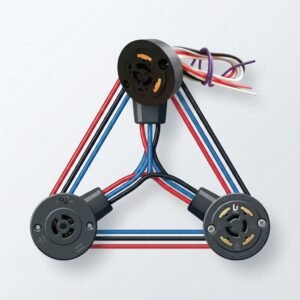
In all these cases, both models work with NEMA twist-lock photocontrol receptacles like JL-200 and related bases, which Long-Join uses across its Serie di fotocontrollo Twist Lock.
Conclusione
For complex tenders or multi-city programs, it’s usually worth sharing your one-line diagram, surge class, and luminaire family with Long-Join’s technical team.
Their case studies and selection guides—such as the Application of Long-Join Photocell Products in Street Lighting E Canada Outdoor Lighting Photocell Solutions articles—are a good starting point when you’re matching the right photocell to each grid and project.
Link esterni:
●https://elgee.com/products/detail/power-vac-model-selection-2/
●https://www.electronics-tutorials.ws/accircuits/ac-waveform.html
●https://en.wikipedia.org/wiki/Zero-crossing_control
● https://en.wikipedia.org/wiki/Inrush_current
 Italian
  English
  Russian
  Spanish
  Portuguese
  Arabic
  Japanese