
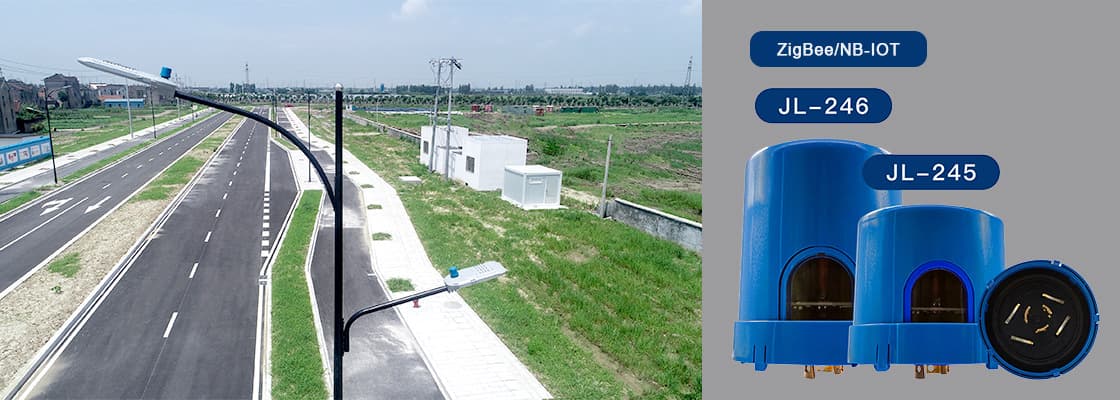
Functional Overview And Applications Of The JL-246CG Smart Light Control Master Module
Introdurre
How do you turn a simple street light line into a real, data-driven smart lighting network?
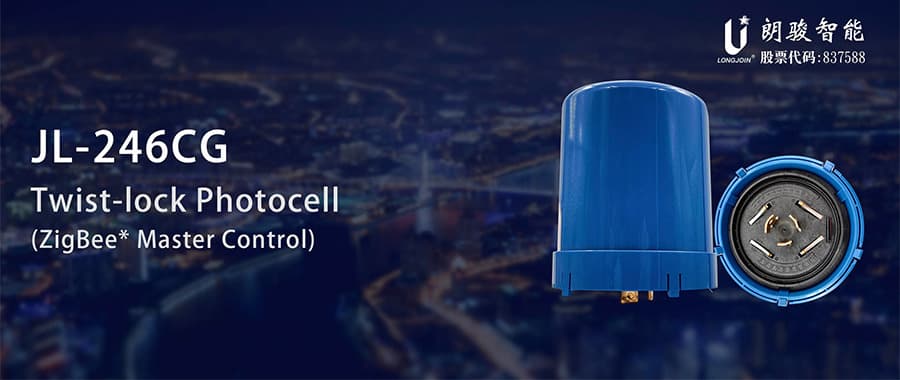
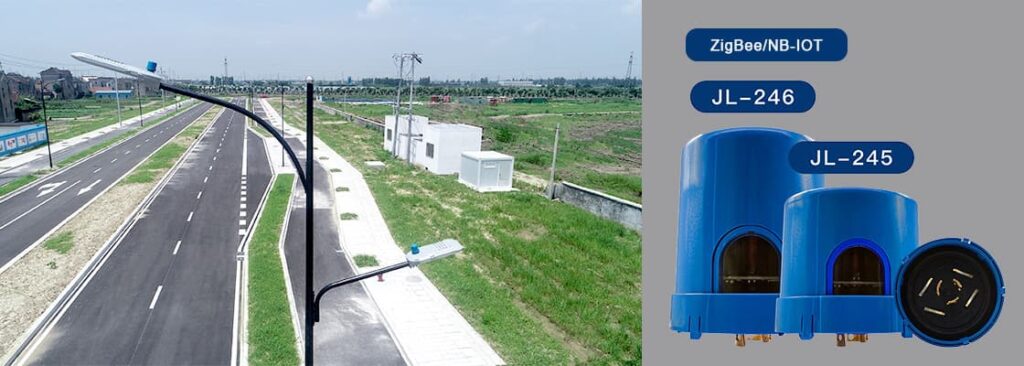
IL JL-246CG Master ZigBee Wireless Smart Street Light Controller is Long-Join’s answer to that question. It combines Zigbee mesh networking, 0–10V/PWM dimming, cloud connectivity and dusk-to-dawn control in one IP-rated, ANSI C136.41 7-pin twist-lock form factor.
It is a smart photocell-style controller that sits on top of the light. It talks to field nodes and sends data up to the cloud.This helps city operators, ESCO, and lighting makers move beyond simple on/off control. They can use smart lighting plans that lower energy bills and make upkeep easier.

What Are The Core Technologies Of The JL-246CG Smart Light Control Module?
Are you trying to manage hundreds or thousands of fixtures without pulling new control cables? The JL-246CG is built exactly for that kind of project, starting from its wireless and dimming core.
How Does Zigbee Wireless Communication Power The Network?
Why is wireless so important when poles are already in the ground? Because communication cables are often the most expensive part of an upgrade.
Zigbee is a low-power network system made to link sensors and controls together. The Connectivity Standards Alliance (CSA) sets its rules. It is common in smart lighting because each device passes messages along and extends coverage without adding extra network gear.
Zigbee Mesh In JL-246CG Vs. Traditional Point-To-Point Control
Aspetto | Zigbee Mesh With JL-246CG | Traditional Point-To-Point Control |
Network Topology | Mesh, multi-hop between nodes | Star or simple bus |
Cabling Requirement | No extra control cable between poles | Extra control bus or signal wiring |
Scalabilità | Easy to add new poles and controllers | Limited by cable runs and addressing |
Failure Impact | Mesh reroutes around failed node | Single cable break can affect many luminaires |
Power Consumption For Control | Very low (sensors and controllers) | Higher, especially for legacy devices |
For a photocell street light project, this approach means you can keep the same pole pattern, mount the JL-246CG on standard ANSI C136.41 photocontrol receptacles, and still gain a modern mesh network on top.
You can see how Long-Join positions this master controller together with other sensore fotocellula intelligente products.
What Functional Features Make The JL-246CG A Smart Lighting Control Hub?
Do you still drive to site just to check which lights are off? The real value of a smart master module is in how it cuts manual work.
How Does The JL-246CG Enable Multi-Functional Centralized Control?
City engineers and facility managers often ask: “Can I see what is happening on every pole without leaving my office?”
The JL-246CG is built exactly for this. Through its WAN link and cloud integration, it:
- Collects electrical parameters and state data from each smart street lamp at regular intervals (for example every 10 minutes).
- Supports hierarchical, region-based project management in the cloud interface.
- Lets users change lighting schedules, midnight dimming ratios and other strategies remotely.
In real deployments, Long-Join shows the JL-246CG working together with slave controllers such as JL-245CZ, plus NEMA receptacles like JL-240XA or JL-250TXA on street light controller poles. This architecture allows you to manage large grids while keeping each luminaire replaceable and modular.
If you want to see how Long-Join builds full solutions around these components, the servizio di controller wireless overview and case studies on long-join.com give concrete examples of regional rollouts and smart pole projects.
Where Does The JL-246CG Deliver The Most Value In Real Projects?
When should you choose a master photo control like the JL-246CG instead of stand-alone controllers?
How Does It Support Commercial Buildings And Public Facilities?
Many commercial projects start with a simple question: “Can we unify control across indoor and outdoor zones without over-engineering the system?”
In office parks, campuses or shopping malls, JL-246CG can act as the outdoor controller intelligent lighting hub for:
- Parking lot luminaires
- Perimeter and façade lighting
- Walkway and park fixtures
Because it uses the same 7-pin ANSI twist-lock form factor, it can be added to compatible luminaires just like a conventional photocell light switch, but offers full remote control, dimming and data feedback.
Example Use Cases In Commercial And Public Sites
Site Type | Typical Luminaires | JL-246CG Role | Vantaggio chiave |
Business campus | Parking lots, roads, façades | Master for outdoor mesh with 0–10V dimming | Unified energy and maintenance management |
Shopping mall | Large car park, perimeter lighting | Gateway to cloud, groups and scenes | Safer, brighter experience at lower cost |
Public square / plaza | Decorative poles, floodlights | Time-based and lux-based dimming strategies | Better ambience, less light pollution |
For owners who already work with Long-Join photocell solutions, using JL-246CG is often a natural next step because it fits into the same ecosystem of twist-lock controllers and receptacles.
How Does The JL-246CG Support System Compatibility And Future Expansion?
Are you scared your choice today will block you out from tech tomorrow? For long-life street lighting, you need systems that fit. And grow.
How Does It Work With NEMA And Zhaga Ecosystems?
Most modern luminaires in road and area lighting now ship with standardized connection interfaces. Long-Join focuses strongly on both NEMA E Presa Zhaga ecosystems.
The JL-246CG uses an ANSI C136.41 7-pin twist-lock base. It plugs straight into NEMA 7-pin photocontrol receptacles like JL-240XA, JL-260C, and JL-250TXA, which also appear as kit options on the product page. That makes it easy to swap a basic dusk-to-dawn light sensor switch for a full smart controller without re-drilling the luminaire.
Long-Join also offers the Zhaga Book 18 JL-700 Zhaga Socket for projects that prefer a low-voltage, top-mounted interface supporting DALI or 0–10V dimming. This combination of NEMA and Zhaga options means luminaire makers can design flexible platforms for different regions and budgets using the same mechanical host.
For planners and installers who want to go deeper on wiring details, Long-Join’s guide “Mastering NEMA and Zhaga Photocell Wiring: Common Issues & Expert Solutions” explains typical pitfalls and best practices.
How Does The Design Support Future Protocols And Cloud Strategies?
Smart city standards keep evolving. DALI-2, advanced Zigbee releases and new cloud architectures for lighting are all moving targets.
JL-246CG helps you stay flexible by:
- We split downlink Zigbee mesh from uplink, like cellular or LPWAN. This lets us change platforms later without rewiring.
- It uses well-known dimming interfaces (0–10V and PWM). These are already supported by many LED drivers and control gear.
- Offering configurable lux thresholds and surge levels, which can be tuned to new efficiency regulations or utility limits.
In practice, this means a city can deploy JL-246CG now as the central photocontrol gateway for its poles and still keep the door open to future upgrades in drivers, cloud software or communication modules.
How Should You Install, Maintain, And Protect The JL-246CG In The Field?
Worried that smart controls will make maintenance harder, not easier? A big part of JL-246CG’s design is about reducing headaches for installers and technicians.
How Do You Install And Maintain The JL-246CG Effectively?
If you already installed classic twist-lock light photocell sensor devices, the mechanical process will feel familiar. The JL-246CG is designed to:
- It mounts on standard ANSI C136.41 7-pin receptacles. It uses twist to lock action.
- They run on 120 to 277 volt AC power. They work with 50 or 60 hertz.
- It works in harsh conditions. It works in extreme cold and heat, from –40 °C to +70 °C. It handles high humidity.
Basic field steps usually include:
- Power off the luminaire circuit.
- Mount or verify the NEMA 7-pin receptacle wiring according to Long-Join guidelines.
- Insert any required SIM card into the JL-246CG (for LTE or NB-IoT).
- Twist-lock the controller into the receptacle.
- Use the commissioning app or back-office system to scan the QR code of slave controllers and register them under the correct pole and project.
Over time, cloud dashboards help technicians identify abnormal loads, repeated failures or mis-configured dimming profiles before they become visible problems in the street.
Conclusione
The JL-246CG isn’t just another box on top of a pole – it’s the brain that connects photocell street lights, LED drivers, and the cloud into one coherent system. It uses Zigbee mesh for control and 0–10V dimming for smooth light. It also works with standard NEMA and Zhaga plugs. Cities and building owners can upgrade from basic dusk-to-dawn timers. They get smart lighting control.
It helps lighting designers, ESCOs, and photocell makers. They do less guessing and travel overall. Their lighting network can grow with future sensors, drivers, and platforms. Used together with Long-Join’s wider photocell and photocontrol receptacle portfolio, the JL-246CG becomes a solid foundation for reliable, efficient, and upgrade-friendly intelligent lighting projects.
External inks:
●https://www.nema.org/membership/products/view/lighting-systems
●https://www.bjb.com/en/light-components/connectors-and-terminal-elements/receptacle-the-basis-for-outdoor-light-sensors/
●https://www.nema.org/standards/technical/ansi-c136-series-standards-for-roadway-and-area-lighting-equipment
●https://csa-iot.org/all-solutions/zigbee/
●https://www.energy.gov/femp/energy-service-companies




 Italian
  English
  Russian
  Spanish
  Portuguese
  Arabic
  Japanese