
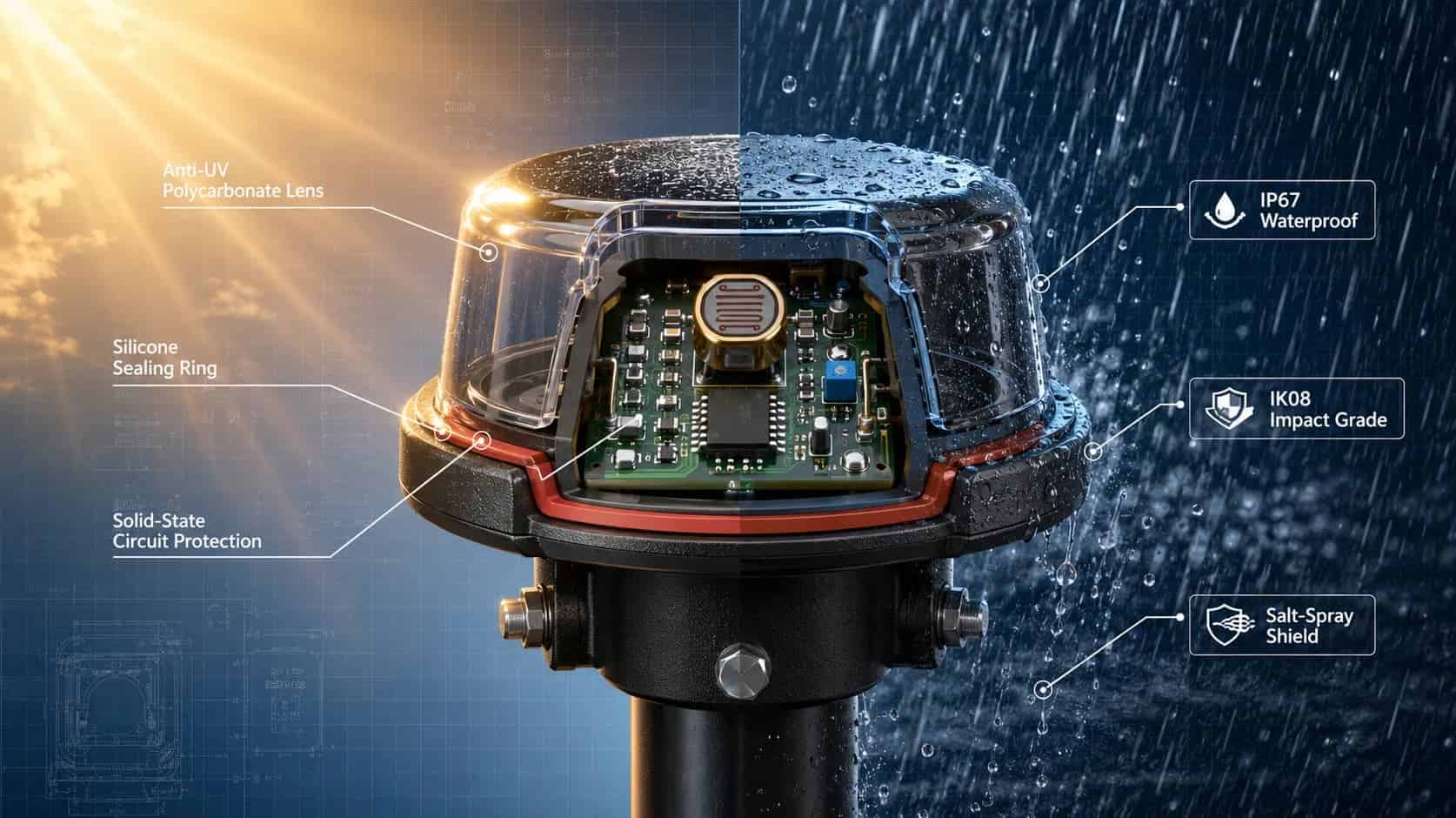
Why Waterproof Ratings Alone Do Not Guarantee Outdoor Photocell Reliability
Introducción
Many buyers see the IP65 or IP66 label and feel safe. They think the outdoor photocell will work fine. To them, it can handle rain and dust. But in real street lighting projects, waterproofing is just one part. Reliability needs more than that.
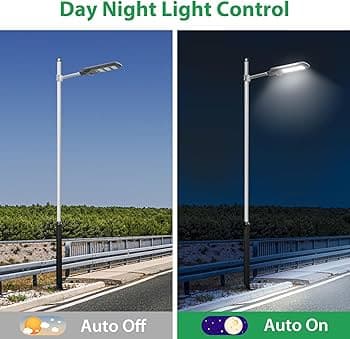
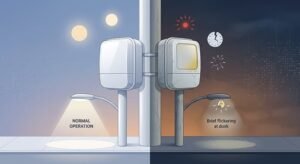
A dusk-to-dawn photocell sensor stays outdoors every day and night. It handles rain, heat, dust, and power swings. It also faces storms, salt air, and constant switching. So, true outdoor photocell reliability is not judged by waterproof rating alone. It must be checked as a full system.
For city lights, highways, coastal roads, factories, and other large outdoor spaces, the photocontrol must work well. It must also last a long time. So the product must fit the voltage. It must also resist surges, seal well, and handle the local climate.
How Working Voltage Affects Photocell Lifespan
A reliable photocell must match the actual lighting system. This sounds simple, but many field problems start from voltage mismatch. If the voltage range is not right, the photocell switch may flicker. It may get too hot or fail too soon.
Many outdoor lighting systems use 120–277VAC. This range is common in road lights, campus lighting, garden lights, parking lots, and public area lighting. Long-Join JL-205C and JL-207C are built for wide-voltage outdoor use, which makes them suitable for many street lighting outdoor projects.
For LED street lights, voltage matching is even more important because LED drivers can create different starting loads and switching pressure.
So, before choosing a sensor de luz, buyers should check the real site voltage, lamp type, load, and application area. A photocell for street light must fit the whole system, not just the lamp body.
Why MOV Surge Protection Matters in Outdoor Photocontrols
Outdoor lights often work in places where power is not always stable. Lightning, grid changes, and sudden electrical spikes can damage the circuit. This is why Protección contra sobretensiones del MOV matters.
MOV means metal oxide varistor. In simple words, it helps absorb sudden voltage spikes before they damage key parts of the photocontrol. For outdoor projects, this can reduce relay burnout, circuit failure, and storm-related damage.
JL-207C is a good example of a fotocontrol built with stronger protection in mind. It is designed for outdoor lighting control and supports 120–277VAC use. In harsh areas, this kind of protection can help the photocell last longer.
Without protección contra sobretensiones, a product may still work well on normal days. But after a storm or unstable grid event, it may fail. That is why buyers should not only ask, “Is it waterproof?” They should also ask, “Can it handle surge stress?”
What Cross-Zero Switching Does for Relay Life
Cross-zero switching helps reduce stress when the photocell turns the light on or off. It allows switching to happen at a safer point in the AC waveform. This helps reduce arc generation and contact wear.
In normal language, it helps the relay avoid a hard electrical hit each time it switches. This is useful for LED lighting because LED drivers can create high inrush current when starting. If the relay is not protected, the contacts may wear faster.
Cross-zero switching can bring three clear benefits. It helps extend relay life. It supports smoother switching. It also improves compatibility with LED street lights.
Why Salt Fog Resistance Matters in Coastal Areas
A photocell used near the sea faces a special problem: salt mist. Salt air slips into small gaps. It stays on metal parts and slowly causes rust. This can affect the contact points. It can also harm the screws, terminals, and inner parts.
A product may pass a simple rain test but still struggle in coastal use. That is why salt fog resistance matters in coastal areas. It helps on roads, ports, bridges, and in seaside cities.
Salt fog testing shows if the photocell can fight rust. It also shows how well it holds up over time. It checks how the material and contacts behave under salty, humid conditions. In coastal areas, this test may matter more. Even more than the IP rating alone.
A farola con fotocélula system in a coastal city needs strong protection. The buyer should check the housing material, the base seal, the contact quality, and its resistance to rust. Waterproofing blocks water, but salt air can still be a long-term enemy.
How Base Seal Strength Stops Hidden Moisture Damage
The base seal is one of the most important parts of an outdoor photocell. It is the point where the housing, base, and gasket meet. If this part is weak, moisture can slowly enter the product even when the outside looks fine.
This kind of failure is hard to notice at first. The light may still work for some time. Later, the internal parts may corrode, the relay may fail, or the sensor may start giving wrong signals.
A strong base seal helps reduce hidden moisture ingress. It also helps keep the photocell stable during long outdoor use. JL-207C uses stronger sealing design for better waterproof reliability, making it more suitable for tough outdoor applications.
For buyers, the lesson is clear. Do not only check the top cover. Check the base, gasket, and sealing structure too. The weakest sealing point often decides the real product life.
Reliability Factor | Waterproof Alone | Full Reliability Design |
Protección de la propiedad intelectual | Sí | Sí |
Voltage matching | No | Sí |
Protección contra sobretensiones del MOV | No | Sí |
Cross-zero switching | No | Sí |
Salt fog resistance | No | Sí |
Base sealing | Basic | Reinforced |
UV and impact resistance | No | Sí |
Other Environmental Problems Outdoor Photocells Should Handle
Outdoor photocells must survive more than rain. They may face snow, sand, strong sun, high temperature, acid pollution, and physical impact. A weak housing may crack under UV light. A poor plastic shell may become brittle after long exposure. A loose structure may fail during stormy weather.
This is why anti-UV housing and strong material selection matter. The photocell body must protect the internal circuit every day. If the shell becomes weak, the product becomes weak too.
In desert areas, sand and heat may be the biggest problems. In cold areas, snow and freezing weather may matter more. In industrial zones, pollution may affect the surface and sealing. So, the right outdoor photocell light sensor depends on where it will be used.
Good product selection starts with a simple question: what will this sensor face after installation?
How JL-205C and JL-207C Show Full-System Reliability
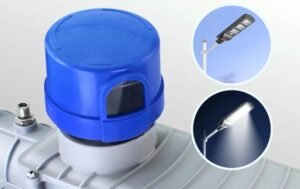
JL-205C and JL-207C are useful examples because they show two levels of outdoor photocell reliability. JL-205C is suitable for common 120–277VAC outdoor lighting applications. It is used for street lights, garden lighting, passage lighting, and doorway lighting.
JL-207C goes further by supporting stronger outdoor reliability features. It is designed for 120–277VAC systems and is available with higher protection options. It also supports features that help reduce field failures in more demanding projects.
For normal municipal or campus lighting, JL-205C can be a practical and affordable choice. For tougher outdoor use, JL-207C gives more protection against electrical and environmental stress.
Modelo | Mejor uso | Key Reliability Features |
JL-205C | Municipal, campus, garden, and passage lighting | 120–277VAC support, outdoor use, NEMA twist-lock design |
JL-207C | Roadway, harsh outdoor, and higher-reliability projects | MOV protection, cross-zero switching, IP options, UV housing, reinforced sealing |
Both Models | Dusk-to-dawn lighting control | Automatic light control based on natural light level |
Preguntas frecuentes
No. IP65 helps protect against dust and water, but it does not prove surge protection, UV resistance, salt fog resistance, or relay life.
MOV protection helps reduce damage from lightning, unstable grids, and sudden voltage spikes. It protects the internal circuit and relay.
Cross-zero switching helps the relay switch at a safer electrical point. This reduces arc, contact wear, and switching stress.
Salt fog testing matters because coastal air can corrode metal parts. It helps show if a photocell can survive seaside conditions.
JL-207C improves reliability through wide-voltage support, surge protection, cross-zero switching, IP protection options, UV housing, and reinforced sealing.
Conclusión
A waterproof rating is important, but it is not enough to prove outdoor photocell reliability. True reliability comes from many things working together. These include voltage compatibility, MOV surge protection, cross-zero switching, waterproof design, salt fog resistance, strong sealing, UV resistance, and impact strength.
LONG-JOIN solutions such as JL-205C and JL-207C are designed around this wider reliability idea. For buyers, the best choice is not only the product with a high IP rating. It is the product that can survive the real outdoor site.
Enlaces externos:
●https://en.wikipedia.org/wiki/Salt_spray_test
●https://www.ti.com/lit/pdf/tiducf7
●https://www.spire-is.com/what-is-a-metal-oxide-varistor-mov/
 Spanish
  English
  Russian
  Portuguese
  Arabic
  Japanese
  Italian