
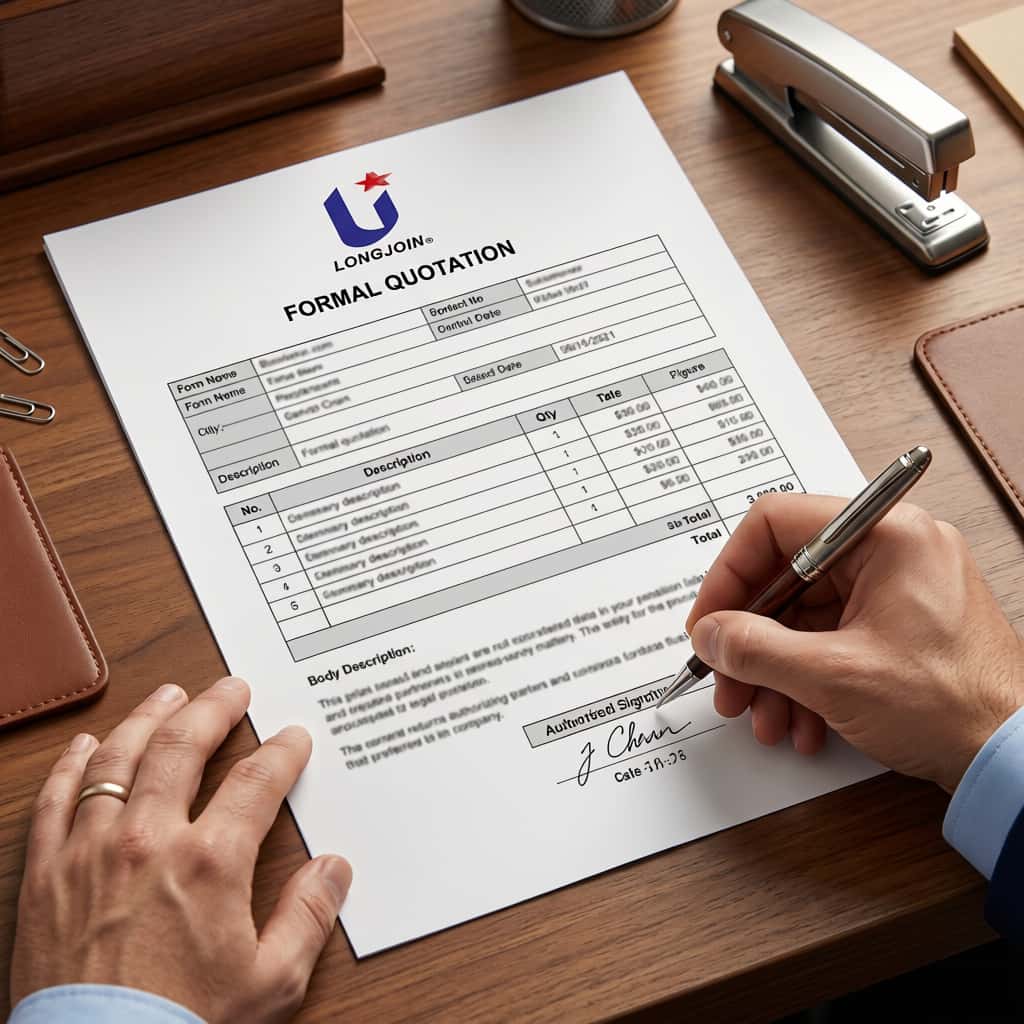
What Information Is Needed for a Smart Node Quotation?
Introducir
Smart lighting projects move faster when the quotation process is done right the first time.
The most common delay in smart node procurement is incomplete inquiry information, whereby the buyer submits a request, the manufacturer asks a series of follow-up questions, the buyer gathers the answers, and the actual quotation arrives days later than it should have.
That cycle repeats across dozens of projects every year.
This article explains exactly what information is needed for a smart node quotation, why each piece matters, and how Long-Join’s product range maps to different application requirements.
Preparing complete inquiry information upfront cuts the back-and-forth and gets a configured solution in front of the right person faster.
What Types of Smart Nodes Does Long-Join Offer?
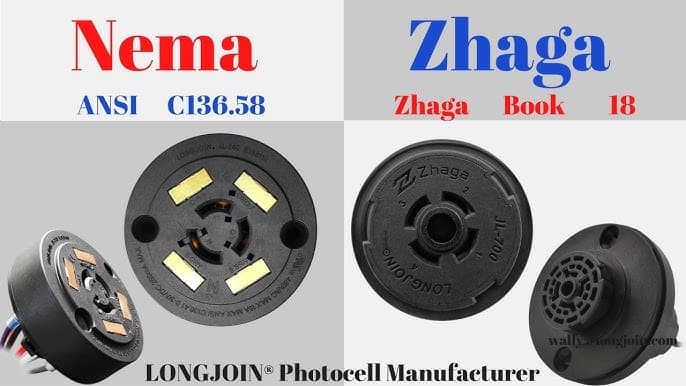
Long-Join’s smart nodes divide into three interface types:
- NEMA
- Customisable module
- Zhaga
Each interface is suited to different installation standards and project requirements.
Tipo | Representative Models | Notas |
NEMA Type | JL-245CG, JL-245CZ, JL-245CN | Standard NEMA interface-compatible photocontrols; widely used in road lighting |
Customisable Module | JL-265CX | Supports customisation, suitable for special scenario requirements |
Zhaga Type Controller | JL-721NP | Compatible with Zhaga standard interface, facilitating modular expansion and maintenance |
Knowing which interface type the project requires is the starting point for any quotation. A project using existing Receptáculo NEMA infrastructure specifies NEMA type. A project using Zhaga Book 18 compatible luminaires specifies Zhaga type. A project with non-standard requirements that don’t fit either interface starts with the customisable JL-265CX.
What Core Information Do You Need for a Quotation?
Five categories of information determine the configuration, pricing, and lead time for any smart node order. Missing any one of them creates delays.
Information Category | Detalles |
Product Model (Smart Node Type) | Clearly specify whether it is NEMA, Customisable, or Zhaga type to quickly filter corresponding components and standards |
Requisitos funcionales | Detailed description including remote control functions (real-time data upload, security), sensor configuration, power parameters |
Compatible Interface Type | Specify the photocontrol interface type, such as standard NEMA or Zhaga interface design to ensure interoperability |
Custom or Special Processing Requirements | Whether extra components or accessories are included, such as waterproof rating, size customisation, or modular integration schemes |
Entorno de aplicación | Different application environments like municipal streets, highways, campuses, as these affect product configuration and performance parameters |
Product model or interface type is the first filter. It determines which product family is relevant and which components and standards apply. A buyer who specifies “smart node” without indicating NEMA or Zhaga may receive a quotation for the wrong interface type entirely.
Functional requirements are where most incomplete inquiries fall short. It is best to give details about:
- Remote control capability
- Real-time data upload
- Alarm and security functions
- Dimming protocol (0-10V, DALI, or PWM)
- Sensor integration (PIR, microwave, ambient light)
All these features affect the configuration and price. A request that says “smart node with remote control” leaves too many variables open. A request that specifies “NB-IoT connectivity, 0-10V dimming output, real-time energy data upload, fault alert” generates a precise quotation.
Compatible interface type goes beyond just NEMA versus Zhaga. For NEMA, is the receptacle 3-pin, 5-pin, or 7-pin? For Zhaga, is it Book 18 standard? If the luminaire already has a specific receptacle installed, the node must physically and electrically match it. Providing the receptacle model or specification at the inquiry stage avoids compatibility problems discovered at installation.
Custom or special requirements cover anything outside standard product configuration. A higher IP rating than the standard model, a modified housing dimension to fit a specific luminaire, an integrated accessory, or a non-standard communication protocol all require engineering involvement that standard quotation processes don’t cover. Flagging these at the inquiry stage allows the technical team to assess feasibility and cost before the quotation is issued rather than after.
Application environment affects both the product specification and the warranty considerations. A municipal road lighting project has different duty cycle, maintenance access, and environmental exposure requirements from a campus pedestrian path project. A highway installation at 12 metre mounting height has different sensitivity and surge protection requirements from a car park installation at 6 metres.
The environment information allows the quotation to include the right IP rating, surge protection level, and operational configuration for the specific conditions.
What Are Some Long-Join Model Application Suggestions?

Here are five models that cover some common smart node application scenarios, from standard city road lighting through to modular smart pole infrastructure.
Modelo | Características principales | Typical Applications |
JL-245CG | Standard NEMA interface, high safety compatibility | City streetlight projects, standard installation needs |
JL-245CZ | High stability and strong environmental adaptability | Road lighting for variable climate areas |
JL-245CN | Precise dimming control, electrostatic protection | Industrial zones and high-security applications |
JL-265CX | Customised interface and packaging, suitable for non-standard needs | Campus and special light source coordination with flexible customisation |
JL-721NP | Zhaga interface, fully modular design ensuring intelligent component interchangeability | New generation modular smart poles with easy maintenance and upgrade |
El JL-245CG, JL-245CZ, y JL-245CN are all NEMA-compatible and differ primarily in their stability characteristics and functional capabilities. The JL-245CZ’s stronger environmental adaptability makes it the better choice for projects in regions with significant climate variation. The JL-245CN’s electrostatic protection makes it appropriate for industrial zones where grid instability is a concern.
El JL-265CX is the answer when none of the standard models fit. Customisable interface and packaging support non-standard luminaire configurations, and its flexibility makes it the go-to for campus projects with specific integration requirements that standard products don’t accommodate.
El JL-721NP covers projects built around Zhaga Book 18 luminaires. Its fully modular design means sensors, controllers, and communication modules can be swapped independently without replacing the entire unit — a significant maintenance advantage on smart pole networks where different components may reach end of life at different times.
For quotation enquiries, sample requests, and customisation discussions, visit Long-Join’s servicio de muestra page or Contáctanos directly.
Frequently Asked Questions On Smart Node Quotation
NEMA uses standardised pin receptacles (3-pin, 5-pin, or 7-pin) common in North American road lighting infrastructure. Zhaga uses a compact Book 18 connector standard designed for modular smart lighting integration, more common in European and Asian new-build projects.
Non-standard IP ratings, housing dimensions, communication protocols, or accessory integration all require engineering assessment beyond standard product quotation. Flagging these at the inquiry stage allows Long-Join to assess feasibility and include accurate pricing in the first quotation.
Specify the communication protocol (NB-IoT, ZigBee, LoRa), what data needs to be uploaded (energy, fault status, dimming level), upload frequency, and whether two-way control is required. These details determine the correct model and configuration.
Its interface and packaging are designed to be modified rather than fixed. Where standard NEMA and Zhaga products don't fit the luminaire or the project requirement, the JL-265CX provides the starting point for a custom-configured solution.
Through direct technical consultation, sample evaluation, and a customisation service that covers interface design, packaging, communication protocol, and accessory integration — all documented in Long-Join's customisation service flow.
Conclusión
A smart node quotation is only as accurate as the information provided. Product model or interface type, functional requirements, compatible interface specification, custom requirements, and application environment are the five categories that determine configuration and pricing. Missing any of them adds a round of questions and delays the quotation.
Long-Join’s smart node range covers NEMA, Zhaga, and customisable formats across the JL-245 series, JL-265CX, and JL-721NP, with the right model determined by the project’s specific technical and environmental requirements.


 Spanish
  English
  Russian
  Portuguese
  Arabic
  Japanese
  Italian