
Brief False Triggering of Photocells Under Boundary Light Conditions
Introducir
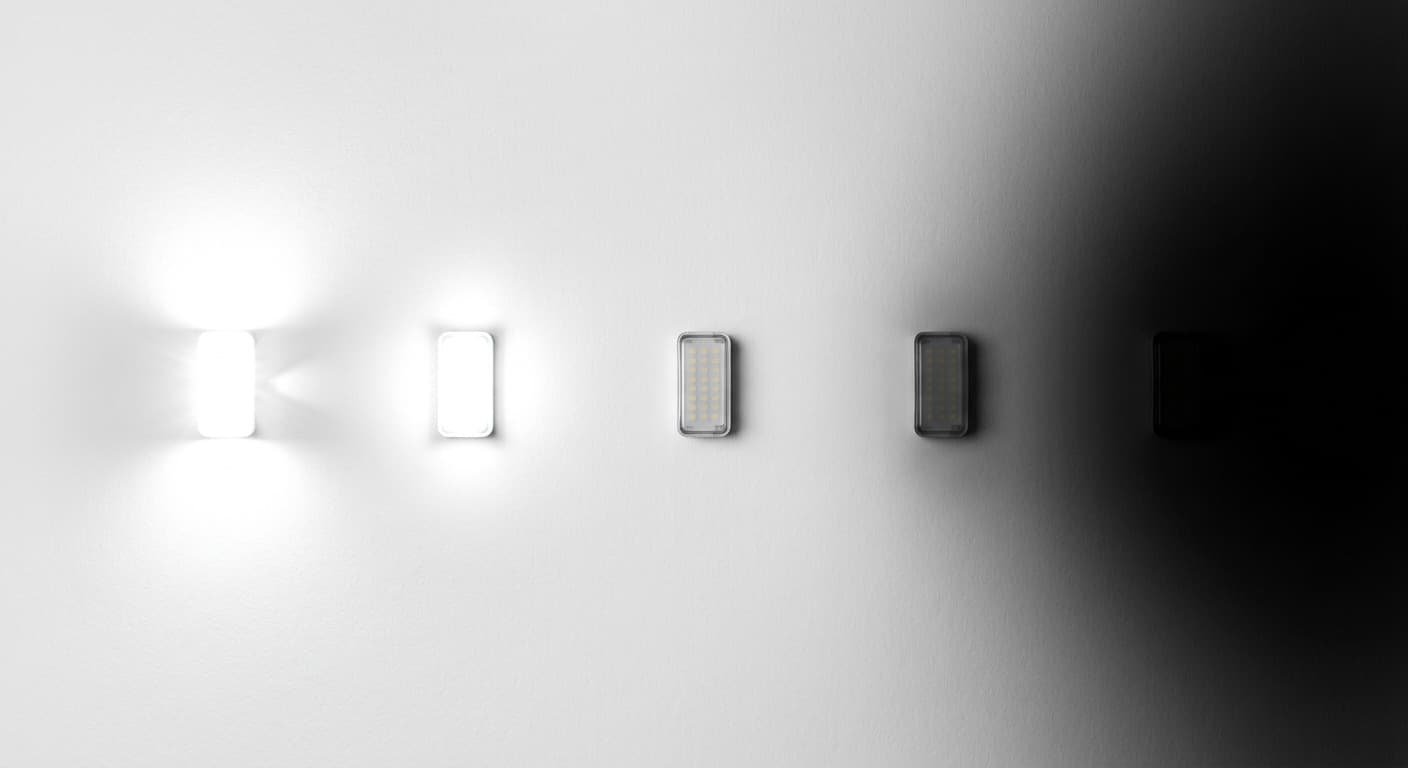
Boundary light is the lighting condition that sits at the edge of a photocell’s switching threshold, that point when it is not clearly day, not clearly night.
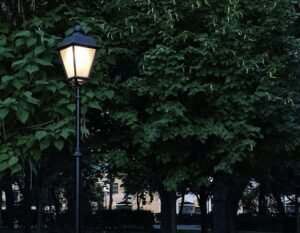
Overcast skies, heavy rain, tree canopy shade, and tunnel entrance positions all produce ambient lux levels that fluctuate around the on-threshold rather than sitting clearly above or below it.
When this happens, even a well-functioning photocell can produce brief false triggers that cause the lamp to flicker or cycle. Understanding how Long-Join addresses this reduces specification errors and field troubleshooting time.
What Is "Boundary Light"?
Boundary light refers to the critical lighting condition between night and day, such as overcast skies, heavy rain, tunnel entrances, and shaded areas. At those points, light intensity fluctuates close to the photocell’s switching threshold, causing borderline switching states.
Under open-sky conditions with no obstructions, the difference between daytime lux and nighttime lux is several orders of magnitude. A photocell’s on-threshold of 10 to 30 Lux is nowhere near daytime levels of thousands of Lux. There is no ambiguity.
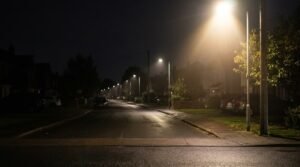
In a boundary light environment, that comfortable margin disappears. Lux may fluctuate between 8 and 35 Lux as clouds move across the sky or as vehicle headlights interact with the sensor. Each crossing of the threshold triggers a switching event. With a short time delay setting, multiple crossings per hour produce visible flickering.
What Are the Typical Manifestations of False Triggering?
Three patterns of false triggering appear under boundary light conditions, each indicating a different relationship between the ambient lux variation and the photocell’s threshold and delay settings.
Situation | Descripción | Causa |
Brief On-Then-Off | Lamp briefly lights up and then quickly turns off | Ambient light fluctuates near the threshold, causing brief mis-triggering of closing on switch |
False On-Off Cycle | Lamps repeatedly turn on and off, causing frequent automatic switching | Large light fluctuation amplitude with sensitive photocell response and lack of suppression on borderline switching |
Delayed Action | Switching command delays cause lamp state mismatch with actual need | System response speed or detection algorithm requires adjustment |
The brief on-then-off pattern is the most common boundary light symptom. A cloud drops lux below the threshold for long enough to satisfy the time delay. The lamp switches on. The cloud passes, and lux rises above the off-threshold. The lamp switches off. The whole sequence may take 30 to 90 seconds and leave observers thinking the photocell is malfunctioning. In most cases, it is functioning correctly, but the threshold setting is not well matched to the installation environment.
The false on-off cycle is more disruptive and more damaging. Repeated switching at short intervals accelerates relay contact wear, stresses the LED driver with repeated inrush events, and creates visible light quality problems. This pattern indicates either an excessively sensitive photocell, an excessively short time delay, or a genuine environmental interference problem such as reflected light from a nearby surface.
How Does Long-Join Address Boundary Light False Triggering?
Three technical approaches in Long-Join photocell design specifically reduce the frequency and impact of boundary light false triggering.
Solution Type | Implementación | Advantage or Benefit |
High-Precision Sensing | Use of precision photosensitive elements with real-time ambient light sampling | Reduces the chance of misjudgment and improves environmental adaptability |
IR-CUT Filter | Filters infrared wavelengths and passes visible light (380-780nm) to avoid abnormal light interference | Lowers interference from light fluctuations, preventing frequent switching |
Threshold Optimisation | Adjust threshold settings according to various natural and artificial lighting environments | Reasonable trigger points improve efficiency in actual operation |
El IR-CUT filter addresses artificial light sources with high infrared content, one of the most common sources of boundary light false triggering in urban environments. Vehicle headlights, high-pressure sodium lamps, and certain LED fixtures all emit significantly in the infrared range.c
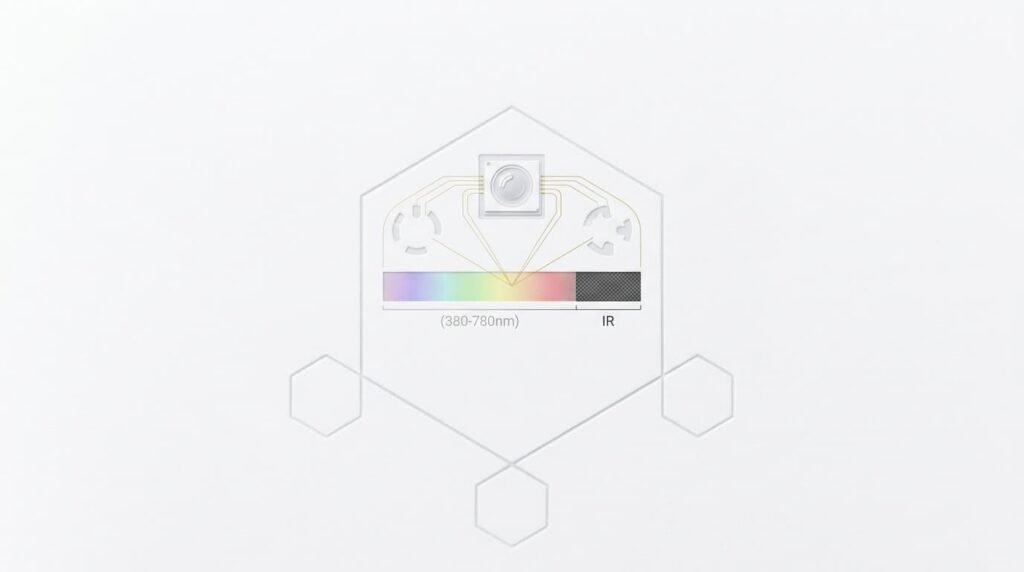
A sensor without IR filtering responds to the total irradiance, including infrared, producing a higher effective lux reading than the visible ambient light alone would indicate. This can push the reading above the off-threshold during night hours when a headlight sweeps the sensor, causing false switching. The IR-CUT filter restricts the sensor response to the 380 to 780nm visible spectrum, making the reading representative of actual ambient daylight rather than total irradiance.
Threshold optimisation is the installation-stage intervention. Long-Join photocells with adjustable lux settings let you set the on-threshold above the typical boundary-light lux range at a specific location. A position under tree canopy that regularly sees 20 to 40 Lux during overcast days benefits from an on-threshold set to 8 to 10 Lux, keeping the ambient variation well above the threshold and eliminating the boundary condition that causes false triggers.
Frequently Asked Questions on Boundary Light False Triggering
It is the ambient light condition near the photocell's switching threshold — produced by overcast, heavy rain, shaded positions, or tunnel proximity — where lux fluctuates across the threshold and causes repeated switching events.
Through IR-CUT filtering that removes infrared interference, high-precision sensing with real-time averaging, and adjustable lux threshold settings that allow the on-threshold to be positioned away from the boundary lux range of the specific installation environment.
Overcast and heavy rain conditions, positions under tree canopy, tunnel entrance and exit zones, and installations near reflective surfaces or artificial light sources with high infrared output.
Accelerated relay contact wear from frequent switching, repeated LED driver inrush current stress shortening driver lifespan, and visible light quality problems that generate user complaints and maintenance calls.
By setting the lux threshold below the typical ambient lux range of the installation position during boundary conditions, ensuring the threshold is not crossed by normal environmental variation. Increasing the time delay setting also reduces triggering from short-duration lux fluctuations.
Enlaces externos
Boundary light false triggering is a predictable consequence of installing photocells in environments where ambient lux regularly approaches the switching threshold.
Long-Join’s IR-CUT filter, high-precision sensing design, and adjustable lux threshold settings address this at the product level. Installation-stage threshold optimisation addresses it at the site level. Together they minimise the brief false triggering events that cause lamp flickering and premature relay wear in boundary light environments.

 Spanish
  English
  Russian
  Portuguese
  Arabic
  Japanese
  Italian