
Are Long-Join Photocells Compatible with High-Power HID Lamps?
Introducir
High-Intensity Discharge lamps remain in active use across street lighting, commercial parking lots, and industrial facilities worldwide despite the growth of LED.
Many retrofit and maintenance projects still require photocells that work reliably with HID loads, and the load characteristics of HID lamps differ meaningfully from LED drivers.
Understanding which Long-Join photocell models suit which HID types avoids compatibility problems before they appear in the field. Let’s run through them.
What Is an HID Lamp?
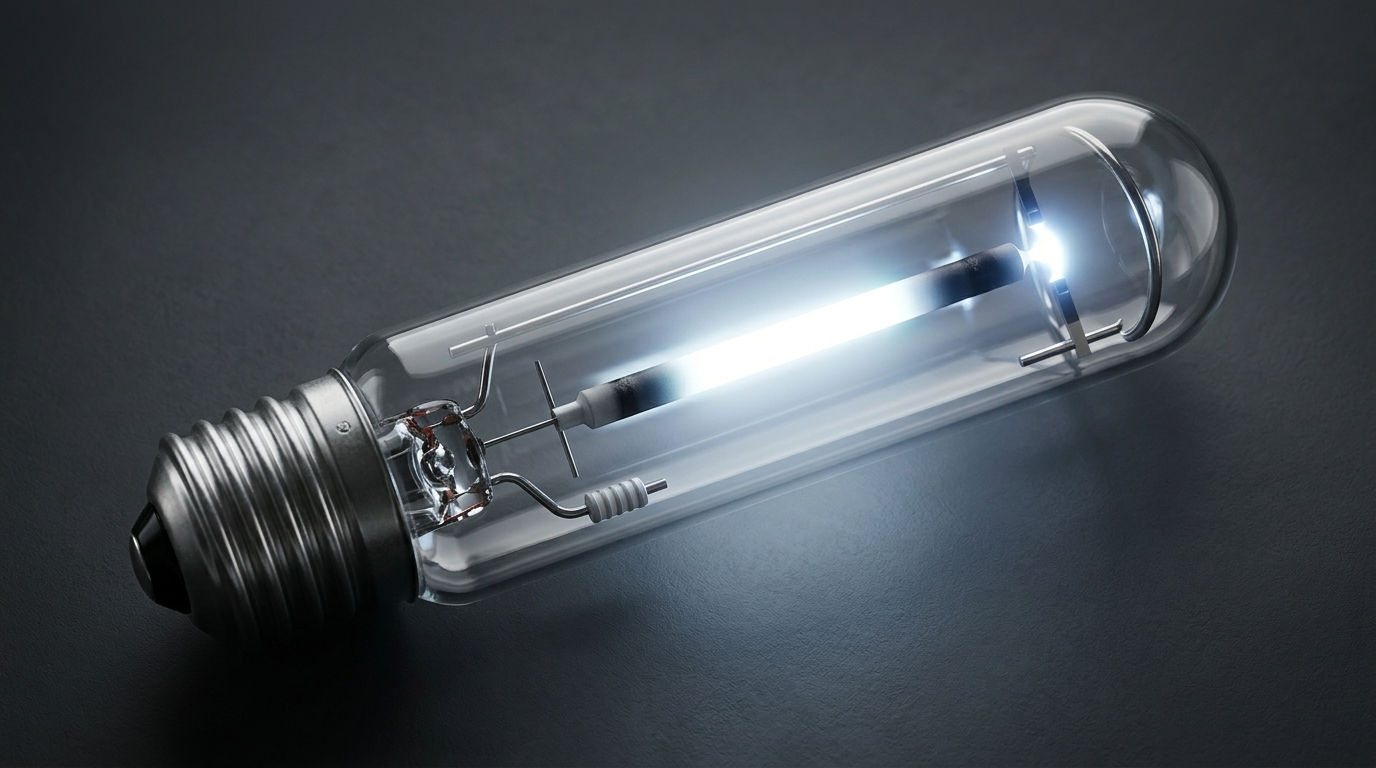
HID (High-Intensity Discharge) lamps are lamps in which high-intensity light is generated by an electrical arc between tungsten electrodes in a gas-filled tube, and are known for their high luminous efficacy, high brightness and long life.
Basically, this means that the light is produced by an electric current that flows through a tube filled with gas which forms a strong electrical arc between two tungsten electrodes. This process creates a much brighter and efficient light than a traditional incandescent, so the use of HID lamps would be acceptable when high levels of illumination are desired.
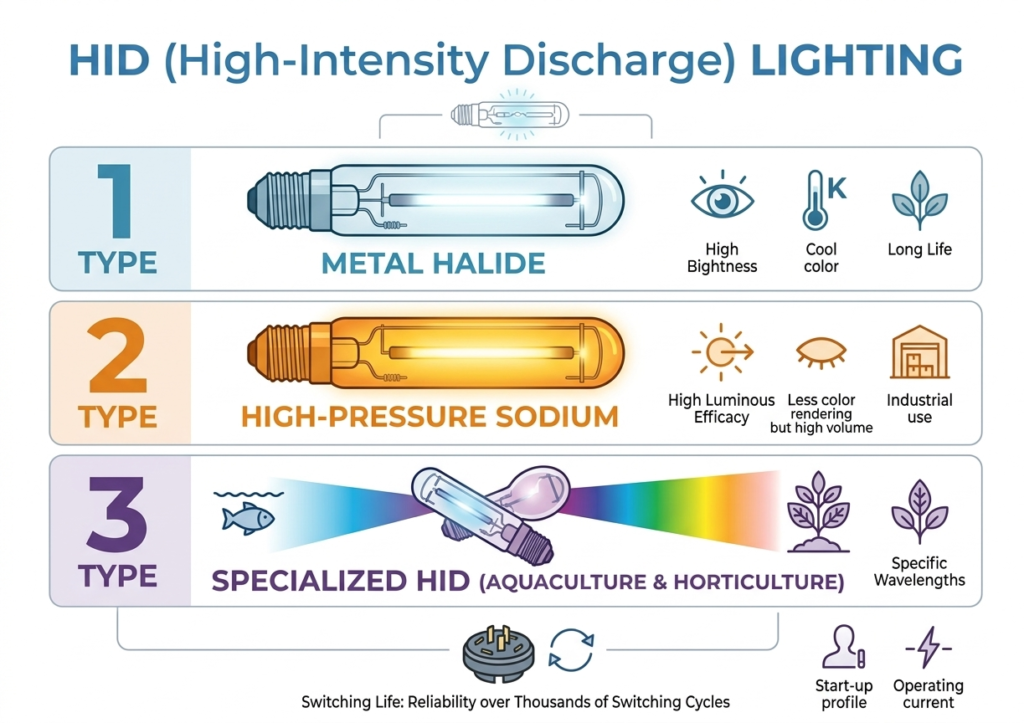
Common HID types in outdoor and industrial lighting include:
- Metal Halide
- High-Pressure Sodium
- Specialised variants for aquaculture and horticulture.
Each has different startup characteristics, operating current profiles, and load demands that the photocell must handle reliably across thousands of switching cycles.
Which Long-Join Photocell Models Are Compatible with HID Lamps?
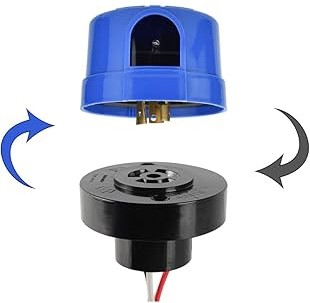
Three HID lamp types map to specific Long-Join photocell series, with model selection driven by the application scenario and mounting interface.
HID Lamp Type | Escenario de aplicación | Long-Join Photocell Models | Remarks |
Metal Halide (MH) | Commercial parking lighting | Wiring series: 103A, 403C; Socket series: 301A, 302A | Common incandescent lamp control solutions |
High-Pressure Sodium (HPS) | Street lights, industrial low-bay fixtures | twistlock photocell models: 205C, 207C | Adapted for high-pressure lamps with twistlock socket interfaces |
HID Aquaculture Lighting | Specialised aquaculture lighting | Controller models: 118A, 205C | Designed for unique aquaculture environments with precise control for harsh outdoor conditions |
Metal Halide lamps (MH)
These are the most common HID type in commercial parking applications. They produce high-colour-rendering light and are used in covered parking structures, retail forecourts, and commercial building perimeters.
El JL-103A y JL-403C wire-in series provide direct circuit integration for fixtures without NEMA receptacles, while the JL-301A y JL-302A bulb socket series suit fixtures using standard E26 lamp bases.
High-Pressure Sodium lamps (HPS)
HPS produces the amber-toned light characteristic of older street lighting infrastructure. They draw high ballast loads during startup and require photocells with sufficient rated capacity and relay stability across the repeated high-current inrush events that HPS startup produces.
El JL-205C y JL-207C twistlock photocell models are rated for 1,000W tungsten and 1,800VA ballast loads, covering the high-pressure sodium load range. The JL-207C’s zero-crossing switching technology reduces relay contact arcing on the switching events that HPS ballast loads produce.
HID Aquaculture Lighting
Thee lighting operates in environments with sustained high humidity, salt water proximity, and the precise switching timing that aquaculture light cycles require.
El JL-118A swivel stem controller and JL-205C twistlock model both suit this application, with the JL-205C’s IP65 rating and adjustable lux threshold providing the environmental protection and timing precision that aquaculture environments demand.
What Should Buyers Consider When Selecting Photocells for High-Power HID Lamps?
Two procurement priorities determine long-term reliability in HID photocell applications:
- Rated load capacity
- Switching technology
Here are 3 top purchasing advices:
- Prioritise twistlockphotocell products like the JL-205C series that support high current and high power to ensure durability and stability across the ballast load profiles that HID lamps produce.
- Select photocells with safety certifications including UL773 or UL773A, overload protection, and high-temperature stability designs to meet the long-term reliable switching requirements of street and industrial lighting.
- For retrofit applications where existing HID fixtures are being maintained rather than replaced with LED, confirming the photocell’s ballast VA rating against the specific HID fixture’s ballast rating is the most important specification check.
A photocell underrated for the ballast load will have its relay contacts stressed on every switching cycle, shortening service life significantly below the rated cycle count.
Frequently Asked Questions on HID Lamp Compatibility
The JL-103A and JL-403C wire-in models and the JL-301A and JL-302A bulb socket models cover Metal Halide commercial parking applications. Model selection depends on the fixture's mounting interface — wire-in or E26 socket.
Yes. The JL-205C and JL-207C models are rated for 1,800VA ballast loads, covering HPS lamp requirements. The JL-207C's zero-crossing switching reduces relay arcing on the high-current HPS ballast switching events.
Aquaculture environments combine sustained high humidity, salt water proximity, and precise timing requirements. The JL-205C's IP65 rating and adjustable lux threshold suit these conditions. The JL-118A swivel model provides directional flexibility for unconventional fixture orientations common in aquaculture facilities.
Prioritise models with zero-crossing switching technology, high relay cycle ratings, and ballast VA capacity that comfortably exceeds the fixture's rated ballast load. The JL-207C HP relay variant at 50,000-plus cycles is the appropriate specification where switching frequency or ballast stress is high.
Ballast VA rating, relay cycle life, UL773 listing, operating temperature range, and zero-crossing switching capability. For outdoor HID applications, IP65 or IP67 protection and UV-stabilised housing material are also essential specifications.
Conclusión
Long-Join’s photocell range covers the main HID lamp types used in commercial and industrial outdoor lighting. This includes Metal Halide applications, High-Pressure Sodium street lighting, and Aquaculture HID lighting. Selecting the right model requires confirming the ballast VA rating, mounting interface, and environmental protection level against the specific fixture and installation conditions.
Enlaces externos
●https://en.wikipedia.org/wiki/Zero-crossing_control
 Spanish
  English
  Russian
  Portuguese
  Arabic
  Japanese
  Italian