
How To Assess The Weather Resistance Of Photocells? Testing Standards From Salt Spray, Damp Heat To Extreme Cold Environments
Introducir
Outdoor lighting looks simple at night. But the parts inside the control system live a harder life than most people think. A photocell sits outside, facing sun, rain, salt air, fog, and freezing wind. Over time, these conditions can get into the housing.
That is why weather resistance testing matters. It is not “extra paperwork.” It is how you reduce failures, call-backs, and dark streets.
En Unión larga, weather testing is treated like a real-world promise, not a lab show. We check corrosion risk, sealing strength, and low-temperature function so a product can keep working season after season.
What Does “Weather Resistance” Really Mean For A Photocell In The Field?
When buyers hear “weather resistant,” they often picture rain only. In reality, weather resistance is about three big threats.
First, corrosion. Coastal cities and industrial zones push salty mist and chemical air onto every exposed surface.
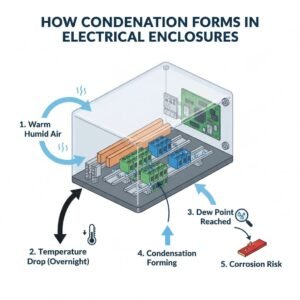
Second, moisture stress. Heat plus humidity can slowly move water vapor through weak seals. Once moisture sits near electronics, it can cause drifting performance, unstable switching, and shorts.
Third, cold shock and brittleness. In low temperatures, plastics can become stiff. Seals can shrink. Metal parts can contract. If the design is not ready, the sensor may stop responding, or the housing may crack.
So weather resistance is not one test. It is a set of tests that match your real environment.
Which Salt Spray Standards Help You Judge Corrosion Resistance?
What Does The Salt Spray Test Try To Mimic?
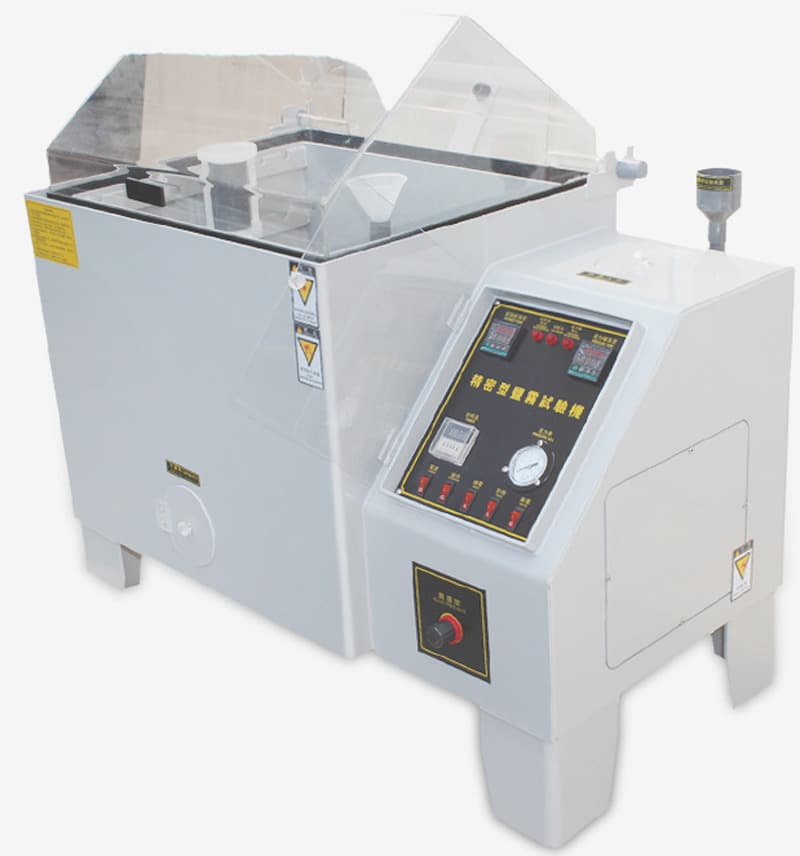
Salt spray does not copy every detail of nature. But it creates a controlled, salty fog environment that quickly reveals weak coatings, low-grade metals, and poor plating.
This is useful when you want to compare materials and surface treatments in a fair way. ASTM B117 explains how to run the salt spray apparatus and the conditions for the test environment.
What Should You Look For After Salt Spray Testing?
For outdoor lighting projects, do not focus only on “hours.” Focus on what happens after exposure.
Look for things like:
- Rust on screws and springs
- White corrosion on plated parts
- Green corrosion on copper parts
- Pitting on aluminum
- Stiff or stuck moving parts
- Changes in contact quality
If a supplier shows a salt spray result, ask what parts were inspected and what pass criteria were used. A simple “96 hours passed” line is not enough.
Which Damp Heat Standards Matter For Sealing And Electronics Stability?
Humidity is sneaky. It can sit on a product for months. Then a storm season comes, and it fails. Damp heat testing helps you catch sealing problems early.
What Is The Difference Between Steady And Cyclic Damp Heat?
- Steady damp heatkeeps temperature and humidity high and stable. It checks how a product handles long exposure to high humidity without condensation.
- Cyclic damp heatmoves through repeating heat and moisture cycles and often creates surface condensation. It is useful because real outdoor environments often heat up and cool down each day.
What Failures Does Damp Heat Often Reveal?
Damp heat tends to expose problems that look “fine” at first glance, such as:
- Seal materials that soften or deform
- Housing joints that slowly leak vapor
- PCB coating weaknesses
- Connector oxidation
- Sensor drift and unstable switching
If you are buying a sensor de fotocélula for a humid coastal city, damp heat is not optional. It is your early warning system.
Which Extreme Cold Standards Help You Confirm Low-Temperature Reliability?
Cold weather testing is not only for snow countries. Some regions have hot days and very cold nights. That daily swing is stressful.
A common reference for cold testing is IEC 60068-2-1, which describes low-temperature “cold tests” to check whether equipment can be used, transported, or stored at low temperature.
What Should A Good Cold Test Check?
A strong cold test should not only check “does it turn on.” It should check function and mechanical safety, such as:
- Switching action at low temperature
- Start-up behavior after cold soak
- Seal shrink and leak risk
- Housing brittleness risk
- Cable and terminal stress
For a photocell switch used in winter zones, a low-temperature pass should mean stable operation, not “it survived once.”
Why Is IP65 Often Mentioned Alongside Weather Resistance Tests?
Weather resistance is not only about the environment outside. It is also about what gets inside.
That is where enclosure protection levels help. Clasificaciones IP come from IEC 60529. This system shows how well a product blocks dust and water.
What Does IP65 Commonly Mean In Outdoor Lighting?
Put simply, IP65 means the enclosure is fully sealed against dust and can resist water jets. Many outdoor lighting projects use this as a basic standard for devices that face rain and water spray.
This is why you will often see damp heat and sealing discussion tied to IP rating targets.
When you see Fotocontrol IP65 in a spec, treat it as a sealing goal that should be backed by test evidence, not only a label.
How Do Long-Join’s Weather Tests Show Up In Real Product Examples?
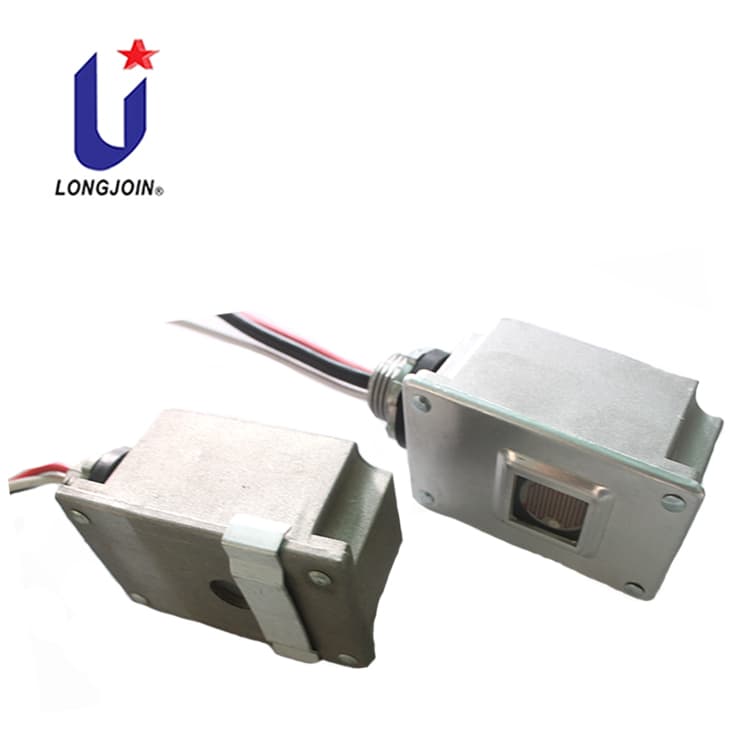
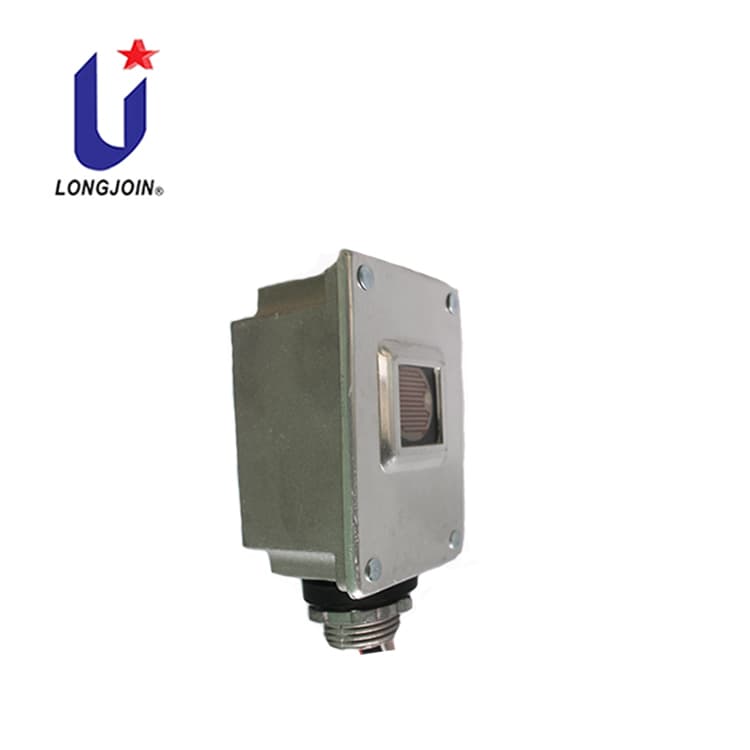
The JL-126A has a heavy-duty die-cast aluminum housing. That housing choice matters in salty air because metal selection and surface treatment decide how fast corrosion starts.
In salt spray conditions, the goal is simple. Keep rust off key parts. Keep moving parts steady. If corrosion forms on fasteners, terminals, or springs, the contact may get weak. When that happens, switching may not work well.
Damp heat matters too. A strong housing alone will not save electronics if seals are weak. Damp heat cycling helps confirm the sealing approach and the stability of internal parts under heat and high humidity.
JL-207C: How Does It Stay Reliable In Extreme Cold And Humid Weather?
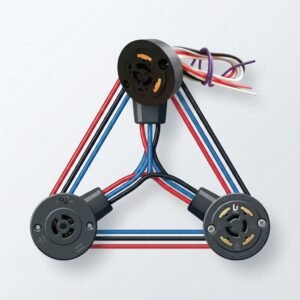
El JL-207C twist-lock style is often used where installers need fast replacement and stable mounting. In cold climates, the big concerns are material stiffness, seal shrink, and sensor response.

Testing down to very low temperatures helps confirm that the device can still switch normally after cold soak. It also helps confirm that the housing and seals do not crack under cold stress.
Damp heat testing then checks the other side of the world: humid rain seasons. Even if a product passes cold, a weak seal can still allow moisture issues over time. Pairing cold and damp heat gives a clearer picture of real-life resilience.
What Comparison Table Helps You Choose The Right Photocell For Your Environment?
Photocell Weather Resistance Comparison Guide
Modelo | Salt Spray Focus | Damp Heat Focus | Extreme Cold Focus | Material de la carcasa | Target Sealing Level | Best-Fit Environment |
JL-126A | Long salt fog exposure for corrosion risk control | High heat + humidity stability for long-run operation | Moderate cold checking | Heavy-duty die-cast aluminum | IP-style sealing target for outdoor exposure | Coastal areas, industrial zones, high corrosion risk |
JL-207C | Salt fog screening for hardware durability | Humidity cycling for sealing and stability | Deep cold operation verification | High-strength engineering plastic | IP-style sealing target for rain and spray | Cold regions, snow and rain cycles, high moisture seasons |
If your project sits near the ocean, focus first on corrosion risk. If your project sits in rainy tropical weather, focus on damp heat and sealing. If your project is in winter zones, cold reliability becomes the top filter.
What Simple Checklist Helps Buyers Verify A Supplier’s Weather Claims?
When you are evaluating manufacturers photocell options, use a short checklist that is easy to verify.
- Do they name the standard?
- Do they show the test condition and duration?Not only “passed.”
- Do they explain what was inspected after the test?Screws, terminals, seals, housing, switching.
- Do they link the test to the environment you actually have?Coastal, humid, cold, industrial.
- Do they tell you how the product is built for that risk?Material choice, sealing structure, and protection design.
A test report should feel like a real answer to a real street problem, not a marketing line.
Conclusión
Weather resistance is not a single claim. It is proof from salt spray, damp heat, and extreme cold checks that match your environment. When your project faces the street and must last for years, do not choose by price alone. Choose based on clear test standards and real proof.
For a fotocélula de alumbrado público, the right test method helps keep the light stable, safe, and easy to maintain for years.
Enlaces externos:
●https://www.gwp.co.uk/guides/ip-ratings-explained/
●https://webstore.iec.ch/en/publication/82354
●https://cdn.standards.iteh.ai/samples/63543/18ec48012fa0464f8cb6093d5f5991e8/ISO-9227-2017.pdf
●https://store.astm.org/standards/b117

 Spanish
  English
  Russian
  Portuguese
  Arabic
  Japanese
  Italian