
Strategic Approach For UM Series Products Entering Emerging Markets
Представлять
Emerging markets in South America want modern street lighting that “just works” — but budgets are tight, grids are unstable, and maintenance teams are small. Distributors sit in the middle of all this pressure.
The UM Series from Long-Join is built exactly for this gap: a family of cost-effective photocell controllers with wide voltage ranges, strong IP protection, and stable dusk-to-dawn behaviour designed for harsh outdoor conditions and weak power grids.
This guide turns your outline into something practical: a question-and-answer playbook you can use with partners in Peru, Argentina, Chile, Colombia and Brazil.
What Market Positioning Works Best For UM Series In South America?
Are you stuck between cheap local controls that fail too soon and premium brands your customers cannot afford? That’s the daily reality for many South American distributors.
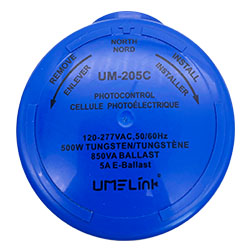
The UM Series works best as a mid-range “value, not luxury” choice. It offers the reliability of a branded photocell sensor without the full cost of top-tier Western products. UM-205C, for example, combines a wide operating voltage (around 90–305 VAC) with IP66 protection and tuned lux levels, making it suitable for unstable grids and coastal or humid climates.
Instead of selling “the cheapest photo cell,” you position UM as “international-grade stability at a local price.” That story resonates strongly in city bids, industrial parks, and private housing projects that cannot risk dark streets.
Market Positioning Map For UM Series
Segment | Typical Buyer | Key Pain Point | UM Series Positioning |
Municipal road lighting | City engineering dept / EPC contractors | Outages, complaints, budget audits | Balanced TCO: reliable photocell for street light projects without premium pricing |
Industrial / port areas | Facility owners, port authorities | Harsh environment, 24/7 operation | Durable control: IP-rated light photocell sensor for dust, salt, humidity |
Residential & parks | Local contractors, cooperatives | Safety, basic compliance, cost | Upgrade from “no-name” controllers with proven specs and brand backing |
Private label brands | Local luminaire manufacturers | Need a stable OEM partner | Customizable platform with consistent quality and certification options |
How Should Distributors Build Online And Offline Channels Around UM Series?
Do you feel your current channels are either too slow (offline only) or too price-driven (online only)? The UM Series travels best when you combine both.
Online, you use regional marketplaces like Mercado Libre или OLX to show clear photos, wiring diagrams, and spec tables. You highlight simple benefits: dusk-to-dawn control, wide voltage, IP66, fewer callbacks. Offline, you lean on training and trust with installers, hardware stores, and local lighting shops.
Channel Strategy For UM Series
Channel Type | Key Actions | UM Series Story To Tell |
E-commerce platforms | Optimise listings, add FAQs, publish wiring diagrams and reviews | “Reliable photocell lighting sensor for street & yard lights” |
Local hardware stores | Provide counter cards, quick spec sheets, basic training | “Simple replacement for failing low-cost controls” |
Lighting distributors | Bundle with luminaires and poles, offer design support | “Standard platform across road, park, and industrial projects” |
OEM / luminaire makers | Offer customised leads, colours, and private labels | “Stable OEM partner for UM-based control ecosystem” |
For more technical buyers, you can point to Long-Join’s UM Series emerging-market strategy article, which explains how UM devices were designed for unstable grids, tight budgets, and outdoor extremes.
How Can A Phased Country Rollout Reduce Risk For Distributors?
Trying to launch in every South American country at once can stretch stock, support, and marketing too thin. How do you stay focused without missing growth?
A phased rollout lets you prove the model in a few markets, then copy the playbook. You start where infrastructure projects are active and competition from entrenched local brands is weaker, then expand step by step.
- Phase 1 – Peru & Argentina: Lead with UM-205C for standard dusk-to-dawn control and UM-208 as a shorting cap for “always-on” circuits.
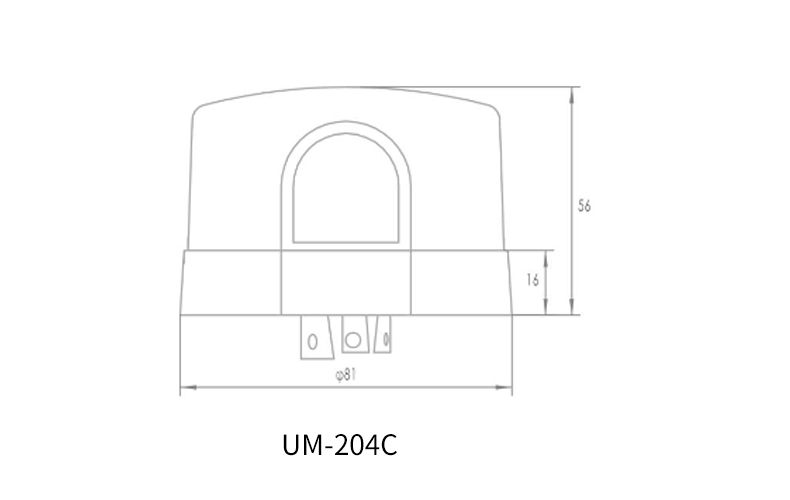
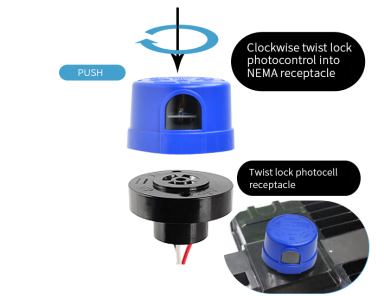
- Phase 2 – Chile & Colombia: Добавлять УМ-204С and the UM-240 photocontrol receptacle so cities can move toward dimming and remote control later.
- Phase 3 – Brazil: Focus on engineering projects and long-term service contracts where specification strength matters more than shelf price.
This roadmap keeps early inventory simple and gives you clear milestones for training, marketing, and reference projects.
How Can Brand And Promotion Turn Technical Specs Into Trust?
Do your customers’ eyes glaze over when you talk about lux levels and voltage ranges? Specs alone don’t create trust; stories and proof do.
Your brand message for UM Series in South America can be summed up as:
“International quality with competitive local pricing.”
You support that promise with three pillars:
- Visible certifications and standards
Point to CE/ROHS on key products and NEMA / ANSI compatibility where it matters, especially on UM-240 and related bases.
- Energy-saving results
Long-Join’s own market content notes that dusk-to-dawn photocell control combined with LED upgrades can cut outdoor lighting energy use by a large margin in many projects.
- Real reference stories
Even a small pilot in a single district — with before/after failure and complaint rates — is more convincing than a brochure.
Turning Specs Into Simple Messages
Technical Feature | Customer-Friendly Message |
Wide voltage range for UM-205C | “Stays stable even when the grid drops or spikes.” |
IP66 enclosure | “Built for rain, dust, salty air, and heat.” |
Tuned dusk-to-dawn photocell control | “Lights come on when it’s dark, off when it’s bright. No guesswork.” |
НЕМА / Жага розетка ecosystem | “Ready for today’s projects and tomorrow’s smart upgrades.” |
How Does UM Series Compete With Local Low-Price Brands And Global Majors?
Are you losing deals either to very cheap local controllers or to big global names with heavy marketing? The UM Series gives you tools to answer both sides.
Against low-price copies, the message is simple:
- Their anonymous photocell for street light may work one season and fail the next.
- UM devices focus on voltage flexibility, Защита интеллектуальной собственности, and stable switching, backed by a manufacturer that specialises in photocell and connector systems.
Against global majors, you highlight fit-for-purpose design instead of over-engineering:
- UM products offer the control functions most emerging markets actually use, without expensive extras.
- When projects need more intelligence, you can combine UM controllers with NEMA or Zhaga interfaces and smart nodes, as described in Long-Join’s comparison of 3-pin, 5-pin, and 7-pin receptacles and their article on Zhaga vs NEMA lighting controls.
Over time, this lets you build a layered portfolio:
- UM controllers for robust, mid-range photocell LED street light control
- NEMA and Zhaga sockets for smart-ready luminaires
- Optional remote controllers and CMS for city-scale projects
This “good enough plus future-proof” mix is often exactly what public buyers in emerging markets want.
Why Is The UM Series A Strong Long-Term Bet For Distributors?
Do you worry that today’s product will not fit tomorrow’s regulations or smart-city plans? A key strength of the UM family is that it can grow with the market.
You can think about distributor value in three time horizons:
Distributor Investment Timeline For UM Series
Horizon | Main Goal | UM Series Focus |
Short term | Win tenders, replace failing controls | Stock UM-205C / UM-204C + UM-208, position value vs. cheap copies |
Medium term | Build regional network and repeat orders | Add UM-240 photocontrol receptacle and bundles with luminaires |
Long term | Enter large smart-lighting projects | Combine NEMA / Zhaga interfaces with smart nodes and CMS |
- In the short term (1–2 years), you use UM as a reliable replacement and mid-range option that reduces complaint calls and warranty claims.
- In the medium term (3–5 years), you formalise partnerships with OEMs and EPCs, bundling UM controllers and receptacles into their standard road-lighting designs.
- In the long term (5+ years), you grow into smart-city deals by building on the same sockets and poles instead of starting from zero.
Because Консорциум Жага and international standards such as ANSI C136.x and NEMA guidelines are becoming common technical references, UM’s compatibility with NEMA socket and Zhaga ecosystems helps keep your catalog compliant as rules tighten.
Заключение
If you want a simple place to start, here’s a practical sequence:
- Choose your Phase 1 country pair (for example, Peru + Argentina).
- Set up a lean product set: UM-205C, UM-204C, UM-208, and UM-240.
- Build one strong reference project in a city district, industrial park, or large residential development.
- Use that project’s data — fewer failures, stable dusk-to-dawn control, lower maintenance — as your lead story across South America.
From there, you can expand into neighbouring markets with a proven playbook, not just a product catalogue. The UM Series, supported by Long-Join’s focused expertise in photocell lighting sensor technology and connector systems, gives you a stable base for this long game.
Внешние ссылки:
● https://www.olx.com/
● https://www.mercadolibre.com/
● https://www.nema.org/membership/products/view/lighting-systems
● https://www.zgsm-china.com/blog/nema-vs-zhaga.html
● https://www.wipo.int/en/web/about-ip
● https://www.nema.org/standards/all-standards
 Russian
  English
  Spanish
  Portuguese
  Arabic
  Japanese
  Italian