
Should Photocells Be Installed On The Top Or Side Of The Luminaire?
Представлять
A photocell is small. Its job is not.
It tells an outdoor light when to switch on at dusk and when to switch off at dawn. Position it right, and the lamp works smoothly. Position it wrong, and everything goes sideways — the light switches on at 4 p.m., turns off in the middle of the night, keeps flickering like something is broken.
For street lighting, wall packs, garden lights, and roadway lamps, where you put the photocell matters. It needs to see natural light. It should not see the lamp glaring back at it. It should not be blocked by a pole. It should not sit where water pools.
What Long-Join Photocell Types Are Commonly Used?
Different lamps need different photocell styles. That is the first thing to understand.
Some fixtures have room for a small embedded photocell. Some need a removable plug-in type so you can swap it out during maintenance without taking apart the lamp. Some need an adjustable mount because the lamp structure does not cooperate with simple placement.
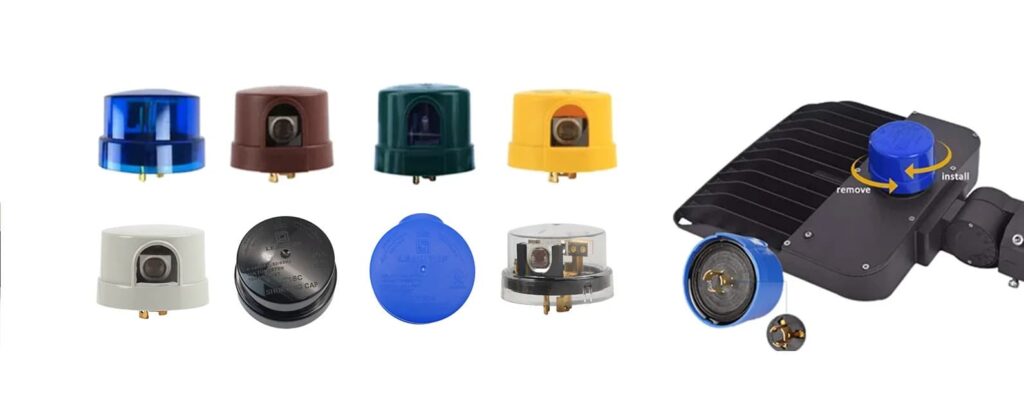
Long-Join’s JL-103A is button type, rated for 120VAC. It is small enough to fit inside a lamp body or pole. This makes it ideal for landscape lights, garden spotlights, LED floodlights, wall packs, and barn lights. You install it once and it stays hidden.
The JL-205C is twist lock. Street lights use these because you can unplug and replace the whole photocell in five minutes without tools. They also fit NEMA standard receptacles, which matters if the fixture was made to spec.
The JL-118A is a stem photocell. A threaded stem screws into a mounting hole, so it sits firm and does not move. Long-Join also stocks swivel versions for situations where you need to angle the sensor.
Тип фотоэлемента | Example Model | Общее использование | Main Benefit |
Button Type | JL-103A | Wall packs, garden lights, small lamps | Compact and protected |
Twist Lock Type | JL-205C | Street lights and pole lights | Easy replacement |
Stem Photocell | JL-118A | Fixed mounting points | Firm positioning |
Swivel Head Type | JL-118AV / similar swivel types | Flexible lamp designs | Adjustable sensing direction |
Should A Twist Lock Photocell Be Installed On Top Of The Luminaire?
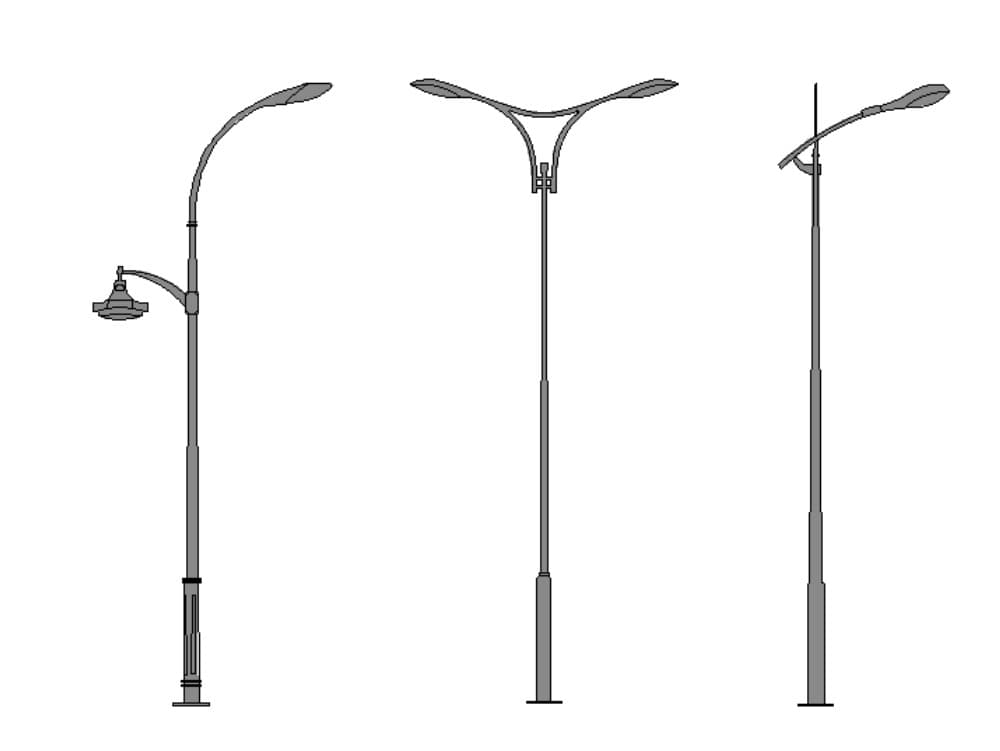
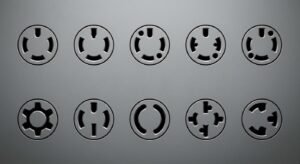
Street lights usually have a NEMA-розетка on top. The twist lock photocell plugs into it. Done.
This works because the top of a lamp sits high. If there are no walls or trees around, the photocell gets clear daylight. Maintenance is simple — a technician can see it, reach it, swap it out without much fuss. For that reason alone, top mounting is common.
But there is a catch.
If the photocell sits close to the lamp’s own light output, it can see reflected light bouncing off the fixture housing. The sensor gets confused. Light goes off. Sensor reads the darkness it just created. Light goes back on. The lamp cycles, and calls start coming in from annoyed customers.
Should A Photocell Be Installed On The Side Of The Luminaire Or Lamp Post?
Side mounting solves some problems and creates others.
If the top of the lamp is crowded with wiring or other parts, the side gives you space. It also sits lower, which can reduce lighting exposure compared to the top.
But now the sensor has to contend with new problems.
The pole itself might block daylight. A wall or bracket might throw a shadow. If the photocell stays in the shade too long, it may think night has come. This can make the light turn on too early. Point it the wrong way, and it may read the outdoor light level incorrectly.
Положение установки | Преимущества | Possible Problems | Наилучшее использование |
Top Of Luminaire | Clear daylight sensing, easy to access | Reflected lamp light, high exposure, lightning risk | Roadway lamps with open sky |
Side Of Luminaire | Less direct lamp glare, flexible wiring | Shading, water around protruding parts | Wall packs and compact fixtures |
Inside Lamp Post | Hidden and protected | Limited light sensing | Button type photocells |
Adjustable Angle Point | Better direction control | Higher cost or more parts | Complex lighting sites |
How Do Button Type Photocells Work In Hidden Installations?
Hide the photocell inside the lamp body and it stays clean. No bumps, no tampering, no weather damage right on the sensor window.
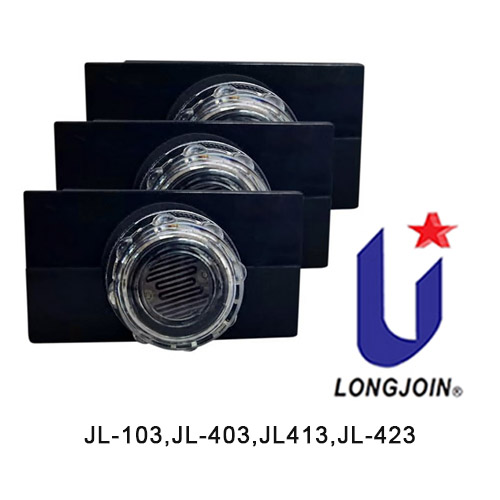
Long-Join’s JL-103A button type is small enough to embed in LED floodlights and wall pack housings. If the fixture has interior space, you drill a hole and the photocell sits protected inside.
The problem is sensing. If the button is too buried, if it sits inside a dark fixture cavity, it may not see daylight at all. Or it sees only partial daylight because the fixture body is blocking the view. This is where installers make mistakes. They think “This sensor will fit here” without thinking “Will it actually see the sky?”
For a simple lamp with clear opening and good light access, a button photocell is fine. For street lighting with complex shadows and angles, you need something with better angle control.
How Do Stem And Swivel Head Photocells Help With Direction Problems?
When the direction matters, stem and swivel head types earn their place.
А stem photocell like the JL-118A screws into a mounting location, so it sits firm. The fixture design usually already has a hole or tapped port, so you just thread it in. This works well when the designer picked a good location.
A swivel head gives you a way out. If the sensor is not reading light correctly, you rotate the head until it does. No redesign, no replacing the fixture, just adjustment. Long-Join’s installation guide notes that sealing compound still matters around the threaded stem, even with swivel types.
What Common Problems Happen When The Photocell Position Is Wrong?
Poor placement is a category of failure all by itself.
Point the photocell at the lamp and it sees the lamp’s light, not the sky. It turns off at the wrong time or cycles on and off. Long-Join’s wiring guide specifically warns not to face the photocell toward artificial or reflected light.
Shade the sensor and it thinks night is coming early. The light turns on too soon. Collect water around the mounting point and moisture creeps in, and the sensor fails months later. Leave the photocell on top of the fixture in an area prone to lightning strikes and you have added risk.
Проблема | Вероятная причина | Simple Fix |
Light Turns On Too Early | Sensor is shaded | Move or rotate the sensing window |
Light Turns Off At Night | Lamp light reflects into sensor | Face sensor away from lamp output |
Flickering Or Cycling | Mixed light signals | Use better placement or swivel head type |
Short Product Life | Water enters mounting point | Improve sealing and drainage |
Frequent Damage | High exposure or surge risk | Choose protected position and suitable model |
Часто задаваемые вопросы
Reflected lamp light, sun exposure that is too strong, water collecting, and lightning risk if there is a storm nearby.
Yes. A pole, wall, bracket, or nearby building can block the sensor without much effort.
Keep the sensor away from artificial light. A swivel head photocell also gives you the option to rotate it until it is reading the right light.
Button type like the JL-103A is usually good for simple installations where the sensor can sit embedded inside.
Swivel head or stem-mounted. Both let you adjust the direction without changing the whole fixture.
Заключение
Top mounting and side mounting both work, but only if you match the position to the fixture and the site. Side mounting keeps the lamp light away from the sensor, but it can end up shaded and water-logged.
Button photocells work for simple lamps where the sensor can be embedded and still see daylight. Twist lock types work for street lights because they are easy to swap. Stem and swivel head types work when the geometry is complicated and you need to dial in the angle.
Внешние ссылки:
●https://www.ia.omron.com/data_pdf/guide/43/photoelectric_tg_e_8_7.pdf
● https://en.wikipedia.org/wiki/NEMA_connector.
●https://www.researchgate.net/publication/372629186_Photocell_Sensor_Implementation_as_an_Automatic_Lighting_System_for_Public_Street_Lighting


 Russian
  English
  Spanish
  Portuguese
  Arabic
  Japanese
  Italian