
Why Led Retrofits Cause Old Photocells To Fail
Представлять
LED retrofits save energy. But they can cause a new problem: the old dusk-to-dawn sensor may start acting up. After a city replaces HID street lights with LED fixtures, teams often report flickering, relay sticking, false switching, and a shorter sensor life.
The reason is not “bad luck.” Many older controls were built for HID lamps and magnetic ballasts. LED fixtures use electronic drivers. They act in different ways, so the old control faces strain it was never built to handle.
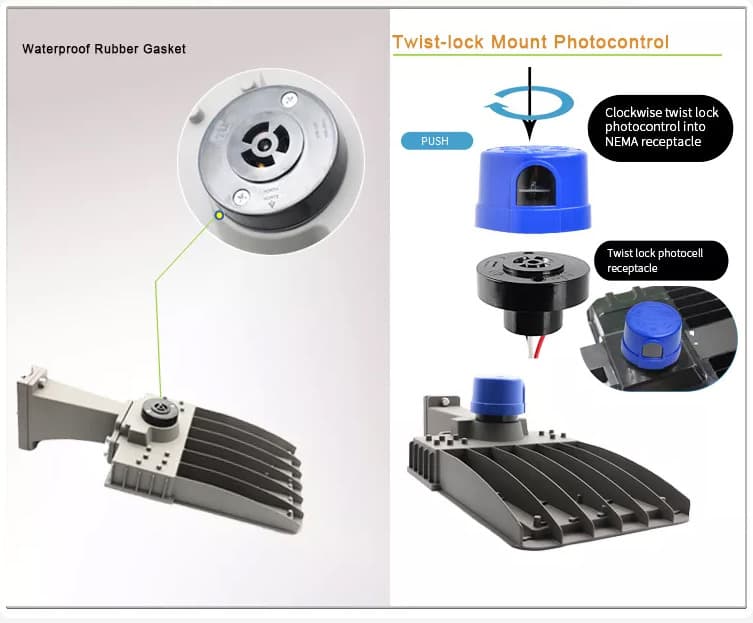
Why Do Led Retrofits Create Compatibility Problems For Old Controls?
Have you ever wondered why a light works fine for years, then starts failing right after an LED upgrade? It is because LED drivers behave differently at power-on and during “off” periods.
Many LED drivers have input capacitors. When power comes on, those capacitors charge very fast. This fast charge can cause a short, sharp surge of current called inrush current. But in some older controls and some LED drivers, it can confuse the switch and cause false ON and OFF signals.
What Failures Usually Show Up After A Led Retrofit?
Most field complaints sound the same. The light flickers at night. It flashes in daylight. It stays ON when it should be OFF. Or it cycles rapidly like it cannot decide.
Here is a simple table you can use when troubleshooting:
Common Failure | What You See In The Field | Likely Electrical Trigger |
LED flickering | Quick shimmer or unstable light output | Relay contact stress / mismatch with LED driver behavior |
Rapid ON/OFF cycling | Repeated switching within minutes | Leakage current confusing the control state |
Relay sticking | Light stays ON even in daylight | Inrush current and arcing damaging contacts |
Short control lifespan | Frequent replacements after retrofit | Mechanical contacts wearing faster under new load patterns |
Ложное срабатывание | Turns ON too early or OFF too late | Poor matching between sensor switching and LED driver response |
If you see more than one of these at once, it is a strong signal the old control is not LED-friendly.
Why Do Traditional Hid Photocells Struggle With Led Drivers?
Do you feel like an old control “should still work” because LED uses lower wattage? That is a common thought, but it misses the real issue.
Older HID-focused controls were often made for:
- higher steady loads
- slower switching behavior
- magnetic ballast systems that behave more predictably
LED drivers, on the other hand, are electronic devices. They can respond faster, and their internal parts (like capacitors) can create different current shapes at switch-on.
So even if the LED fixture uses less steady power, the first moments after switching can be harder on a relay. Over time, the relay can chatter, arc, or stick.
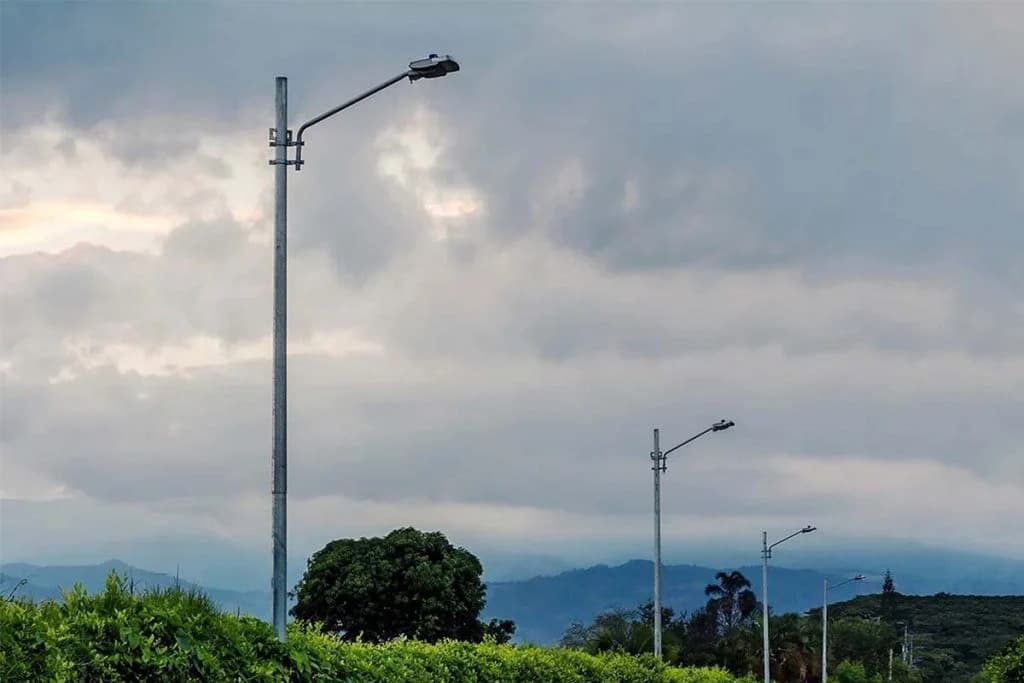
Which Long-Join Photocells Are Better Choices For Led Retrofits?
If your goal is stable dusk-to-dawn control on LED street lights, it helps to choose controls designed and rated for modern outdoor loads.
JL-205C: What Makes It A Practical Retrofit Option?
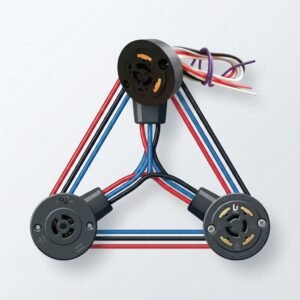
Need a simple, dependable control for roadway upgrades? The JL-205C is a NEMA twist-lock photocell designed for automatic outdoor switching. Long-Join lists it as suitable for street lighting and other outdoor areas, with a wide voltage range (110–277VAC) and loading ratings that support common outdoor applications.
You can review the JL-205C details here:
JL-207C: Why Do Cities Use It For Heavy-Duty Projects?
If you need stronger relay life and more durable switching behavior, the JL-207C is positioned as a long-life option in Long-Join’s lineup. Long-Join states that the JL-207 series long-life version can maintain reliable characteristics and that the relay can exceed 10,000 working life cycles.
That kind of relay durability matters when LED drivers create repeated electrical stress at switch-on.
You can review the JL-207C details here:

How Does An Old Hid Photocell Compare With An Led-Compatible Option?
If you are buying for a municipality or a contractor team, this quick comparison helps you explain the value clearly:
Особенность | Old HID Photocell | Long-Join LED-Compatible Option |
Designed With LED Driver Behavior In Mind | Often no | Yes (built for modern outdoor switching loads) |
Inrush Current Tolerance | Usually weaker | Better fit for modern switching patterns |
Relay Life | Shorter in retrofit conditions | Long-life designs available (e.g., JL-207 series) |
Flicker Risk After Retrofit | Выше | Lower when properly matched and installed |
Upgrade Readiness | Ограниченный | Easier standard replacement within NEMA twist-lock systems |
This is not about “old is bad.” It is about “old was designed for a different kind of load.”
How Can Buyers Avoid Problems Before And After An Led Upgrade?
Want fewer call-backs and fewer “mystery flicker” complaints? Use this checklist before you approve the retrofit.
Buyer Check | What To Ask Or Verify | Why It Helps |
Confirm LED-fit control | Is the control rated for LED street lighting use? | Reduces flicker and false switching risk |
Check relay life and load rating | What is the rated loading and life-cycle claim? | Helps avoid early relay wear |
Plan for inrush behavior | Does the LED driver create high inrush current? | Protects relay contacts |
Watch leakage current effects | Are there known issues with leakage current in this setup? | Prevents cycling and daytime flashing |
Use standard twist-lock systems | Is it a standard NEMA twist-lock interface? | Makes replacements faster and cleaner |
Часто задаваемые вопросы
Because many old photocells have relay contacts that don’t match how LED drivers draw power. The LED driver can trigger unstable switching, so the light flickers instead of staying steady.
It’s a quick “surge” of current that happens the moment an LED driver powers on, as its internal parts charge up. It is short, but it can be much higher than normal running current.
Sometimes they work at first, but many fail over time. HID photocells were designed for magnetic ballast loads, not electronic LED drivers, so you may see cycling, flicker, or relay damage.
Because it is built for tougher switching conditions and longer relay life, which helps it handle LED driver behavior more reliably in street lighting projects.
Use LED-rated photocells, check inrush/leakage behavior, run a small pilot installation first, and standardize on NEMA twist-lock systems so replacements and maintenance stay simple.
Заключение
LED retrofits save energy. But they can expose weak spots in old dusk-to-dawn controls. Common faults are flickering, stuck relays, fast cycling, and false switching. These problems often happen when LED drivers do not handle inrush and leakage current well.
For smoother retrofits, choose LED-compatible options designed for outdoor street lighting work. Long-Join models like JL-205C and JL-207C are built around modern requirements and help reduce the common problems seen after upgrades.
Внешние ссылки:
● https://en.wikipedia.org/wiki/NEMA_connector.
●https://www.ledsupply.com/blog/understanding-led-drivers/?srsltid=AfmBOooWm6RQzljbfsAQv027UTtX4nMBGvSsedZXlzc4uQwgQy-oUsfy
●https://www.leappole.com/product-category/hid-street-light/

 Russian
  English
  Spanish
  Portuguese
  Arabic
  Japanese
  Italian