
Why Can’t Different Brands of Products with the Same NEMA Standard Interface Be Interchanged?
Introduzir
The expectation that a “standard” interface means full interchangeability between all compliant products is reasonable and almost always wrong in practice.
NEMA-standard twist-lock photocells and sockets from different manufacturers regularly produce poor contact, difficult installation, loose fit, or premature failure when combined.
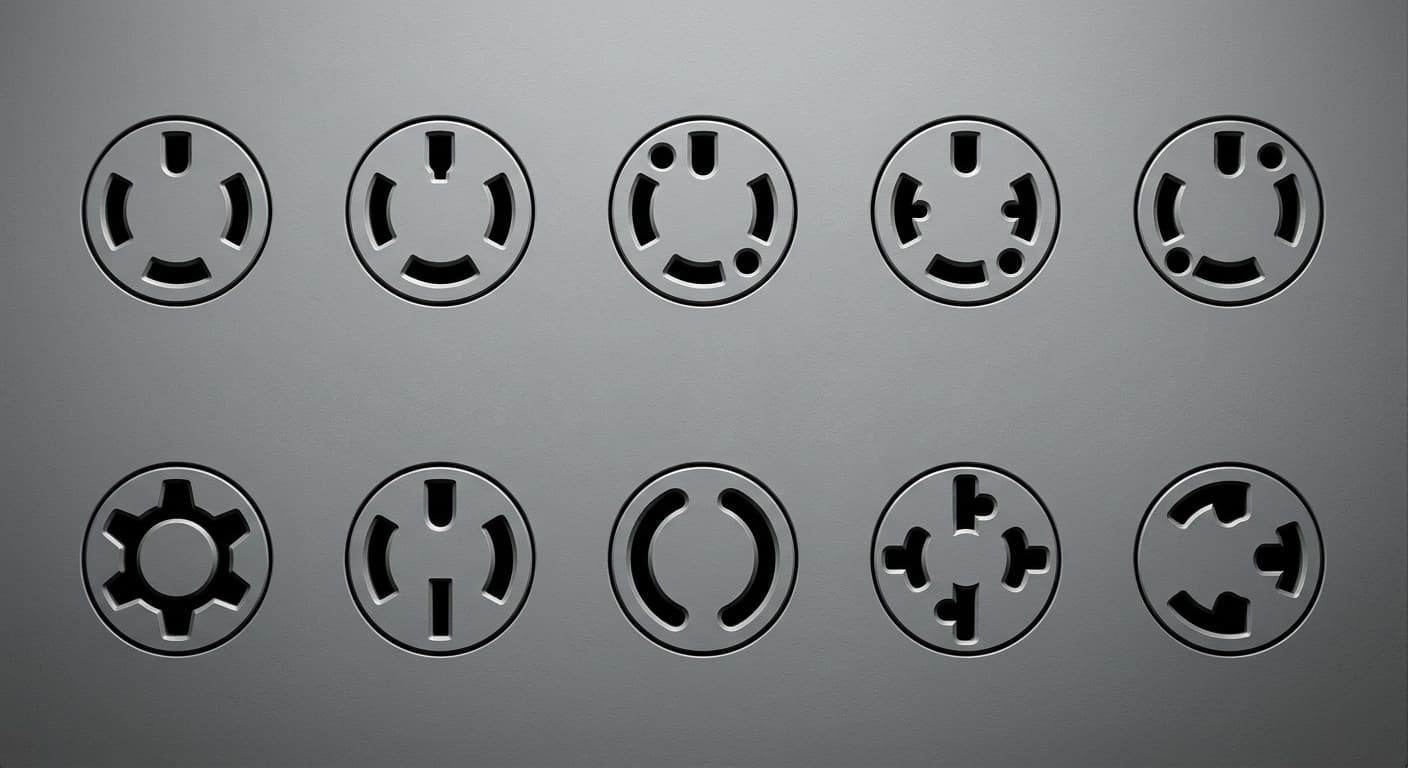
The standard defines enough to establish a common geometric envelope. It does not define enough to guarantee operational compatibility.
What Interface Specifications Does the NEMA Standard Actually Define?
NEMA SS-1 covers:
- Pin position and arrangement
- Plug and socket size range tolerances
- Electrical connection definitions
- Basic mechanical structure requirements
However, the standard fails to cover key compatibility details such as spring contact material and pressure, insertion and extraction force, base material requirements, sealing ring compression geometry, socket service life, and certification requirements including high-temperature, UV, and salt spray aging.
The individual manufacturer determines each of these unspecified factors, and different design choices within the same standard envelope produce products that are compliant on paper but incompatible in the field.
What Are the Core Reasons for Genuine Incompatibility?
Five core design differences account for the incompatibility that appears between different brands despite nominal NEMA compliance.
Core Aspect | Description and Impact |
Differences in spring contact pressure and materials | No uniform standard for spring pressure; varying spring forces cause poor plug retention and contact failures |
Size variations in socket and plug | Combined size tolerances cause difficulty inserting or a loose fit, even inability to insert or instability after insertion |
Special socket hole structural designs | Some manufacturers use proprietary socket hole designs to restrict accessory replacements, creating brand exclusivity barriers |
Differences in sealing rings and water resistance design | Variations in seal height and compression may cause water resistance failure and internal ingress faults |
Variations in socket materials | Strength differences in PC and GF materials affect socket lifespan and operational stability |
Spring contact pressure is the least visible and most consequential compatibility factor. The socket’s spring clips grip the photocell’s brass pins after the quarter-turn rotation that locks it in place. NEMA SS-1 specifies no force value for these springs.
Combined size tolerance variation multiplies the spring force problem. NEMA SS-1 allows a range of acceptable dimensions rather than a single precise value.
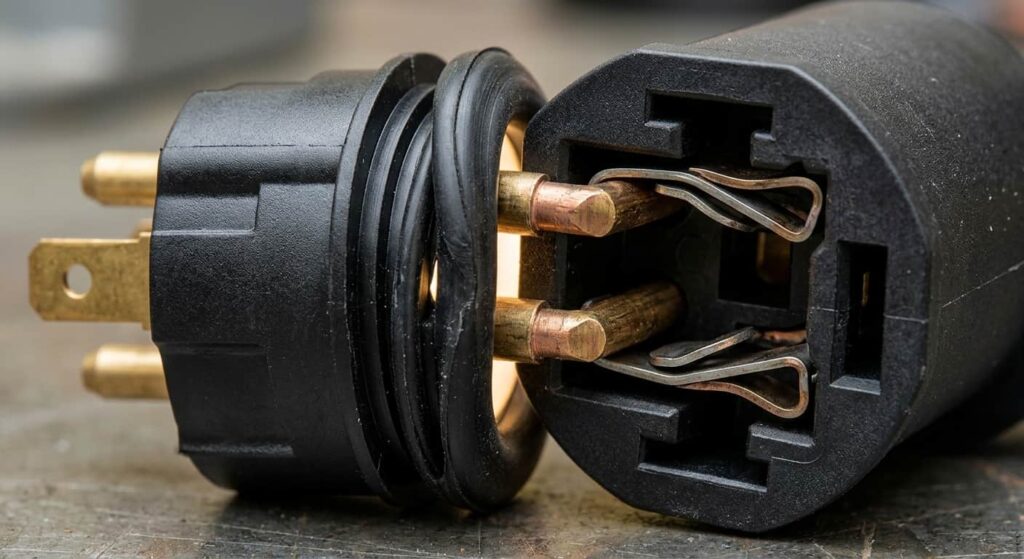
Proprietary socket hole designs are a deliberate incompatibility strategy used by some manufacturers to create captive replacement markets. A socket with a non-standard hole geometry accepts only photocells with a matching proprietary pin arrangement. Buyers who specify these sockets have effectively committed to a single-supplier ecosystem for photocell replacements, regardless of price or availability.
Sealing ring variation affects the assembled Classificação IP. The IP rating of a photocell is tested as a standalone unit. When installed in a socket, the sealing interface between the photocell base and the socket seat determines whether the system-level IP protection is actually achieved. If the sealing ring height in the socket does not match the compression geometry of the photocell base, the sealing ring is either under-compressed, leaving a gap, or over-compressed, which can distort the ring and cause it to roll out of its groove over thermal cycling.
What Problems Appear in Actual Use?
Installing photocells from different brands into Long-Join sockets, or Long-Join photocells into third-party sockets, may produce poor contact leading to:
- Cycling on/off
- Flickering
- Lamps staying on or failing to switch off.
Loose mechanical seating causes incorrect sensor orientation. Difficult insertion or removal may cause mechanical jamming that damages the photocell pins or the socket spring clips during forced removal.
How Can Buyers Ensure Stable NEMA System Compatibility?
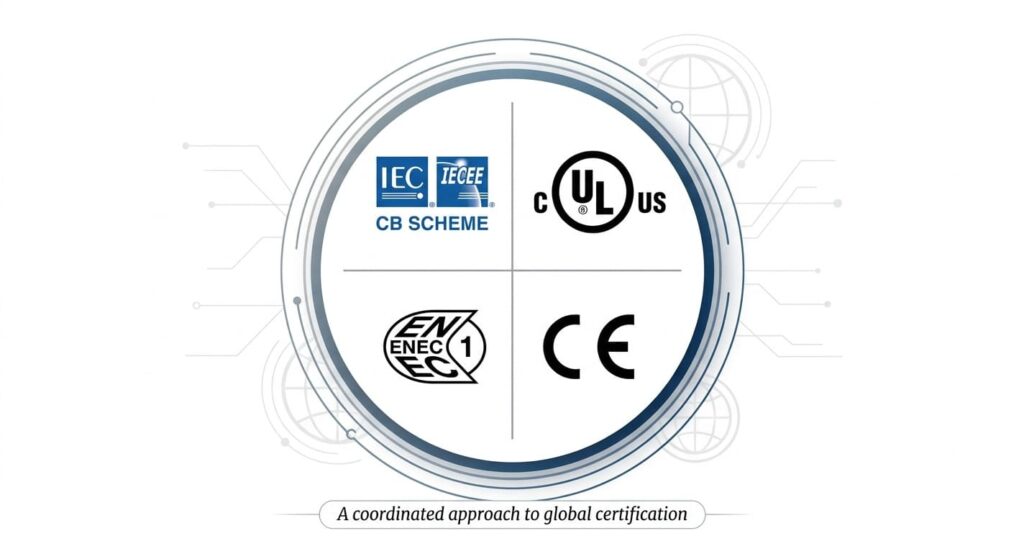
Select products from manufacturers with strict quality control and consistent standard compliance. Prefer sockets and photocells with UL773, UL1598, and where applicable, ENEC certification, as these require the testing that reveals compatibility-relevant design failures.
Avoid mixing non-standard components from different brands on the same network where possible, and prioritise matched brand suites for both socket and photocell. When evaluating suppliers, specifically check spring contact force specifications, base material (GF+PBT versus PC), and sealing ring design documentation. Long-Join’s Receptáculo NEMA e twist-lock photocell range is designed and tested as a matched system.
Frequently Asked Questions on NEMA Interface Interchangeability
Pin position and arrangement, plug and socket size range tolerances, electrical connection definitions, and basic mechanical structure. It does not cover spring pressure, material requirements, sealing performance, or certification testing requirements.
It determines the clamping force on the photocell pins after rotation, which controls both mechanical security and electrical contact resistance. Mismatched spring forces between brands produce loose, over-tight, or inconsistent contact that causes switching problems.
To create brand-exclusive replacement markets by ensuring only their own photocells physically fit their sockets. This limits buyer flexibility and can produce cost and availability problems when photocells need replacement.
Poor contact from spring force mismatch or size tolerance stacking increases contact resistance and produces heat at the pin interface. Intermittent contact from loose seating causes the photocell circuit to open and close unpredictably, producing flickering or cycling that appears to be a photocell sensing fault.
Through controlled spring contact force specifications, GF+PBT base material with consistent dimensional tolerances, UL1598-compliant socket design, and EPDM sealing rings designed to match Long-Join photocell base geometry. Testing as matched photocell-socket systems rather than components in isolation.
Conclusão
NEMA standard compliance does not guarantee interchangeability between brands because the standard leaves the most compatibility-critical factors to individual manufacturer design decisions.
Different decisions produce products that are dimensionally standard-compliant and operationally incompatible. The reliable solution is a matched photocell and socket from the same manufacturer with consistent quality certification, supplemented by material and force specification verification when mixed-brand installation cannot be avoided.
Links externos
●https://en.wikipedia.org/wiki/NEMA_connector
●https://en.wikipedia.org/wiki/IP_code


 Portuguese
  English
  Russian
  Spanish
  Arabic
  Japanese
  Italian