
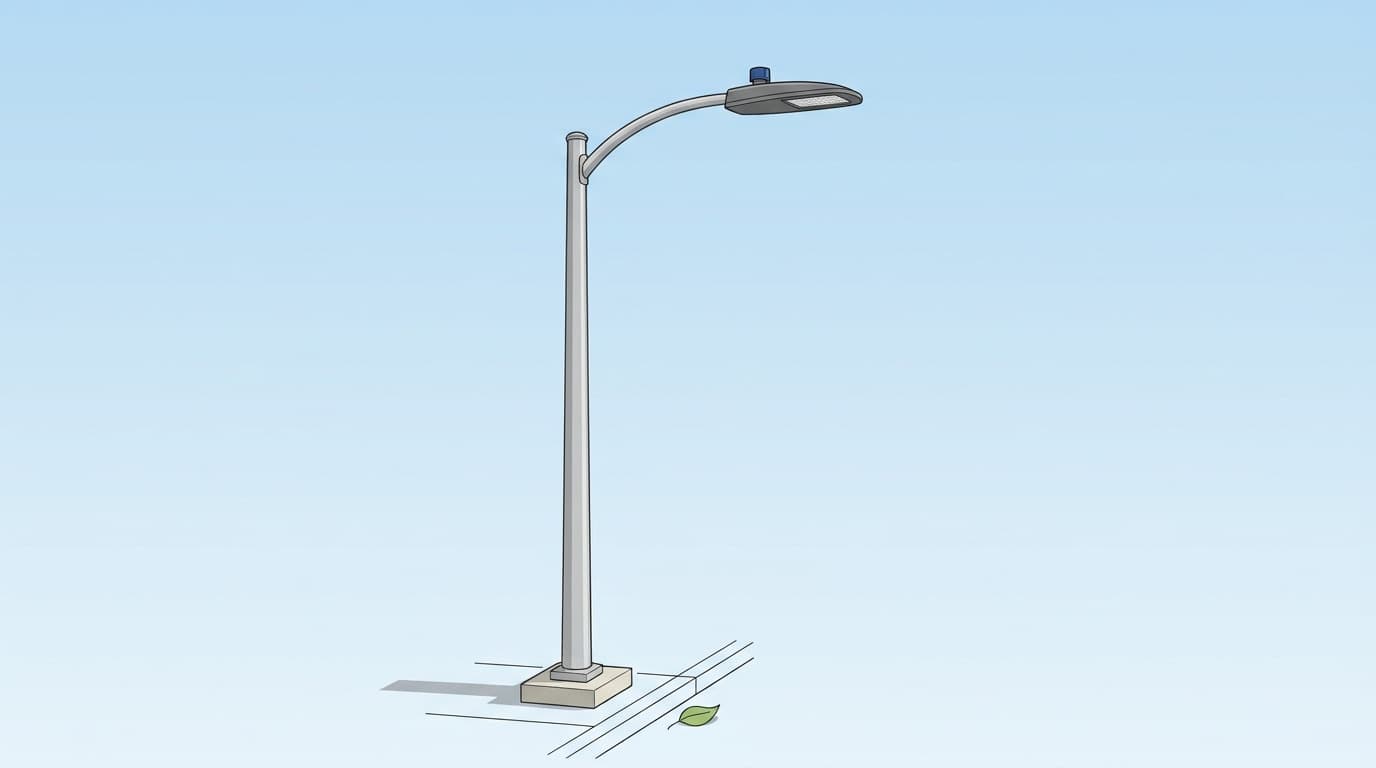
Which Is More Reasonable: Top-Mounted or Side-Mounted Photocell?
Introduzir
The rating of the photocell is more important than the placement of a photocell on a luminaire, and that can be confusing. The mounting position determines the light that the sensor reads each evening. It also determines how difficult the sensor is to replace when it’s time for replacement.
Top and side mounting are the methods of installation that are mostly used in outdoor municipal and industrial lighting. The standard approach for municipal LED streetlights is a top-mounted NEMA twist-lock solution. Lamps with special structures, or lamps with illumination on top which result in shading and light interference, are best suited for side-mounted photocells.
Installation ease and sensor sensitivity can be improved by considering the amount of light reaching the sensor and how simple it is to install. This article will explain the methods, discuss the differences between them, and look at when each method is most suitable.

What Is a Top-Mounted Photocell?
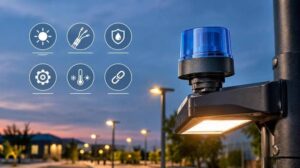
Replacement and maintenance are easy because a top-mounted photocell is installed on top of the lamp, through a standard NEMA twist-lock socket.
Picture a typical roadside LED luminaire. The socket is on the top of the housing, the photocell is pushed in and makes a 1/4 turn to lock, and the sensor window faces up toward the sky.
This layout is so popular because of its standard design. If a unit fails, it can be quickly replaced by a technician without the need for special tools or rewiring. This is beneficial when the fixture is mounted several metres high on a pole and a bucket truck is being paid for per hour.
Orientation still counts. The photocell has an arrow indicating the direction of the sensor, and typically the photocell is installed with the arrow pointing north in the Northern Hemisphere. This prevents the window from being directly hit by the sun’s rays and the beams from the lamp.
What Is a Side-Mounted Photocell?
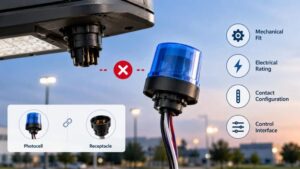
A photocell is installed on the side of the lamp using a special mounting base or an extension cable with a compatible NEMA base bracket. This allows the light sensor to be positioned appropriately for better light detection.
This approach comes into play when the top of the lamp isn’t a fit for the sensor. The housing may be designed to not allow a socket to fit in or it may be filled with something and the sensor has to fit somewhere else.
The sensor is installed on its own base so that it can be positioned to have a clear view of the sky and minimise reflection from the lamp. One example is Long-Join’s JL-260C external mounting receptacle, which rotates a full 360 degrees, allowing the installer to position the sensing window to provide the best view after the fixture is installed.
The cost also increases due to the additional components required. Bases, brackets, and cables add to the overall cost, while each cable connection creates another possible point where water could enter.
How Do Top-Mounted and Side-Mounted Photocells Compare?
The two methods differ in six dimensions, and each one comes out ahead on some of them.
Comparison Dimension | Top-Mounted Photocell | Side-Mounted Photocell |
Light Sensing Accuracy | Depends on top receiving light conditions and optical design | Depends on side light receiving conditions and optical design |
Avoid Lamp Self-Light Interference | Needs evaluation of lamp reflection and nearby light sources | Reduced interference through position and orientation design |
Standardization Level | Mature NEMA twist-lock standard interface | Customized according to mounting base and connection type |
Installation and Maintenance | Standard NEMA interface allows quick replacement | Side structure may require extra fixing or wiring |
Water Resistance & Environmental Adaptability | Requires verification of socket sealing, drainage, and shell protection | Requires verification of side interface sealing, water paths, and cable entry protection |
Applicable Scope | Suitable for standardized streetlights with reserved top socket | Suitable for lamps with limited top space or special installation position |
When Is a Top-Mounted Photocell the Better Choice?
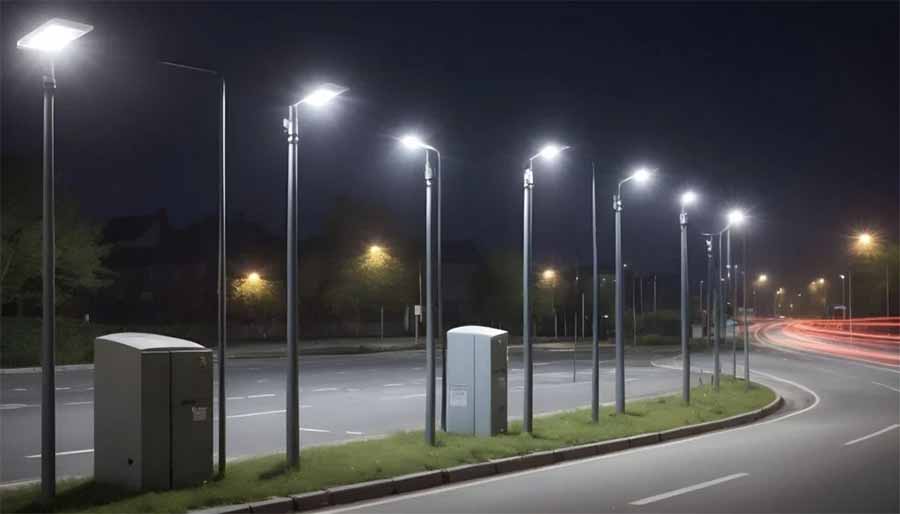
If the sensor is to be installed on top of a lamp, it is best to use the standard lighting conditions that allow the top of the lamp to have a clear sky view.
Widely Used in North American Municipal LED Streetlights
If you are walking down any street in North America, the lights will be overhead and will have a NEMA plug on top. From luminaire manufacturers to maintenance teams, it’s the foundation of the entire supply chain. Moving any other way is swimming upstream!
Large-Volume Standardized Lighting Projects
In a project involving thousands of identical fixtures, a standard interface means using the same spare parts and replacement procedures across every pole. This allows maintenance crews to resolve faults within a minute or two, rather than having to identify and work out a different fitting each time. Across a large network, these time savings quickly add up.
Lamp Tops With Good, Unobstructed Light
The sensing condition is nearly optimum if the lamp’s upper surface is completely open and has a clear line of sight to the sky. No obstructions to block the light or to reflect unwanted light into the window. If that is the case, then top-mounting is probably the best way to go.
When Is a Side-Mounted Photocell the Better Choice?
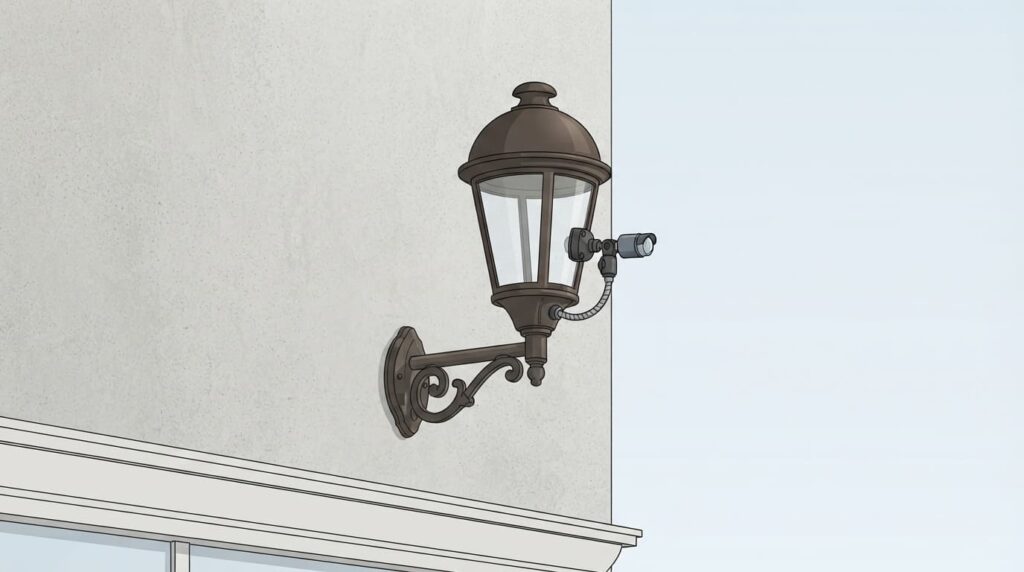
Side-mounted photocells can be used when the top of the lamp is inappropriate for the sensor, either due to the construction of the lamp, to lamp light or lamp shading.
Lamp Top Structure Unsuitable for NEMA Twist-Lock Installation
Typically, wall lamps and decorative lamps. There is no flat surface on a wall lantern with a glass cap or a decorative post top with a finial for a NEMA socket. The sensor needs to swing to the side, and the mounting base and extension cable will allow that.
Top Location Easily Shaded by Large Covers or Decorations
Occasionally, it is present but very poorly located. A large cover or a decorative element above the window might overshadow the window for the most part of the day, disrupting the natural light sensing. The photocell then reads the evening too early or the morning too late. Taking it to the side will move the window out of the shade.
Need to Reduce the Lamp's Own Light Interference
The problem that bothers the maintenance teams most. The lamp turns on, the lamp illuminates the sensor, the photocell thinks it’s daytime, so it turns the lamp off, and it all happens again. That unwanted off/on switching can be prevented by a side-mounted sensor placed and turned away from the beam.
Frequently Asked Questions on Top-Mounted and Side-Mounted Photocells
Neither is more accurate by nature, accuracy is only determined by the amount of light received by the position and the optical design. A top position will have more clear sky, and a side position can be away from the light of the same lamp.
If large covers or decorations obscure the top of the lamp, or if the lamp's shape does not accommodate a NEMA twist-lock socket, or if the lamp's own light is always on the sensor, large covers or decorations are needed to protect the sensor.
They require a mounting base (typically with an extension cable and a matching NEMA base bracket) and a well-sealed side interface and protected cable entry.
Tool-free installation, parts that span multiple networks, and an established standard that is familiar to crews and suppliers.
Mounted from the top for standardized lamps with good top visibility, or from the side for lamps that are unsuitable for top mounting, but from which the top is shaded or flooded.
Conclusão
The obvious choice when it comes to street lamps is top-mounted photocells, as the NEMA twist-lock interface is well established, and the replacement process is very quick. When the top of the lamp does not accept a socket, the lamp is covered or decorated, or the light can cause a problem for the photocell, the side-mounted photocells are the answer. Be sure to inspect the actual light the sensor must see, the interference that it will encounter, and the seals at each connection, either approach works for years.
Links externos
●https://en.wikipedia.org/wiki/NEMA_connector
 Portuguese
 English
 Russian
 Spanish
 Arabic
 Japanese
 Italian