
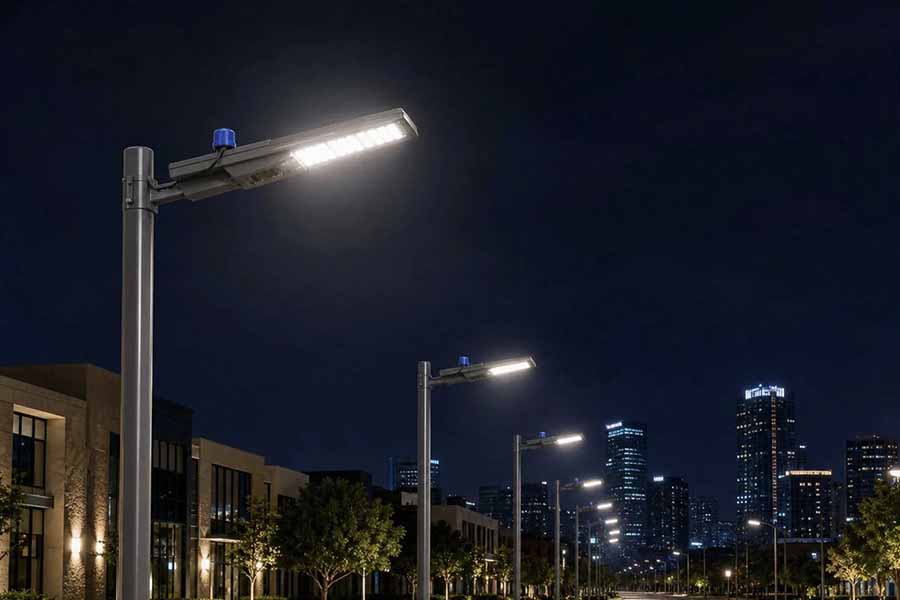
Why Are Some Cities Phasing Out Traditional Photocells?
Introduzir
For decades a streetlight had one job. Light up when evening comes in, go dark once the sun is back over the rooftops. A traditional photocell handles that with no network, no software platform and no control room.
Plenty of cities want more than that now. Dimming after midnight. An alert when a lamp dies. Energy figures. Schedules. The ability to switch a whole district from one laptop.
So some of them are swapping stand-alone photocells for networked control nodes. That doesn’t always mean the light sensing goes away, though. In a lot of smart systems, the light sensor just moves inside a bigger controller instead of working on its own.
What a Traditional Photocell Actually Does
Why has the photocell hung around for so long? Because it fixes one real problem with almost no equipment.
Morning light gets strong enough, it switches the lamp off. No lamps burning through a sunny afternoon, and nobody has to go round flicking switches.
It also works right there on the pole. There’s no server it has to ask, no app to update, no password someone forgot to renew. Darkness arrives and the relay clicks.
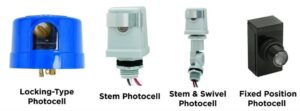
Junção longa still makes traditional twist-lock photocontrols for street, roadway, garden and area lighting through its NEMA and photocell product range. Some are plain on/off units you twist into the socket and forget for years. Others are a good deal more advanced.
What Cities Get From Going Networked
What can a smart streetlight do that a basic photocell can’t? Mostly, it can talk back.
A plain sensor fotocélula do anoitecer ao amanhecer has one input, the sky, and one output, on or off. Swap in a networked controlador de iluminação pública and the operator gets dimming, schedule changes, fault alerts, energy tracking and a way to run a whole estate’s lights as one group.
According to the U.S. Department of Energy, connected streetlighting can report energy use and how each light is operating. In practice, that’s fewer trucks crawling along at night hunting
Reason for the Change | Why Cities Care |
Remote monitoring | Faults show up without a pole-by-pole patrol |
Dimming and scheduling | Brightness follows the time of night |
Energy data | Operators see how the lights are doing |
Faster maintenance | Alerts send crews to the right fixture |
Smart-city expansion | The same network can carry other sensors |
Limits of older units | Basic on/off photocells can’t send data |
So the switch usually isn’t about the old photocell doing a bad job. The city just wants the lighting network to do a lot more than switch.
The Photocell Isn't Finished Yet
Does smart lighting make the traditional photocell pointless? No. It depends what the job is.
For plain, dependable dusk-to-dawn switching, a basic photocell still does fine. No wireless link, no central platform. On a quiet side road, a factory car park or a simple like-for-like replacement, that can be all anyone needs.
There’s a middle path too. Some smart controllers keep local light sensing and add communication on top. Long-Join describes smart IoT products that pair light sensing with Zigbee, LTE or NB-IoT communication through its wireless controller solutions.
Put another way, a city can retire the stand-alone unit without giving up photocell control at all. The light-sensing part just gets folded into a smarter box.
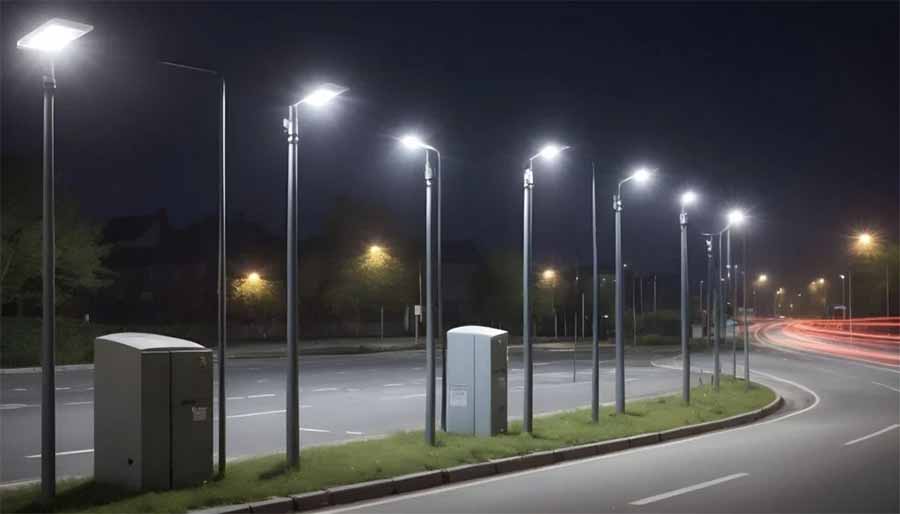
What Can Go Wrong With Central Control?
If central control does so much more, why not rip out every independent photocell? Because of what happens on the bad day.
A traditional photocell works at the pole. A connected system adds gateways, software and communication links. Useful, but every one of those pieces needs looking after.
Emitir | Fotocélula tradicional | Central Smart Control |
Network needed | Not for normal switching | Yes, for remote functions |
How it reacts | Straight to the light | Depends on controller and fallback settings |
Relatório de falhas | Usually none | Can report lamp or controller faults |
Manutenção | Usually a simple swap | May need software and networking skills |
Size of a failure | Normally one light | A network fault can hit remote control of many lights |
Backup | Works dusk-to-dawn on its own | Good designs keep local schedules or sensor fallback |
The trouble starts when everything leans on the central platform and nobody planned for it going quiet. Think of a storm knocking out the gateway serving a whole neighbourhood at four in the afternoon. With a proper fallback, nobody on the street even notices. Without one, the evening could get a lot darker than it should.
That’s why the failure plan belongs in the design, before the simple local controls come off the poles.
Using Photocells and Smart Controls Together
A NEMA socket or Zhaga socket also makes the controller easy to swap later without replacing the whole luminaire. Long-Join covers both through its NEMA and Zhaga product families, with NEMA receptacles, photocontrols, Zhaga interfaces and related smart-lighting parts for different fixture designs.
For a city that wants to upgrade a few districts at a time, that’s a safer route than stripping out every local control in one go.
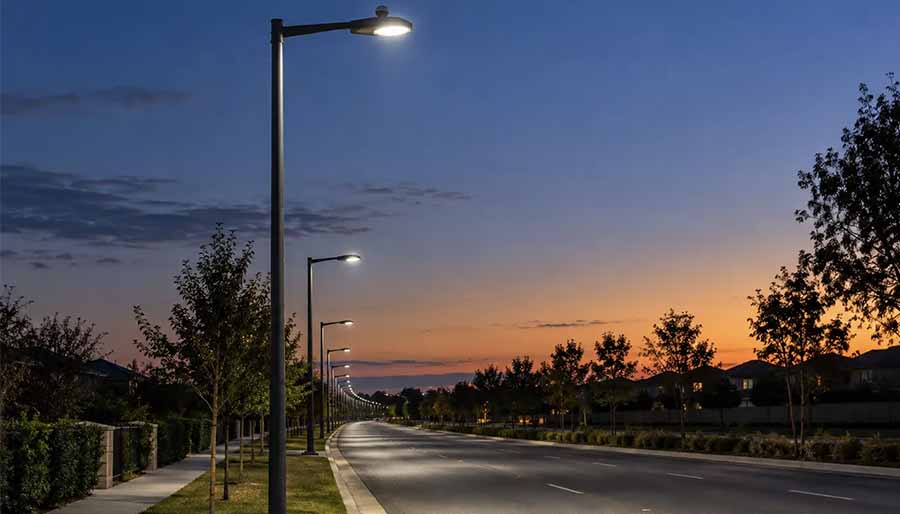
What to Ask Before the Switchover
Before anyone signs a big order, sit the lighting and network people down and go through these.
What does each lamp do if the network drops for an hour? For a day? Who looks after the gateways and the platform, and how fast can they get to a fault? Can the existing fixtures take a NEMA or Zhaga node, or does the luminaire itself have to change? And is there a plan to test the fallback every so often, not just on the day it’s installed?
If those answers are vague, the photocells probably shouldn’t come down yet.
How Does Long-Join Cover Both Sides?
Can one supplier handle both the simple photocell and the connected system? Long-Join’s range is set up for exactly that.
It offers traditional photocontrols, NEMA receptacles, Zhaga products, dimming controls and wireless controllers, with a smart controller range built for dimming and wireless streetlight management.
Long-Join’s quality certification page has the paperwork: UL, CE, CB, FCC, RoHS, Zhaga Book 18, UKCA and ISO 9001. Its NEMA and Zhaga ranges cover different markets and different upgrade plans.
That matters, because projects don’t all need the same level of tech. Some buyers just want a photocell switch that works. Others want dimming, remote management and space for whatever sensors come next.
Perguntas frequentes
Mostly for the extras. Remote monitoring, dimming, fault alerts, schedules, and real numbers on what every light is doing.
A good system keeps a local schedule, local light sensing or some other fallback mode on the controller.
Yes. Standard photocontrols, plus NEMA, Zhaga, dimming and wireless control products.
Weak backup design. Skip the local fallback and one dead gateway or crashed platform can cut a whole area off from remote control.
Yes. A smart controller can read the light itself and still take orders from the control room.
Conclusão
Why are some cities phasing out traditional photocells? Mostly because they want their streetlights to give them more control, more data and easier maintenance.
The traditional photocell is still simple, independent and useful. Smart systems bring a lot more to the table, but they need careful network design and a real backup plan. For many projects, it isn’t photocell against smart control at all. It’s working out the right mix of the two.
Links externos:
●https://www.nema.org/membership/products/view/lighting-systems
●https://www.ijraset.com/research-paper/street-light-control-system
●https://www.energy.gov/cmei/ssl/connected-streetlighting-systems
●https://en.wikipedia.org/wiki/Zigbee
https://en.wikipedia.org/wiki/Narrowband_IoT


 Portuguese
 English
 Russian
 Spanish
 Arabic
 Japanese
 Italian