
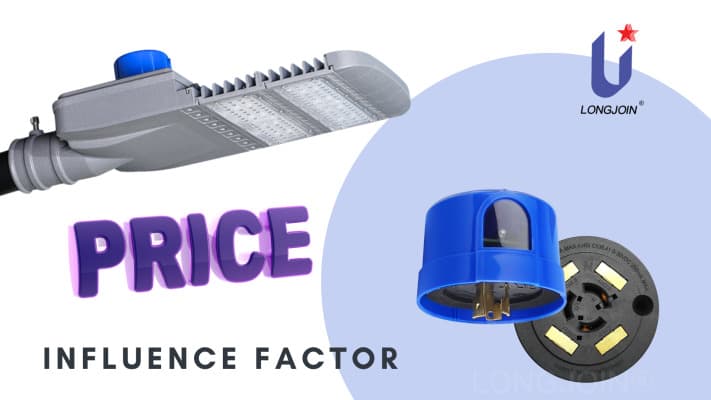
How To Ensure Quality Consistency When Mass Purchasing Photocells
Introduzir
Buying one photocell is easy. Buying hundreds or thousands is where real problems begin. A product may look fine in a sample, then show differences in switching level, sealing, or surge resistance when the full order arrives. That is why quality consistency matters so much in bulk purchasing. It protects the customer from field failures, delayed projects, and costly returns.
For a product like the Long-Join JL-205C, consistency is not only about meeting a voltage label. It is also about making sure the unit switches at the right light level, handles outdoor weather, and matches the customer’s real use case.
Long-Join presents the JL-205C as a twist-lock photocontrol for street lighting, garden lighting, passage lighting, and doorway lighting, with multiple voltage options and different IP protection choices.
What Makes The Long-Join JL-205C A Common Choice For Bulk Projects?
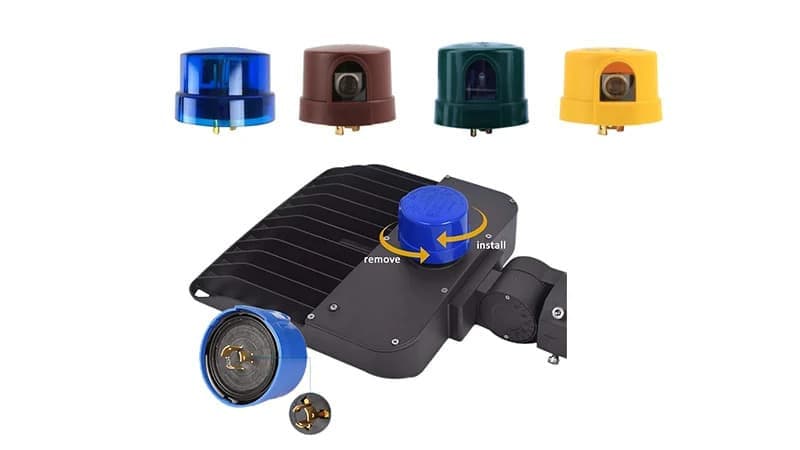
The JL-205C is often used because it fits many outdoor lighting jobs without making the setup too complex. Long-Join says the product is designed to control lighting automatically based on ambient natural light, and its standard twist-lock design supports easy installation on compatible Soquetes NEMA. That makes it useful for contractors and buyers who want a simple photocell switch for repeat projects.
It also covers a practical voltage range for many outdoor applications. On the JL-205C product page, Long-Join lists the rated voltage as 110–277 VAC and the applicable voltage range as 105–305 VAC.
Another reason buyers look at this model is flexibility. Long-Join’s 205 series page shows that different surge protection levels and ingress ratings can be selected within the JL-205C family, including IP54, IP65, e IP67 options, as well as different MOV protection levels. That matters in bulk purchasing because one city project may need a basic model, while another may need stronger sealing and surge resistance.
Long-Join JL-205C Key Technical Specifications
Item | Parameter Description |
Modelo do produto | JL-205C |
Tensão nominal | 110–277 VAC |
Faixa de tensão aplicável | 105–305 VAC |
Frequência nominal | 50/60Hz |
Carga nominal | 1000W Tungstênio, 1800VA Reator |
Consumo de energia | 1.5VA on the product page; the 205 series page also states ≤3W for JL-205C |
Nível ligado/desligado | 6 Lx on, 50 Lx off |
Modo de falha | Fail-ON |
Protection Options | IP54, IP65, IP67 |
Surge Protection Options | 110J/3500A, 235J/5000A, 460J/10000A |
These figures come from Long-Join’s JL-205C product page and JL-205 series page. The two pages present the same product family, but one lists power consumption as 1.5VA while the series page states ≤3W, so buyers should confirm the exact configuration before placing a mass order.
Why Do Bulk Photocell Orders Sometimes Lose Quality Consistency?
The biggest problem is that buyers often focus only on price and model name. That sounds harmless, but it leaves room for mismatch. One customer may expect IP65 sealing, while another assumes the standard version is enough.
One project may need stronger surge protection, while another only needs basic protection. If those details are not locked in early, the delivered units may still be “JL-205C” products, but not the right JL-205C products. Long-Join’s 205 series page shows that the model can vary by surge protection level, cover material, color identification, and ingress rating.
Another common issue is poor technical communication. A photocell sensor can work well in one fixture and fail early in another if the environment is hotter, wetter, or more exposed to surges. Even the right model can disappoint if the supplier and customer never fully discuss the operating conditions.
Mass orders also raise a simple factory problem: repeatability. Samples are usually checked with extra care. Large production runs need the same care spread across every batch. That is why supplier process control matters just as much as product specs.
How Should You Define Product Requirements Before Ordering?
The first step is to make the customer’s need clear in writing. Do not stop at the model number. Confirm the rated voltage, exact protection level, surge level, fail mode, on/off lux range, socket compatibility, and the lighting environment. If the project uses a NEMA socket, that should be stated too, since Long-Join describes the JL-205C as a twist-lock design that installs on compatible NEMA sockets.
This step sounds basic, but it prevents expensive confusion later. For example, a buyer may ask for an outdoor photocell light sensor for road lights, but the actual project may involve coastal air, heavy rain, or unstable grid conditions. Those details affect whether IP54 is enough or whether IP65 or better is safer.
A good purchasing document should answer one plain question: what exactly must this product do in the field?
What Should Buyers Confirm Before Mass Purchasing?
Check Item | Por que isso importa |
Faixa de tensão | Confirms the unit matches local power supply |
On/Off Lux Level | Prevents lights from switching too early or too late |
Proteção contra surtos | Helps the unit survive unstable power and lightning risk |
Classificação IP | Protects against dust, rain, and moisture |
Tipo de carga | Makes sure the unit can handle the actual lamp load |
Tipo de soquete | Avoids installation mismatch |
Modo de falha | Confirms what happens if the unit fails |
Application Scene | Matches the product to street, garden, passage, or doorway lighting |
What Tests Help Prove The Product Matches Customer Needs?
Testing should not be treated like a final formality. It is the proof step. For a fotocélula do anoitecer ao amanhecer like the JL-205C, the important checks include voltage range, switching level, load handling, surge protection choice, and ingress protection choice. Long-Join’s product pages list these areas directly in the product parameters and available customization fields.
This is also where technical documents matter. A buyer should ask for the test report, product parameter sheet, and any relevant compliance records for the exact version being shipped. That is especially important when one model family has different versions. The JL-205C family can be supplied with different MOV levels and IP levels, so the report must match the ordered configuration, not just the broad product name.
A Simple Quality-Control Flow For Bulk JL-205C Purchasing
Stage | Main Action | Meta |
Spec Confirmation | Lock voltage, surge level, IP rating, load, and socket type | Avoid mismatch |
Technical Review | Engineering checks feasibility and project fit | Reduce design risk |
Production Planning | Factory schedules the confirmed version | Keep delivery on time |
Product Testing | Verify electrical and protection performance | Catch batch issues |
Document Review | Match reports to ordered configuration | Build traceability |
Delivery Confirmation | Customer checks goods after arrival | Confirm acceptance |
SOP Mass Production | Repeat the approved version in future orders | Keep consistency |
This flow follows the outline you provided and aligns with the way Long-Join presents configurable parameters and product-family options for the JL-205C.
How Can Buyers Reduce Risk Before Starting Full Mass Production?
The smartest move is to treat the first approved batch like a bridge between sample and full rollout. Do not jump from one sample straight to a huge purchase without checking the approved version again. Confirm the exact configuration, compare the test report with the order sheet, and verify that the delivered unit matches the intended lighting environment.
It also helps to choose a supplier with visible product depth. Long-Join’s twist-lock photocontrol category and JL-205 pages show a wider ecosystem of related models, sockets, and application notes, which is useful when a buyer needs to solve project issues without changing supplier midstream.
In plain terms, bulk buying works best when the supplier is not guessing and the buyer is not assuming.
Conclusão
Quality consistency in mass Photocontrol purchasing does not happen by luck. It comes from clear specs, honest technical review, careful production planning, strict testing, and final customer confirmation. The Long-Join JL-205C is a strong example because it is built for outdoor lighting use, offers several protection options, and supports common project needs across a wide voltage range.
If buyers want stable results, they should not ask only, “Can this unit work?” They should ask, “Can this supplier keep every unit working the same way?”
Links externos:
●https://lsp.global/your-guide-to-the-mov-surge-protection-circuit-diagram/
●https://www.trentonsystems.com/en-gb/blog/ip67-rating
●https://www.onlogic.com/blog/what-does-ip65-mean/
●https://www.electricalcounter.co.uk/articles/what-is-ip54?srsltid=AfmBOoqmAuqaysJHr4k8qzVI-XYEelYstsN0dQH_KzAhgwVxffKZn8rV
●https://en.wikipedia.org/wiki/NEMA_connector
 Portuguese
  English
  Russian
  Spanish
  Arabic
  Japanese
  Italian