

Why Professional Street Lighting Manufacturers Choose Tin-Plated Phosphor Bronze Terminals — The Engineering Logic Behind The JL-700W Zhaga Socket
Introduzir
Modern outdoor lighting has changed fast in the last decade. Today, cities rely on smart controllers, photocontrol systems, and Zhaga sockets. They keep street lights bright, steady, and save energy. With so much intelligence built into each pole, one small part decides whether everything works year after year: the terminal inside the socket.
For many engineers, this tiny component feels simple. But it controls how stable the signal stays, how well the current flows, and how long the connection survives in heat, cold, salt, or dust. That is why so many professional photocell for street light manufacturers now ask one question before anything else:
“What terminal material do you use?”
This article shows why our JL-700W Zhaga socket uses tin-plated phosphor bronze terminals. It also explains how this choice protects smart lighting systems for years outdoors.
What Makes Phosphor Bronze Better Than Brass Or Stainless Steel?
Phosphor bronze meets these three needs better than brass or stainless steel. It stays strong, even after many years of shaking on the pole. It handles temperature changes without losing shape. And it carries control currents with low resistance, which is important for sensor de iluminação fotocélula signals.
Comparing Common Terminal Materials
Property | Brass | Stainless Steel | Phosphor Bronze |
Electrical Conductivity | Médio | Baixo | Medium-High |
Elastic Retention | Fraco | Médio | Strong |
Corrosion Resistance | Baixo | Alto | Alto |
Long-Term Stability | Fraco | Bom | Excelente |
Suitability For Zhaga Terminals | Moderado | Baixo | Ideal |
Brass deforms too easily. Stainless steel is strong but does not carry current well enough for stable signal transfer. Phosphor bronze sits in the middle in all the right ways.
Why Does Elasticity Matter So Much In A Zhaga Socket?
Smart controllers connect to the socket and remain in place for years. During that time, street-light poles shake from:
- Passing vehicles
- High winds
- Sudden temperature changes
- Storm vibrations
If the terminal metal is too soft, it loses its spring force. When that happens, the connection becomes loose. A loose contact can cause:
- Flickering
- Data loss
- High contact resistance
- Superaquecimento
- Full socket failure
Phosphor bronze keeps its elasticity for a long time. Even after thousands of hours of vibration, it stays firm. This prevents the socket from “breathing open” under stress.
For smart-lighting systems using photocell control and wireless dimming, stability is everything.
How Does Phosphor Bronze Help Control Temperature Rise?
Outdoor lights run all night, every night. If terminal material cannot manage this heat, problems appear quickly.
Phosphor bronze has:
- Low contact resistance
- Predictable conductivity
- Stable thermal performance
This keeps the temperature rise inside the terminal under control. The flow of current stays stable. The photocell sensor communicates with the controller without interruption. More importantly, no hotspots form around the connection.
Brass tends to heat unevenly. Stainless steel traps heat. But phosphor bronze is a balanced metal.
Why Is Mechanical Strength Important During Installation?
When technicians install a Zhaga socket, they may use:
- Push-in terminals
- Screw-clamp terminals
- Spring-clamp terminals
All three methods apply force to the metal.
Brass can collapse. Stainless steel is very hard and can harm the wires. Phosphor bronze is different.
During installation, this reduces the chance of:
- Terminal cracking
- Wire pull-out
- Uneven pressure
- Permanent deformation
It also creates a secure, reliable contact that stays strong when the controller is later removed and replaced.
Why Must Phosphor Bronze Terminals Be Tin-Plated?
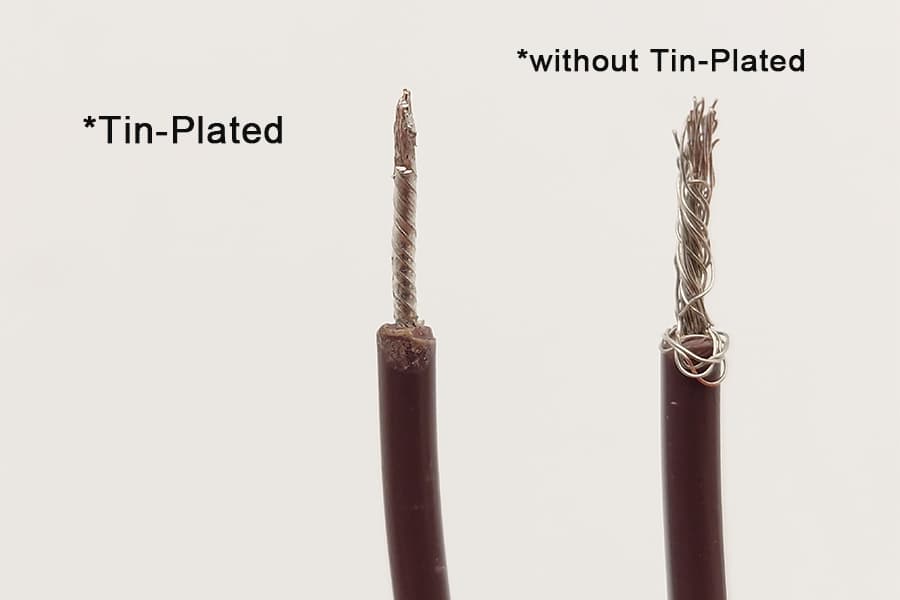
Even strong base metal still needs extra protection outside. Moist air, oxidação, salt, and dirt can harm bare metal. They slowly change their surface. Tin plating adds a shield. It keeps the surface bright and clean for many years.
This coating plays three big roles:
- Stops oxidation
- Reduces corrosion
- Maintains low resistance
Without tin plating, terminals would darken and resist current more each year. This would slowly disrupt communication between the socket and controller.
How Does Tin Plating Improve Outdoor Reliability?
Different places challenge metal in different ways. A Zhaga socket might be installed in:
- A coastal city with salty air
- A wet tropical region
- An industrial zone with heavy pollution
- A high-altitude area with extreme cold
Tin plating helps the terminal survive all these conditions.
Environmental Threats and Tin Plating Protection
Ambiente | Problema comum | Tin-Plated Protection |
Coastal | Salt corrosion | Excelente |
Tropical | Humidity + oxidation | Very high resistance |
Industrial | Chemical exposure | Strong barrier |
Desert | Temperature cycling | Stable surface |
Cold Climate | Condensation | Slow oxidation |
This stable surface ensures low resistance and stable signal flow — both critical for photocontrol systems and dusk-to-dawn photocell operations.c
Why Is Tin Better For Wire Compatibility?
Tin-plated terminals create a friendly interface between:
- Tinned copper wires
- Bare copper wires
- Tinned controller pins
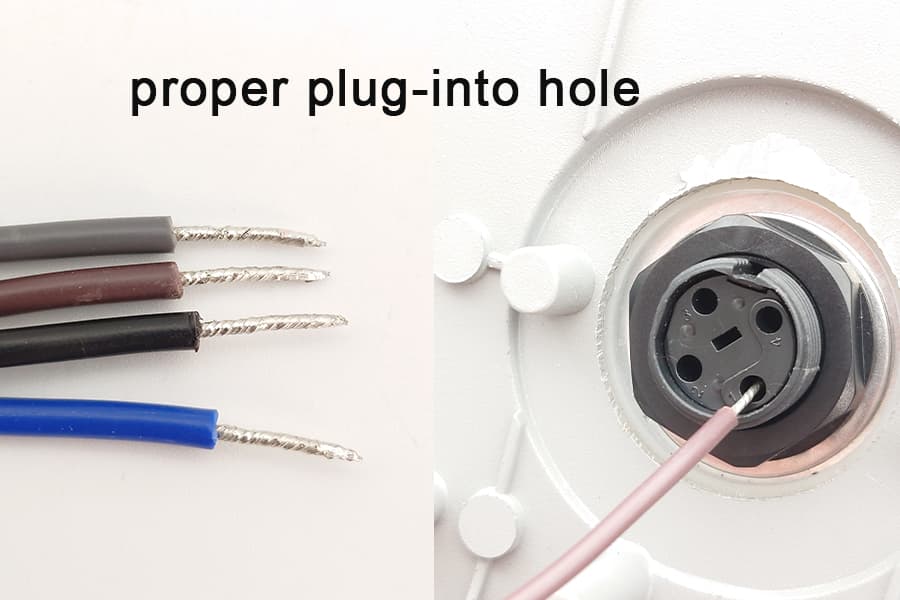
This compatibility reduces the risk of micro-corrosion and supports stable connections over many years.
A mismatched metal interface creates tiny electrical gaps. These gaps grow in humid environments. Tin plating closes those gaps and allows metals to “agree” without fighting each other.
How Does Tin Plating Prevent Galvanic Corrosion?
Galvanic corrosion occurs when two unlike metals are in contact and moisture is present there. A Zhaga socket often works with many controller brands, each using different metal compositions.
Tin plating forms a neutral buffer layer. It reduces metal-to-metal conflict, preventing:
- Green corrosion
- Powdery buildup
- Weakening of the terminal
- Long-term failure
This protection is essential because cities cannot predict which smart controller will be used five years later. A safe, neutral surface keeps the socket compatible with all brands.
Why Do Customers Ask About Terminal Material?
Today’s lighting engineers are more aware of lifetime performance. They know that the terminal material directly affects whether a socket works for 1 year or 10 years.
When a customer asks, “What terminal material do you use?” they actually want an honest answer about reliability. They want to know the product is not a cost-down version pretending to be a full outdoor solution.
This single question helps them evaluate:
- Durabilidade
- Long-term cost
- Maintenance frequency
- Quality of design
- Supplier honesty
Hearing Tin-Plated Phosphor Bronze almost always improves trust.
How Does Terminal Material Influence Project Performance?
In smart-city projects, thousands of sockets may be installed across large areas. If the terminal material is wrong, even a small problem becomes expensive. Replacing sockets on high poles requires:
- Lifting trucks
- Skilled technicians
- Lane closures
- Labor hours
A stable terminal avoids these costs.
Phosphor bronze plus tin plating helps ensure that the socket:
- Handles vibration
- Maintains contact force
- Supports long-term signal transfer
- Survives corrosion
- Works across controller brands
This is why professional suppliers choose stable materials over cheaper alternatives.
Why Does Material Choice Show Engineering Philosophy?
A socket is small, but it reveals the manufacturer’s mindset. Cutting corners on internal metal often means corners are also cut elsewhere.
At Long-Join, we use engineering-grade materials, not cost-down parts. This is part of the same philosophy behind our Zhaga Book 18 sockets and Receptáculo de fotocontrole NEMA soluções.
Choosing Tin-Plated Phosphor Bronze shows that the product is built for:
- Cold nights
- Salty air
- Heat from LED drivers
- Rapid temperature swings
- Long-term signal reliability
This is the backbone of a smart street-lighting system.
Conclusão
Smart lighting depends on stable connections. That stability begins with one small part inside the socket: the terminal.
This is why the JL-700W Zhaga socket uses it. The material protects the connection, stabilises the signal, and ensures every smart controller works the way it should, year after year.
For any lighting project that expects true outdoor reliability, the right terminal is not a detail — it is the foundation.
Links externos:
●https://chem.libretexts.org/Bookshelves/Analytical_Chemistry/Supplemental_Modules_(Analytical_Chemistry)/
Electrochemistry/Redox_Chemistry/Definitions_of_Oxidation_and_Reduction
●https://en.wikipedia.org/wiki/Galvanic_corrosion
●https://en.wikipedia.org/wiki/Phosphor_bronze


