

7 Key Factors For Selecting The Optimal Photocontrol Type In Lighting Fixtures
Introduzir
Choosing the right photocontrol is no longer just about “on at night, off in the morning.” For cities, industrial parks, and OEMs, the wrong choice can mean dark streets, frequent maintenance calls, and wasted energy. The right one quietly delivers stable light, lower operating costs, and a future-proof platform for smart upgrades.
In this guide, we’ll walk through seven practical questions that help you pick the optimal photocontrol type for each lighting fixture — from basic dusk-to-dawn poles to fully connected smart street lights.
Why Does The Installation Environment Matter So Much?
If the environment is wrong for the device, even the best photocell lighting sensor will fail early. So the first question is always: Where will this luminaire live, and what will it suffer?
Outdoor fixtures on highways, coastal roads, or dusty industrial yards need photocontrols with:
- High IP rating(IP65/IP66) against rain and dust
- UV-stable housings
- Wide temperature range
- Strong surge and lightning protection
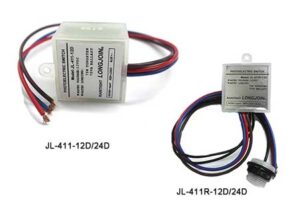
For low-voltage gardens or landscape strips, a compact DC light photocell sensor such as Long-Join’s JL-411 series (12–24 V DC) can handle automatic switching without exposing sensitive electronics to mains voltage.
Environment vs. Key Photocontrol Requirements
Installation Environment | Typical Luminaire | Key Requirements For Photocontrol Type |
Urban streets & main roads | Iluminação pública LED | IP65+, proteção contra surtos, wide temp range, UV-resistant housing |
Parks, plazas, pedestrian zones | Decorative pole / bollard | Compact size, stable low-light response, vandal resistance |
Industrial yards, ports | High-mast floodlight | High surge rating, robust housing, strong EMI immunity |
Gardens, signage (12/24 V DC) | Landscape & strip lighting | Low-voltage photocell switch, moisture-proof enclosure |
How Should Fixture Applications And Photocontrol Types Match?
Next question: What does this luminaire need to do in real life? A simple wall pack does not need the same controller as a smart corridor light on a city platform.
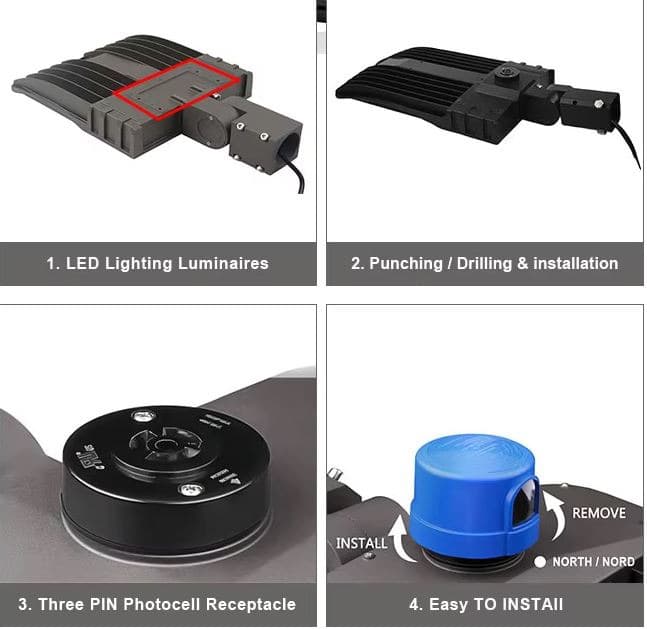
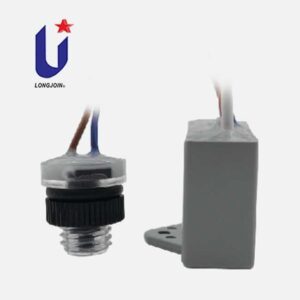
For basic street poles, a twist-lock photocell for street light mounted on a NEMA or photocontrol receptacle delivers cost-effective dusk-to-dawn control. Long-Join’s JL-217 series, for example, is designed to automatically manage street, garden, passage, and doorway lighting based on ambient light.
Where you need modularity and smart upgrades, Soquete Zhaga–based controllers allow you to swap sensing and communication modules without changing the luminaire body. Long-Join’s JL-700W leadless Zhaga socket is a typical example of this scalable approach.
Fixture Type vs. Recommended Photocontrol
Fixture / Project Type | Typical Control Option | When It Fits Best |
Standard LED street light | Twist-lock photocell control (NEMA) | Simple dusk-to-dawn, utility standards, easy replacement |
Floodlight on high-mast | Hard-wired photo control or cabinet-mounted lighting control | Group control, shared sensor, fewer field devices |
Decorative pole / city center | Zhaga controller on Zhaga socket | Need future upgrades, extra sensors, wireless networking |
Garden / façade DC lighting | Inline low-voltage photo cell or timer | Short runs, 12/24 V systems, small projects |

Which Technical Parameters And Protocols Should You Check First?
Now we get to the numbers. The key question: Does this device actually match the driver, mains, and control protocol?
You need to align:
- Supply voltage (e.g. 120–277 V AC vs 12/24 V DC)
- Load current and inrush capability
- Surge rating (kA)
- Dimming / control protocol: on/off only, 0–10 V, or DALI-2
For example, if your drivers use 0–10 V analog dimming, a controller with DALI-2 only will not integrate cleanly. Long-Join’s range includes both simple on/off controllers and models with 0–10 V dimming outputs to match different driver ecosystems.
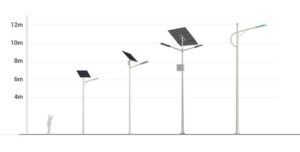
How Do Pole Height And Fixture Spacing Affect Sensor Performance?
Even a perfectly specified photocell sensor can misbehave if it is placed at the wrong height or in the wrong direction. The practical question is: Can the sensor “see” the environment the way you need it to?
On tall poles, the sensor’s field of view leans toward the horizon and sky. If the controller mainly “sees” bright sky, it might delay switch-on at dusk. If it mainly sees reflected light from the luminaire head, it may switch off too early.
Spacing also matters. In tight residential streets, too many head-mounted controllers can cause unwanted interaction (one light reflecting into another’s sensor). In some projects, engineers move the light sensor to a mast arm or cabinet to give it a more representative view.
Typical Pole Heights vs. Sensing Considerations
Pole Height | Risk If Sensor Is At Head Level | Mitigation Strategy |
4–6 m (residential) | Glare from nearby shop signs, tree shadows | Side-mounted sensor, tuned lux settings |
8–10 m (urban) | Over-exposure to sky, late switch-on at dusk | Use shields / louvers, choose controller with narrow FOV |
12–16 m (high-mast) | Reflections from multiple floodlights, wind sway | Central photo switch sensor on mast or in cabinet |
Good pole and spacing design keeps your sensor fotoelétrico working with the environment, not fighting it.
How Do Municipal And Project Requirements Influence Your Choice?
A city rarely buys one single luminaire. It buys a long-term system. So the real question is: What does the municipality expect this network to do over the next 10–15 years?
Typical requirements include:
- Centralised monitoring and fault alarms
- Energy reporting and dimming profiles by district
- Integration with smart-city or building platforms
- Remote firmware updates and configuration
In simple projects, a stand-alone fotocélula do anoitecer ao amanhecer is enough. For larger concessions, cities often standardise on controllers that support remote parameter updates and group profiles. Long-Join’s application notes on street-lighting photocell products show how cities balance cost, performance, and future flexibility when choosing control types.

Which Wireless Communication Options Make Sense For Your Network?
When a project grows past simple lighting control, we must ask a new question. How will the controllers talk outside? The wrong choice here can lock you into an ecosystem that doesn’t scale.
Common options:
- Zigbee / 2.4 GHz mesh for dense urban grids
- Sub-GHz mesh or LoRa-based systems for long ranges and fewer gateways
- NB-IoT / LTE-M for directly connected, low-bandwidth nodes
Many modern controllers integrate RF modules into a compact node that plugs into a NEMA or Zhaga interface. Long-Join, for example, offers NB-IoT remote street light controller products that use standard twist-lock bases and IP-rated housings for road lighting.
Wireless Options For Photocontrol Networks
Wireless Type | Typical Range | Melhor para | Key Trade-Offs |
Zigbee mesh | 50–100 m per hop | Dense streets, city blocks | Needs many nodes for coverage |
Sub-GHz mesh | Hundreds of meters | Highways, industrial parks | Slightly higher complexity vs. point-to-point |
LoRaWAN | Up to several km | Wide-area, low-density roads | Lower throughput, need network operator |
NB-IoT / LTE-M | Many km via cell towers | Isolated poles, small smart projects | Ongoing SIM / connectivity cost |
Picking wireless options is not just an RF decision; it shapes how you manage, commission, and maintain your street lighting outdoor assets for years.
What Role Do Sensor Types And Protection Features Play?
Finally, you need to ask: What exactly do we want the luminaire to “sense,” and how do we keep that hardware safe for 10+ years?
Modern control nodes combine:
- Daylight sensing (outdoor photocell light sensor)
- PIR or radar motion sensing
- Temperature and sometimes environmental sensing
Conclusão
When you put all seven questions together, choosing a photocontrol type becomes much If you need a starting point, Long-Join’s knowledge articles on low-voltage photocell switches and LED street lights with photocells provide concrete examples of how different cities and OEMs put these principles into practice.
Working with an experienced manufacturers photocell partner like Long-Join means you don’t need to guess. You can mix and match sockets, controllers, and sensors in a controlled way — and build a lighting system that is safe today, efficient tomorrow, and ready for whatever “smart” means in ten years.
Links externos:
●https://www.iec.ch/ip-ratings
●https://en.wikipedia.org/wiki/Surge_protector
●https://www.realpars.com/blog/photoelectric-sensor
https://www.dali-alliance.org/dali2/comparison.html
 Portuguese
  English
  Russian
  Spanish
  Arabic
  Japanese
  Italian