
Is UV Stabilizer Necessary for Photocell Housings?
導入
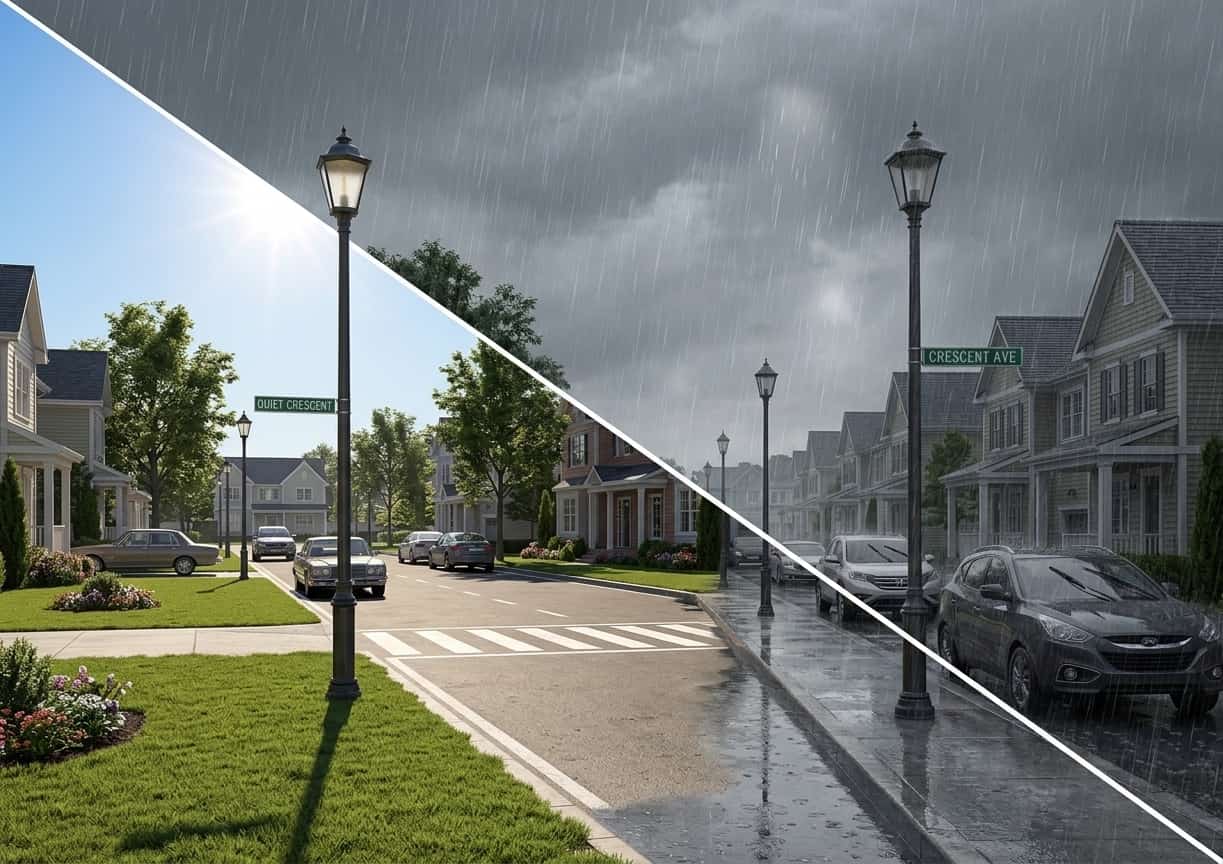
A photocell housing sits at the top of a street light, fully exposed to direct sunlight, UV radiation, rain, condensation, and salt spray every day of its service life.
No other component in the luminaire assembly experiences this combination of environmental stressors as continuously or as intensely.
In this article, I will break down why a UV stabilizer is necessary in the housing material and is therefore not just a design preference, as well as the likely consequences when it is absent.
What Is a UV Stabilizer?
A UV stabilizer is an additive in plastic materials that prevents ultraviolet radiation from attacking polymer chains, slowing plastic aging and protecting the product’s mechanical and optical performance across its service life.
Without a stabilizer, UV radiation breaks down the polymer chains in plastic housing materials through a process called photodegradation. The visual result is yellowing and surface chalking. The structural result is embrittlement and loss of mechanical strength. Both consequences affect photocell performance and housing integrity directly.
Why Does the Photocell Housing Need UV Stabilizer?
Three environmental factors combine to make UV stabilizer non-optional for photocell housings.
Environmental Factor | 説明 |
Intense Sunlight | Photocell on top of luminaire subjected to strongest UV, temperatures up to 70-90°C |
Rain, Condensation, Salt Spray | High humidity, salty, corrosive environment impacting housing material and sealing |
Accelerated Aging | Plastic housings without UV stabilizer last only about 1-3 years |
The photocell is mounted at the luminaire’s highest and most exposed point because the position that receives the most direct solar radiation with no shielding from the fixture body. In tropical and high-UV regions, the UV dose that the photocell housing receives is substantially higher than what any other luminaire component experiences.
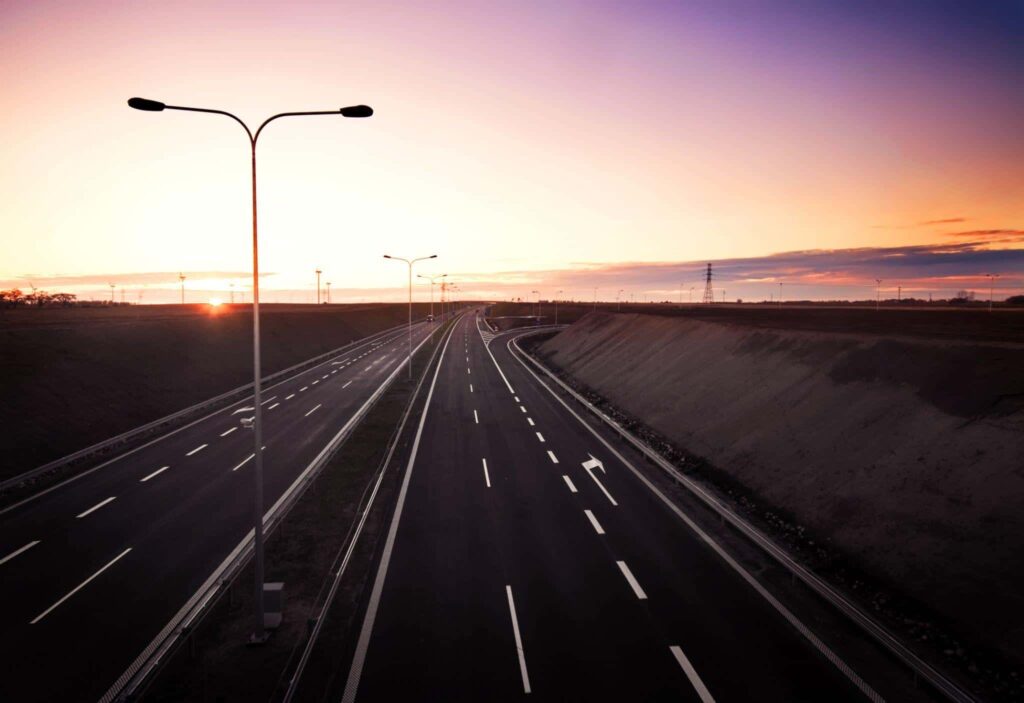
Without UV stabilizers, this exposure produces visible and structural degradation within one to three years. With it, the housing maintains its mechanical and optical properties across a ten to fifteen year service life.
What Happens When a Photocell Housing Has No UV Stabilizer?
There are five possible degradation consequences that follow directly from absent or inadequate UV stabilizer, each affecting either housing integrity or photocell performance.
Phenomenon | Impact and Description |
Yellowing | PC, PA66, and PBT materials turn yellow under UV causing light window transmittance drop, photocell malfunction, and lux point drift |
Brittleness | Affects seal performance; plastic mechanical strength declines; base cracks; moisture penetrates internally |
Cracking | High temperature combined with UV and condensation causes severe degradation, external cracks affecting internal optical components |
Loosened seals | Leads to poor sealing, accelerating component aging further |
Mechanical strength loss | Glass fibres become exposed, surfaces roughen, screw holes crack, violating UL1598 safety certification standards |
Yellowing is the most immediately performance-relevant consequence. As the housing and photosensitive window material yellows, its light transmittance decreases. The photocell receives less light than it did when new, which shifts the effective lux threshold at which switching occurs.
Brittleness and cracking follow from the same photodegradation process that causes yellowing. UV breaks polymer chains, reducing the material’s ability to absorb impact and deform before fracturing. In outdoor photocell installation, vibration from wind and mechanical shock during maintenance are constant. A brittle housing that would have been impact-resistant when new fractures under loading that the undegraded material would have handled without damage.
What Standards and Regulations Require UV Stabilizer?
Four international standards explicitly require UV stabilizer in photocell housing materials.
Standard/Regulation | Related Requirement |
UL1598 | Mandates adding UV stabilizer in photocell housing materials to ensure durability and safety |
UL773 | Focuses on photocell component function; actual installation on luminaire requires meeting UL1598 full requirements |
ENEC | Stricter standards requiring photocell components to achieve a 10-15 year lifespan and pass UV aging tests |
NEMA SS-1 | Requires photocells for outdoor use to have UV stability, ensuring longevity of the photosensitive window and housing |
その ENEC requirement is the most demanding. It specifically requires photocell components to pass UV aging tests as part of the certification process and targets a product lifespan of 10 to 15 years. This means UV stabilizer presence is not just a material specification claim but must be verified through documented accelerated aging testing by an accredited third-party body.
UL1598 and NEMA SS-1 both establish the outdoor photocell housing UV stability requirement as a mandatory specification. A product that does not include UV stabilizer in its housing material cannot legitimately carry these certifications, and procurement teams should treat a lack of UV stabilizer documentation as a disqualifying factor when evaluating suppliers.
Long-Join uses UV-stabilised GF+PBT housing materials across its photocell range, verified through accelerated UV aging testing.
Frequently Asked Questions on UV Stabilizer in Photocell Housings
It prevents UV radiation from breaking down polymer chains, slowing the yellowing, embrittlement, and cracking that cause housing failure and photocell malfunction in outdoor applications.
Yellowing of the housing and photosensitive window, reducing light transmittance and causing lux threshold drift. Progressive embrittlement leading to cracking. Loosened seals allowing moisture ingress. Loss of mechanical strength at screw holes and plug contact points.
Through UV-stabilised GF+PBT material specification and accelerated UV aging testing that documents housing performance across the equivalent of years of outdoor UV exposure, verified against UL1598, ENEC, and NEMA SS-1 requirements.
UL1598, ENEC, and NEMA SS-1 all explicitly require UV stability in outdoor photocell housing materials. ENEC additionally requires UV aging test documentation demonstrating a 10 to 15 year service life.
The photosensitive window must maintain optical transmittance stability after UV aging to prevent lux threshold drift. Sealing rings must use UV-stable materials such as EPDM or silicone that do not harden, crack, or lose elasticity under sustained UV and heat exposure.
結論
UV stabilizer is not an optional quality upgrade for photocell housings, but a required material specification under UL1598, ENEC, and NEMA SS-1. Without it, photocell housings yellow and lose transmittance, embrittle and crack, lose sealing integrity, and fail mechanical strength requirements within one to three years of outdoor service.
With UV-stabilised GF+PBT, Long-Join’s photocell housings maintain their mechanical and optical properties across the ten to fifteen-year service lives that professional outdoor lighting applications demand.
外部リンク
●https://en.wikipedia.org/wiki/Ultraviolet
●https://en.wikipedia.org/wiki/Photodegradation



 Japanese
  English
  Russian
  Spanish
  Portuguese
  Arabic
  Italian