
What Are The Common Alternative Base Materials For Photocells? What Are Their Advantages And Disadvantages?
導入
A photocell base looks small. Its job is huge.
It must hold the pins firmly. Resist heat. Fight sunlight damage. Stay stable outdoors for many years. If the base material is weak, the whole photocell ages faster, deforms, cracks, or loses sealing performance.
For outdoor lighting, common base materials include PC, PA66, PBT, glass fiber reinforced PA66, and glass fiber reinforced PBT.
What Is A Photocell Base Material?
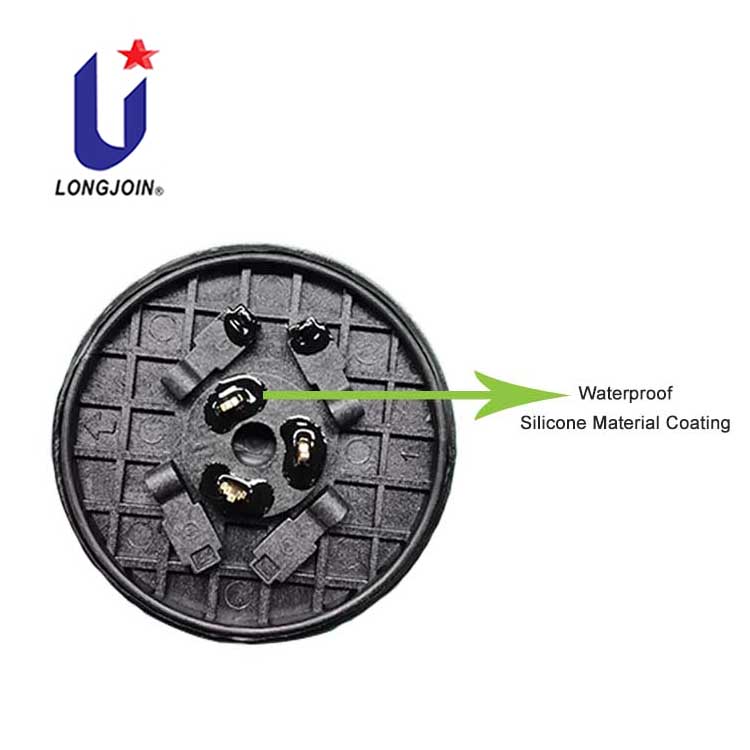
The photocell base is the plastic or reinforced plastic used to make the bottom structure of a 光電セルスイッチ.
It supports the metal pins. Protects the circuit area. Helps the controller fit tightly into the receptacle. This base must not be too soft, too brittle, or too easy to bend.
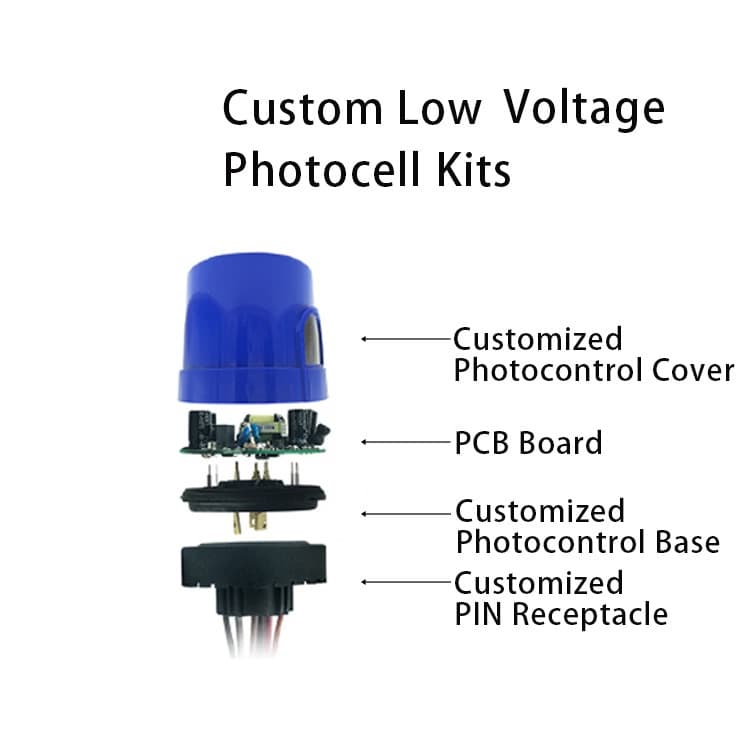
In street lighting outdoor projects, the base faces sun, rain, heat, dust, electrical stress. So the material affects safety, strength, waterproofing, and service life. Long-Join’s JL-241J base is listed with PBT material, UV stabilizer, UL94V-0 flame rating, silicone O-ring gasket, and spring leaf signal contacts for smart control use.
Base Part Requirement | なぜそれが重要なのか |
Heat resistance | Stops base from softening under hot conditions |
UV resistance | Reduces yellowing, cracking from sunlight |
Dimensional stability | Keeps pins and contacts in right position |
Flame rating | Helps improve electrical part safety |
Waterproof support | Protects inside with gaskets and sealing |
Why Does The Material Choice Matter?
Outdoor photocells work in harsh places.
A light photocell sits on top of a lamp pole for years. Direct sun in the day, heat from the lamp body at night. Wind, rain, sometimes salt air. If the material cannot handle this, the base changes shape. Once it changes shape, the pins do not connect well. Water enters the housing. Unstable switching, short service life, complete failure.
This is why good manufacturers do not only focus on the circuit. They focus on the base, cover, gasket, and full sealing structure. Long-Join notes that its photocell switch fittings use bases, PCB circuits, covers, terminals, signal contacts, and sealing gaskets for roadway, street, and area lighting use.
One small material choice affects years of performance.
What Are The Common Photocell Base Materials?
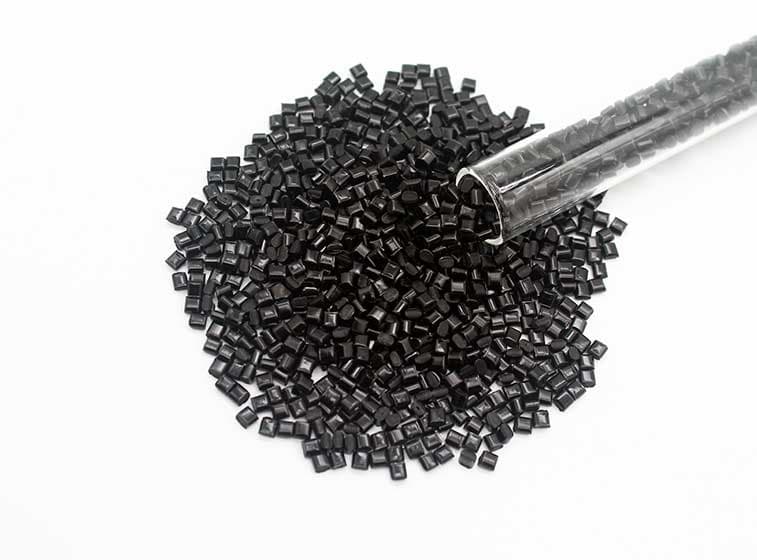
The most common base materials are PC, PA66, PBT, GF+PA66, and GF+PBT. Each one has good points and weak points.
PC, also called polycarbonate, is easy to mold and has good strength. But in strong heat and UV conditions, it ages and yellows more easily. PA66, also called Nylon 66, is stronger and handles heat better, but it absorbs moisture. This causes size changes. PBT is more stable and better for outdoor electrical parts, especially when improved with additives.
Glass fiber reinforced materials are stronger because glass fiber is mixed into the plastic. Among these options, GF+PBT is often the stronger long-term choice for outdoor photocell bases.
Material Type | 利点 | Disadvantages | 一般的な用途 |
パソコン | Good strength, smooth surface, easy molding | Lower heat resistance, weaker UV aging resistance | Lower-end photocell bases |
PA66 | Strong, wear-resistant, better heat than PC | Absorbs moisture, may warp, needs UV stabilizer | Mid-level photocell bases |
PBT | Stable size, good chemical and weather resistance | Needs reinforcement for higher heat | Better photocell base parts |
GF+PA66 | Stronger and more rigid than PA66 | Moisture issue still exists, higher processing difficulty | Structural lighting parts |
GF+PBT | Strong, stable, heat-resistant, good outdoor aging resistance | Higher cost | High-quality photocell bases |
Why Is PA66 Better Than PC, But Still Not Perfect?
PA66 is stronger than PC in many ways. Good mechanical strength, good wear resistance, better high-temperature performance. This makes it useful for mid-to-high-end photocell bases.
The problem is moisture absorption. PA66 can take in water from the air. When that happens, its size may change slightly. For a small electrical part, even small changes matter. The base may warp, or the pin position may become less stable.
This does not mean PA66 is bad. It only means it needs careful material design. UV stabilizers and proper processing are important. In dry or controlled conditions, PA66 can perform well. But for long outdoor service, PBT-based materials often give better size stability.
Why Does Long-Join Prefer GF+PBT?
Long-Join prefers GF+PBT because it gives a better balance of strength, stability, and outdoor resistance.
Glass fiber helps the material become harder and stronger. PBT helps the part keep its size and shape. UV stabilizer helps fight sunlight aging.
For a base like JL-241J or related NEMA control parts, this matters a lot. The base must hold metal terminals, support signal contacts, and keep the controller stable when installed on a street light. Long-Join’s related content also mentions JL-240XA as a 7 pin receptacle made from glass-fiber strengthened PBT.
Formula Part | Suggested Range | Main Purpose |
PBT resin | Main material | Gives base structure and stability |
Glass fiber | 30–40% | Improves strength and heat resistance |
UV stabilizer | 0.5–1.5% | Reduces sunlight aging and cracking |
Antioxidant | 0.3–0.8% | Slows material breakdown |
Heat stabilizer | 0.2–0.5% | Helps resist high temperature |
How Do You Choose The Right Base Material?
Start by looking at the environment.
Is the light used in a hot city, coastal road, parking lot, or industrial area? Then check the product function. Is it a simple dusk to dawn photocell, or is it a スマートコントローラー with signal contacts and dimming?
For basic indoor or mild outdoor use, PC or PA66 may be enough. For stronger outdoor lighting control, PBT is better. For high-end outdoor use, GF+PBT is the safer choice.
Also check flame rating, UV resistance, waterproof sealing, contact design, and 認証. Long-Join’s photocell switch fittings page mentions different protection standards such as IP54, IP65, IP66, and IP67 across its photocontrol products, depending on design.
よくある質問
GF+PBT is usually the best choice for high-quality outdoor photocells. It offers strong heat resistance, good size stability, and better aging resistance.
UV stabilizer helps the base resist sunlight damage. It reduces yellowing, cracking, and brittleness.
PC can be used for low-cost or less demanding bases. But it is not the best choice for hot, long-term outdoor use.
PA66 absorbs moisture from the air. This can cause size changes or warping if the formula is not well controlled.
Glass fiber makes PBT stronger, stiffer, and more heat-resistant. It helps the base stay stable outdoors and resist bending or deformation under stress.
m dolor sit amet, consectetur adipiscing elit. Ut elit tellus, luctus nec ullamcorper mattis, pulvinar dapibus leo.
結論
Photocell base material may seem like a small detail, but it has a strong effect on product life.
PC is simple and affordable, but weaker under heat and sunlight. PA66 is stronger, but moisture absorption can be a problem. PBT is more stable for outdoor electrical parts. GF+PBT gives the best balance for high-quality photocell bases.
For smart street lighting, outdoor photocell light sensor products, and long-life photocell control systems, GF+PBT with UV stabilizer is a practical and reliable choice. It is the choice that lasts.
外部リンク:
●https://www.ensingerplastics.com/en/shapes/tecadur-pbt-gf30-natural
●https://www.ensingerplastics.com/en/thermoplastic-materials/pbt-material
●https://en.wikipedia.org/wiki/Printed_circuit_board
●https://en.wikipedia.org/wiki/Polycarbonate
 Japanese
  English
  Russian
  Spanish
  Portuguese
  Arabic
  Italian