
10 Key Factors Affecting Composite Sensors
導入
Smart lighting got fancier. Composite sensors combine motion detection with light sensing, add wireless communication, and you have something that sounds advanced.
Advanced is not the same as reliable.
This article looks at the 10 major factors that make composite sensors fail in real outdoor conditions. Most of them involve temperature. Some involve humidity. All of them show why complex sensors break down faster than simple ones.
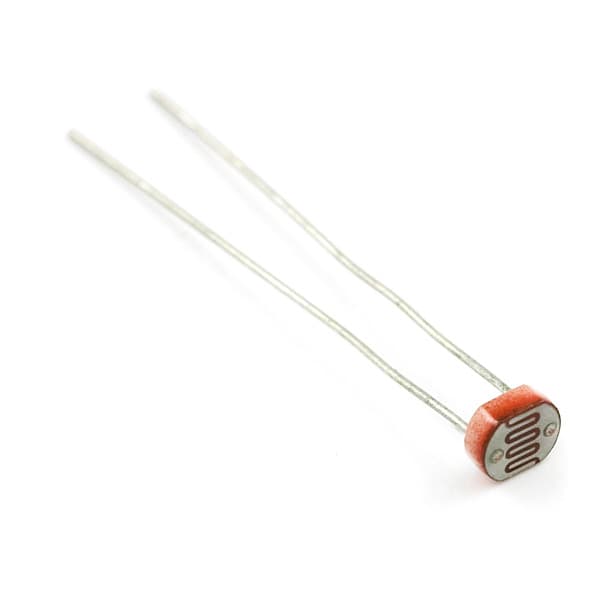
What Is a Composite Sensor?
A composite sensor combines two jobs. One sensor reads motion — either infrared (PIR) or microwave. Another sensor reads ambient light level (Lux). The system uses both inputs to decide when to switch.
In theory, this is smarter. More inputs means more control.
In practice, more sensors means more ways to fail.
Smart Wireless Communication
Composite sensors also try to talk to the outside world. NB-IoT, Zigbee, ロラワン, LoRaMesh, 3G, 4G, 5G, Cat1, Cat4. Pick your protocol. The sensor is supposed to send data back to a central system and receive commands.
Every wireless protocol adds complexity. Every wireless connection can drop. Every antenna creates another point of failure in an outdoor environment.
Types of Photo Controls
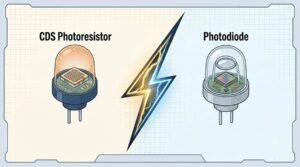
Photodiodes. Phototransistors. Not CDS photoresistors, and not bimetallic strips.
The difference matters. A CDS photoresistor works by changing resistance based on light, which is slow and temperature-sensitive. A bimetallic strip is mechanical, which means it wears and sticks. A photodiode or phototransistor responds electrically and instantly, which is what you need in outdoor lighting.
ロングジョイン chose the stable ones. フォトダイオード and phototransistor based controls handle environmental interference better. They do not drift as much with temperature. They do not age as fast.
Ten Temperature-Related Factors Affecting Composite Sensors
Temperature breaks things. Here are the ten ways it breaks composite sensors.
要素 | Description & Impact |
High temperature reduces PIR detection rate | Near body temperature environments (30–35°C) shrink thermal difference, causing unstable sensing and reduced distance. |
Low temperature increases PIR false triggers | Larger thermal difference plus wind, fog, and ice crystals cause on/off cycling and flickering. |
Lux threshold drift and CDS sensitivity drop at low temperatures | Causes early or abnormal lighting in winter. |
High temperatures delay Lux module response | Photo-sensitive components slow down, causing delayed lighting at dusk. |
Severe temperature swings on high-pole lamps | Top environment day-night temperature difference up to 40°C, hard to maintain sensor performance stability. |
Lamp heat interferes with PIR sensor | LED drivers and heat dissipation raise ambient temperature, shortening sensing distance and delaying response. |
Composite algorithm misjudgment under extreme temperatures | Simultaneous shift in Lux and PIR causes repeated on/off and irregular switching. |
Low sun angle in winter causes Lux misjudgment | Results in abnormal lighting during daytime or earlier times. |
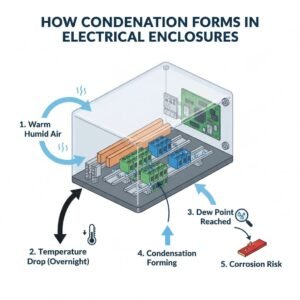
Condensation in cold, humid environment | Water droplets disturb light and infrared lens reflection, causing false triggers and cycling. |
Composite sensor lifetime drastically shortens due to extreme temperatures | Multi-module complexity leads to faster aging, device damage, and higher maintenance costs. |
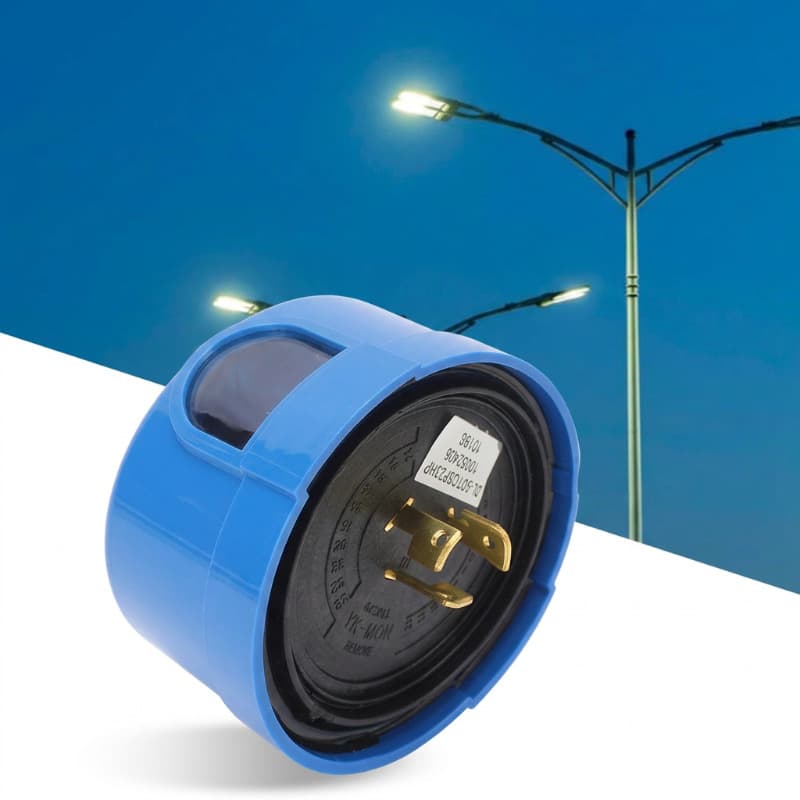
Why Composite Sensors Fail
Complexity is the root cause.
Every component has a temperature range. When temperature exceeds that range, the component drifts. When all components drift at different rates, the algorithm has no stable reference point.
A simple photo control has one job: read light level. When temperature changes, the photodiode reads light level differently, but the logic stays the same. Switch when light drops below threshold. Switch back when light rises above threshold. No algorithm. No competing sensors. No wireless link to fail.
Why Lifespan Suffers
Temperature stress ages electronics.
A component rated for minus 10 to plus 40 degrees Celsius fails years earlier if it actually sits in an environment that swings from minus 20 to plus 60. Each swing is stress. Each cycle weakens the solder joints, the capacitors, the circuits. A photodiode might last 20 years. The components around it in a composite module might last 8 or 10.
Here is how the different components degrade under temperature stress.
成分 | Temperature Range Rated | Performance at ±20°C Swing | Performance at ±30°C Swing | Typical Failure Mode |
Photodiode (Photo Control) | −20°C to +70°C | Stable, <2% drift | Minimal drift, <4% | Rare catastrophic failure; gradual aging only |
PIR Sensor (Composite) | −10°C to +45°C | Becomes insensitive above 35°C | Complete failure above 40°C | Loses motion detection; false triggers below 5°C |
Lux Module CDS (Composite) | −5°C to +50°C | Threshold drift 4–6% | Drift 8–12%, inconsistent switching | Resistance creep; seasonal recalibration required |
Lux Module Photodiode (Composite) | −15°C to +60°C | <3% drift | 4–6% drift | Moderate thermal aging; output weakens |
Wireless Module (Composite) | −10°C to +50°C | Connection loss 2–3% of hours | Loss 8–12% of hours; data corruption | Battery depletes faster in cold; crashes in heat |
Then there is the complexity factor. A simple photo control has maybe 5 components. A composite sensor has 15 or 20. Five of them are temperature-sensitive. Three of them fail first. Now you have a failure rate that is not linear—it is accelerating. One failed component forces the algorithm into unknown state. The system makes wrong decisions. The LED driver cycles. The whole thing fails faster.
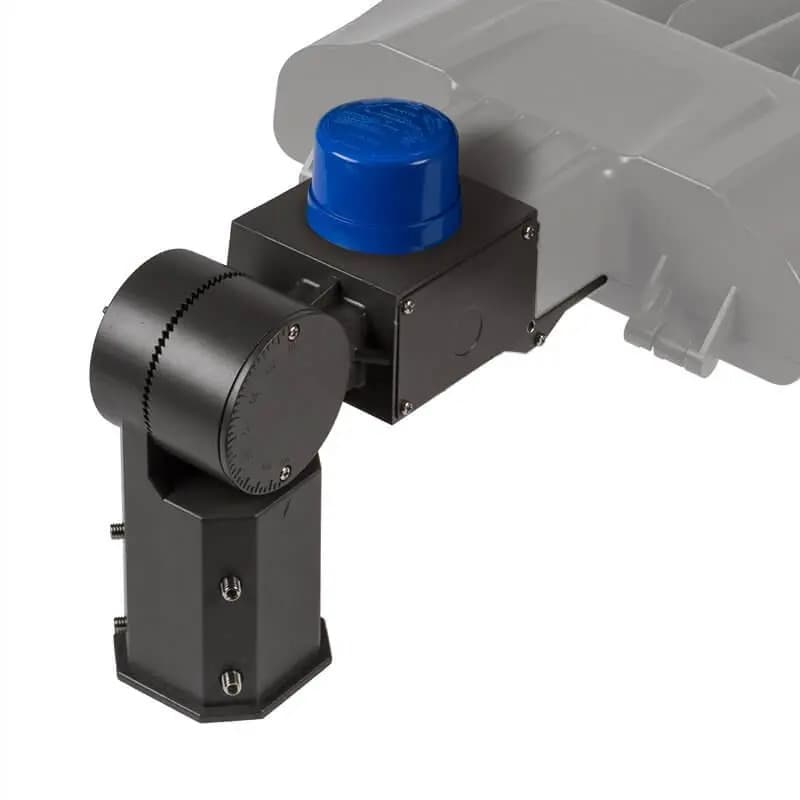
Long-Join saw this in field data. Composite sensors deployed in climates with large temperature swings showed failure rates 3 times higher than simple photo controls in the same location. Same latitude, same humidity, same weather. The difference was the sensor type.
よくある質問
The advantage is theoretical: you can use motion to reduce lighting when nobody is around. In practice, the motion sensor does not work reliably at any temperature outside a narrow band.
A PIR sensor detects motion by reading infrared radiation and comparing it to background temperature. High temperature shrinks the contrast, so motion becomes invisible.
They use photodiode-based Lux control only, no motion sensing. A photodiode is temperature-stable across a wide range.
Complexity. A composite sensor has multiple components, each with its own temperature sensitivity. As temperature cycles, the components age at different rates.
Because they have no motion sensor to fail in high temperature, no complex algorithm to drift in temperature swings, and no wireless connection to drop in humid conditions.
結論
Composite sensors looked like a step forward. More sensors, more intelligence, more control.
In actual outdoor lighting, they became a step backward. Temperature, humidity, wind, condensation — the real environment — exposed every weakness in the design. Every added sensor added a failure point. Every algorithm layer added complexity that could not be tuned to work across all climate zones and seasons.
外部リンク:
●https://www.adafruit.com/product/161?srsltid=AfmBOooeL4aYQNzUE5EygzFWRMQzhEn26ZIdpipFHCAJzcJH0CYXLioh
●https://www.thethingsnetwork.org/docs/lorawan/what-is-lorawan/
●https://en.wikipedia.org/wiki/Narrowband_IoT
●https://en.wikipedia.org/wiki/Passive_infrared_sensor
●https://www.roombanker.com/blog/types-of-motion-detectors/

 Japanese
  English
  Russian
  Spanish
  Portuguese
  Arabic
  Italian