
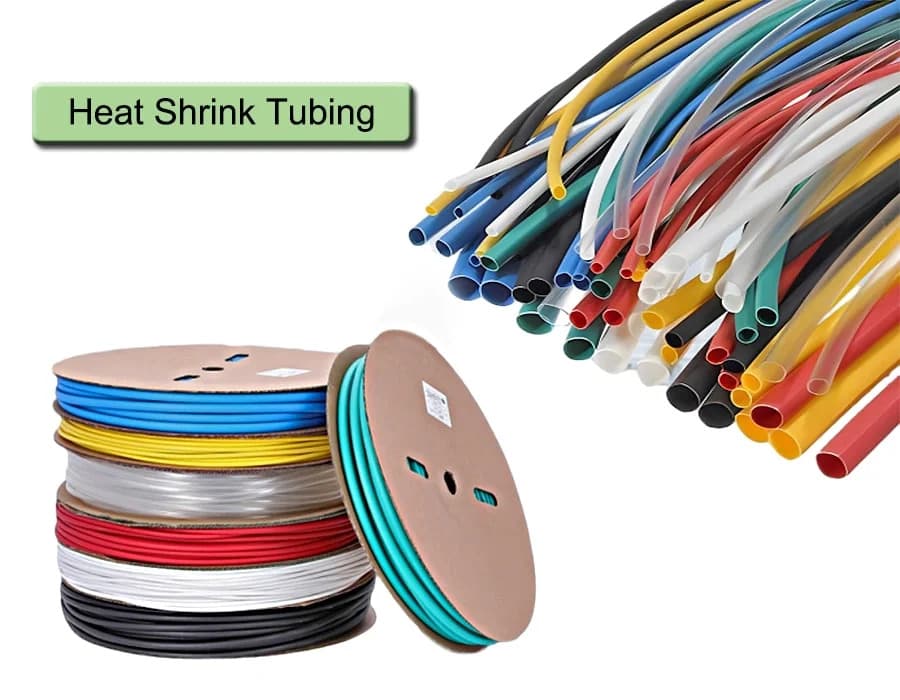
Why More Outdoor Lighting Projects Choose Heat Shrink Tubing Instead Of Double-Insulated Wires
Introducir
In outdoor street lighting projects, especially those using a dusk-to-dawn photocell or intelligent lighting controller, wiring can look like a small detail. It isn’t.
Many project owners start with the same request:
“Can we use double-insulated wire? It looks safer.”
But when the design reaches real poles, real strain, and real inspection rules, experienced manufacturers and EPCs quietly choose another path:
Standard insulated wire plus targeted heat shrink tubing.
This is not a cost-cut. It’s an engineering optimization that protects your photocell street light system without redesigning sockets, molds, or approvals.
What Problem Are Customers Actually Trying To Solve With “Safer” Wiring?
Are you really worried about the wire label, or the project risk hiding behind it?
In harsh environments — coastal roads, tropical cities, dusty highways — buyers rarely lose sleep over “18 AWG vs. 20 AWG.” Instead, they worry about:
- Will the photocell lighting sensorkeep working in humidity and salt air?
- Will inspectors pass the installation without asking for rework?
- Will water creep along cables and kill controllers in the third year of operation?
- Will a wiring choice force a redesign of the photocontrol receptacleor housing?
In other words, what the customer really wants is:
- Long-term reliabilityin outdoor conditions
- Moisture and salt resistancearound cable exits and terminations
- Mechanical stabilityinside NEMA y Zócalo Zhaga interfaces
- Stable performanceacross thousands of poles, not just a lab sample
Heat shrink tubing goes straight at these worries. It adds a controlled, localised second insulation at the stress points instead of changing the entire cable structure.
When this is paired with a proven controller — for example Uniones largas JL-207 y JL-217 twist-lock photocells for street lighting — the result is a wiring scheme that survives real-world projects, not just drawings.
Why Can Double-Insulated Wires Create New Issues In Photocell Controllers?
Double-insulated wire sounds safer on paper. So why do so many engineering teams avoid it in photocell control assemblies?
The problem is usually not electrical. It’s mechanical. The key parameter inside a compact controller body is outer diameter (OD), not the AWG number on the datasheet.
Inside a NEMA twist-lock controller or a JL-700 Zhaga socket, you have:
- A fixed wire outlet path
- A molded strain-relief structure
- A sealing concept that relies on specific cable diameters
When you increase the wire’s outer diameter, you quietly push against all three.
Typical Outer Diameter Comparison For Photocell Leads
Wire Type | Nominal Gauge | Typical Outer Diameter (Approx.) |
Single-insulated wire | 18 AWG | ~2.7 mm |
Double-insulated wire | 20 AWG | ~3.55 mm |
Double-insulated wire | 24 AWG | ~3.0 ± 0.2 mm |
That extra millimetre sounds small. In mass production, it’s not. Oversized cables can lead to:
- Difficult or inconsistent assembly: operators struggle to route and clamp leads
- Compromised IP rating: gaskets and seals no longer compress as designed
- Higher failure probability: internal stress on solder joints and terminations
- Certification risk: construction changes may invalidate existing UL/ Normas ANSI test results
So a wire that “looks” safer can actually reduce system reliability and slow your ramp-up. That’s why many manufacturers of photocell solutions keep the original single-insulated lead design, and then upgrade protection exactly where it matters, using heat shrink.
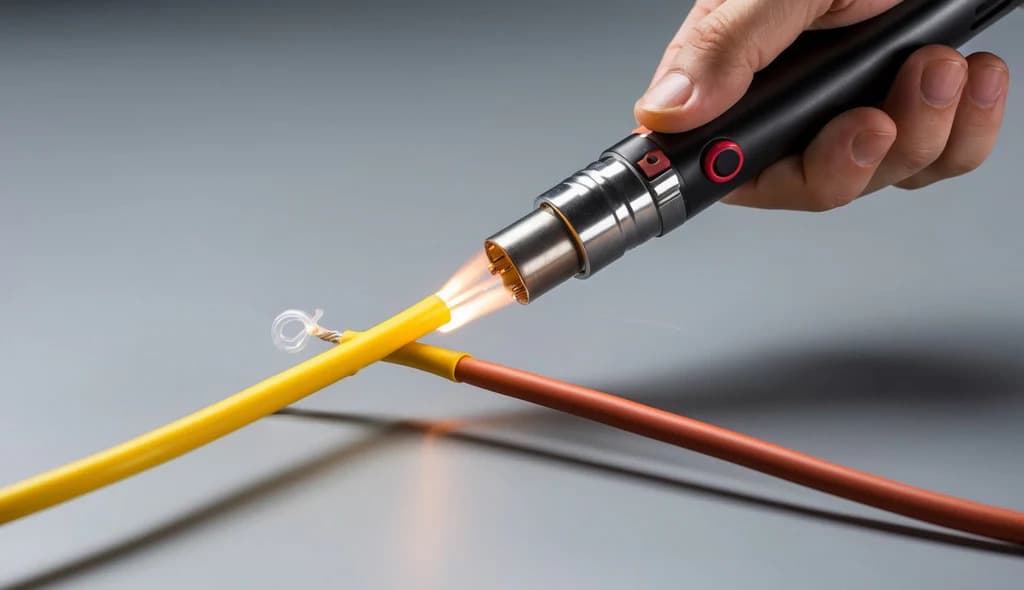
How Does Heat Shrink Tubing Provide A Smarter Second Layer Of Protection?
If you don’t switch to double-insulated wire, how do you still get extra safety and durability?
Heat shrink tubing gives you a secondary protection layer only at the weak points: exits, bends, solder joints, and terminations. Let’s break down what this does.
Electrical Insulation Where It Matters
A short length of heat shrink over a standard lead can:
- Increase dielectric strengtharound sharp edges and terminals
- Improve creep-ageand clearance at PCB and connector transitions
- Reduce the chance of nicks and cuts in the main insulation during assembly
Because you only add material where you need it, you keep the original wire OD through most of the route. That means the controller still fits the Toma NEMA or Zhaga interface as originally tested.
Mechanical Protection And Strain Relief
Street lighting outdoor hardware doesn’t sit still. Cables see:
- Pole vibration from wind and traffic
- Tension during installation and maintenance
- Expansion and contraction from temperature swings
Heat shrink adds a small, stiffened section that:
- Spreads bending stress over a longer length
- Protects against chafing at enclosure edges
- Keeps the lead jacket from cracking after thousands of cycles
Long-Join’s own durability tests for controllers like the JL-207C5-L show how crucial repetition is: tens of thousands of on–off cycles and outdoor exposure demand strong, fatigue-resistant wiring paths.
Extra Help In Coastal And High-Humidity Climates
Near the sea, moisture doesn’t only attack from the outside. It can migrate along conductors and capillary gaps. Heat shrink creates:
- A tighter barrier at the exit point
- Less exposed surface area for photoelectric sensorleads
- Better protection against salt mist and condensation pockets
For projects using dusk to dawn photocell sensor controllers across long coastal roads, this modest change can extend field life and cut truck rolls.
Why Is Heat Shrink Tubing Kinder To Certification And Mass Production?
Do you really want to reopen molds, data sheets, and safety files because of one wiring change?
From a project point of view, any structural change inside a light photocell sensor is expensive. You risk new tooling, fresh type-tests, and uncertain lead times. Heat shrink avoids most of that.
Structural And Certification Impact Comparison
Option | Structural Change To Controller | Mold / Tooling Change | Certification Impact | Production Risk |
Thicker double-insulated wire | Sí | Sí | Alto | Alto |
Enlarged wire outlet & new gasket | Sí | Sí | Muy alto | Muy alto |
Standard wire + heat shrink | No (inside limits) | No | Bajo | Bajo |
Para already certified Long-Join controllers — such as the twist-lock JL-207/JL-217 families and their matching photocontrol receptacle range — this strategy offers several advantages:
- Keeps existing UL / CE / ANSI reports valid
- Avoids re-opening mechanical parts or seals
- Keeps deployment schedules predictable
- Maintains stable assembly processes in factories
That’s why many global customers now ask for “standard lead plus heat shrink” by name when they specify their lighting control build with Long-Join’s customization team.
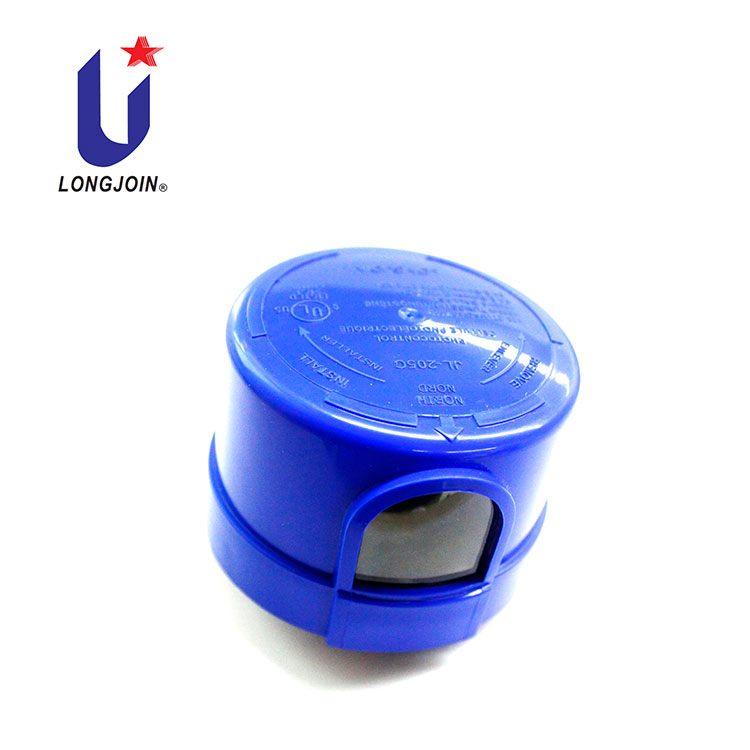
Why Do Experienced Buyers And EPCs Prefer This Combination In Practice?
If you look at large rollouts in North America, Europe, or the Middle East, what do seasoned buyers actually sign off on?
Across thousands of photocell LED street light installations, the pattern is clear:
- They choose mature controller platforms – for example, Long-Join’s NEMA twist-lock and Zhaga Book 18 solutions for smart street lights.
- They preserve the mechanical structure that has already passed years of field use.
- They add process-level enhancements like heat shrink, improved gaskets, and better potting where needed.
External industry guides on photocells also reflect this thinking: focus on correct sensor selection, reliable switching behaviour, and proper installation details, rather than chasing the thickest possible cable jacket.
So, professional buyers are not impressed by how “fat” the wire looks. They care whether the controller:
- Passes inspections
- Avoids nuisance failures
- Integrates cleanly with standard NEMA or Zhaga interfaces
- Keeps energy savings consistent year after year
In that context, heat shrink plus standard insulation is simply a more elegant engineering solution than forcing double-insulated cable into a space that was never designed for it.
How Should You Decide For Your Next Outdoor Photocell Street Light Project?
So, what should you do if you are specifying wiring for a photocell for street light controllers right now?
Ask three simple questions:
- Is the controller platform already certified and proven?
- If you’re using a long-running platform like Long-Join’s JL-207 / JL-217 series or JL-700 Zhaga interfaces, start from the approved structure and avoid unnecessary mechanical changes.
- Where are the real risks located?
- Look at wire exits, solder joints, terminal blocks, and sharp edges. These are the places where heat shrink offers the biggest gain at the lowest cost.
- What environment are you designing for?
- In coastal, high-humidity, or high-UV locations, targeted protection at the controller’s boundary often delivers more life extension than bulkier insulation over the entire cable run. Recent international work on smart lighting highlights how sensors and controls, not just LEDs, determine long-term system resilience.
If the answer to all three is “yes, we need reliability plus stability,” then standard insulated leads plus properly specified heat shrink tubing is usually the safest and most economical choice.
Conclusión
If you need a short sentence to drop into your datasheet or tender, use this:
For outdoor photocell light switch applications, we recommend standard single-insulated leads with local heat shrink tubing at exits and terminations, ensuring safety, structural compatibility, and long-term reliability without modifying certified controller designs.
That single line captures what experienced engineers already know:
You don’t win projects by making the cable look thicker. You win them by controlling risk where it actually lives.
Enlaces externos:
●https://en.wikipedia.org/wiki/Dielectric_strength
●https://www.ansi.org/
●https://www.ul.com/solutions
 Spanish
  English
  Russian
  Portuguese
  Arabic
  Japanese
  Italian