
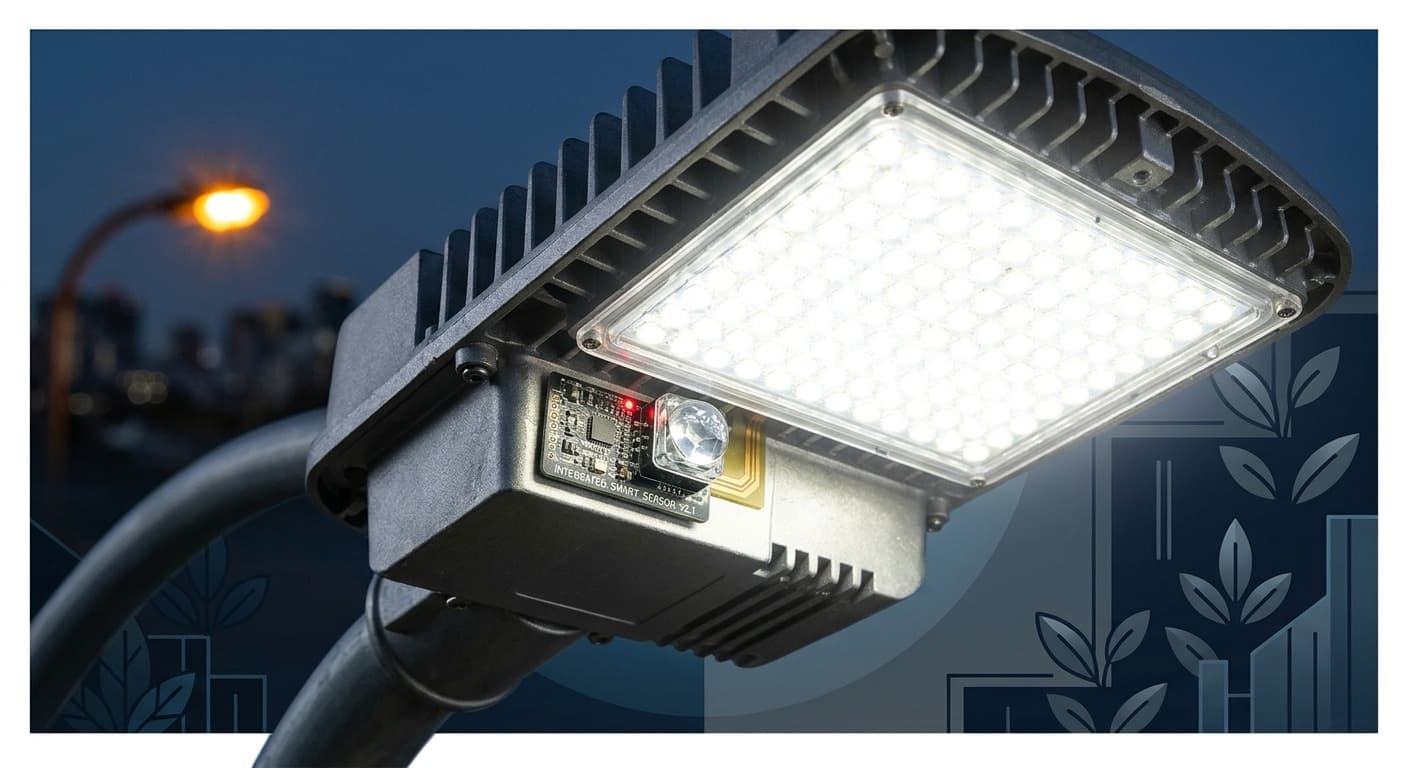
Do Photocells Need to Be Replaced After Streetlights Are Upgraded to LED?
Introducir
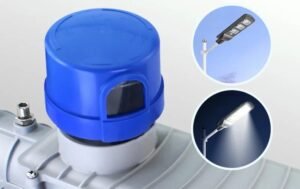
The number of HPS and metal halide streetlights has declined for more than a decade, and that’s thanks to the increased reliability of energy-efficient LEDs. The upgrades have become commonplace, but one installation issue remains: what about the photocells?
Many retrofit applications replace the luminaire and leave the photocell behind. This has often been used as a cost-cutting tool. But it doesn’t always work out. This can lead to a “headache” while troubleshooting because the photocells are not the first place you look for trouble.
Photocell is most often the culprit. Not that it couldn’t, but that’s an application it was never meant to be used with an LED load.
What were Old Photocells Made for?
The traditional photocells were optimized for HPS, metal halide, and mercury vapour lamps. These fixtures come with some load limits. All relay contacts, sensing elements, and switching logic were calibrated using those older loads.
Ballast loads of HPS lamps and metal halide lamps are well behaved in a switching context. They have a predictable current; they react predictably to the closing and opening of the relay; their light output does not cause an interfering problem at the photocell sensor.
The old photocells were designed based on these assumptions, and they functioned well since these assumptions were true. LEDs make all of them different.
What Actually Changes When You Go to LED?
Four things shift when a streetlight goes from HPS to LED, and all four affect how well an old photocell handles the new load.
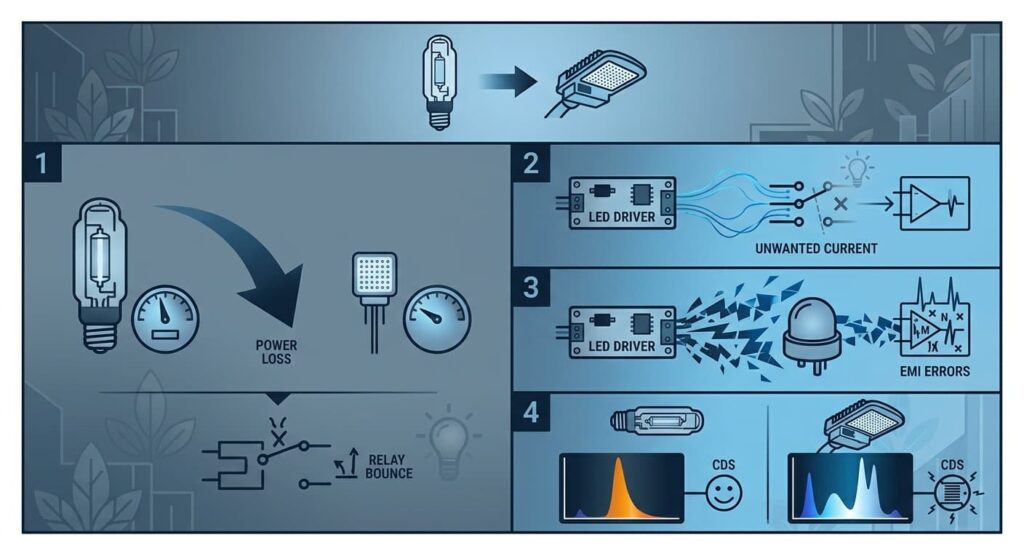
1. Power drops dramatically
A 400W HPS fixture becomes a 100W or 120W LED replacement. The relay in the old photocell was sized for the original load. With the reduced power, the relay contact may not close cleanly. The contact force needed for reliable switching at high loads is more than enough at those wattages. At low LED loads, the same relay can bounce, arc inconsistently, or create resistance that causes flickering.
3. LED drivers produce electromagnetic interference
The high-frequency switching inside the driver creates EMI that older photocells were not designed to handle. This interference can reach the photocell control circuit and cause false triggering, erratic switching, or complete malfunction.
4. LED spectral output is different from HPS
The amber-dominated spectrum of HPS contains a lot of infrared content. LEDs produce a cooler, whiter spectrum. Old CDS sensors were calibrated in environments where HPS was the dominant artificial light source. In an LED environment, both the reflected ambient light from road surfaces and the accidental illumination of the sensor head produce a different spectral distribution, which CDS sensors interpret inconsistently.
What Actually Changes When You Go to LED?
Compatibility Aspect | Common Symptoms |
Relay Load Limitation | Low-power LED load fails to properly trigger old photocell relays, causing unstable switching |
Photosensitive Unit Mismatch | Old CDS sensors have reduced sensitivity to LED light spectrum and ambient changes |
Leakage Current and EMI | LED driver leakage and interference cause false on/off switching |
Mechanical Wear | Prolonged use and outdated design increase failure likelihood with old photocells |
The relay issue is the most common complaint from contractors doing LED retrofits. They swap the fixture, leave the photocell, and within a few weeks start getting calls about lights that flicker, stay on through the day, or behave erratically at dusk. Replacing the photocell fixes it almost every time.
What Should You Do During an LED Retrofit?
The simple answer to that question is that for most projects, it is correct to replace the photocell at the same time as the luminaire. The extra expense is not a significant part of the retrofit budget, and it avoids compatibility issues that can cause service calls.
Look for photocells that are suitable for LED sizing, that have LED-compatible relays, use a photodiode sensor instead of a CDS sensor, and have built-in EMI filtering and SPD surge protection. Long-Join’s photocell range is designed and tested to be compatible with LED drivers, as it is a major specification requirement, and not an afterthought.
When one can’t afford to replace all the photocells, testing the existing photocells with the new LED fixtures before signing off on the installation will catch obvious compatibility failures early on in the project. However, some failures occur over time because the leakage current and EMI that creep in over several months begin to put stress on the worn-out photocell components.
Frequently Asked Questions on LED Retrofit and Photocells
Old photocells were created for high-power HPS and metal halide loads. The power consumption of LED fixtures is much lower, leakage current and EMI that was not accounted for in the original designs, and a different spectral output than the original CDS sensors are able to read.
Old relays that are rated for 400W loads might not close cleanly with 100W loads of LEDs. The leakage current of LED drivers can cause contact through open contacts. The photocell control circuit may be affected by the switching function of the LED Drivers.
Broad spectral response and higher rejection of artificial LED ambient light, and more stable threshold performance over the temperature range of LED luminaire tops. It is easier to manage with photodiode elements than with CDS.
Test load with new LED load prior to installation sign-off. If the flickering, activation in daylight, or failure to switch at dusk is experienced with the new fixture, it is considered to be a compatibility failure. The age also plays a part: photocells that have been in service for seven to ten years or more have worn relays, and LED load characteristics will speed up wear even more.
Switched to photodiode sensing for stable spectral response, sized relay contacts appropriately for LED load ranges, added RC filter circuits and TVS protection for EMI and leakage current handling, and tested all products against LED driver compatibility as a standard part of the certification process.
Conclusión
It is advisable to replace the photocells of a lighting system during an LED upgrade, and the cost of doing it at the same time as the retrofit is much lower than the cost of the service calls you will get if you do not.
Old photocells were built for different loads, different spectral environments, and different interference characteristics than LED systems produce. Long-Join’s LED-optimised photocell range addresses all four compatibility dimensions directly.
Enlaces externos
●https://en.wikipedia.org/wiki/LED_lamp
●https://en.wikipedia.org/wiki/Electromagnetic_interference


 Spanish
 English
 Russian
 Portuguese
 Arabic
 Japanese
 Italian