
Why Do Some Old Photocells Frequently Fail In The LED Era?
Introducir
The light on the corner worked fine for years. Then it got the LED upgrade. Now it flickers. Or cycles. Or burns away through the afternoon like nobody told it the sun was up.
Everyone blames the shiny new LED fixture first. Fair enough, it’s the thing that changed. But a lot of the time the real problem is the old célula fotoeléctrica sitting on top, still trying to do a job it was never built for.
That’s the short answer. Old photocells were made for one kind of lamp, and now they’re switching a very different one.
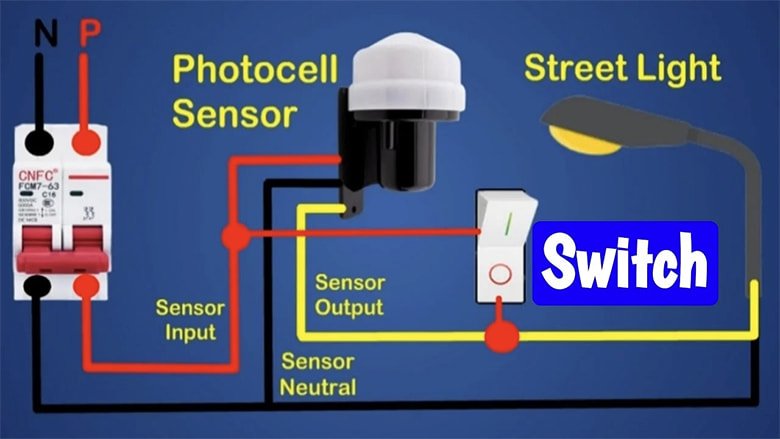
What Old Photocells Were Built For
Go back a decade or two. Street lights ran on HPS, metal halide and mercury vapor lamps, usually with magnetic ballasts. Big, heavy, fairly simple loads.
The photocells that went with them were simple too. A CdS sensing element. A mechanical relay. That was about it. Nobody worried much about LED driver compatibility, serious surge protection or filtering out electronic noise, because the lamps of the day didn’t need any of that.
Older photocell | What an LED setup wants | |
Lamp it switched | HPS, metal halide, mercury vapor | LED with an electronic driver |
Sensor | Often CdS | Steady reading near LED light and heat |
Switching | Plain relay | Copes with a startup surge |
Protección contra sobretensiones | Thin, or depends on the model | Usually more of it |
Electrical noise | Not much to deal with | Has to ignore driver EMI |
None of this makes every old unit junk. It was just designed for a different world. Long-Join walks through the same problem in its guide to why LED retrofits cause old photocells to fail.
Why Do LED Drivers Wear Out Old Relays?
An LED driver has capacitors inside. Flip the light on and they gulp a quick burst of current, called inrush current. It’s over fast, but for that instant it can be far above what the lamp draws while running.
Old relays weren’t made to take that hit night after night. The contacts arc. They pit. Eventually some of them stick shut.
Newer controls get around this with zero-cross switching. The relay closes right around the point where the voltage crosses zero, so there’s much less arcing. Long-Join shows this in its JL-207C zero-cross switching test, which looks at cutting relay arcing and electrical stress when the lamp switches.
So here’s the catch. A low-wattage LED is not automatically an easy load. Don’t go by watts. Look at the driver’s inrush and the photocell’s real load rating.
Leakage, Noise and a Lamp That Fools Itself
Lamp blinking? Going off too early? Cycling all night? The photocell might not be broken at all. It might just be reacting to things older lighting never threw at it.
LED drivers can leak a little current and give off electrical noise. A control that was never designed to ignore that can get jumpy.
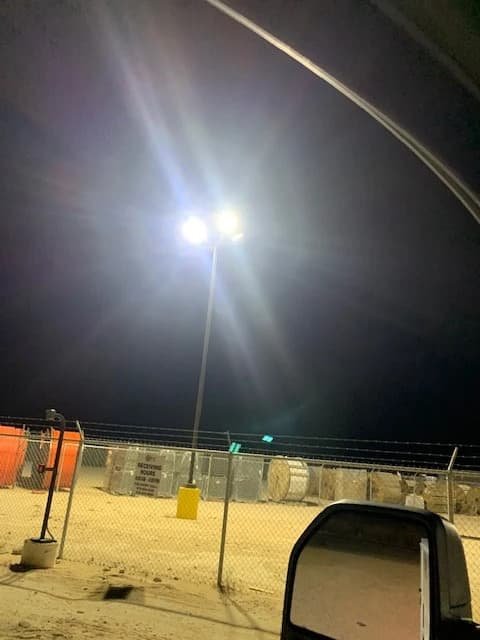
Then there’s reflection, and this one’s almost funny. Light from the fixture bounces off something and lands on the sensor. The célula fotoeléctrica thinks it’s morning and switches the lamp off. The reflected light disappears. It’s dark again, so the lamp comes back on. Then off. Then on. It’ll keep that up all night if nothing changes.
Heat doesn’t help either. The control sits right on a warm fixture, so its parts run hotter than the weather report suggests. Give it a few years and you get drift, or just an early death.
Long-Join warns that artificial or reflected light reaching a control can cause cycling. R-filtered versus IR sensor guide goes further and explains how LED light triggers false switching when the sensor type doesn’t suit the fixture. And it’s why mounting direction matters. Even a good control will misbehave if it can see its own lamp.
Why Does CdS Get Shakier With Age and Heat?
Lights on the same street starting to come on at slightly different times? Sensor drift is a likely suspect.
CdS, short for cadmium sulfide, changes resistance with light. Great for switching street lights. The trouble is that temperature nudges that resistance too, and in an old or basic circuit, that moves the point where the lamp switches.
It rarely fails outright. You just get small annoyances. A lamp that stays on a bit too long in the morning. One that comes on early in the evening. A bit of cycling right at dusk or dawn. The hot fixture underneath makes all of it worse.
Long-Join’s article on CdS photocell temperature drift covers this, and points to calibration, time delay, hysteresis, compensation and a better sensor choice as ways to steady it. On a demanding project, a newer dusk to dawn photocell sensor usually beats reusing the old one.
When the Driver Takes the Blame for the Relay
Lamp on all day? The LED driver looks guilty. Sometimes it’s innocent, and the real fault is the relay inside the photocell.
Mechanical relays wear out. Startup current, false triggering over and over, vibration, plain old age. Bit by bit the contacts get chewed up, and one day they weld together. Now the lamp just stays on.
Long-Join lists relay sticking as one reason a photocell-controlled lamp stays lit in daylight, along with electrical overload, repeated false triggering, vibration and contact wear. So before you pay for a new driver, test the photocell. It’s the cheaper part to check.
How Do You Tell Which Part Failed?
Three quick checks will usually sort it out.
Cover the sensor in daylight. Tape, a glove, anything that blocks the light. After the delay the lamp should come on, and go off again once you uncover it. Nothing happening? Point the finger at the photocell or its wiring.
Then fit a spare photocell you trust. Lamp behaves now? Old photocell was the problem. Still misbehaving? Look at the driver, the fixture or the wiring.
A shorting cap settles it. Long-Join’s JL-208 slots in where the photocell goes and just keeps the lamp on. If the lamp runs fine on the cap, the driver and fixture are healthy.
Mistakes Worth Avoiding
Don’t swap the driver first. It costs more, and it might not be the problem.
Don’t reuse the old photocells just because they still fit the socket. Same shape doesn’t mean same job.
And don’t skip a trial run. Put a handful of lights up with the new driver and control, then watch them for a couple of weeks before rolling out across the whole site. Problems show up early and cheap that way, instead of late and expensive.
What to Check Before Buying a Replacement
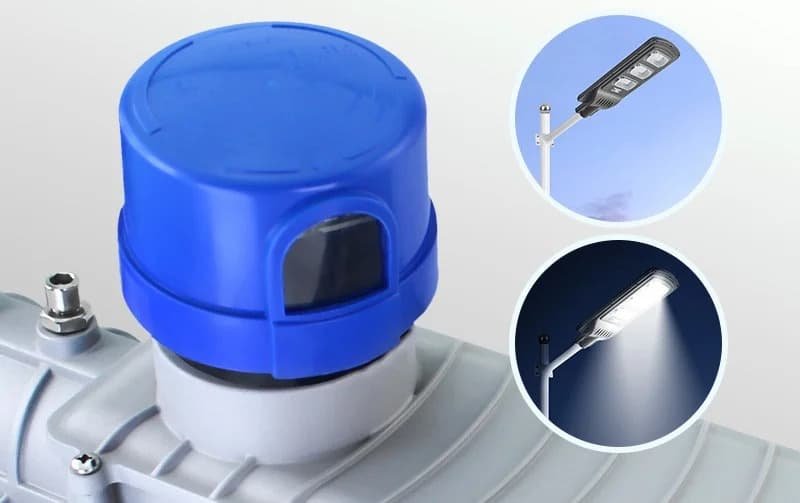
Matching the shape isn’t enough. A street light photocell has to suit the LED driver and the place it’s going to live.
Controlar | Why you care |
LED load rating | Tells you it can handle the driver |
Inrush handling | Saves the relay contacts |
Protección contra sobretensiones | MOV or SPD to soak up spikes |
Tipo de sensor | Fewer false readings around LED light |
Temperature range | Hot fixtures are hard on parts |
Clasificación IP | Keeps rain and dust out |
Delay or hysteresis | Stops the on-off-on-off routine |
Long-Join’s JL-207C photo control sensor comes with options like MOV surge protection and zero-cross technology. Its JL-24 series 7-pin photocontrol adds LED dimming control, an IR-filtered phototransistor and surge protection.
Whatever you pick, test the driver, control, voltage, startup behavior and mounting position together first. A small field trial is cheap. Fixing a whole street afterwards isn’t.
Preguntas frecuentes
LED drivers behave differently from old ballasts. Different startup surge, a bit of leakage, more electrical noise. Plenty of older controls just weren't built for that.
It can, with some driver and control combinations. A small stray current is enough to make switching unstable.
If it bounces back onto the sensor, the photocell thinks it's daytime and switches off. Then the light's gone, it's dark again, and the lamp comes back on. Round and round.
A stuck or worn relay can leave the lamp on, off or unstable. That looks a lot like a bad driver from the ground.
LED-rated switching. Decent inrush handling. Surge protection. Steady sensing. Proper outdoor sealing. A load rating that actually matches the driver.
If they were built for HID lamps, yes, it's usually worth it. Swapping them during the retrofit saves a lot of call-backs later.
Conclusión
So why do old photocells keep failing after an LED upgrade? Mostly because nobody changed them. The lamp moved on and the control didn’t.
The fix isn’t complicated. Match the new photocell to the driver, the voltage, the heat, the surge risk and where it’s mounted. Long-Join’s newer controls bring options like zero-cross switching, surge protection, filtered sensing and LED-focused load ratings to help with that.
Treat the lamp and its control as a pair. Get the pair right and most of the flicker, cycling and stuck-on lamps simply stop showing up.
Enlaces externos:
●https://www.reddit.com/r/AskPhotography/comments/18jlq6b/ir_sensor_conversion_vs_filter
●https://www.sciencedirect.com/topics/engineering/photocell
●https://www.ti.com/lit/pdf/tiducf7
●https://www.sciencedirect.com/science/article/abs/pii/S0921510722001817


 Spanish
 English
 Russian
 Portuguese
 Arabic
 Japanese
 Italian